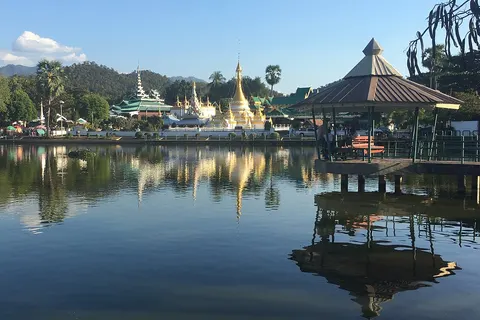
Mae Hong Son is not a town you tick off with a list of photo stops. Its appeal is the multi-roofed Shan-style temples reflected in the lake, a morning market with Shan and Burmese-style breakfasts, and cool-season mornings so cold that you reach for a jacket before sunrise. This page puts every sight in town in one place, with short histories, hours, how to get up Doi Kong Mu, the Tai Yai dishes worth ordering and a walking plan with times.
Information is as of 6 Nov 2026. Hours are approximate and temples can change them for religious events, so check again before you go. Everything in town on this page is free to enter, and there are no tickets to buy in advance.
We earn a commission if you book through our links. The price you pay does not change. How we choose
Chong Kham lake and the town: read the table first
| Place | Approx. hours | Fee | Time needed |
|---|---|---|---|
| Chong Kham lake (lakeside park) | Open all day; best early and late | Free | 30 to 45 minutes |
| Wat Chong Kham and Wat Chong Klang | About 08:00 to 18:00 | Free, donations welcome | 45 to 60 minutes |
| Wat Hua Wiang | About 08:00 to 18:00 | Free | 20 to 30 minutes |
| Wat Phra Non and museum | Temple about 08:00 to 18:00; museum about 08:00 to 17:00 | Free | 45 to 60 minutes |
| Wat Kam Ko | Daytime | Free | 15 to 20 minutes |
| Wat Phra That Doi Kong Mu | About 07:00 to 19:00 | Free, donations welcome | 45 to 90 minutes |
| Lakeside night market | About 17:00 or 18:00 to 22:00 | Free to enter; pay for food | 1 to 2 hours |
Chong Kham is a natural lake in the middle of town, ringed by a park that is open all day at no charge. There are pavilions at the water's edge, an outdoor fitness corner and a path around the water. From the park it is about 100 m to the two temples, about 500 m to the walking street and about 2 km to Doi Kong Mu, so nearly everything can be done on foot except the climb.
What time of day looks best
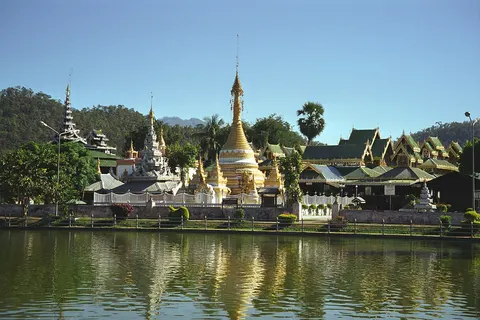
- Early morning in the cool season (December and January): thin mist rises from the basin, the water is still, and on some days monks pass along the shore on their alms round.
- Late afternoon, one to two hours before sunset: the light falls on the golden chedi so the reflection turns gold.
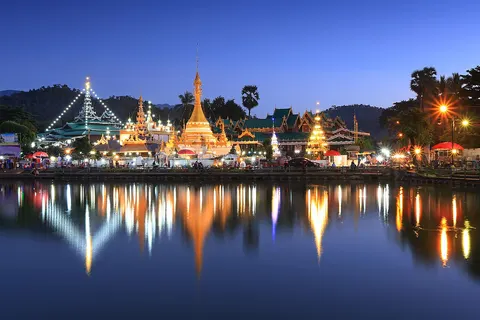
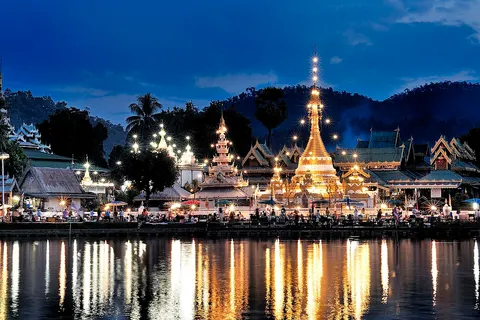
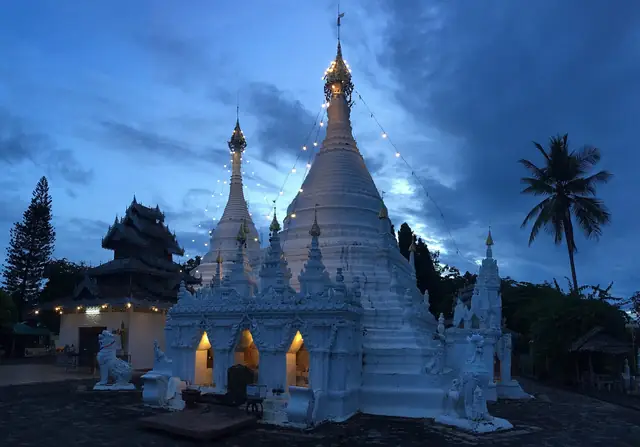
- Dusk to about 21:00: both temples are lit, the lights stretch across the water, and the night market sits on the same shore.
The town is nicknamed the city of three mists because the surrounding mountains hold mist in the basin much of the year. Cool-season cold is real here. The town has recorded December lows of about 3 degrees Celsius, and one morning in 2017 dropped to 8.5 degrees with dense fog on the lake. In December and January the early hours usually need a jacket, and the sun then warms things fast, so bring layers you can take off.
In the burning and haze season (mid-February to the end of April) smoke can hide the hills and the Doi Kong Mu chedis almost completely. 2026 was severe. For views and good photos, come from November to January. The whole-year picture is in the loop and plans page.
Mae Hong Son airport is about 2 km from the centre, but as of 6 Nov 2026 no airline sells scheduled flights into it. Check the airlines' own websites before you plan. Vans and private cars are covered on the getting-there page.
Wat Chong Kham and Wat Chong Klang: the twin lakeside temples
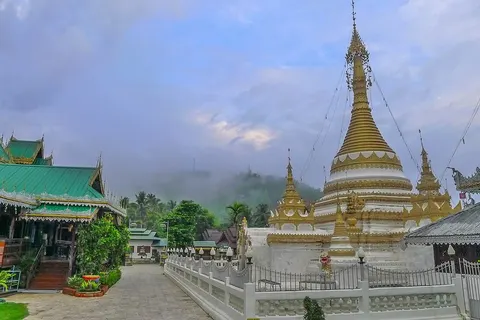
The two temples stand side by side on Chamnan Sathit Road. Seen from across the lake, Wat Chong Klang is on the right with its white and gold chedi and Wat Chong Kham on the left. Both are open about 08:00 to 18:00 daily (check before you go), free, with donations welcome.
Wat Chong Kham
Wat Chong Kham is the oldest temple in town, founded by Tai Yai craftsmen around 1827 under Phraya Singhanatracha, the first governor. The name comes from the gold-leaf pillars inside. Its signature features are a castle-style tiered roof, Shan metal fretwork and a huge principal image called Luang Pho To. It was cast by Burmese craftsmen around 1926, has a lap width of about 4.85 m and is a copy of the Phra Buddha Sihing at Wat Suthat in Bangkok. The original wooden buildings burned in 1970, so much of what you see is reconstruction.
Wat Chong Klang
Wat Chong Klang was built around 1867 to 1871 as an offering to Burmese monks who came for the funeral of a senior abbot. The white chedi with gold trim is the lakeside highlight. Inside the hall there is a woven wicker Buddha, and a gilded copy of the Phra Sihing on the altar. What people walk past and should stop for is a small corner holding carved wooden figures of people and animals, said to have been brought from Burma, and glass panels telling the Vessantara Jataka and the life of the Buddha, many with Burmese captions and said to be the work of a Tai Yai craftsman from Mandalay. If you have 15 minutes, spend them here and not just on a photo of the chedi.
Dress and manners
- Cover shoulders and knees, and take your shoes off before entering a hall. Follow any sign at the door.
- Speak quietly and do not point your feet at a Buddha image. Women should not touch a monk or hand things to him directly.
- Photos in the grounds are fine. If a ceremony is under way inside, keep your distance and do not use flash.
If posted hours differ from the figures here, trust the sign at the gate. The temples may close earlier than 18:00, so if you come in the evening, arrive before 16:00.
Wat Phra That Doi Kong Mu: the viewpoint, the two white chedis and how to get up
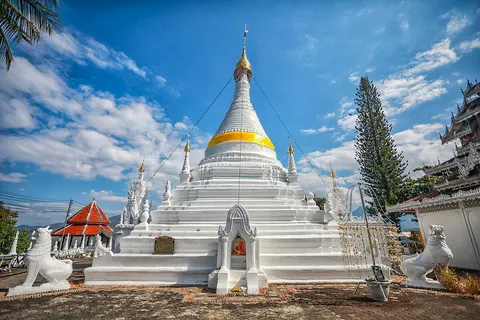
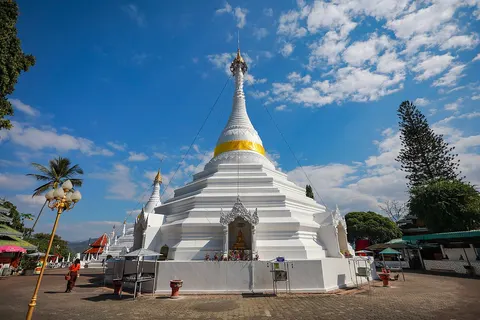
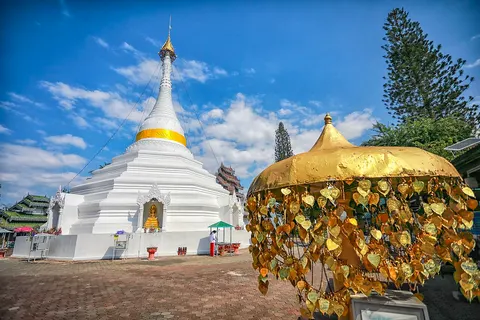
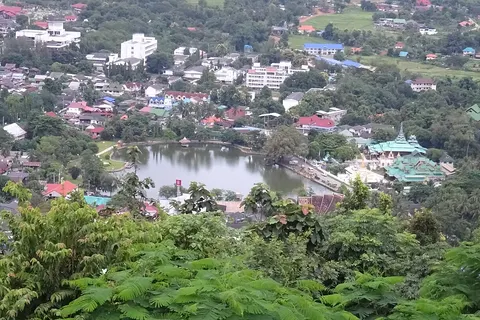
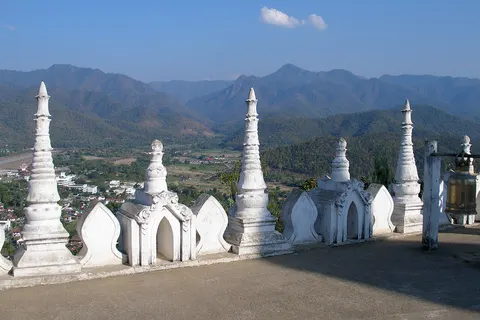
Wat Phra That Doi Kong Mu (formerly Wat Plai Doi) sits on a hill above town, with two whitewashed chedis in a mix of Shan and Burmese style. From the terrace you see Chong Kham lake, the town, the airport, the Pai valley and ridges running into Myanmar almost all the way round. Both sunrise and sunset can be watched from here. Entry is free with donations welcome, and it is open about 07:00 to 19:00 (check before you go). Arrive at least half an hour before the evening closing time.
What is on the hill
The larger chedi was built in 1860 by a wealthy Tai Yai merchant, Chong Tong Su, and holds relics of the disciple Moggallana brought from Mawlamyine. The smaller one followed around 1872 to 1874 under Phraya Singhanatracha and holds relics of Sariputta from Mandalay. The first governor's ashes are said to have been moved to a chedi at the summit. Behind them is an open Shan-style hall with a Buddha in the Subduing Mara pose and an image called Luang Pho Than Jai. The Fine Arts Department registered the site in 1979.
How to get up: walk, motorbike or tuk-tuk
- Paved road (what most people use): from the Singhanatracha monument go straight for about 150 m, turn left at the Doi Kong Mu sign and climb about 1.5 km. A motorbike or small car makes it easily. Walking from the town centre it is about 1.7 km in total.
- Tuk-tuk: simplest without wheels. Agree a return fare before you set off, and if you want to stay for sunset tell the driver to wait or arrange a pick-up time.
- Stairs from Wat Phra Non: a long steep staircase guarded by two Shan lion statues at its foot. Allow about 20 to 30 minutes depending on fitness, and bring water.
- Footpath from Wat Muay Taw: said to be gentler than the Phra Non stairs, a good choice if you dislike steep steps.
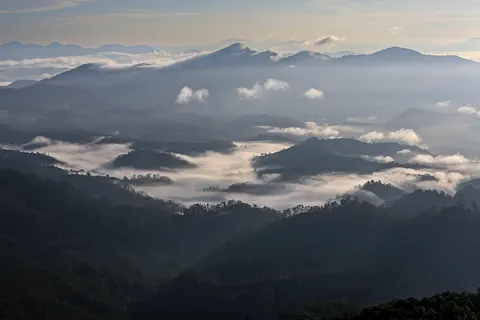
Timing: for mist, go up early. In the cool season the sun rises at about 06:30 to 07:00, and some mornings cloud fills the basin like a small sea of mist. For sunset, be on the hill about 45 minutes before the sun goes down (in November that is around 17:30 to 18:00, so check the time for your day) and walk down before dark. If you plan to be there before 07:00, check that the gate is open.
What to look at
- The lake-side terrace: the green roofs of the two temples from above.
- The western ridges: on a clear day from November to early February the layers run far into Myanmar.
- The two white chedis in low evening sun, which turn pale gold and are easiest to photograph then.
- The temple yard in the morning: fewer people than in the evening, when visitors gather for sunset.
In the haze season (mid-February to April) some days you cannot see even the chedis from town below. If the whole sky is white, do not bother with the climb. Check the morning air first.
Wat Hua Wiang (Wat Klang Muang): the Buddha carried by boat from Mandalay
Wat Hua Wiang is on Singhanat Bamrung Road next to the municipal market, about 200 m north of the lake. It is open about 08:00 to 18:00 and free. Built in 1863 as the second temple of the town, its Burmese-Shan wooden viharn with multi-tier roofs and silver fretwork is the building to see. The present sermon hall dates from about 1973 to 1974, after seven old halls were taken down in 1972, and the ubosot was rebuilt in 1998 and is usually closed.
The reason people come is Phra Chao Phala Lakhaeng, a bronze Buddha in the earth-touching posture in the Mahamuni style, about 3 m wide and 3.25 m high. It was cast in pieces in Mandalay, brought in nine parts by boat up the Pai River, first assembled at Wat Phra Non and then moved here. Townspeople regard it as the guardian image of the town.
Is it worth a stop? Yes if you are passing, because it sits beside the morning market and takes 20 to 30 minutes. It is not worth a separate trip. It is walkable from the lake, and a tuk-tuk or motorbike taxi from the lake area costs about 20 to 40 baht, so agree the price first.
Pair Wat Hua Wiang with the morning market next door: eat a Shan breakfast first, then visit the Buddha. The market is liveliest in the morning, so go before about 10:00.
Wat Phra Non and the Chao Khun Sophon Samakkhi Anusorn Museum
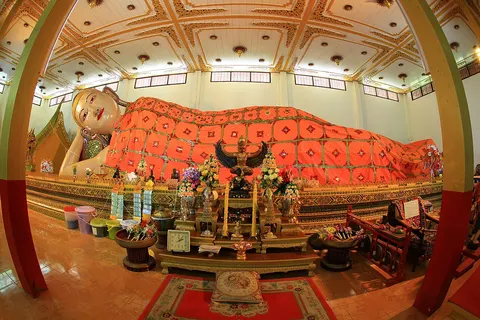
Wat Phra Non is on Siri Mongkol Road at the foot of Doi Kong Mu, about 200 m west of the lake. Phraya Singhanatracha built it around 1875. The open-fronted Shan viharn has a tiered roof, and inside is a reclining Buddha about 12 m long, brick and plaster, brightly painted and draped in a patterned robe. Beside it a cemetery holds four memorials to early Shan rulers. It is open about 08:00 to 18:00 and free, and it is where the stairs up to Doi Kong Mu begin.
The museum inside the temple
In the temple's hall is the Chao Khun Sophon Samakkhi Anusorn Museum, open about 08:00 to 17:00 and free. It holds Tai Yai palm-leaf manuscripts (some more than 300 years old), Buddha images, bronze Vinaya (monastic code) texts from Myanmar, Japanese ceramics, the rulers' tea sets, old Burmese banknotes and items from the Second World War. The labels are handwritten by the abbot, so it feels like a museum made by locals.
If you have any interest in Tai Yai history, give it 20 to 30 minutes. If you are tired or hot, skip it without regret. For a serious look at the war years, go to the Khun Yuam museum, covered on the Khun Yuam and Mae Sariang page.
Wat Kam Ko: the small temple opposite Wat Phra Non
Wat Kam Ko is on Khunlumprapas Road directly opposite Wat Phra Non, so do the two as one stop. It is an old Tai Yai temple said to have been founded around 1890 by the monk Khruba Tao. The name means "bunnak flower" in the Tai language. It is free and open in daylight.
What to look at: the tiered covered walkway from the gate up to the hall, the pair of lions by the steps, and manuscripts in Tai Yai script that tell the history of the Tai Yai people, with a translation into Thai. If you do not have time to read, walk through and look at the architecture. It takes 15 to 20 minutes at most.
Honestly, Wat Kam Ko is not a place to travel for in its own right. But if you are at Wat Phra Non already, crossing the road costs nothing.
The lakeside night market and Tai Yai food
The night market sets up along the shore of Chong Kham and the walking street. Check that it is running on the night you go. Vendors begin around sunset (17:00 to 18:00) and carry on to about 22:00, with more stalls on weekends and in the cool season. Most dishes cost under about 60 baht, and pad thai and fried mussels are about 40. There are grilled skewers, noodles, fruit, coconut pancakes, hill-tribe crafts and crispy fried insects with kaffir lime near the temple gate. Some stalls lay out low tables on the water's edge. Expect a small, relaxed market with modest variety. For real Tai Yai food, the morning market is better.
The morning market: the real Tai Yai food
The municipal market beside Wat Hua Wiang is where you find Shan and Burmese-style breakfasts. Go before about 10:00 and ask for "khao soi Tai" (Tai Yai khao soi) and Shan tofu (tao hu). Do not expect English signs; pointing at another person's plate and ordering the same works best.
Dish names worth knowing
- Khao soi: ask for the Tai Yai version at the morning market.
- Nam phrik ong and sai ua: northern staples you will see all over town.
- Kaeng hang lay: a pork curry of Burmese-Shan origin, with ginger and no coconut milk.
- Khanom chin nam ngiao: rice noodles in a tomato-based broth topped with dried flower buds.
- Khao kan jin: steamed northern rice mixed with pork; some versions use pork blood, so ask before you order if you avoid it.
- Laap and aep: northern laap, usually pork or beef, and aep, meat grilled in a banana-leaf parcel.
- Tam som-o: a fresh pomelo salad, sour and fragrant.
- Kai op faang and oop kai: Shan dishes of chicken roasted in rice straw and a chicken dish called oop kai. They are not on every menu every day, so ask before you order.
Restaurants in town open, close and move often. The reliable method is to look for the places where locals fill the tables at breakfast and lunch, then order by the dish names above.
Vegetarians: say clearly that you want no meat and no fish sauce, as many northern dishes use pork or chilli pastes made with animal products. For where to sleep tonight, see where to stay in Mae Hong Son. A room near Chong Kham lake lets you walk to the night market and back without a ride.
Festivals: Loy Krathong, Poy Sang Long and Jong Para
| Festival | When | Where |
|---|---|---|
| Loy Krathong | Tuesday 24 November 2026 | Chong Kham lake |
| Poy Sang Long | Late March to April; dates change every year and each temple sets its own | Tai Yai temples in town and nearby districts |
| Jong Para (Poi Lern Sip Et) | End of Buddhist Lent, around late October; the 2026 season is over | Town, Khun Yuam, Mae Sariang, Su Tong Pae |
Loy Krathong on 24 November 2026
The town holds Loy Krathong at Chong Kham lake, and the reflections of the temples, krathongs and lanterns on the water are easy to photograph. Check the stage, parade and show programme with the TAT Mae Hong Son office or the municipality close to the date. If you want to come for this, book your room in advance, as late November is when visitors start to pick up. Choose a krathong made of natural materials.
Poy Sang Long
Poy Sang Long (the ordination of boys as novices) is the Tai Yai festival in which boys aged about 7 to 14 dress as princes. It runs for three days in the school break, usually from late March to April. On the first day heads are shaved and the boys are dressed and ask for blessings, on the second there is a procession in which each boy rides on a guardian's shoulders under a parasol, with feet not allowed to touch the ground, and on the third he is ordained. Each temple sets its own dates. For next year, ask TAT Mae Hong Son before you book. If you go, keep your distance and do not step into the procession. This is also the hot, smoky season, so bring a mask and choose air-conditioned rooms.
Jong Para (Poi Lern Sip Et)
This is the Tai Yai festival at the end of Buddhist Lent, when bamboo "palaces" decorated with paper, banana stems, sugar cane and lanterns welcome the Buddha back from the Tavatimsa heaven. In 2026 the end of Lent fell on 27 October, so this season is over. Next year it moves with the lunar calendar to around October, so check before you plan. To see it fully you need both the town and the Su Tong Pae bridge. See Pang Ung and Ban Rak Thai.
Long-neck (Kayan) villages: whether to go, and how if you do
In the province there are villages of the Kayan people, where some women wear brass coils around the neck. The best-known is Huay Pu Keng. Kayan and some Red Karen groups fled the conflict in Myanmar from about the late 1980s. Many have no clear legal status and cannot easily leave the province, and tourism is an important income for some families. The coils do not stretch the neck. They press the collarbone and ribs down, so the neck looks longer.
The ethical question has two sides. On one, visitors pay a fee and buy crafts, which is income families need. On the other, critics compare such villages with a "human zoo" because women are treated as photo subjects, and some feel most of the benefit does not reach the Kayan themselves. Some women have also stopped wearing the coils. Whether to go is a personal decision.
If you decide to go
- Ask how the fee reaches the community, and choose an operator or local guide who is open about it.
- Buy handicrafts directly from the women, which is the most direct income.
- Ask permission before every photo, do not ask anyone to pose, and do not use a drone.
- Do not treat it as a ten-minute photo stop; if you go, spend time to talk and listen.
- Always ask the price first, as entry and boat fees vary on the day.
Walking plan: half a day and a full day, with times
This order loops without backtracking and starts in the cool early morning while mist is still on the water. In the cool season the sun rises around 06:30 to 07:00. Times are approximate.
Half day (about 06:30 to 12:00)
| Time | Where | What to do |
|---|---|---|
| 06:30 | Chong Kham lake | Walk the shore, watch the mist, the monks' alms round and the reflections. Wear a jacket. |
| 07:30 | Morning market and Wat Hua Wiang | Eat a Tai Yai breakfast, then visit the Phala Lakhaeng Buddha (about 30 minutes) |
| 08:30 | Wat Chong Kham and Wat Chong Klang | Walk back as the temples open. See the glass panels and wooden figures (about 60 minutes) |
| 09:45 | Wat Phra Non and Wat Kam Ko | The reclining Buddha, the museum and the temple opposite (about 75 minutes) |
| 11:00 | Doi Kong Mu (tuk-tuk or your own wheels) | Town and chedi views. If the sun is harsh, save it for the evening |
| 12:00 | Lunch | Khao soi or kaeng hang lay where the locals are sitting |
Full day (about 06:30 to 21:00)
- 06:30 to 11:30: follow the half-day plan above, but do not climb Doi Kong Mu in the morning.
- 11:30 to 14:00: lunch and a rest at your hotel. At midday the light is harsh and the photos are flat.
- 14:00 to 15:30: sit in a lakeside cafe, or stroll the walking street, about 500 m from the lake (check which shops are open in the daytime).
- 16:30 to 17:45: go up Doi Kong Mu in time for sunset, then walk down before dark.
- 18:00 to 20:30: night market on the lake, see the temples lit, then walk back to your room.
If you add a second day from town, the most worthwhile trip is the day tour to Ban Rak Thai, Pha Suea waterfall and Pang Ung, described in the next section.
Where Mae Hong Son town fits on the Mae Hong Son Loop
The town is the halfway point of the loop, about 110 km from Pai and about 160 km from Mae Sariang. Most people on the loop sleep here at least one night. With only one night, use the afternoon and evening for the town and leave the next morning. With two nights, spend the second day on a day trip from town. The route, leg distances and 3 to 5 day plans are on the loop and plans page.
- Onward by Pai and Pang Mapha: see Tham Lod and Pang Mapha and, for the Pai side, Pai.
- To Pang Ung, Ban Rak Thai and Pha Suea waterfall: see Pang Ung and Ban Rak Thai. It can be done as a day return from town.
- South to Khun Yuam and Mae Sariang: see Khun Yuam and Mae Sariang. The sunflower fields at Doi Mae U Kho bloom from about November to mid-December, and the place to sleep is Khun Yuam, not the town.
- Starting from Chiang Mai: plan from Chiang Mai and see the getting-there page.
Day tour from Mae Hong Son town
If you do not want to drive, a shared tour with hotel pickup in town is the simple way to reach Ban Rak Thai and Pang Ung. The same programme is sold on KKday and Klook. It takes about 7 hours 30 minutes from Mae Hong Son town. It stops at Ban Mok Champae (hand-made noodles and village life in the fields), a hill-tribe village, lunch at Ban Rak Thai (the Yunnan Chinese village of former Kuomintang soldiers) with a tea and coffee plantation visit and jasmine tea tasting, Pha Suea waterfall, and ends at Pang Ung. KKday terms: at least two adults, and no cancellation once booked, so read the terms before booking.
 KKday
Day Tour from Mae Hong Son: KMT Village (Ban Rak Thai), Pha Sua Waterfall, Pang Oung
From US$118.26 (Starting price per person)
Price as of 5 Nov 2026Shared day tour from Mae Hong Son town, about 7 hours 30 minutes, with hotel pickup in town and lunch at Ban Rak Thai included.
Day tour on KKdayPhotos, prices and reviews from Klook
The same route from Mae Hong Son town, with an English or Thai guide and hotel pickup in town.
Day tour on KlookThere is no ticket to buy for the town itself. The temples, the lake and Doi Kong Mu are free, and the only costs are food, a ride up the hill and anything you buy. Compare places to sleep on the where-to-stay page.
Frequently asked questions
How long do I need in Mae Hong Son town?
Half a day covers Chong Kham lake, Wat Chong Kham, Wat Chong Klang, Wat Hua Wiang, Wat Phra Non and Wat Kam Ko. Add Doi Kong Mu at sunset and the night market and it becomes a full day. For a slow pace and a proper Tai Yai meal, stay one full night.
What time do Wat Chong Kham and Wat Chong Klang open, and is there a fee?
About 08:00 to 18:00 daily and free, with donations welcome. Cover shoulders and knees and take your shoes off before entering a hall. Hours can vary a little, so check the sign at the gate.
How do I get up to Wat Phra That Doi Kong Mu, and does it cost anything?
It is free, with donations welcome. You can take the paved road of about 1.5 km by motorbike or tuk-tuk (agree the fare first), climb the steep stairs from Wat Phra Non in about 20 to 30 minutes, or walk from the centre, about 1.7 km in all. Open about 07:00 to 19:00.
Is Doi Kong Mu better at sunrise or sunset?
In the cool season, sunrise can give mist filling the basin on some mornings, and sunset gives the white chedis a golden glow without an early start. Choose sunrise for mist and sunset for easy light. In the haze season, mid-February to April, the view is often lost.
What time does the Mae Hong Son night market open, and what is there to eat?
From about 17:00 or 18:00 to 22:00 beside Chong Kham lake. Most dishes are under about 60 baht, with grilled skewers, noodles, fruit, sweets and crafts. For real Tai Yai food go to the morning market beside Wat Hua Wiang before 10:00.
When is Loy Krathong in Mae Hong Son in 2026?
Tuesday 24 November 2026. The town celebrates at Chong Kham lake. Check the municipal programme with TAT Mae Hong Son close to the date, and book your room early.
When is Poy Sang Long?
Late March to April, in the school break. Each temple sets its own dates, so check with TAT Mae Hong Son before booking next year. It is also the hot, smoky season.
Should I visit a long-neck village?
It is a personal choice. The villages are income for families who fled Myanmar, but critics see them as people on display. If you go, ask how the fee reaches the community, buy crafts directly from the women, ask before taking photos and do not use a drone.
How cold does Mae Hong Son town get in the cool season?
December and January mornings are usually cold enough for a jacket, with thick fog some days. The town's December record low is about 3 degrees Celsius. It warms quickly once the sun is up, so dress in layers.
Where the facts come from
Keep planning
 Plan Mae Hong SonThe loop, sunflowers, Pang Ung, Tham Lod, where to stay, getting there
 Mae Hong Son Loop and 3, 4, 5 day plansRoute, direction, driving, vans, safety, season
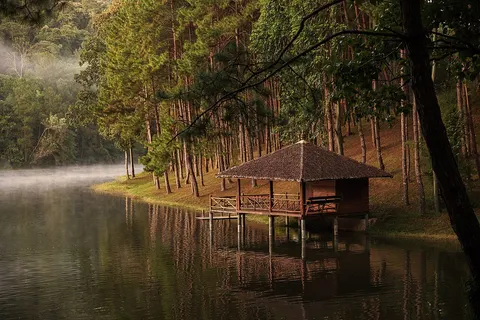 Pang Ung and Ban Rak ThaiPang Ung lake, Ban Rak Thai tea, Pha Suea, fish cave, bamboo bridge
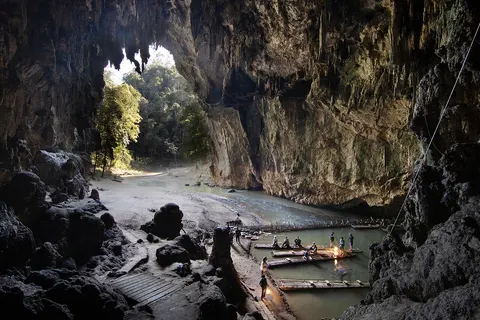 Pang Mapha and Tham LodRaft tour, costs, Ban Luk Khao Lam, viewpoints
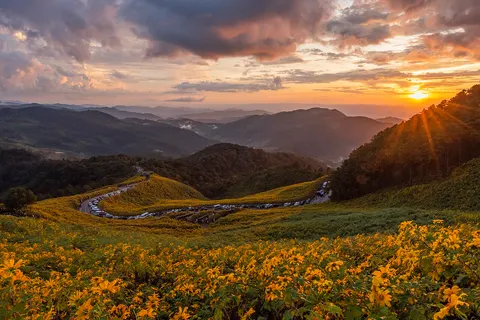 Khun Yuam, Mae Sariang and the sunflowersDoi Mae U Kho sunflowers, Mae Surin, Wat To Phae, Mae Sariang, Salween
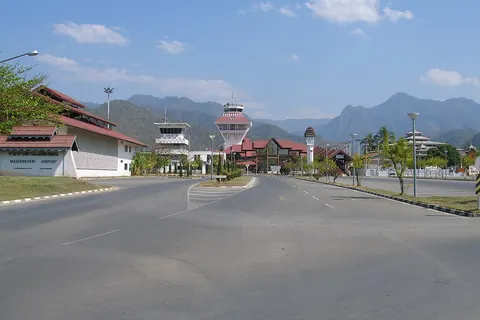 Getting to Mae Hong SonVans, buses, private cars, airport, from Chiang Mai, Pai and Bangkok
 Where to stay in Mae Hong SonTown, Ban Rak Thai, Pang Mapha, Khun Yuam, Mae Sariang
 Mae Hong Son deals this monthTours, transfers, vans and hotels worth booking ahead