Lopburi packs several layers of history into a few hundred metres. A 13th-century Khmer-style temple stands beside the railway line, across from a small shrine where macaques sit on the roof, and a short walk away is the palace where King Narai received foreign envoys. Outside town the plain opens into sunflower fields, a very large earth dam and the hills that mark the edge of the Khorat plateau. This guide covers how to get there, how to sequence the sights, and the monkey question most visitors ask first.
It uses only facts we could check on 16 October 2026 against the sources listed at the end, and it says where a source is old, disagrees with another, or could not be confirmed on an official page. Fees and opening hours change, so confirm them at the gate or with the operator before you go. The monkeys have their own guide: Lopburi monkeys: Phra Prang Sam Yot, festival and safety.
What kind of province Lopburi is
Wikipedia puts the province in central Thailand with an area of 6,493 square kilometres, about 725,000 people in 2024, and 11 districts with Mueang Lopburi as the capital. It borders eight provinces: Phetchabun, Chaiyaphum, Nakhon Ratchasima, Saraburi, Ayutthaya, Ang Thong, Sing Buri and Nakhon Sawan. About 30 percent of the area is low alluvial plain along the Lopburi and Pa Sak rivers, and the rest is plains mixed with hills, with the Phetchabun Mountains forming the eastern edge toward the Khorat plateau.
For the city itself, Wikipedia says it lies about 150 km north-east of Bangkok. Wikivoyage says about 180 km and under three hours, and gives 153 km by Highway 1; the 12Go page we opened shows a distance of 125 km. The figures differ because they measure different things, so use a live map on the day if you are driving.
The old name is Lavo. Wikipedia describes Lavo as a Mon kingdom of the Dvaravati period that later came under Khmer influence, and Wikivoyage says Lopburi was one of the roots from which Ayutthaya emerged in 1350 and remained the second capital of the Siamese kingdom. In the 17th century King Narai spent about eight months a year here, and a French traveller wrote that Lopburi was to Siam what Versailles was to France. The provincial slogan quoted on Wikipedia lists the same highlights: King Narai's Palace, San Phra Kan shrine, Phra Prang Sam Yot, the land of Dinso Phong (chalk), Pa Sak Jolasid Dam and the golden land of King Narai.
Wikivoyage splits the town into the old town and the new town. Most important sites and the train station are in the old town, while buses arrive and leave from the new town. That split matters when you choose where to sleep and how to arrive.
Phra Prang Sam Yot and San Phra Kan
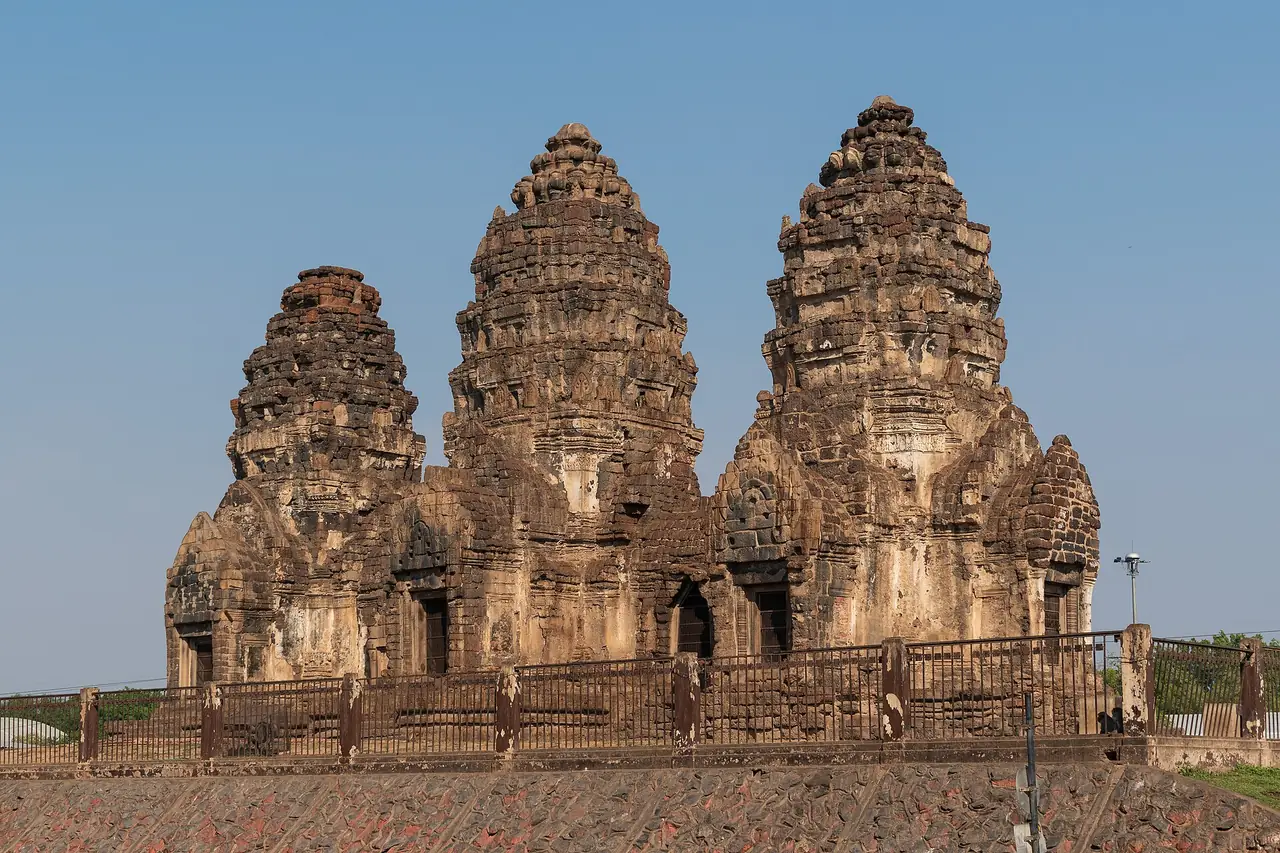
Wikipedia says Phra Prang Sam Yot is an Angkorian-style temple built by the Khmer king Jayavarman VII in the early 13th century. It is brick with a stucco exterior and has three towers, each with its own deity: Prajnaparamita in the north tower, the Buddha in the centre and Avalokitesvara in the south. When Lopburi came under Ayutthaya the temple was re-dedicated to Theravada Buddhism, and a prayer hall was added during King Narai's reign. Wikipedia also notes that the temple appears on a Second World War special series 1,000 baht note and on the provincial seal and flag.
Across the railway is San Phra Kan. Wikivoyage describes a small shrine, the remains of a Khmer prang, a few stalls selling offerings and food, and lots of monkeys; signs warn about purse-grabbing, but the animals look docile if not provoked. Wikipedia explains the origin of the local attitude: people in Lopburi traditionally believe the monkeys are disciples of Jao Paw Phra Kan, a spirit that protects the city, and the Monkey Buffet Festival that began in 1989 led to a sharp rise in their numbers.
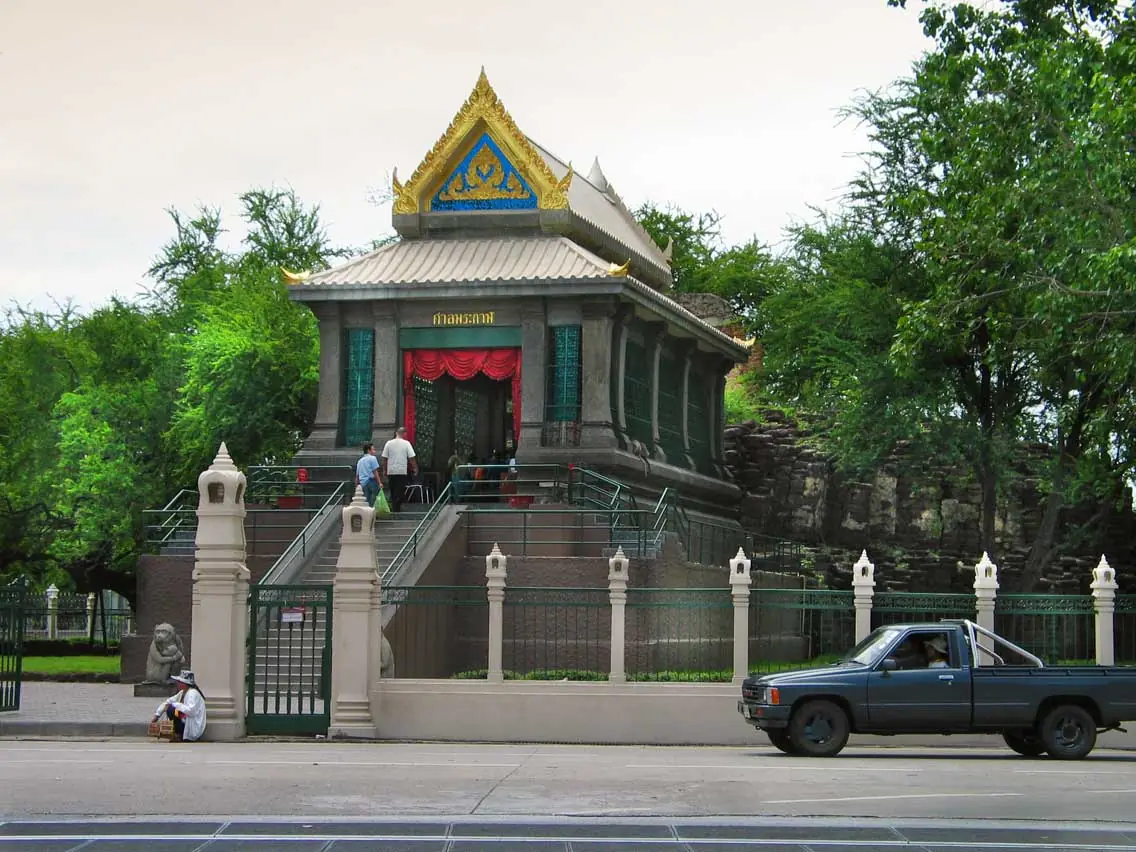
Three things are worth knowing about the monkeys. First, the numbers move fast. Wikipedia says the population had grown to about 3,000 by 2024, with monkeys snatching bags and rummaging through homes, and the government began rounding them up for sterilisation: 1,600 were captured within five months. Wikivoyage says that as of March 2026 the population has decreased substantially, though normal precautions still apply. Second, Wikipedia quotes a sign in town saying officers feed the monkeys at three designated areas outside San Phra Kan twice a day, at 10:00 and 16:00, and that anyone who wants to feed them at other times should contact the officer. Third, Wikipedia says the monkeys have damaged the temple's exterior and are kept out of the temple itself.
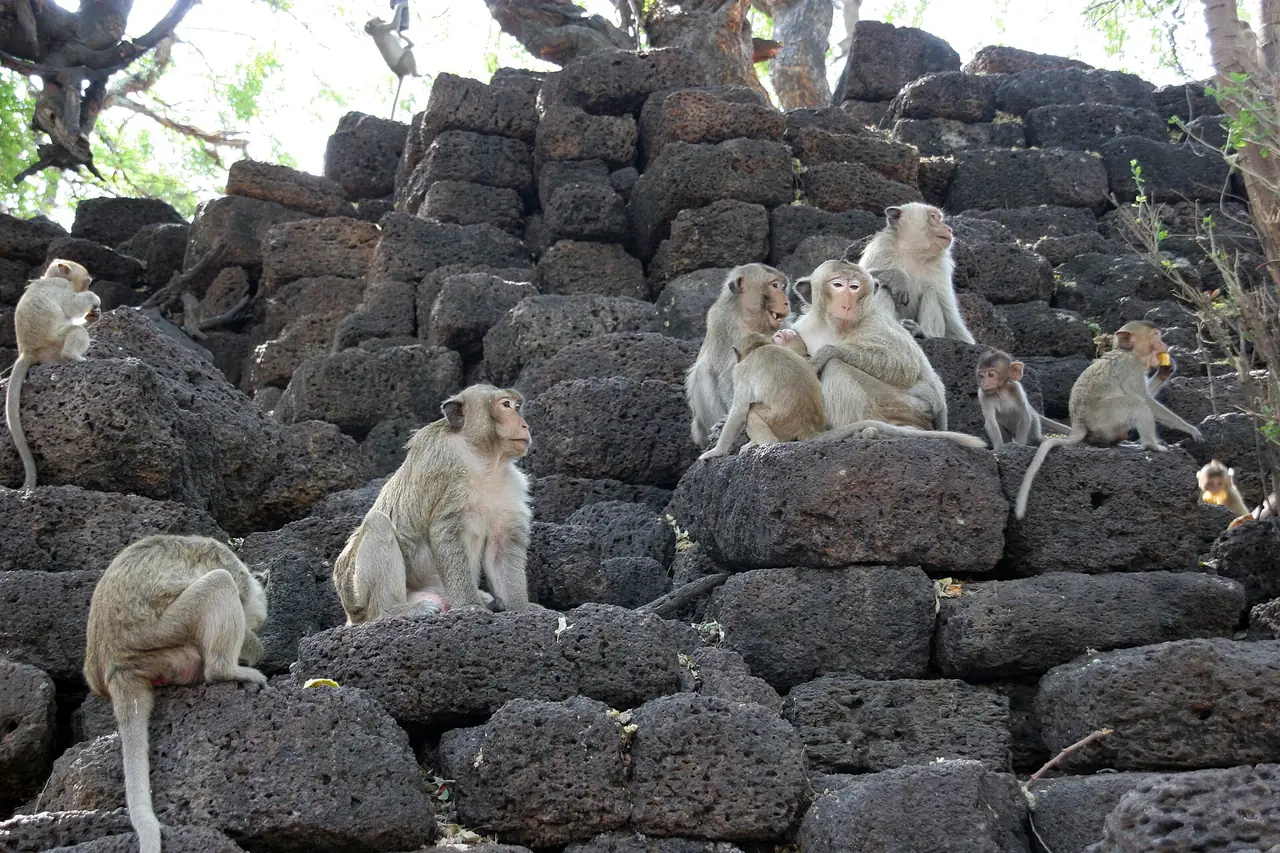
Fees and hours: Wikivoyage lists 50 baht for foreigners and 10 baht for Thais at Phra Prang Sam Yot and 50 baht at San Phra Kan. We could not confirm this on an official page, and sites disagree on opening hours, so ask at the gate. The monkey guide lists the conflicting hours we found.
King Narai's Palace and the old town
Wikipedia says King Narai the Great ordered the palace built in 1666 near the site of King Ramesuan's earlier palace. He stayed about eight to nine months a year, except in the rainy season, and used it for rest, hunting, running the country and receiving official visitors. When he died in 1688 Lopburi and the palace were abandoned. King Mongkut had it restored in 1856, built the Phiman Mongkut Pavilion for his own stays and renamed it Phra Narai Ratchaniwet. On 11 October 1924 two princes opened the Chantarapisarn Pavilion as a museum, and in 1961 the museum took the name Somdet Phra Narai National Museum.
Wikivoyage lists the palace as open Wednesday to Sunday 08:30 to 16:00, closed Monday, Tuesday and holidays, at 150 baht for foreigners and 30 baht for Thais. We could not check the Fine Arts Department page, so treat both as unconfirmed and check before a special trip, because a wrong day wastes the journey.
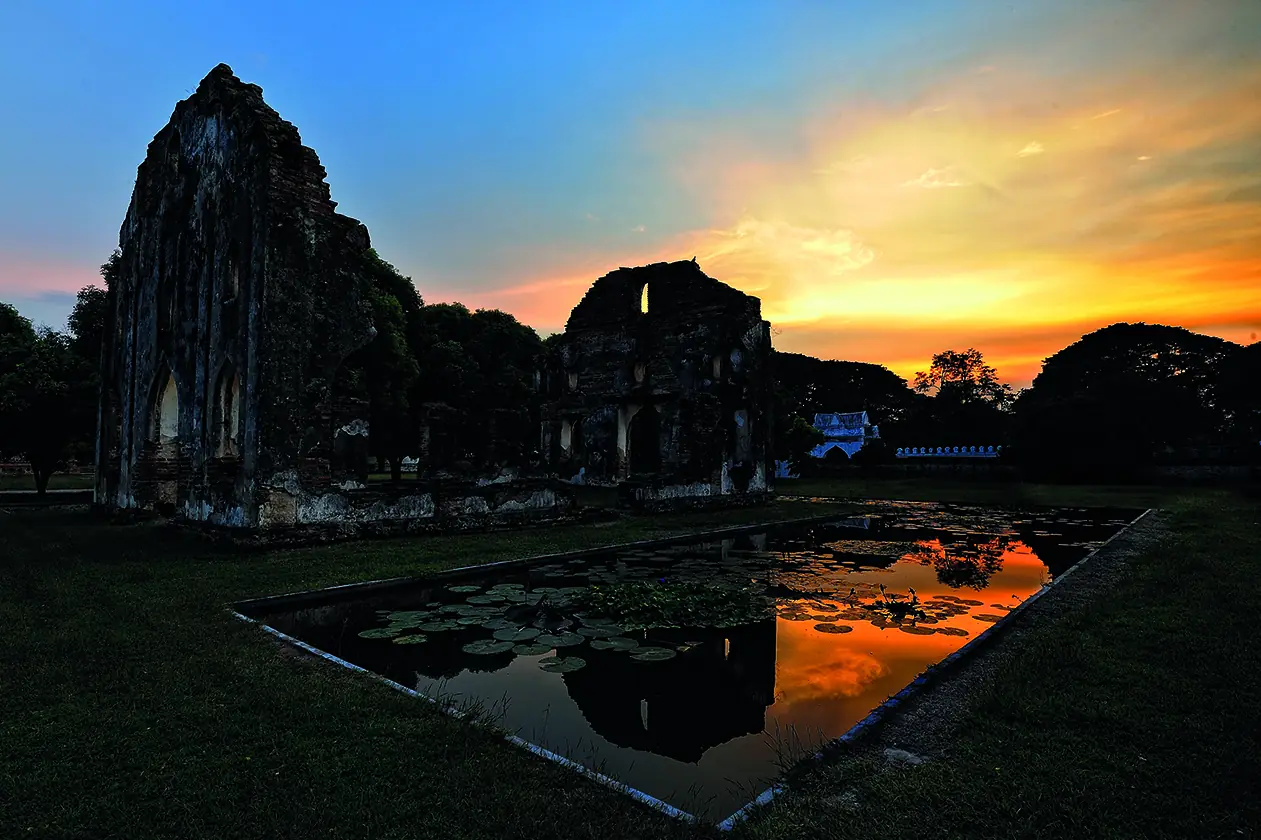
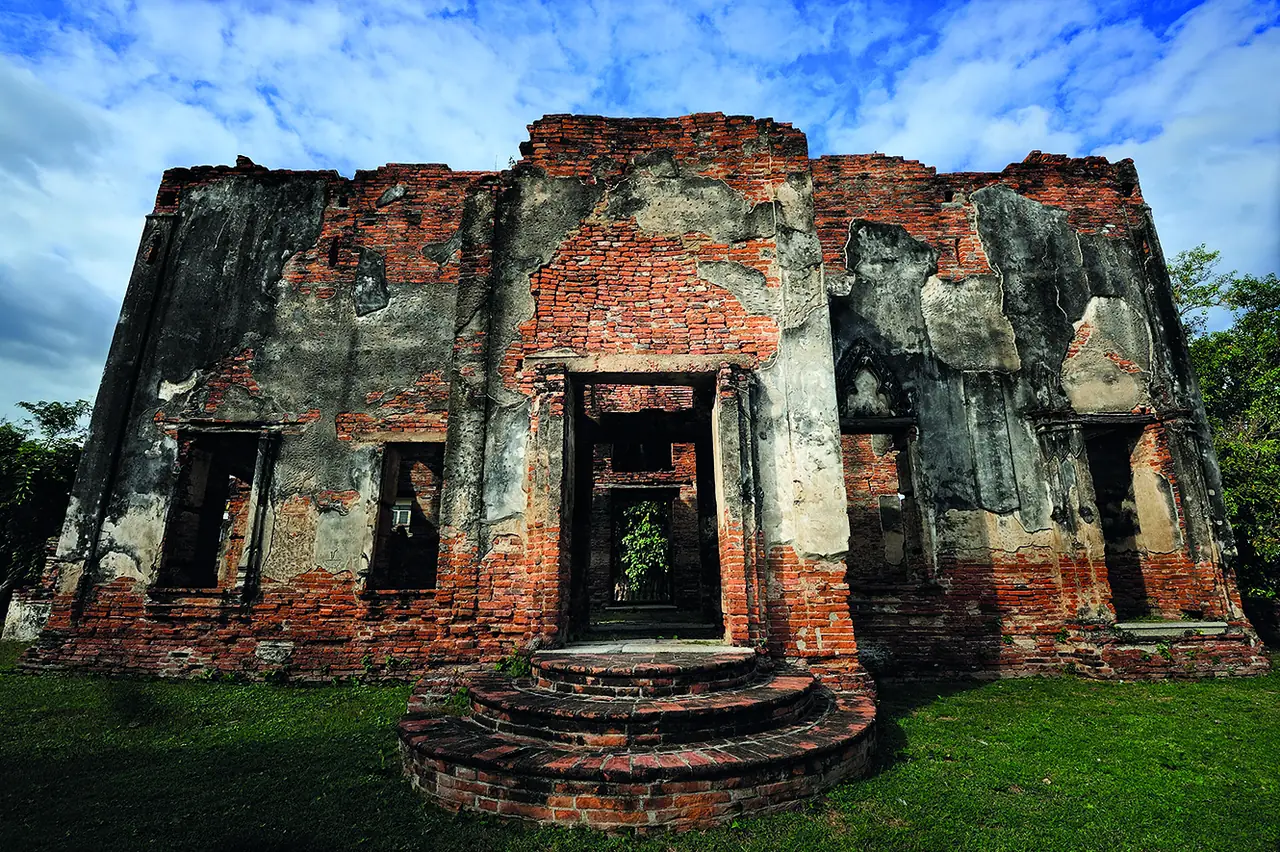
Nearby is Ban Vichayen, which Wikivoyage describes as the remains of Constantine Phaulkon's residence, with only the outer walls of three main buildings left. The Wikipedia article on the palace adds that the Jesuit chapel at Ban Wichayen was built after 1662. Wat Sao Thong Thong is a viharn in a working temple that Wikivoyage says was once used as a Christian chapel and a mosque and has now been restored.
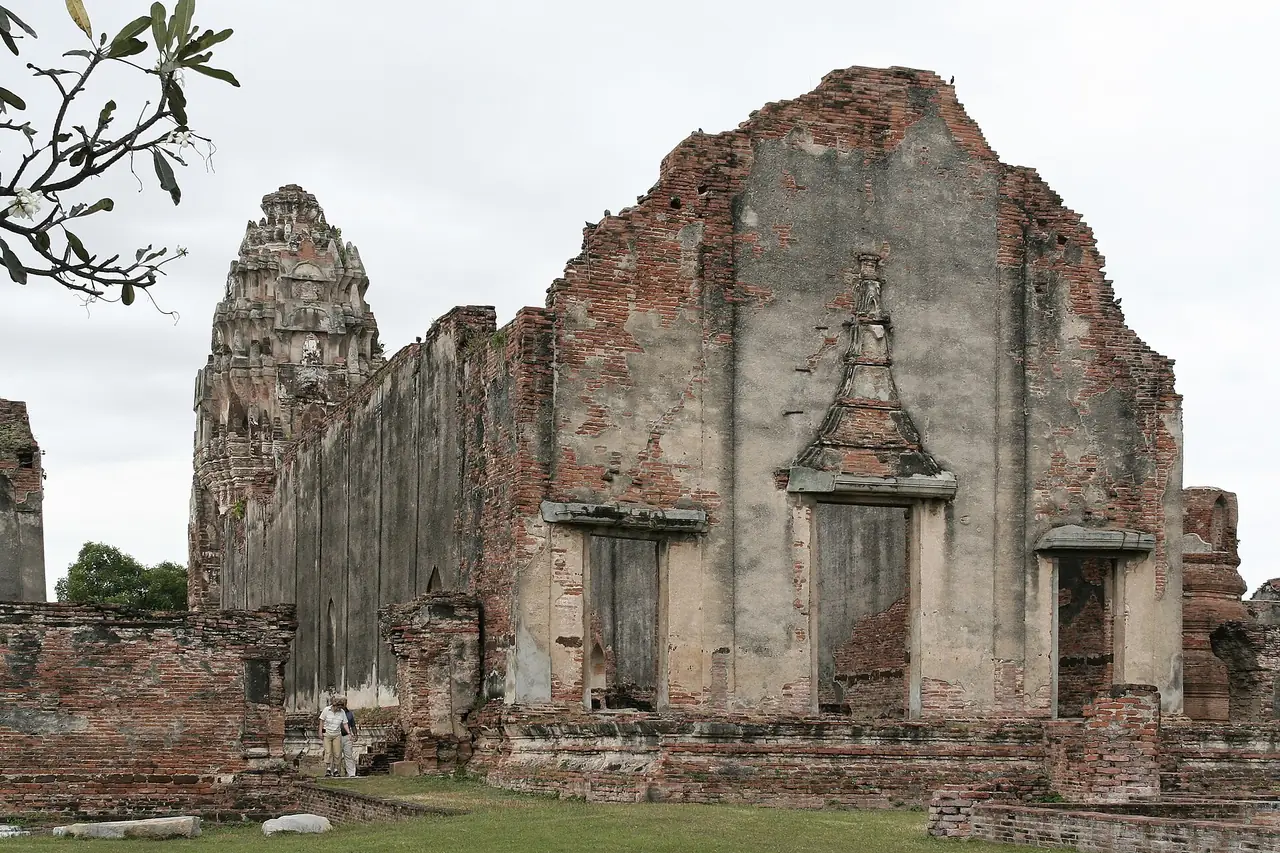
If you want a stop without monkeys, Wikivoyage points to Wat Phra Sri Rattanamahathat, built in the 13th century and one of the town's most important monasteries, where you can see a bas relief of the Buddha's life on the central prang and, it says, no monkeys. It lists 50 baht for foreigners and 10 for Thais. The temple is opposite the railway station, which makes it a natural first stop when you step off the train.
Sunflowers, Pa Sak Jolasid Dam and the dam train
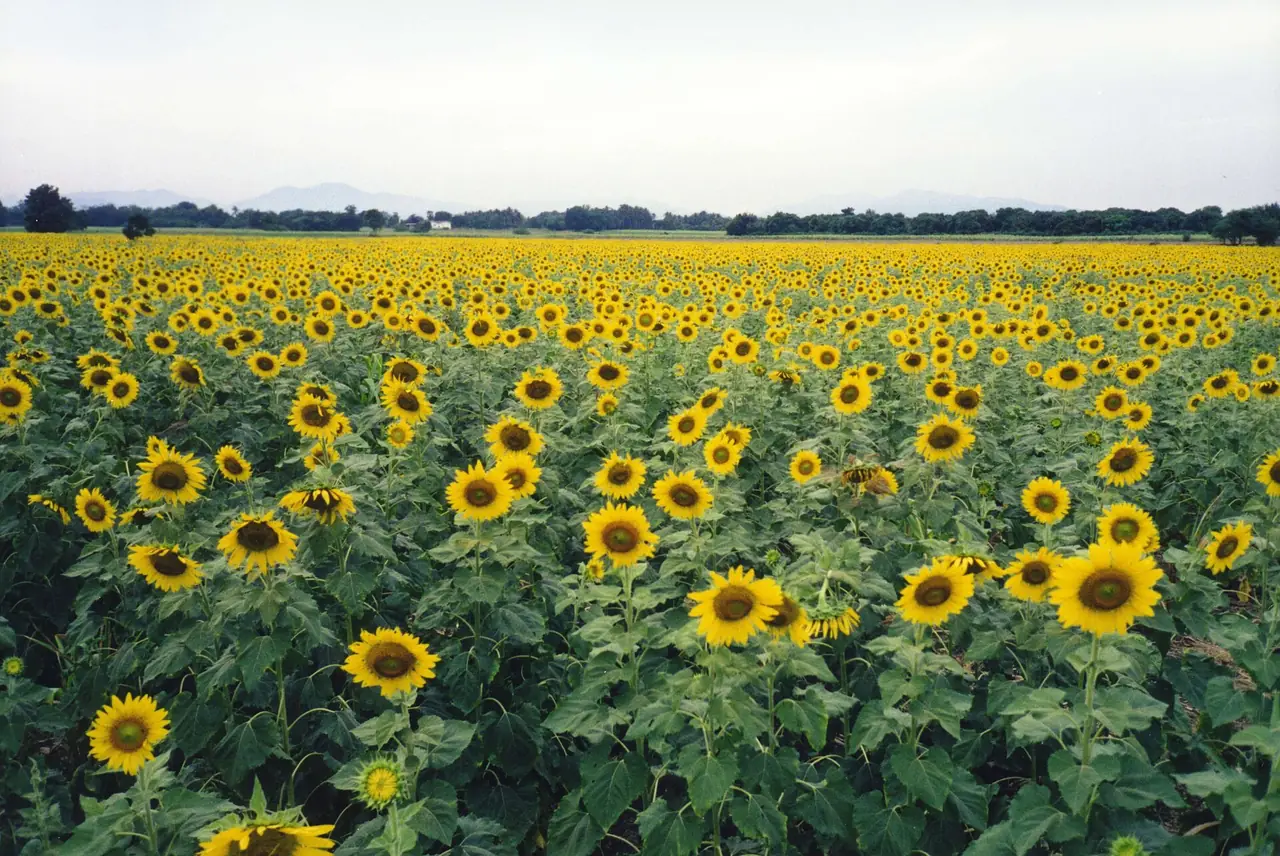
Outside the old town Lopburi looks different. Wikivoyage says the province is one of the largest growers of sunflowers and that the hilly backdrop makes the fields good for photography, especially between November and December, with most fields around Pa Sak Jolasid Dam. Wikipedia uses a photo of sunflowers in Phatthana Nikhom district among the province's lead images. Field locations and bloom dates change every year with the farmers and the weather, so we do not give exact dates. Ask locally or check provincial channels before you go.
Pa Sak Jolasid Dam is in Nong Bua subdistrict, Phatthana Nikhom district. Wikipedia calls it the biggest reservoir in central Thailand, an earth-filled dam with an impervious core, storing 785 million cubic metres at normal level and generating about 6.7 MW. King Bhumibol gave the dam its name on 20 October 1991 and presided over the inauguration on 25 November 1999. It also reduces flooding risk for Bangkok because the Pa Sak River was one of the main flood sources.
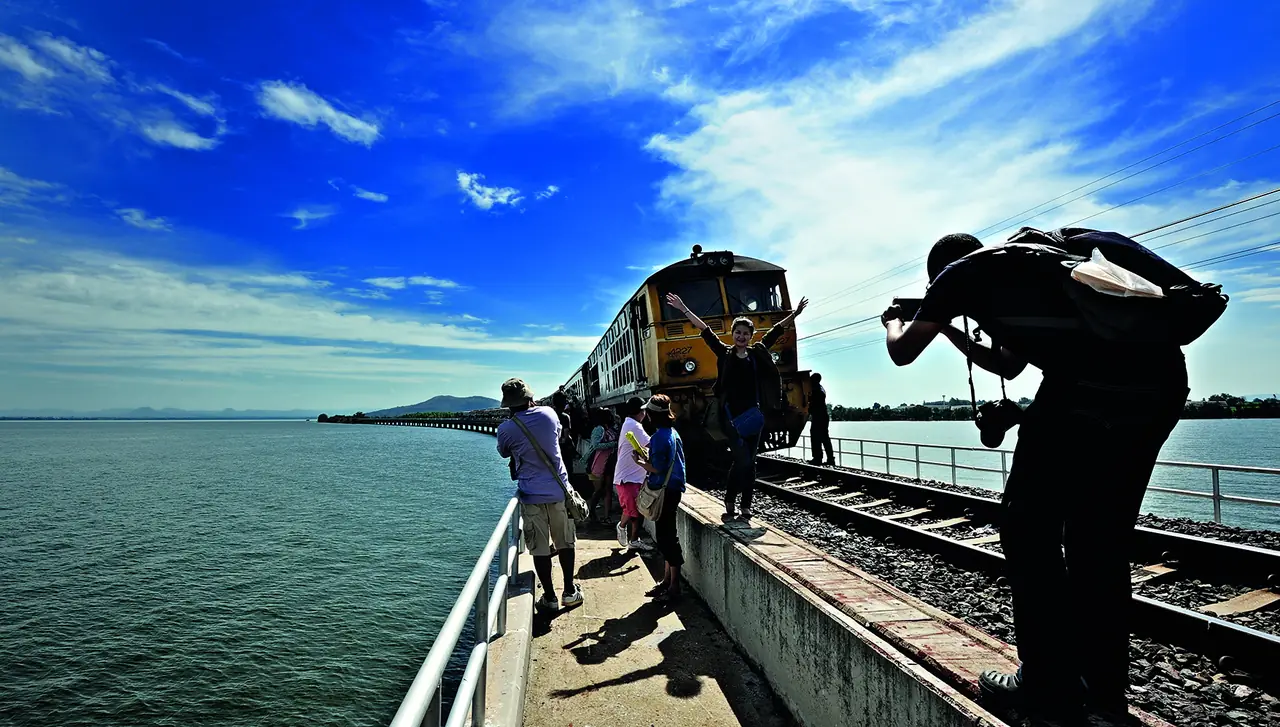
Building the dam would have submerged the old Kaeng Khoi to Bua Yai railway line, so a railway viaduct was built and opened on 15 June 1998 together with the Pa Sak Jolasid Dam Railway Halt, built to boost tourism. Wikipedia says that from November to January each year, except over New Year, the State Railway of Thailand runs a special weekend train from Bangkok that stops on the viaduct so passengers can walk and take pictures. That is Wikipedia's wording and it may be out of date, so check the schedule and booking rules on the railway's own site each year.
Hills, forest and viewpoints
Wikivoyage lists several nature stops. Wat Khao Wong Phrachan sits on the province's highest peak, about 650 m above sea level; it says the climb takes 2 to 3 hours up a very steep stair of 3,790 steps, and during the temple festival the lights stay on all night. Wikipedia separately records the Khao Wong Prachan valley as a prehistoric copper-production site, where ore was processed from about 1500 BC.
Sublangka Wildlife Sanctuary is at the north-eastern tip of the province. Wikivoyage calls it the last remaining forest in Lopburi, with elephants and wild boar, hiking trails, waterfalls and caves, and gives hours of 06:00 to 18:00 and free entry, which we could not confirm on an official page. It also lists Wang Kan Lueng Waterfall, described as turquoise with water all year, Khao Phraya Doenthong, with a road to the top for sunrise and sunset over the dam, Sub Lek Reservoir close to the main town, and a camping spot on the dam shore called the New Zealand of Thailand, where it says the farm animals were brought in to attract visitors.
These places are far from the old town and from each other, so you need a car or a hired driver. Wikivoyage says the blue local bus circles the town for 8 baht, linking the bus station with the town centre, but it does not reach them, and it says Grab and Bolt were unavailable as of 2024.
Festivals
The Monkey Buffet Festival, per Wikipedia, usually falls on the last Sunday of November, with fruit, vegetables and sweets laid out for the monkeys around the temple. Our monkey guide records 30 November in 2025, while one holiday site lists 29 November 2026 and no official announcement has been found, so confirm with the Tourism Authority of Thailand office in Lopburi.
Wikivoyage describes the King Narai the Great Festival as a 10-day cultural celebration every February commemorating the reign of King Narai (1656 to 1688), with traditional dress, retro markets and light shows. Wikipedia also shows a photo of the February fair.
The Wat Khao Wong Phrachan temple festival runs for 15 days a year by the Buddhist calendar, per Wikivoyage, so the dates change, with food stalls at the bottom and lights along the stairway.
Eating and getting around town
Wikivoyage says street vendors in the old town sell all kinds of food and that in the evening many street food stalls set up on the road in front of the railway station. Department stores and larger shops are in the new town. The provincial slogan calls Lopburi the land of Dinso Phong, but we did not check any producer or opening hours, so we name no shop.
Getting there from Bangkok
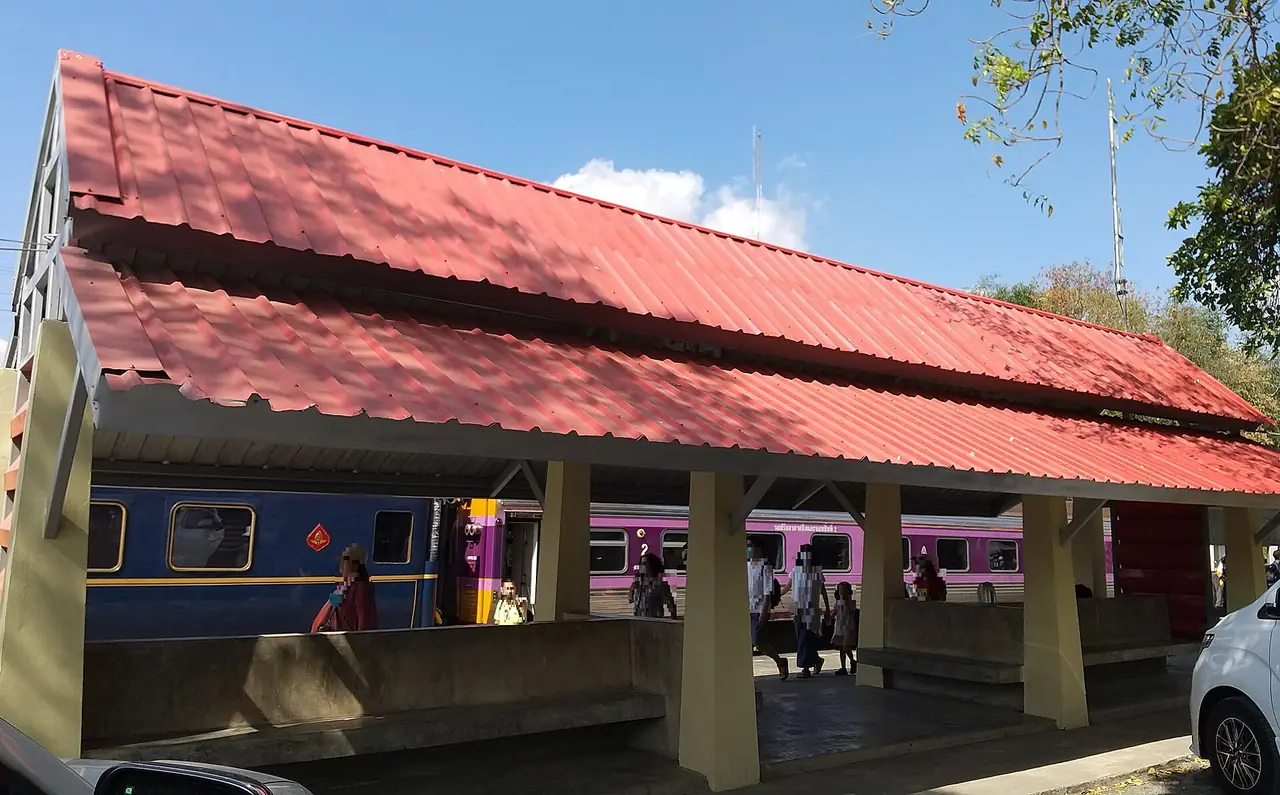
Lopburi has the Northern Line railway and Highway 1 running through it. Wikipedia says Lopburi station is the provincial main station on the Northern Line and the end of Bangkok's suburban service, and that Lopburi 2 (Tha Wung) station opened on 5 December 2025 to serve rapid and express trains on a bypass line. Wikivoyage warns that the central station currently handles only local and commuter services. Before buying a ticket, check which station the train stops at, because if you get off at Lopburi 2 you need onward transport into town.
| From | By | What the sources say |
|---|---|---|
| Bangkok, drive | Highway 1 (Phahonyothin Road) via Saraburi | Wikivoyage gives 153 km in total; the alternative is Highway 32 via Ayutthaya |
| Bangkok, minivan | Mo Chit minivans | Wikivoyage says about 2 hours, 110 baht, last van around 18:00 (old data, different from 12Go prices) |
| Bangkok, train | SRT Northern Line | Wikivoyage says about 3 hours from Krung Thep Aphiwat Central Terminal; check times and the arrival station on the SRT site |
| Ayutthaya, train | Northern Line | Wikivoyage says about 1 hour, 20 baht in third class (old data) |
| Ayutthaya, bus | Local bus | Wikivoyage says every 20 minutes, about 2 hours, 35 baht (old data) |
Onward from Lopburi, Wikivoyage lists Sing Buri about 30 km north-west, Ang Thong about 40 km south-west, Saraburi about 50 km south-east and Ayutthaya about 60 km south. Wat Phra Phutthabat in Saraburi is about 17 km from Lopburi on Highway 1.
Booking your transport
When we opened the Bangkok to Lopburi page on 12Go in a browser on 16 October 2026, searching Sunday 18 October for two travellers, it showed 41 trips with prices from THB 90 to THB 6,250. The tabs read: trains 14 from THB 90, buses 1 from THB 234, vans 2 from THB 259 and taxis 24 from THB 1,894. The facts panel on the page gave the cheapest transport as THB 138, the fastest as 2 h 30 m, the earliest departure at 6:00 AM and the latest at 9:42 PM, 19 departures a day and a distance of 125 km, with operators Kim Transfers Thailand, Thai Railway, Thian Chai and Watcharin Tour.
One example we saw was a Watcharin Tour van from Mochit New Van Terminal taking 2 h 30 m from THB 259, with the first of five departures at 08:30. A schedule table lower on the page also listed several Watcharin Tour intercity bus departures at THB 156. The two parts of the page do not match, so we report both. Prices and departures change daily, so compare on the page before you decide. The booking button on this page is a partner link to 12Go and covers transport to Lopburi town only.
When to go
Wikipedia gives Lopburi a tropical savanna climate: winters are dry and warm, temperatures rise until April or May, and the monsoon runs from about May to October. It records a maximum of 41.4 C in April, a minimum of 10.2 C in December, average annual rainfall of 1,125 mm and 17.6 rainy days on average in September.
What that means in practice: walk the old town and San Phra Kan in the morning because Lopburi is hot. Aim for November to January for sunflowers and the dam train, the last Sunday of November for the monkey banquet, and February for the King Narai fair. The rainy season is no reason to skip the old town because the walk is short, but fields and hills can be muddy and slippery. For other regions see the best time to visit Thailand by region.
Where to stay in Lopburi
We looked for official hotel websites in Lopburi and found that most places only have a social media page or a listing on a booking site, which we cannot use to verify facts. So we have not published a hotel comparison or named any hotels. When we can read the official sites of at least eight places we will add a stay page.
Two bits of advice we can support from the sources. First, for the old town, sleep in the old town, because Phra Prang Sam Yot, Wat Phra Sri Rattanamahathat, the palace and the station are close together. Wikivoyage says old-town hotels range from places with lots of monkeys to places with few, and that most hotels are monkey-proofed with screens or sealed windows, so ask about windows and balconies before you book if monkeys worry you. Second, if you will drive to the sunflowers, dam or hills, a base in the new town near Phahonyothin Road gets you onto the main roads faster, but it is several kilometres from the old town (Wikivoyage puts a restaurant in the new town about 6 km from the old city).
Wikivoyage quotes old-town hotel prices in the low hundreds of baht, but that list is old and unconfirmed, so we do not use it as a reference. Check current rates on the hotel's own website.
Nearby destinations
- Ayutthaya: the old capital, about 60 km south, with its own day trip guide
- Phetchabun: the neighbouring province to the east, across the Phetchabun Mountains
- Khao Yai: another nature destination with its own guide
- Bangkok: where most trips start
- Thailand overview
- Getting around Thailand
- Pathum Thani: temples, theme park and the science museum
- Nakhon Sawan: Paknam Pho, Bueng Boraphet and Mae Wong
- Nakhon Ratchasima (Korat): Thao Suranari, Phimai and the gateway to Isaan
FAQ
How far is Lopburi from Bangkok?
Wikipedia says about 150 km north-east of Bangkok, Wikivoyage says about 180 km and gives 153 km by Highway 1, and the 12Go page shows 125 km. The figures differ by how they measure. The fastest trip on the 12Go page was 2 h 30 m on 16 October 2026.
Can I visit Lopburi as a day trip from Bangkok?
Yes for the old town. The 12Go page showed a first departure at 6:00 AM and a last one at 9:42 PM, 19 a day, while Wikivoyage says the last Mo Chit minivan leaves around 18:00 (old data). Check the return time before you go. If you also want the sunflowers or the dam, stay a night.
Where do I see the monkeys and are they dangerous?
They live around Phra Prang Sam Yot and San Phra Kan in the old town. Wikivoyage warns that they snatch food and bags, and our monkey guide records a bite incident. Carry little, never hold up food, secure loose glasses and hats, and keep your distance. Details are in the Lopburi monkey guide.
When is King Narai's Palace open and what does it cost?
Wikivoyage lists Wednesday to Sunday 08:30 to 16:00, closed Monday, Tuesday and holidays, with 150 baht for foreigners and 30 baht for Thais. We could not confirm this on an official page, so check before you go.
When do the sunflowers bloom?
Wikivoyage says November to December, mostly around Pa Sak Jolasid Dam in Phatthana Nikhom district. Exact dates change every year and some fields may not be open to visitors, so ask locally first.
Is there a train to Pa Sak Jolasid Dam?
Wikipedia says that from November to January, except over New Year, the State Railway of Thailand runs a special weekend train from Bangkok that stops on the viaduct. This may be out of date, so check the latest schedule on the railway's website.
Which station do I get off at?
There are two. Lopburi station is in the old town and, per Wikivoyage, serves local and commuter trains. Lopburi 2 (Tha Wung) opened on 5 December 2025 for rapid and express trains. Check which one your train uses before buying.
Where should I stay in Lopburi?
For the old town sights, stay in the old town; if you will drive out to the fields, dam or hills, the new town along the highway is easier. We have no hotel list verified against official websites, so we name none.
Where can I go next from Lopburi?
Wikivoyage lists Sing Buri, Ang Thong, Saraburi and Ayutthaya at 30 to 60 km, and Wat Phra Phutthabat in Saraburi about 17 km away. See Ayutthaya for the closest hub we have published.
Official sources and further reading
Prices, schedules and entry rules change. Figures here are approximate as of 2026; always confirm on the official or operator page before you book. Spotted something out of date? Tell us.