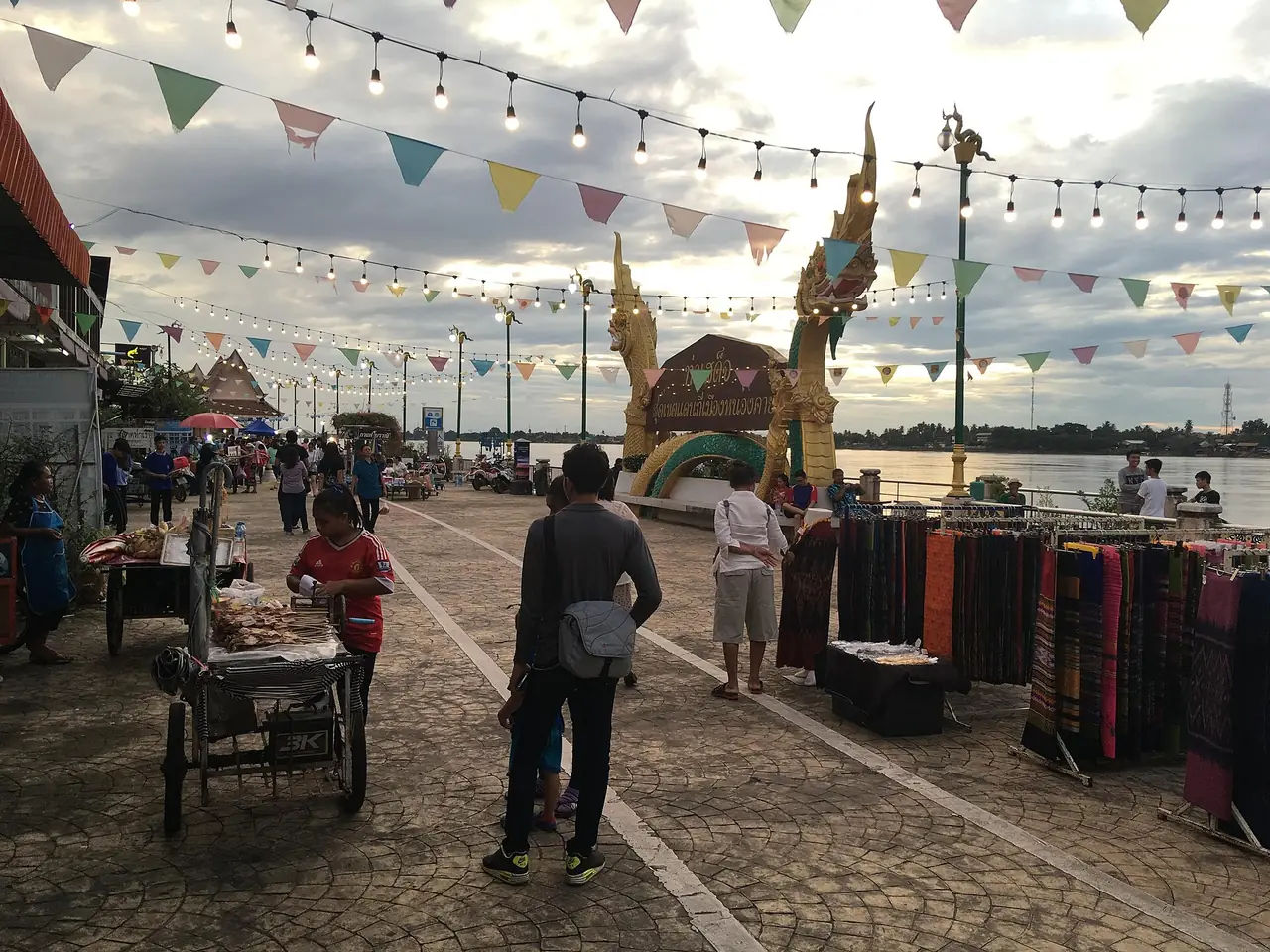
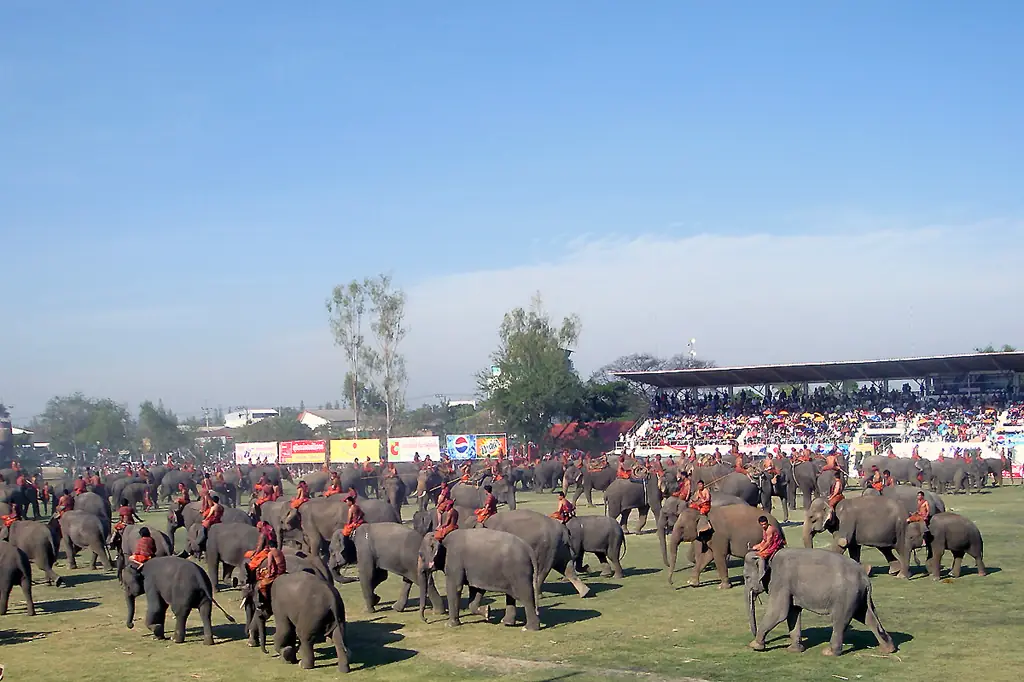
Mukdahan is a small Mekong border town in upper Isaan, facing Savannakhet in Laos. The province has no airport and no railway, so most people arrive by bus or car, but a short drive covers a tower with a 360-degree view, a riverside market selling Vietnamese and Lao goods, a temple with a naga statue more than 100 metres long, a national park of mushroom-shaped rocks and a prehistoric cave, and the bridge to Laos.
This guide uses only what we checked on 16 October 2026 against the sources listed at the bottom: Wikipedia and Wikivoyage for the sights, and the hotels' own websites for distances. Where sources disagree we show both numbers, and we leave out entry fees and opening hours that we could not confirm with the place's own operator. If you are choosing a bed, read where to stay in Mukdahan or the Thai version, ที่พักมุกดาหาร.
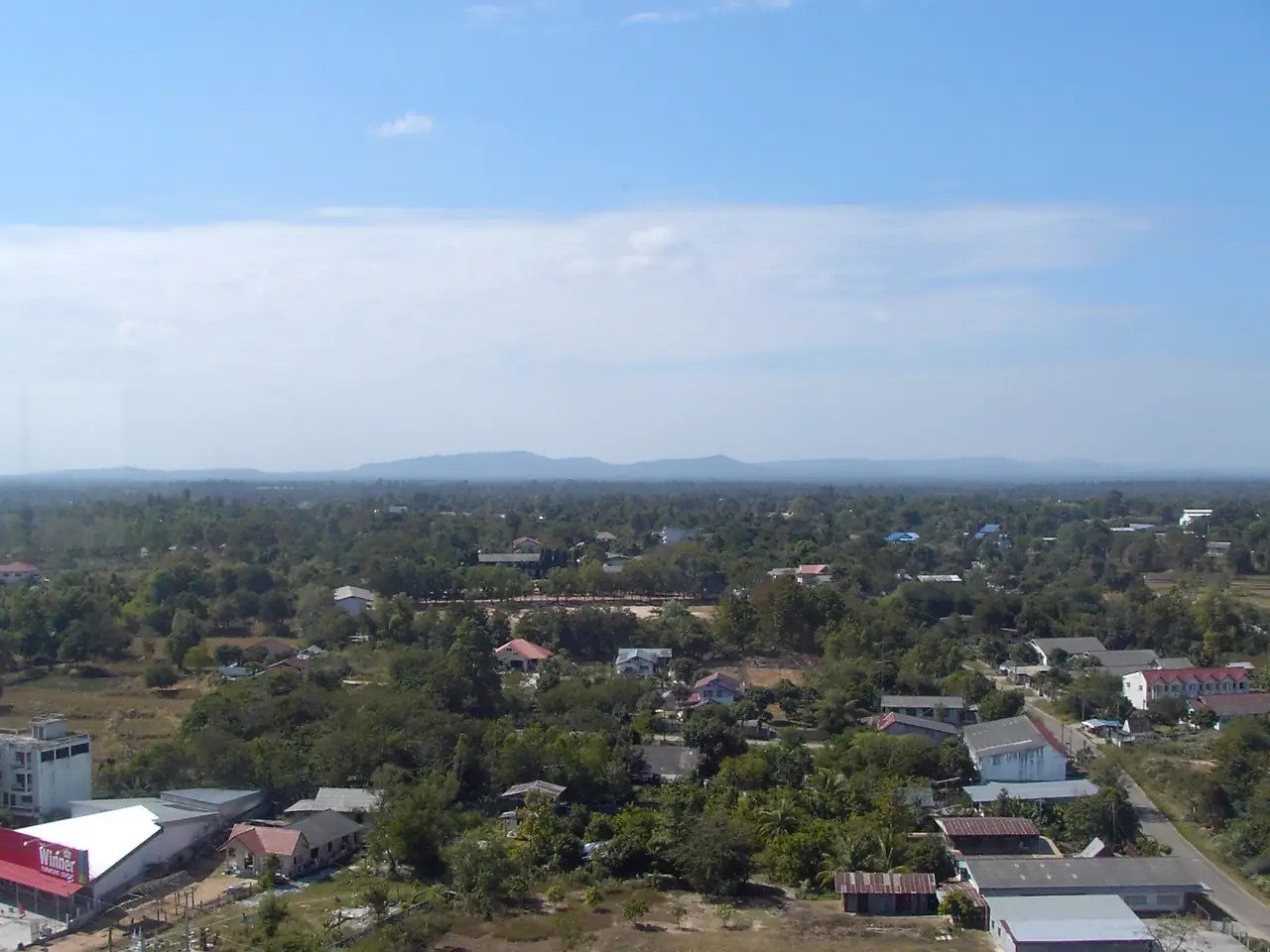
What kind of town is Mukdahan?
Wikipedia calls Mukdahan Thailand's 73rd province, split from Nakhon Phanom on 27 September 1982. The old town was founded around 1770 by Prince Kinnari, who brought people across from the Lao bank of the Mekong. The name comes from words for pearl or moonstone, one of the nine gems, and a local legend says people saw a glowing gem rise from seven sugar palms by the river at dusk and return at dawn. The Thai article calls the province the "Gateway to Indochina" because it sits on the East-West Economic Corridor and has the Second Thai-Lao Friendship Bridge as its trade crossing.
The article lists eight indigenous ethnic groups (Isan Thai, Phu Thai, Tai Kha, Kaso, Tai Kaloeng, Tai Yo, Tai Saek and Tai Kula) and notes Thai communities of Vietnamese and Chinese descent. You see this in the food, the markets and the festivals. Mukdahan is not a beach or mountain destination. It suits an evening market walk, a tower view, a sit by the river and a half-day drive to odd rocks.
Getting to Mukdahan
There is no commercial airport in the province and no passenger rail at the moment. Thai Wikipedia says a Ban Phai to Mukdahan to Nakhon Phanom double-track line and an airport are planned, but neither is open, and the article gives different target years in different places, so do not plan around either.
| From | By | What the sources say |
|---|---|---|
| Bangkok | Direct bus | Thai Wikipedia: about 11 hours and 650 km, with night departures from 18:00 to 20:30; operators named include BKS (route 999), Nakhonchai Air and Thai Sa-nguan Tour |
| Bangkok | Driving | English Wikipedia says about 652 km, Thai Wikipedia about 642 km, and Wikivoyage 642 km via Saraburi, Nakhon Ratchasima, Maha Sarakham and Roi Et |
| Nakhon Phanom | Nearest airport most people use | Thai Wikipedia: about 120 km, about 1 hour 50 minutes by road, with vans and buses to Mukdahan bus station |
| Ubon Ratchathani | International airport | Thai Wikipedia: about 170 km, about 2.5 hours; Wikivoyage says 167 km from Ubon by bus |
| Roi Et | Airport | Thai Wikipedia: about 138 km, about 1 hour 55 minutes |
| Savannakhet (Laos) | Lao-side airport | About 20 km, but Wikipedia notes border limits and Wikivoyage says it mainly flies to Vientiane |
Mukdahan bus station is at 33/12 Chayangkun Road. Thai Wikipedia lists routes to Bangkok, Nakhon Ratchasima, Khon Kaen, Rayong, Pattaya, Hua Hin and Mae Sot. It gives bus fares from Bangkok of about 457 to 560 baht, while the 12Go page we opened showed higher starting figures (see "Book your trip"). The two come from different sources and dates, so use them as a guide and confirm the fare with the bus company for your date.
Getting around
Thai Wikipedia says the town has several songthaew routes that charge by distance, motorised tricycles that are mostly chartered, and metered taxis. District distances from the town are Nikhom Kham Soi 29 km, Wan Yai 32 km, Don Tan 34 km, Khamcha-i 38 km, Nong Sung 53 km and Dong Luang 55 km. The sights outside town are spread out, so on a short trip a hired car or a taxi for the day is easier than waiting for songthaews.
Book your trip
The Bangkok to Mukdahan page on 12Go showed the following when we opened it in a browser on 16 October 2026, searching Sunday 18 October for 2 travellers: 20 trips from THB 651 to 16,875, made up of 14 buses from THB 651 (operators we saw were Transport Co and Nakhonchai Air) and 6 taxis from THB 6,685. We saw no train or flight trips on that page. These are the figures the page showed that day, not guarantees, and they change with date and seats. We link the page for convenience, and some links on this site may earn us a commission, which does not change the times or prices you see. Before paying, check the departure point, the time and the operator again.
There is no airport or train in town. If you fly, plan a road transfer from Nakhon Phanom airport (about 120 km) or Ubon Ratchathani (about 170 km), as Wikipedia gives them, and allow two hours or more for it.
Seasons
Thai Wikipedia splits the year into a hot season from mid-March to mid-May, rains from mid-June to mid-October and a cool, dry season from mid-November to mid-February. It says April is the hottest month, August the wettest, and that December highs are usually under 30 degrees. English Wikipedia gives an April average daily high of 36.1 degrees.
For market walks, the tower and the parks, the late rains and cool season are the comfortable choice. The Phu Pha Thoep article says the Mutchalin rock plateau is covered in wild flowers in the late rains and early cool season, and that some waterfalls, such as Phu Tham Phra, run only in some seasons, so ask the park before you go if the waterfall is the point of your trip. Check the Thai Meteorological Department forecast for your dates.
The riverfront, markets and the town
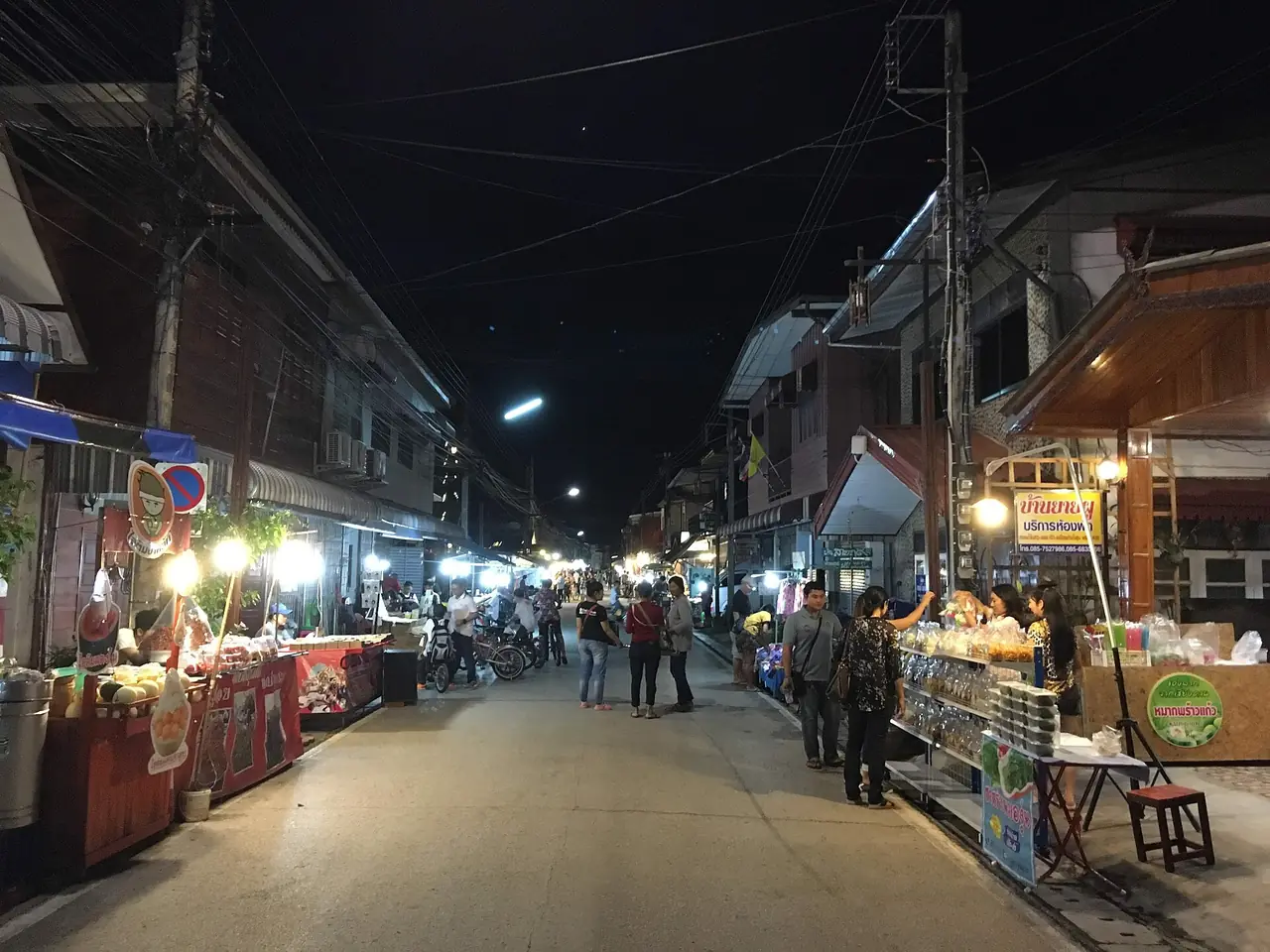
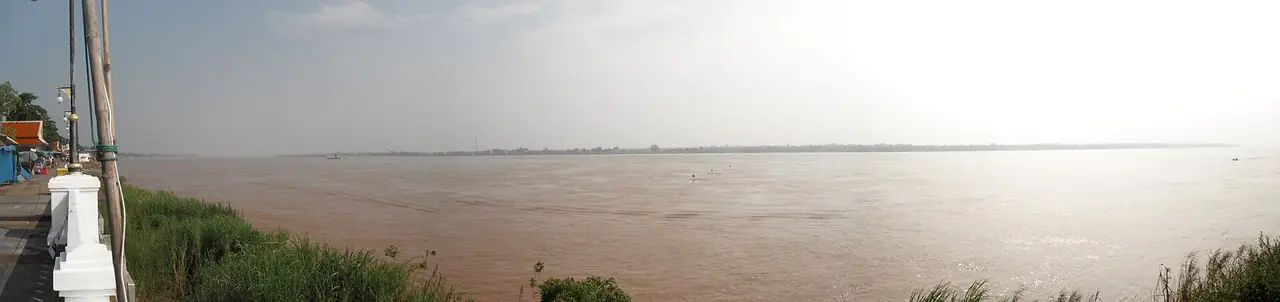
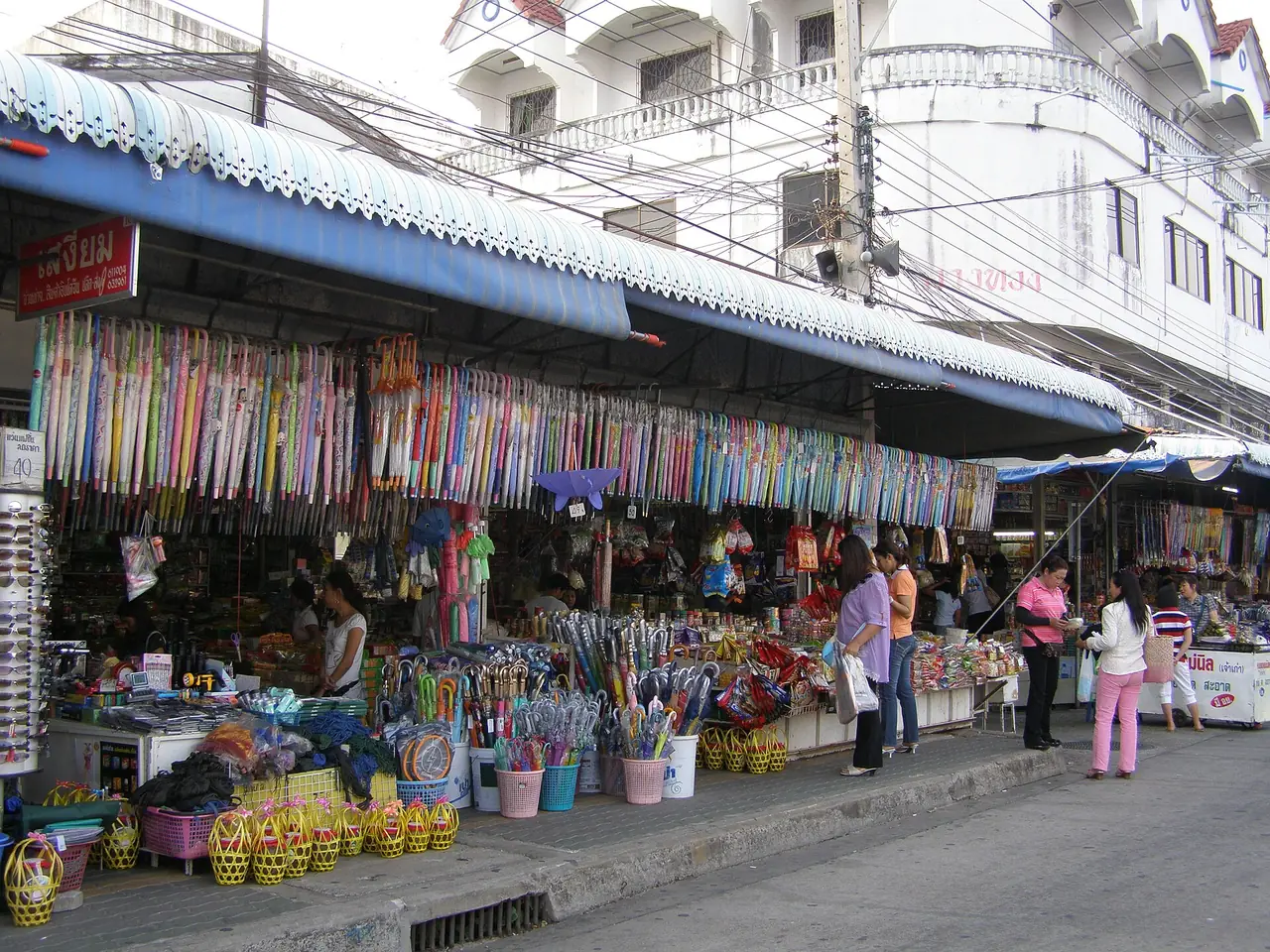
The centre of the fun is the Mekong frontage. Ploy Palace's own site describes the Indochina Market as standing on the Mekong where the river is up to 2,000 metres wide, with Savannakhet on the far bank, and selling goods from Vietnam, Laos, Eastern Europe and local products. Thai Wikipedia lists the market as both a walking street and a pier, and names other trading areas: the night market, the Danang (Vietnamese) market, the Lan Sanuk walking street and Mukdahan Square. It also describes waves of Vietnamese migration into the town.
Two hotel sites give distances. B2 lists, from its own door, the night market at 1.3 km, the Indochina Market at 1.4 km, the Chao Fa Mueang shrine at 1.5 km, the Jubilee park at 1.6 km, the Two Sisters shrine hall at 1.7 km, Wat Si Mongkhon Tai at 1.8 km and the Vietnamese community five-way junction at 1.8 km. HOP INN says it is near Muk Street Art, Ho Kaeo and Wat Si Mongkhon Tai. The town is small enough to walk parts of or to cover by short taxi rides, but each figure is measured from that hotel, not from one central point.
Ho Kaeo Mukdahan tower
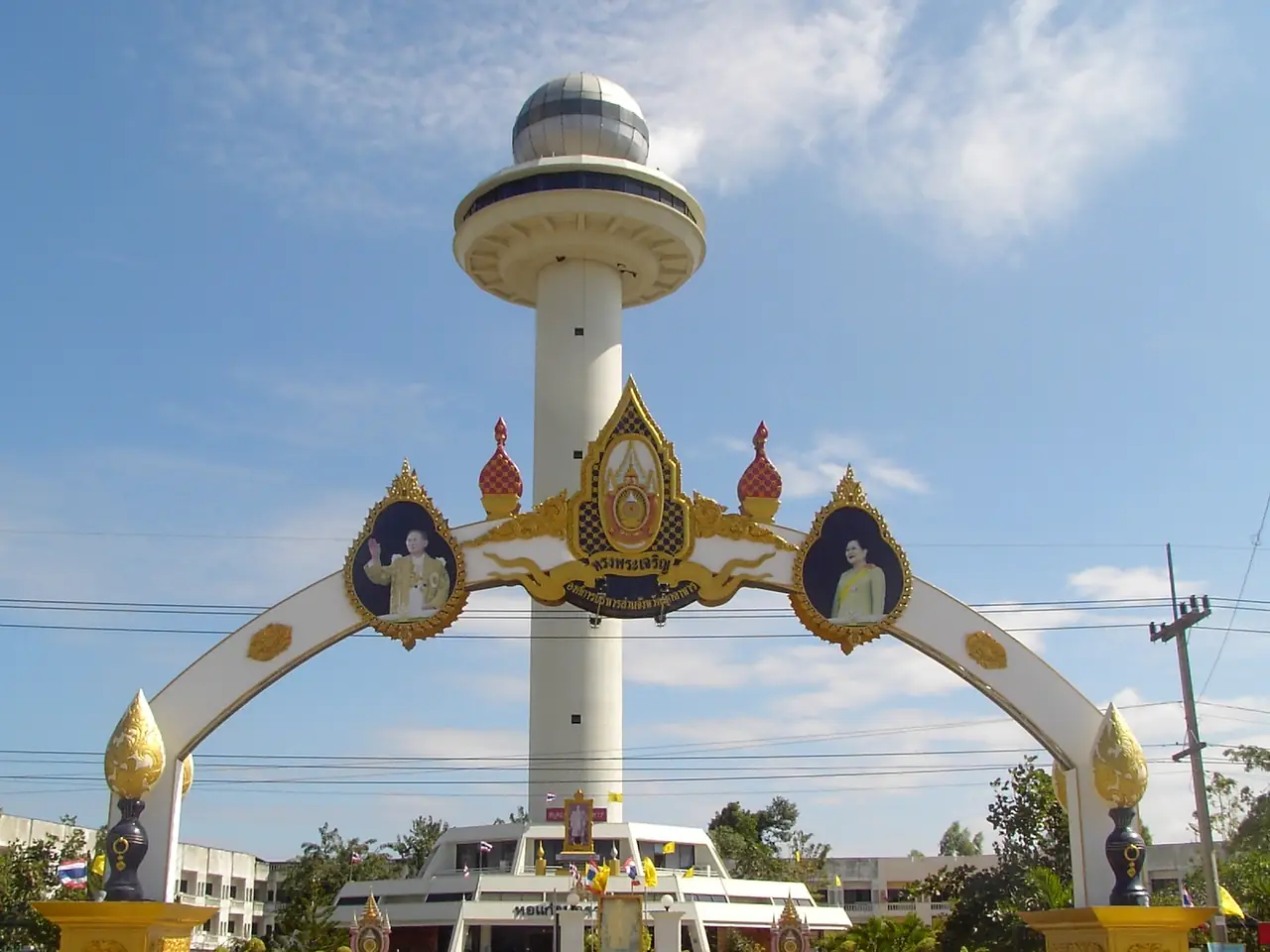
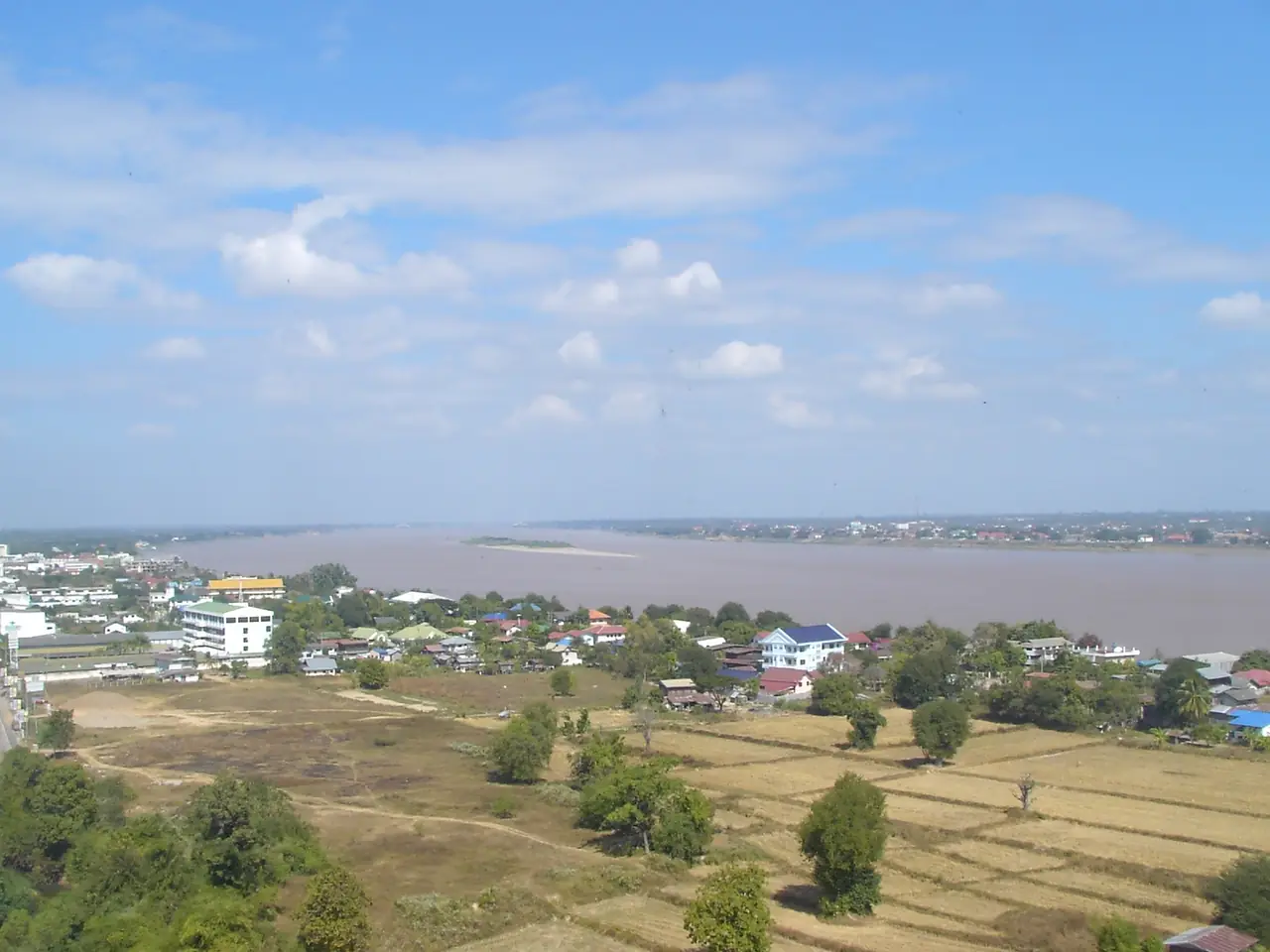
Ho Kaeo is an observation tower and museum, built in 1996 for the Golden Jubilee. Thai Wikipedia says the concrete tower is 65.5 metres high with 12 floors, a nine-sided base and a pearl-white sphere on top, with a lift and 321 spiral steps in the core up to a 360-degree viewing deck. The lower floors hold an art and culture museum and a history display with the costumes of the eight ethnic groups. It stands beside Highway 2034 about 2 km south of the town centre.
Opening hours and fees disagree. Thai Wikipedia gives 08:00 to 18:00 daily and fees of 10 baht for children, 30 for adults and 50 for foreigners, while Ploy Palace's site gives 06:00 to 18:00. We have not checked with the provincial authority that runs the tower, so treat both as possibly out of date and check before you go.
Wat Si Mongkhon Tai
Wikipedia calls Wat Si Mongkhon Tai the first and only royal temple in Mukdahan province. Its open hall houses Phra Chao Ong Luang, an old Buddha image in Lan Xang Vientiane style that is treated as the town's guardian image, and a small iron image called Phra Lup Lek. Sources differ on the date: the Religious Affairs Department book the article cites says 1742, while the provincial record it cites says 1770. The same article's temple list also names Wat Manophirom, said to date from around 1753 and to show Vientiane architecture.
Wat Roi Phra Phutthabat Phu Manorom and the nagas
If you visit one temple outside town, many people pick Wat Roi Phra Phutthabat Phu Manorom in Na Si Nuan, on a rise above the Mekong. B2 lists it 5.5 km from its door. Thai Wikipedia says the temple covers about 66 rai, was once abandoned, was restored and founded as a temple in 2005, and was removed from the Phu Pha Thoep National Park boundary by a 2003 decision.
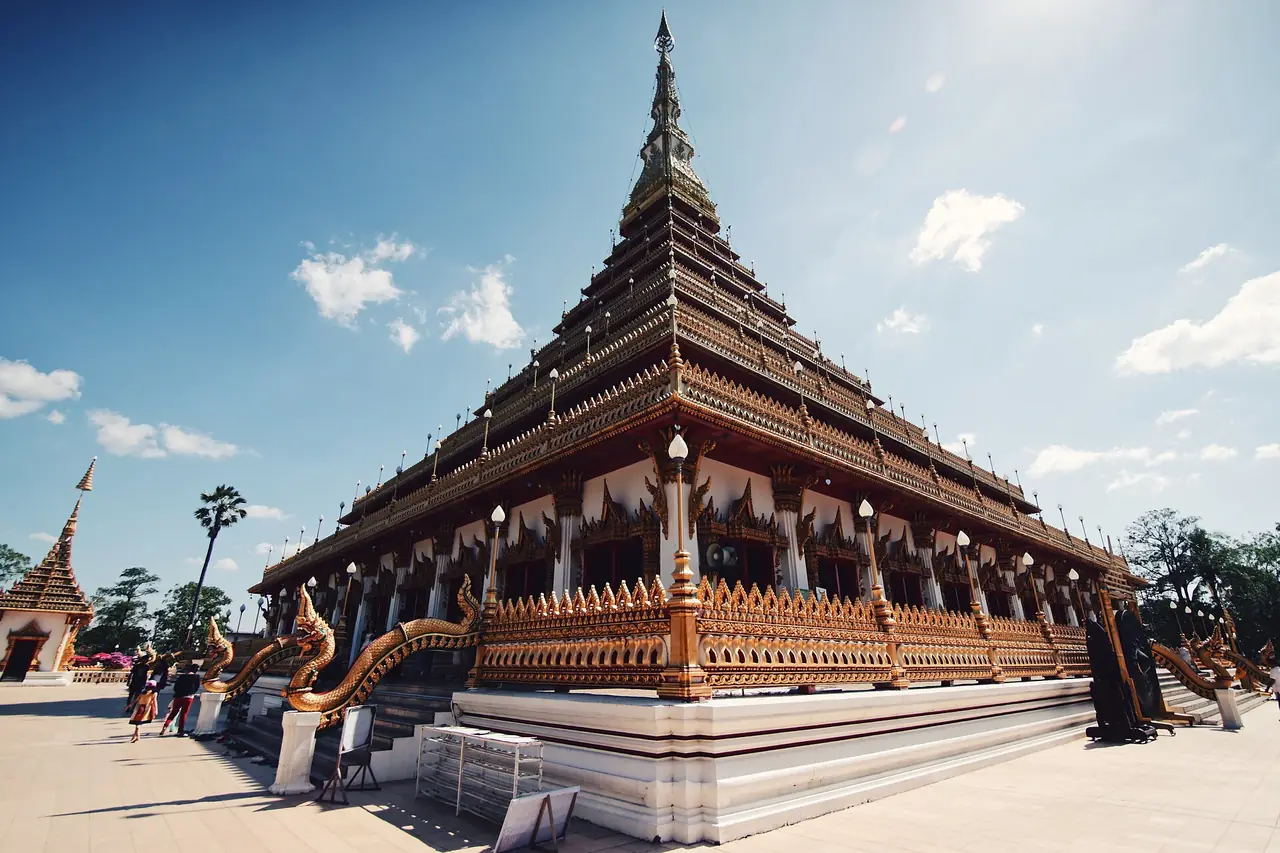
The main sights, per the article, are a large Mara-subduing Buddha image given a royal name by King Bhumibol, and Phaya Si Mukda Maha Muni Nilapala Nakharat, a naga statue built on 7 April 2017 with its head turned toward the Mekong. The article gives the naga as 122 metres long and 20 metres high, blue-green with carved scales, with a coiled belly forming seven arches. The Buddha image is given as 39.99 metres across the lap and 59.99 metres high, or 84 metres from base to the top of the head, figures we read only in Wikipedia. Thai Wikipedia also says the province promotes faith tourism around naga beliefs, and its attractions list includes a naga statue at the foot of the Second Friendship Bridge and a four-family naga clock tower in town.
National parks and nature
Phu Pha Thoep National Park
Phu Pha Thoep, formerly Mukdahan National Park, is Thailand's 59th national park at about 48.5 square kilometres, one of the smallest. Wikipedia says it lies about 17 km south of town and is reached from Highway 2034 between km 14 and 15, then about 1 km in. A blue songthaew passes the entrance every 30 minutes, but you then need to walk or drive about 2 km more. B2 lists the park at 16.8 km from its door.
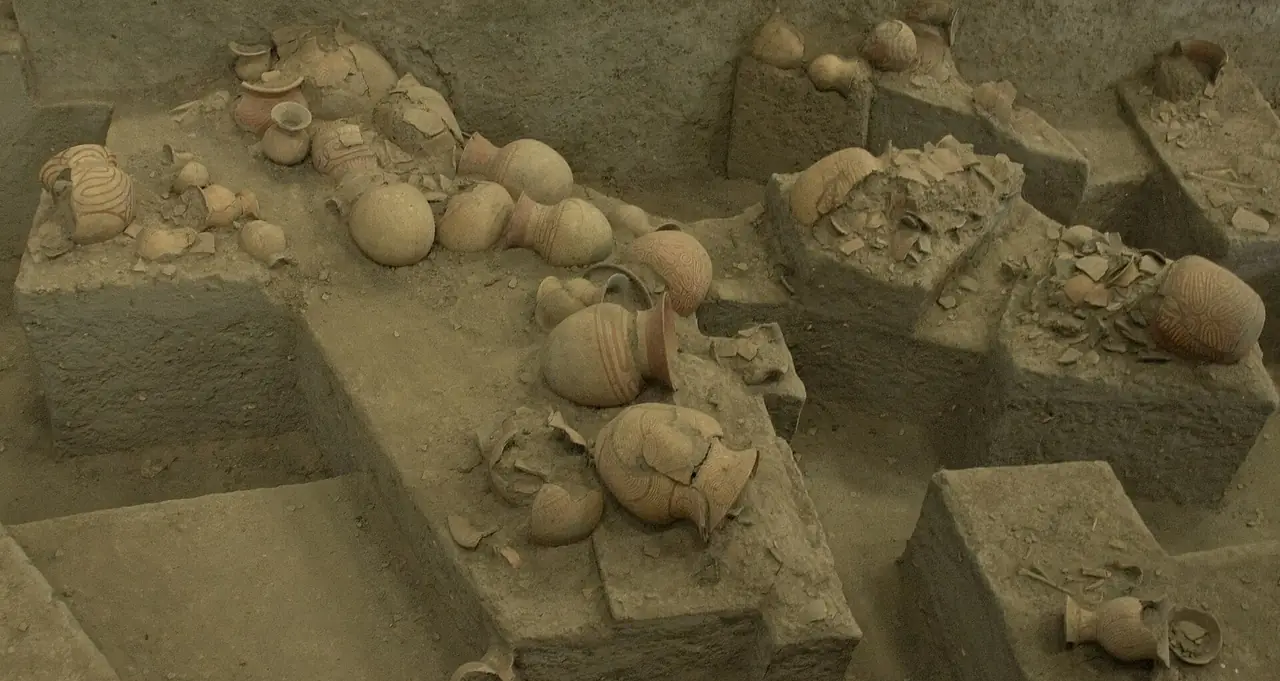
The Thep rock group near the park office is described as the result of 95 to 120 million years of erosion by rain, wind and sun, shaped like mushrooms, a Chinese pavilion, a crown, a crocodile and more. About 500 metres further is the Mutchalin plateau, a wide flat rock area with a view of the Mekong and Laos. The article also names the Red Hand Cave (Tham Fa Mue Daeng), with hand paintings estimated at 3,000 to 5,000 years old, the Phu Tham Phra and Wang Duean Ha waterfalls, and the Phu Mano and Pha Ut viewpoints.
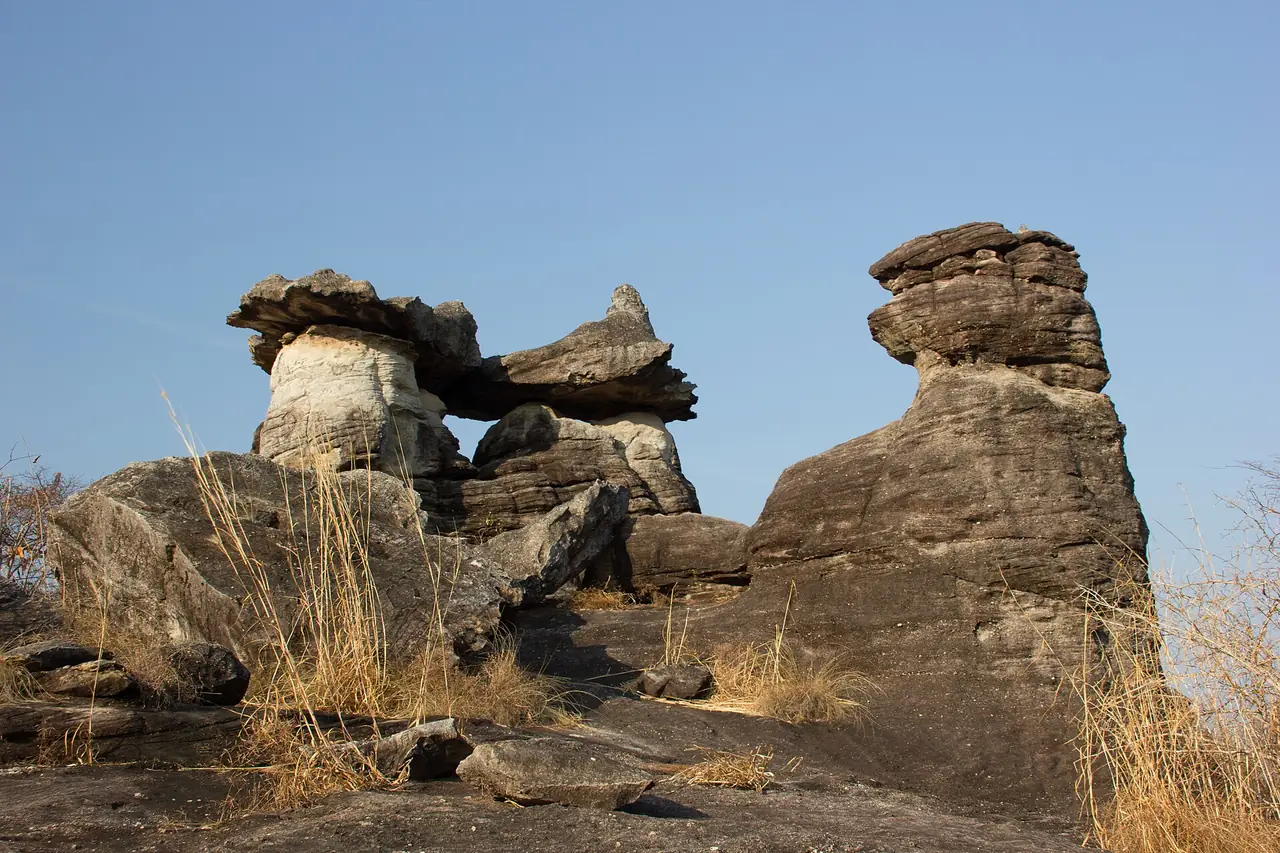
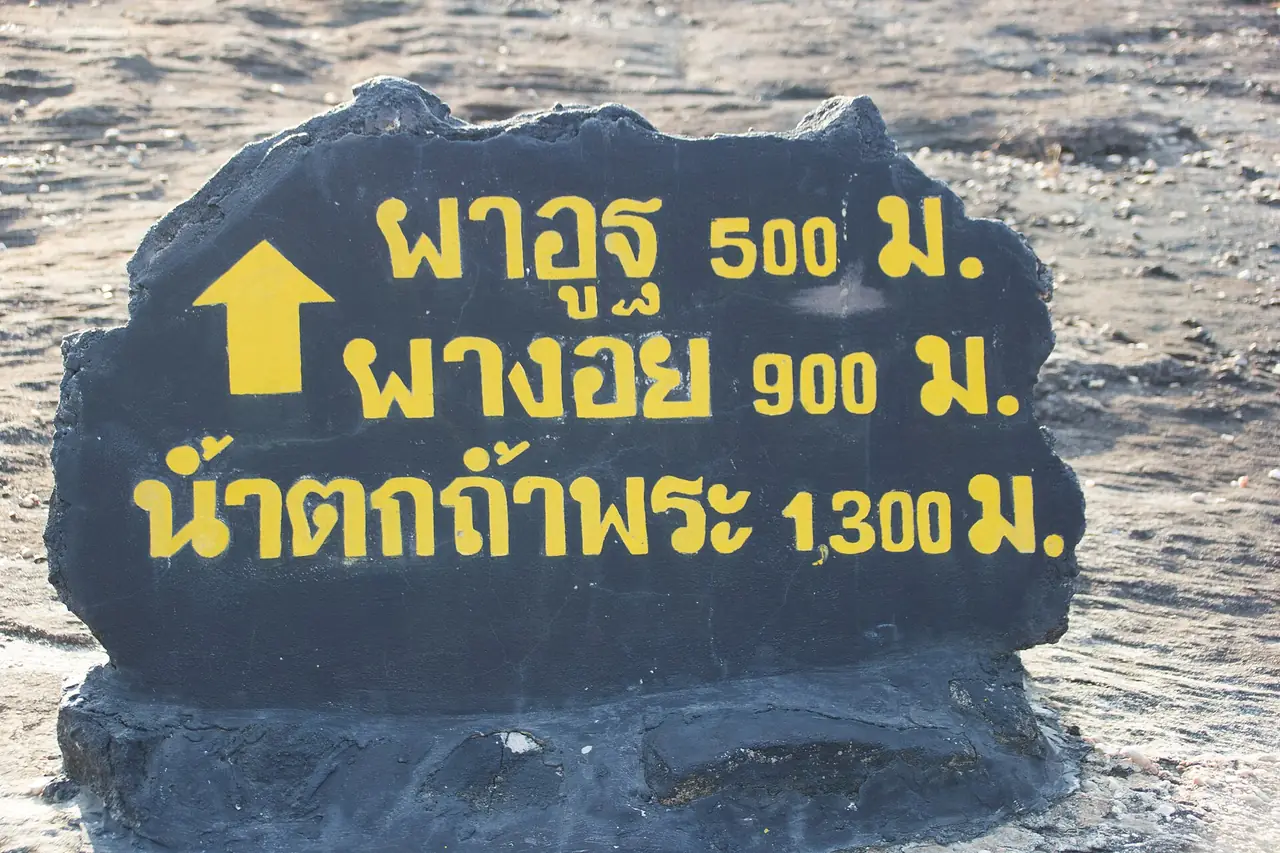
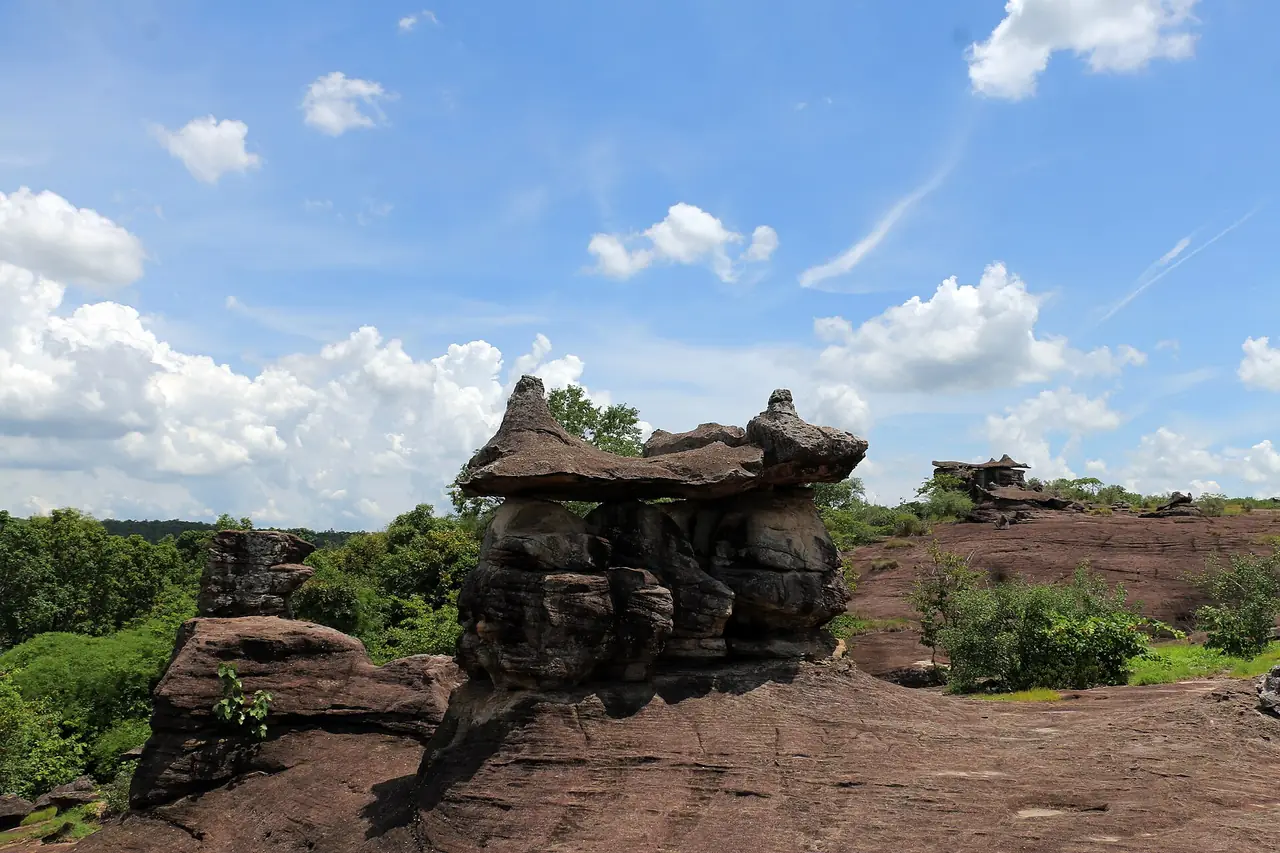
We have not checked park fees or opening hours with the National Parks Department, so confirm them first, and in the rains ask about the paths and whether the waterfall is flowing.
Phu Sa Dok Bua National Park
Phu Sa Dok Bua is much bigger, at about 231 square kilometres, and spans Mukdahan, Yasothon and Amnat Charoen provinces, with its headquarters at the Huai Hin Kho reservoir in Don Tan district. English Wikipedia says the mountaintop has 11 small stone pools, each with a different lotus species, and local legend says nobody planted them, which gives the park its name. Nearby is a large cave used as a stronghold by the Communist Party of Thailand in the 1960s, and a 386 m viewpoint at Phu Pha Hom. It suits visitors who have a car and are in no hurry.
Kaeng Kabao, Dong Bang-i and other places
Kaeng Kabao is a long stretch of rocky rapids in the Mekong. Ploy Palace's site says that in the low-water season you can see islets and sand beaches, and puts it about 36 km north of the town; B2 gives 34.1 km, a small difference from where each is measured. Thai Wikipedia also lists other natural sights, among them Dong Bang-i forest park, the Pha Kiu viewpoint, Manophirom beach, Ko Kan Lueang, Wang Thian Mek, the Tat Don, Tham Sai and Pha Chen waterfalls, the Huai Khilek reservoir and the Rom Klao wind farm. We have not checked routes or opening times for these, so treat them as names to research, not recommendations.
The same article lists fossil sites, including the Nong Sung dinosaur footprints, a freshwater shark fossil named Mukdahannodus trisivakulii, the Phu Pha Thoep dinosaur site, and the Ban Kham Phok site where an ancient tortoise and a coelacanth were found.
Wan Yai and Songkhon
About 32 km north of town, Wan Yai district contains Songkhon village. Thai Wikipedia says that seven Thai Catholics from Songkhon died for their faith during the Franco-Thai dispute at the end of 1940, and that Pope John Paul II beatified them on 22 October 1989, the first Thai people to be beatified. The Sanctuary of Our Lady, Martyrs of Thailand (the Songkhon church) stands there, and the province's tradition list includes a Christmas star procession at the shrine. Dress modestly and ask about visiting hours first, as we did not check them. B2 lists the sanctuary at 29.9 km.
Crossing to Savannakhet
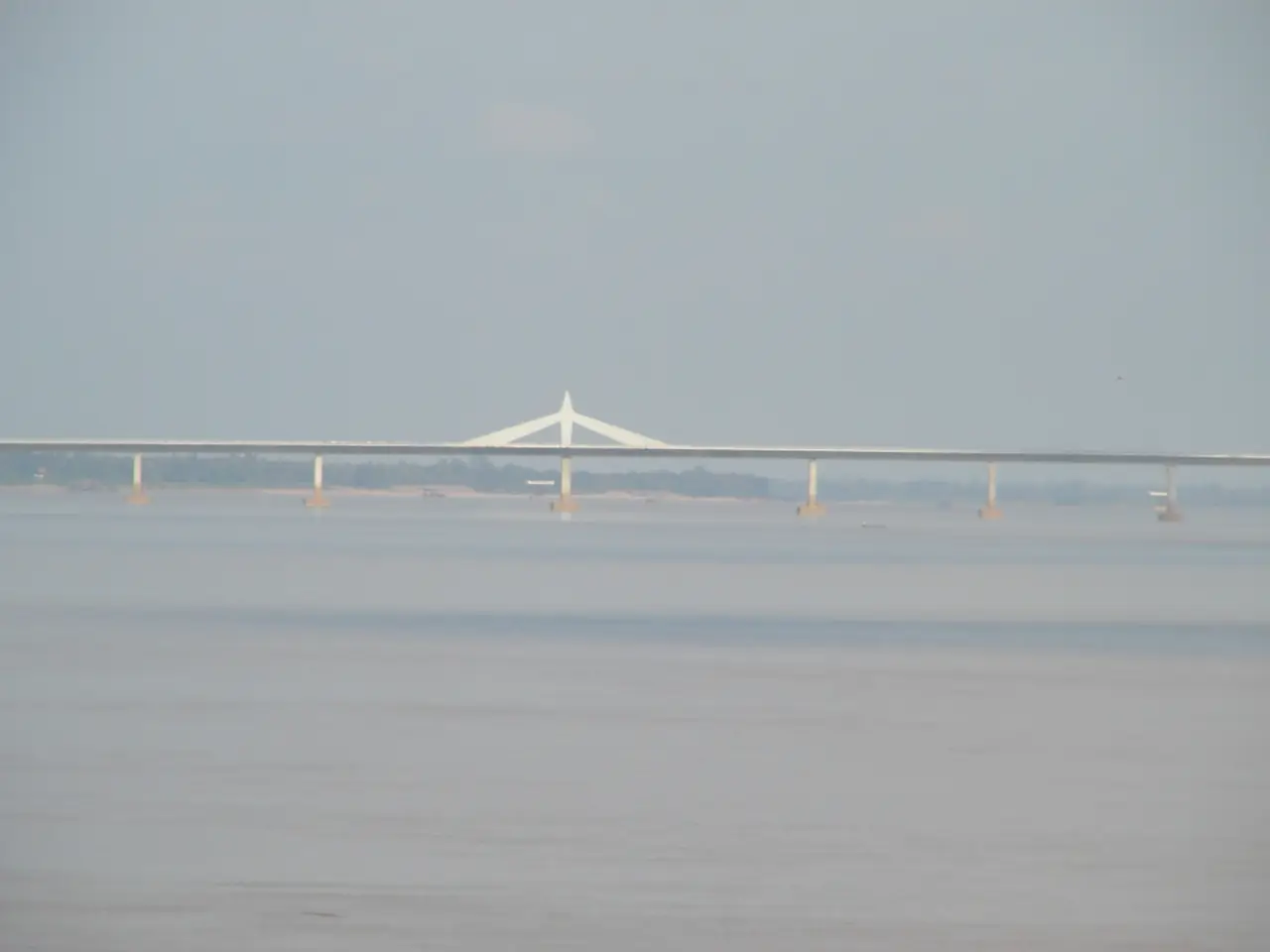
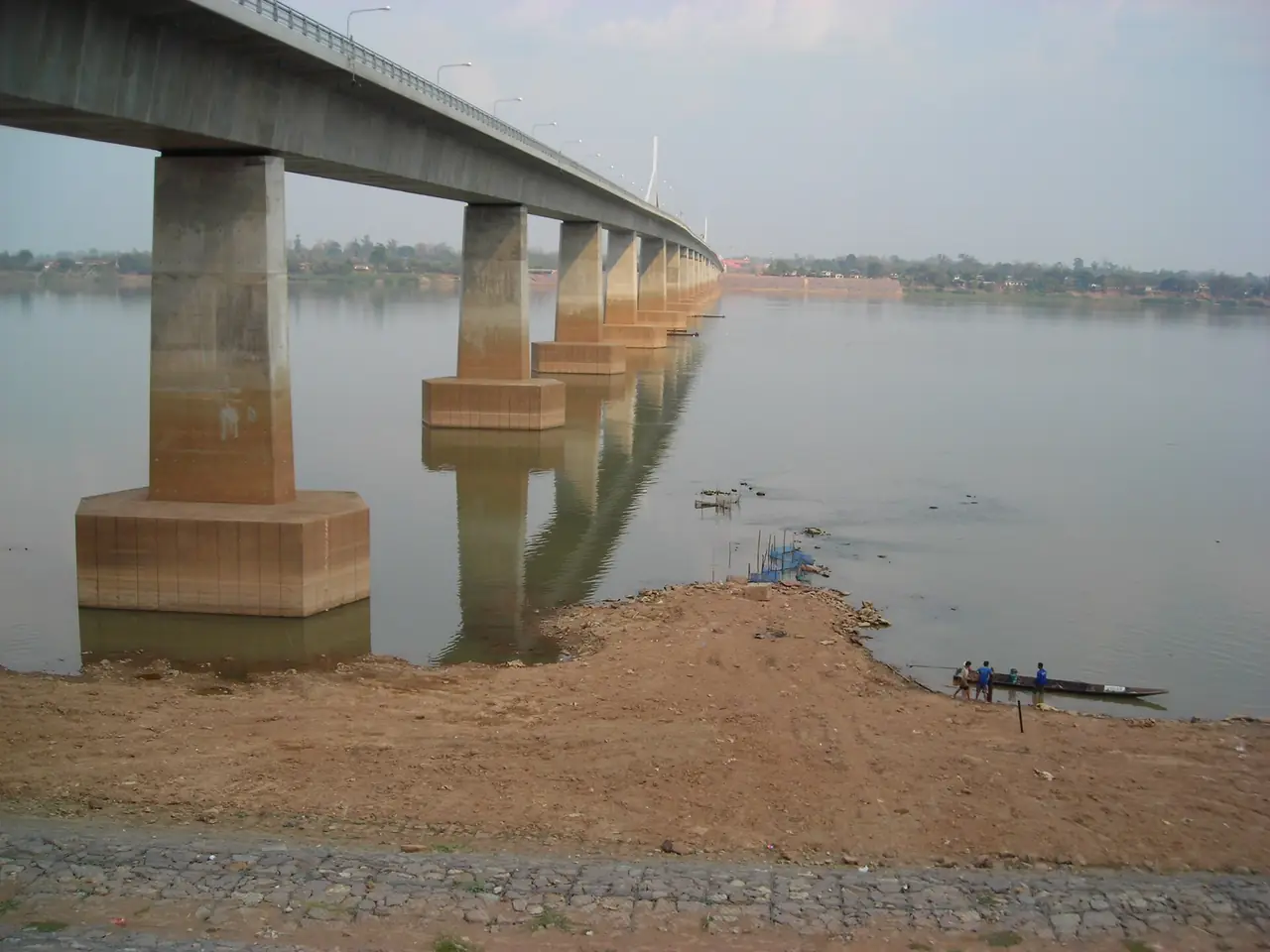
The Second Thai-Lao Friendship Bridge links Mukdahan with Savannakhet. English Wikipedia says it is 1,600 m long and 12 m wide with two lanes, construction began on 21 March 2004 at a cost of about 2.5 billion baht funded largely by a Japanese loan, and it opened to the public on 9 January 2007. Traffic switches sides on the Thai side because Laos drives on the right. B2 lists the bridge at 8.0 km from its door, and Wikivoyage says it is about 4 km from each town centre, so the figure depends on where you measure.
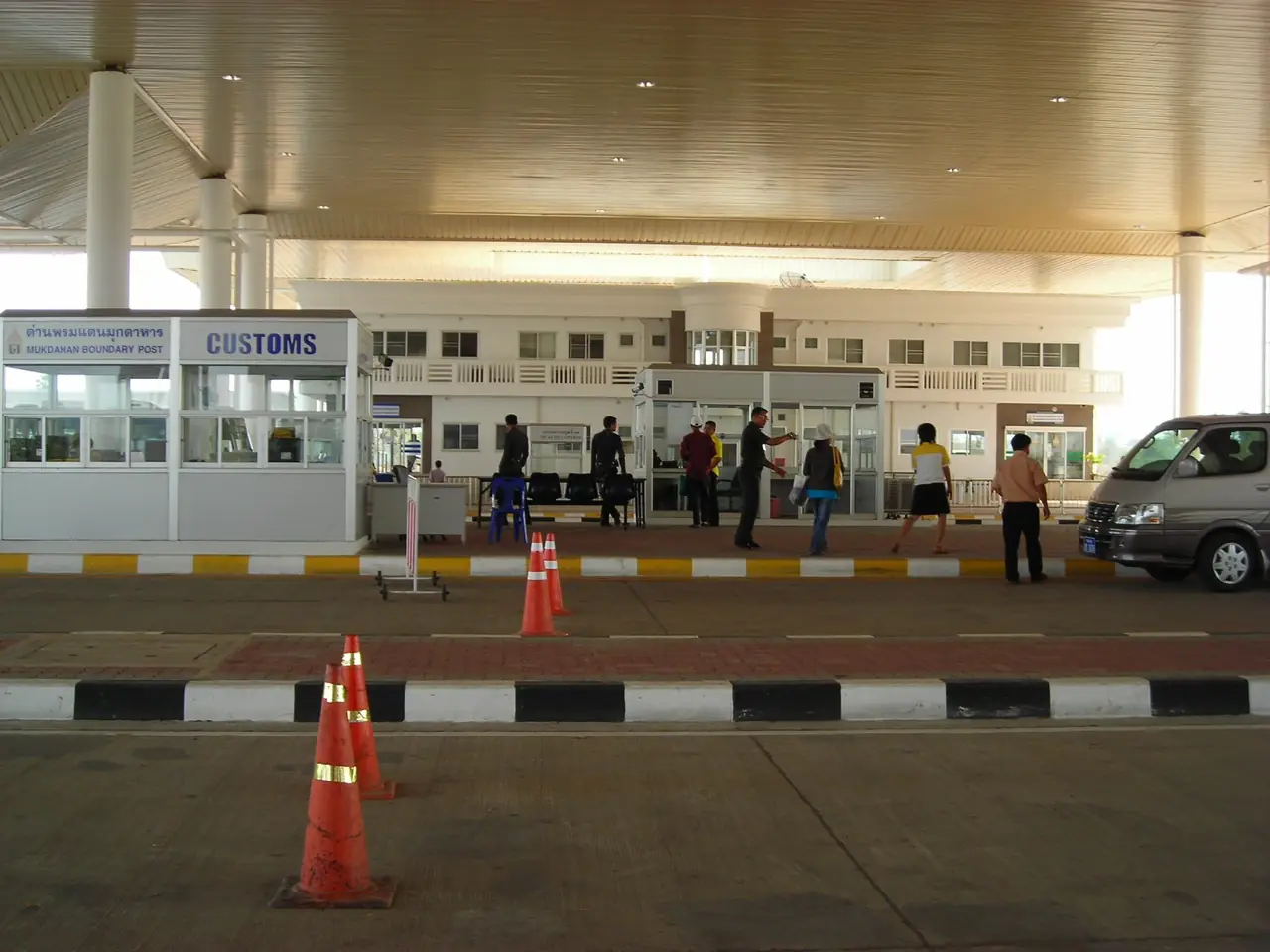
Wikivoyage says regular buses cross the bridge and passengers get off at both ends for border formalities, and it quotes a one-way ticket price and some border fees. We have not checked those against the immigration or customs authorities and they may be out of date, so we do not repeat the amounts. Before you cross, check your documents, any visa rule for your nationality, border opening hours and rules for vehicles. Thai Wikipedia says the old municipal ferry pier was a permanent crossing point, but that the ferry service has stopped with no restart date.
Festivals and local culture
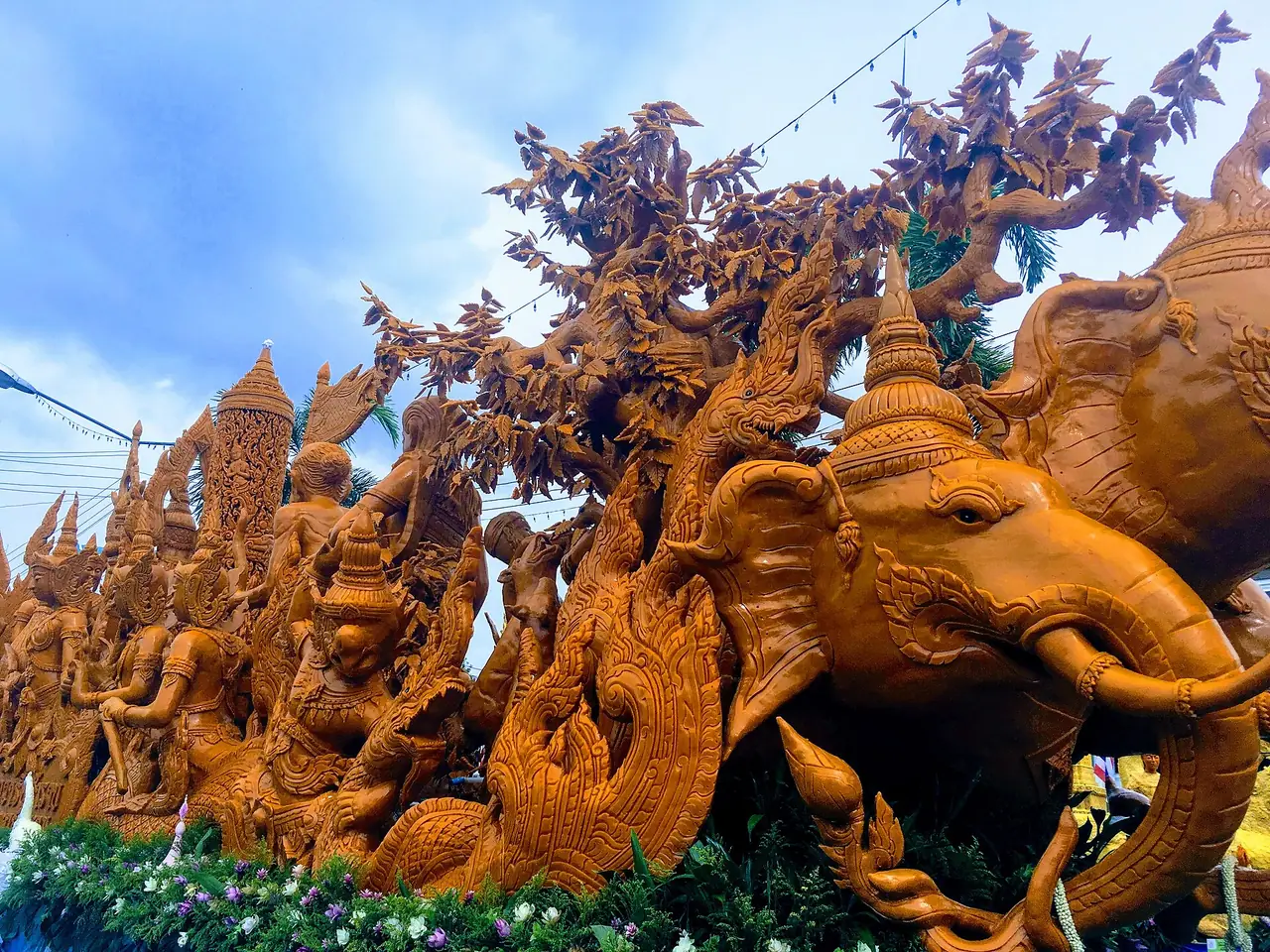
Thai Wikipedia lists many Mukdahan events: the Bun Khao Yaku merit festival, the Bun Bang Fai rocket festival, Loi Krachu (a local version of Loy Krathong using coconut shells at the town pier), the boat races at the end of Buddhist Lent with the Ti Chang Nam Nong ritual, the water ceremony for Phra Chao Ong Luang at Wat Si Mongkhon Tai, Chinese New Year as "Muk Sin Chao", the Tai groups gathering and sweet-tamarind fair, a Naga festival, and a Mukdahan to Savannakhet running event. We have not checked this year's dates, so look at provincial or Tourism Authority notices before planning around one.
For crafts, the article names the Phu Thai dance, the Lam Phaya singing of Don Tan, the Yao spirit ritual, the So Thang Bang ritual of the Kaso people, and hand-woven cloth. The province's identity fabric is the Kaeo Mukda mudmee silk, woven by groups at Ban Kham Ahuan and Ban Na Si Nuan.
Food and gifts
Thai Wikipedia groups local food into two sets. Local dishes include herbal miang, mixed-ingredient Eelok curry, rattan-shoot Om Wai stew, hed pho mushroom curry, red-ant-egg grilled chicken, grilled Nong Sung beef with dipping sauce, and stir-fried rice porridge (khao tom phat). Vietnamese-influence foods include nem nuong (naem nuea), Vietnamese pork sausage, rice noodle soup and old-style Vietnamese coffee. Fermented fish (pla som) is on the processed-food list. Wikivoyage names Krua Saigon as a well-regarded Vietnamese restaurant, but that entry was last edited in 2018, so check that it is still open.
Gifts named in the article are sweet tamarind from Khamcha-i, Kaeo Mukda silk, replica bronze drums from the drum centre in Nikhom Kham Soi, and water-hyacinth products from Ban Dong Yen. We did not check prices or shops.
A 1 to 3 day plan
This is our own suggestion, built from the distances the sources give, not a schedule from the places.
- 1 day: Morning at Ho Kaeo (about 2 km from town), then the Indochina Market and pier. Afternoon at Wat Roi Phra Phutthabat Phu Manorom (5.5 km from B2). Evening on the riverfront and the night market area.
- 2 days: Day one as above. Day two at Phu Pha Thoep (about 17 km) for the rock group and Mutchalin plateau, with Wat Si Mongkhon Tai in town in the afternoon.
- 3 days: Add a half-day north to Kaeng Kabao (34 to 36 km) and the Songkhon sanctuary (about 30 km), or Phu Sa Dok Bua if you have a car, and keep a spare day if you plan to cross to Savannakhet.
Where to stay in Mukdahan
Our stay guide compares three areas, and every hotel fact is checked against the hotel's own website.
- Riverfront by the Indochina Market: Hotel de Ladda and Riverfront Hotel say they stand on the Mekong bank within walking distance of the market.
- Town centre: Ploy Palace, B2 Mukdahan, HOP INN Mukdahan, Kieng Piman Hotel, Bird Day Boutique Hotel and Mukda Sawan Resort give town-centre addresses on their sites.
- Wan Yai: Baan Kieng Sawan, a quiet riverside stay north of town that suits visitors with a car.
Open where to stay in Mukdahan for the area table and the nine hotel cards. We only list hotels whose official site we could open and re-check, so it is not a list of every hotel in town.
Nearby destinations
- Nakhon Phanom: the next Mekong town north, about 108 km away per Wikipedia
- Ubon Ratchathani: the larger city to the south with an international airport
- Sakon Nakhon: the neighbouring province in the same cluster
- Nong Khai: the Mekong city with the First Friendship Bridge
- Isaan travel guide
- Getting around Thailand
- Thailand travel guide
FAQ
Does Mukdahan have an airport?
No. Thai Wikipedia says the province has no commercial airport. Most people use Nakhon Phanom airport, about 120 km away, then Ubon Ratchathani at about 170 km or Roi Et at about 138 km.
How do I get to Mukdahan from Bangkok?
Most people take a direct bus. Thai Wikipedia gives about 11 hours with night departures between 18:00 and 20:30. Driving is about 642 to 652 km depending on the source, or you can fly to Nakhon Phanom or Ubon Ratchathani and continue by road. The 12Go page showed 20 trips when we opened it.
Is there a train to Mukdahan?
Not yet. Thai Wikipedia says a double-track line from Ban Phai through Mukdahan to Nakhon Phanom is planned, but there is no service. Check with the State Railway of Thailand before relying on it.
How many days do I need in Mukdahan?
One day covers the town and a temple, two days adds Phu Pha Thoep, and three days lets you add Kaeng Kabao, Songkhon or Phu Sa Dok Bua, as in the plan above.
When is the best time to visit?
The late rains to the cool season, about November to February, are cool and dry. Wikipedia says April is the hottest month and August the wettest.
How do I cross to Savannakhet?
Over the Second Thai-Lao Friendship Bridge. Wikivoyage says buses cross it and passengers get off for border formalities at both ends. The municipal ferry has stopped, per Thai Wikipedia. Check documents and border hours with the authorities first.
What are Ho Kaeo's opening hours and fee?
Sources disagree. Thai Wikipedia gives 08:00 to 18:00 and fees for children, adults and foreigners, Ploy Palace gives 06:00 to 18:00, and we have not confirmed either with the operator, so check before you go.
What food is Mukdahan known for?
Wikipedia lists local dishes such as red-ant-egg grilled chicken, Eelok curry and Om Wai, plus Vietnamese-influenced food such as nem nuong, Vietnamese pork sausage, rice noodle soup and old-style Vietnamese coffee, because of the town's Thai-Vietnamese community.
Do I need a car?
Not in town, where you can walk or take short rides. You will want a car or taxi for Phu Pha Thoep, Wat Roi Phra Phutthabat Phu Manorom, Kaeng Kabao, Songkhon and Wan Yai. A blue songthaew passes the Phu Pha Thoep entrance every 30 minutes but you still walk about 2 km in, per Thai Wikipedia.
Official sources and further reading
- Mukdahan province (Wikipedia)
- Mukdahan (Wikipedia)
- Mukdahan province (Thai Wikipedia)
- Ho Kaeo Mukdahan (Thai Wikipedia)
- Wat Roi Phra Phutthabat Phu Manorom (Thai Wikipedia)
- Wat Si Mongkhon Tai (Thai Wikipedia)
- Phu Pha Thoep National Park (Wikipedia)
- Phu Pha Thoep National Park (Thai Wikipedia)
- Phu Sa Dok Bua National Park (Wikipedia)
- Martyrs of Songkhon (Thai Wikipedia)
- Second Thai-Lao Friendship Bridge (Wikipedia)
- Mukdahan (Wikivoyage)
- Ploy Palace Hotel: Mukdahan page
- B2 Mukdahan: distances to nearby places
- HOP INN Mukdahan
- 12Go: Bangkok to Mukdahan
Prices, schedules and entry rules change. Figures here are approximate as of 2026; always confirm on the official or operator page before you book. Spotted something out of date? Tell us.