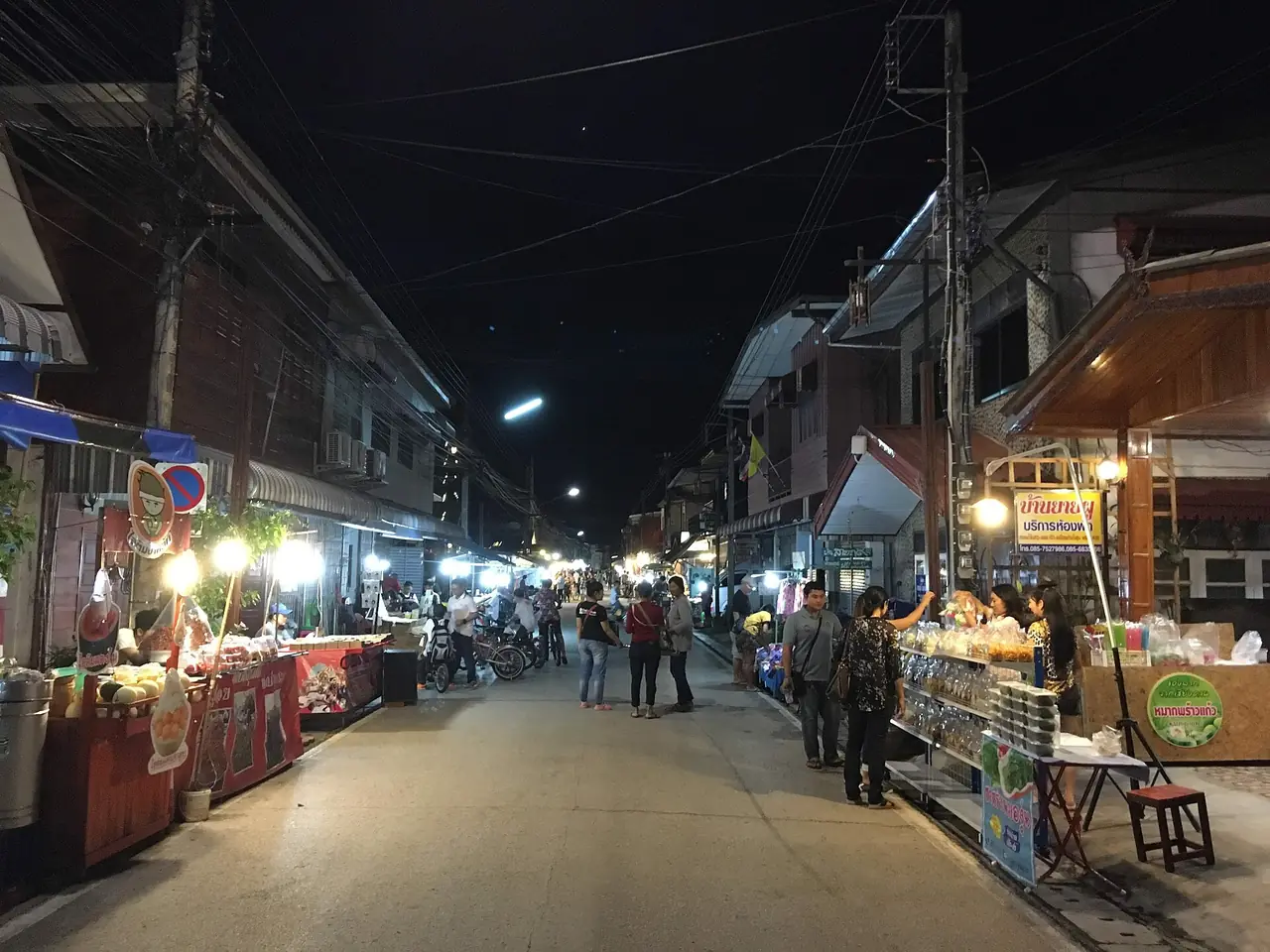
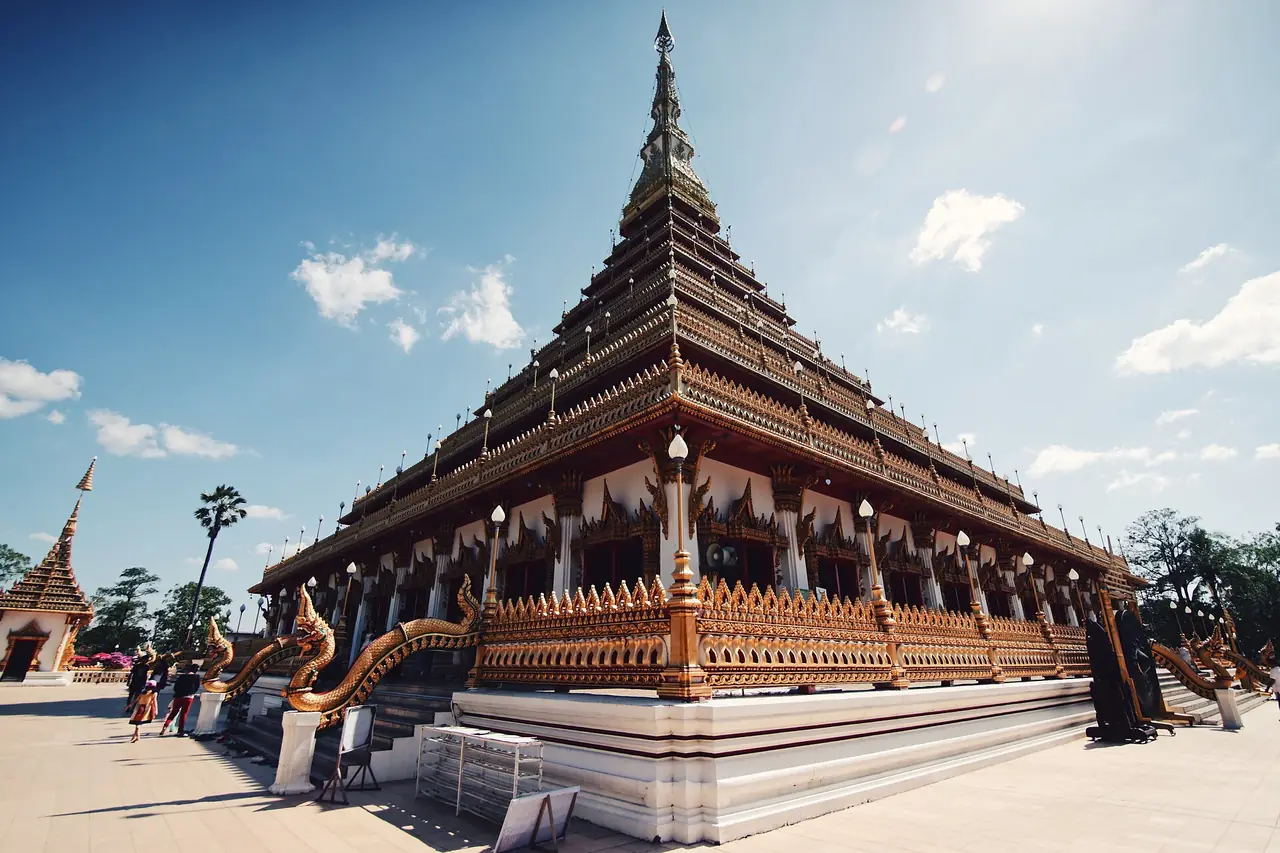
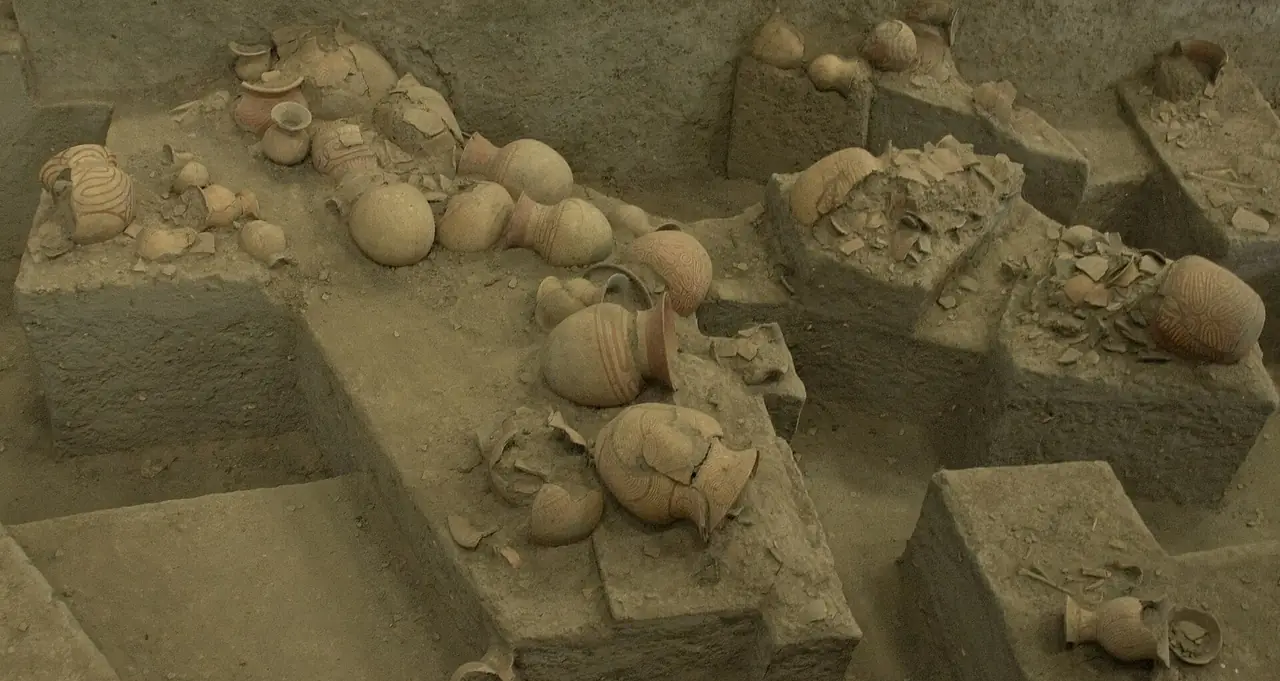
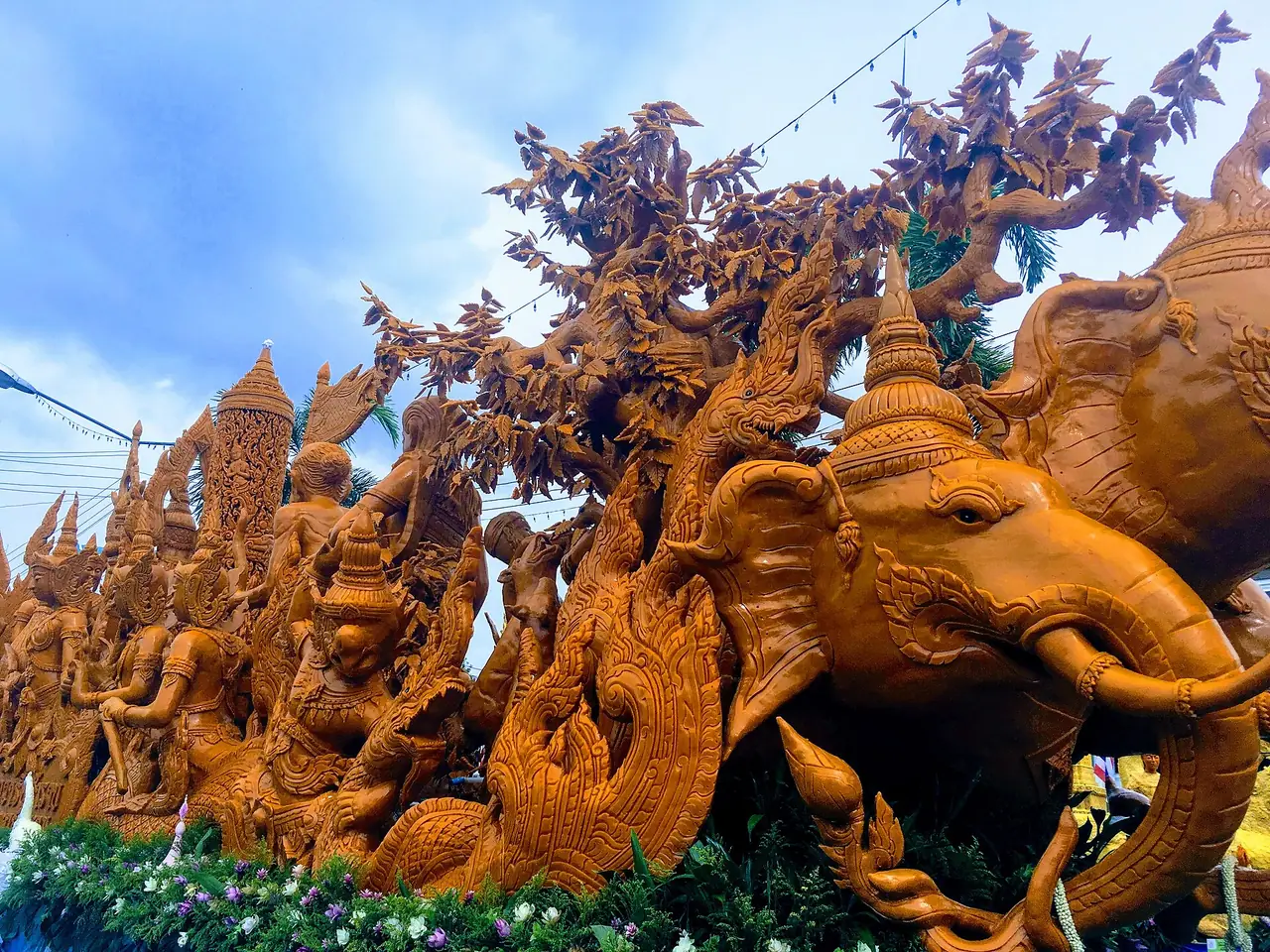
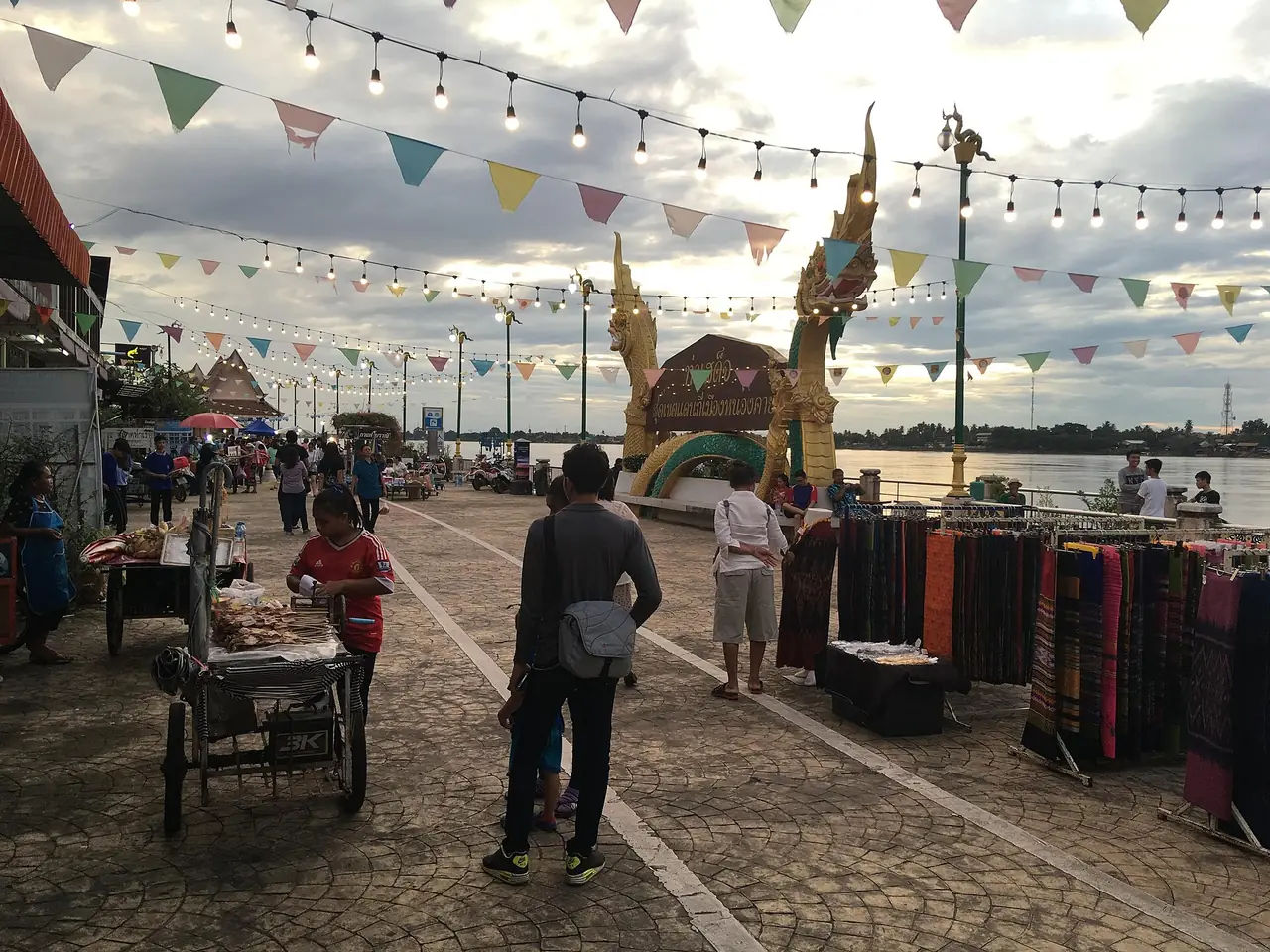
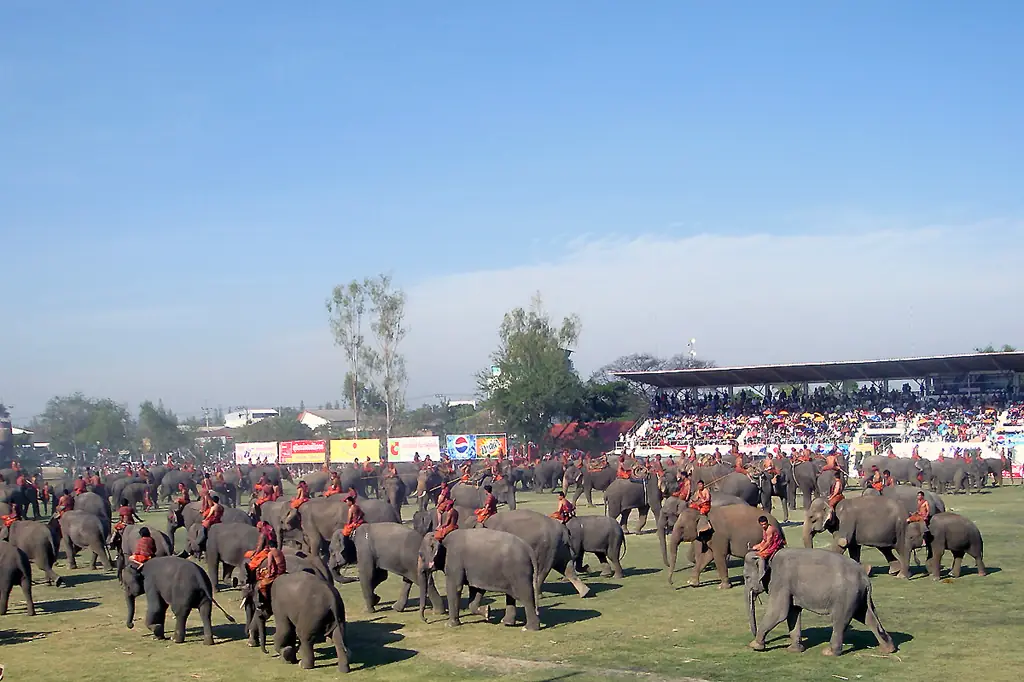
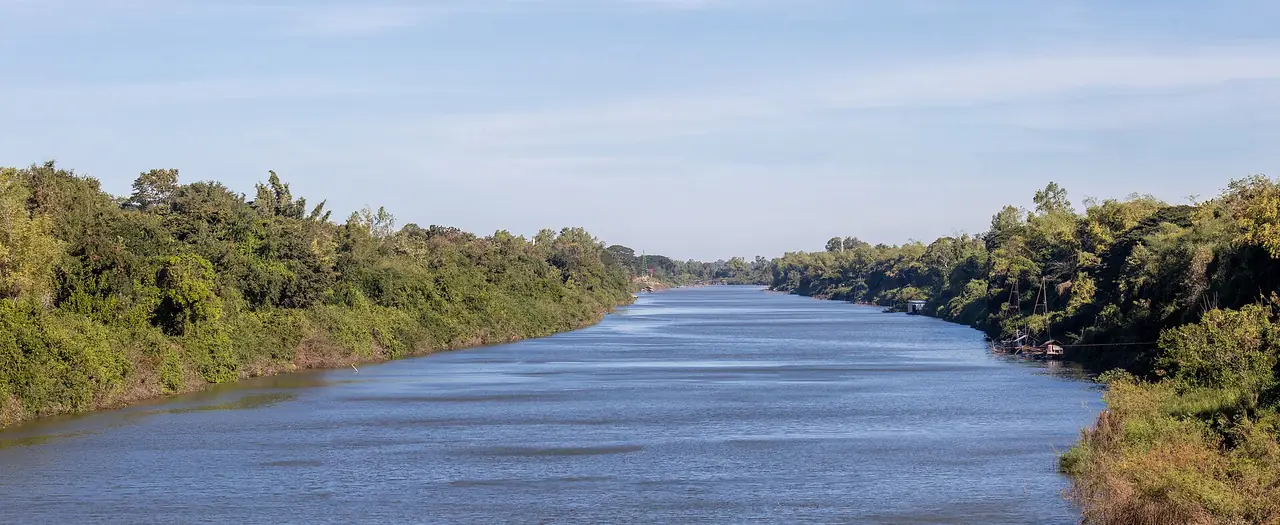
Yasothon is a small province in lower Isaan, with its town on the Chi River. There is no airport and no railway, so most people know the name from one event: the Bun Bang Fai rocket festival in mid-May, with parades, mor lam stages and homemade rockets fired at Phaya Thaen Park. Outside the festival the town still has a 19-metre toad-shaped museum, a wooden scripture library standing in a pond at Wat Maha That, an old brick stupa in the rice fields, and a compact centre you can walk in a day.
This guide uses only what we checked on 16 October 2026 against the sources listed at the bottom: Wikipedia, Wikivoyage, and the 12Go page we opened ourselves in a browser. Where sources disagree we show both. We give no entry fees, opening hours or festival dates that we have not confirmed with the people who run each place. We could not find enough hotels with readable official websites to publish a where-to-stay page, so the stay section gives area advice only.
What kind of place is Yasothon
Thai Wikipedia says Yasothon became a province by a revolutionary council announcement, taking six districts from Ubon Ratchathani, effective 1 March 1972. It now has nine districts and covers about 4,161 square kilometres, roughly 0.81 percent of Thailand. It sits in the Khorat basin. The centre and south are low plains along the Chi River, which runs about 110 kilometres through the province, while the north is higher, rolling land that was once the Dong Bang I forest. Most people work in farming.
Sources tell the founding story differently. English Wikipedia's article on the town says Chao Racha Wong Singh led his people to the Chi in 1811 and founded the town on a bluff. The Thai article on the province says Thao Kham Su and his followers came from the old Nong Bua Lamphu city in 1771 and set up Ban Sing Tha. Both agree on the old name, Ban Sing Tha, tied to a legend of a lion coming out of the forest when the site was chosen, and the provincial seal shows two lions facing the Phra That Anon stupa at Wat Maha That. In 1814 King Rama II raised it to Mueang Yasothon.
English Wikipedia adds that the town has a significant Thai-Chinese community: the city pillar shrine, put up in 1987, looks like a Chinese temple, and the annual parade uses a Chinese warrior as the city spirit. The province is much older than that, though. Thai Wikipedia lists four ancient inscriptions that mention Chenla, including the Dong Mueang Toei inscription naming a place called Sankhapura, and several moated Dvaravati-era settlements.
Getting to Yasothon
Thai Wikipedia states that Yasothon has no railway and no airport. Rail and air travellers must get off at Ubon Ratchathani and take a bus or air-conditioned van on. The same article mentions a planned Ban Phai to Nakhon Phanom railway that would pass through Loeng Nok Tha district and a plan to develop an airport there, but both are future projects. Do not plan a trip around either.
| From | By | What sources say |
|---|---|---|
| Bangkok | Bus | English Wikipedia says several lines run to the Northern Bus Terminal (Mo Chit) and other terminals. The 12Go page we opened showed buses from about THB 589 (see the booking section below) |
| Bangkok | Drive | About 531 km per Thai Wikipedia's district article (the province article says 532 km, English Wikipedia says about 500 km). Wikivoyage describes Highways 1 and 2 through Korat, then Highway 23 via Maha Sarakham and Roi Et, 531 km and about 7 hours |
| Ubon Ratchathani | Car or bus | English Wikipedia says about 100 km east along Highway 23; this is where trains and flights arrive |
| Roi Et | Bus | Wikivoyage's next-stop list gives about 1.5 hours (the fare printed there is old, so we do not repeat it) |
English Wikipedia says the bus terminal moved from the town centre to the Route 23 bypass, just east of the Ban Kham Noi junction. If you arrive by long-distance bus, allow for a second ride into town, and check with the bus company whether your trip ends at the terminal or somewhere else along the way.
Getting around town and province
English Wikipedia says samlo (cycle rickshaws) serve the town centre, tuk-tuks are not allowed there, and yellow-plate motorcycle taxis with identifying vests run in town and out to the villages. Thai Wikipedia adds that buses and songthaews run to the other districts from the bus station. Distances from the provincial centre listed there are: Sai Mun 21 km, Kham Khuean Kaeo 25 km, Pa Tio 31 km, Kut Chum 39 km, Maha Chana Chai 44 km, Thai Charoen 55 km, Kho Wang 66 km and Loeng Nok Tha 72 km. Sights outside the town are spread out, so with limited time a hired car or a day-rate taxi beats waiting for songthaews.
Booking transport
The 12Go Bangkok to Yasothon page showed the following when we opened it in a browser on 16 October 2026, for 18 October and two travellers: 36 trips, priced from THB 589 to THB 17,850. That was 29 buses, from THB 589, and 7 taxis, from THB 6,685. Bus operators we saw in the list were Transport Co, Prayat Tour, Cherdchai Tour, Kammaratrungruang, Jiratkan Kemarat and Ubon Air; the taxi operator we saw was Glassflower. We did not see trains or flights on this page. Drop-off points differ by trip. Examples shown were Pa Tio, Kham Khuean Kaeo and Kham Hai Phanom Phrai, so not every trip ends in the middle of Yasothon town; read the drop-off name before you book. These figures are what the page showed that day, not guaranteed prices, and they change with date and seats. We link it so you can compare, and some links on this site may earn us a commission, which does not change the times or prices you see.
There is no train station and no airport in the province. If you fly, plan to land at Ubon Ratchathani and continue about 100 km by road, as Wikipedia says, and check the last bus before you book your flight.
Seasons and when to go
Thai Wikipedia says Yasothon has three seasons, hot, rainy and cool, with average relative humidity of 71.1 percent, a recorded high of 43 degrees and a low of 11, and average rainfall around 1,600 mm a year over 2009 to 2013. The article does not give months for each season, so we do not either. Check the Thai Meteorological Department forecast for your dates.
The festival is the main draw. Thai Wikipedia and Wikivoyage agree that the rocket festival takes place on the Saturday and Sunday of the second week of May at Phaya Thaen Park; English Wikipedia's town article says a weekend in the middle of May. We have not checked next year's dates against the province or the Tourism Authority of Thailand, so look for an announcement before you buy tickets or book a room.
The Yasothon rocket festival
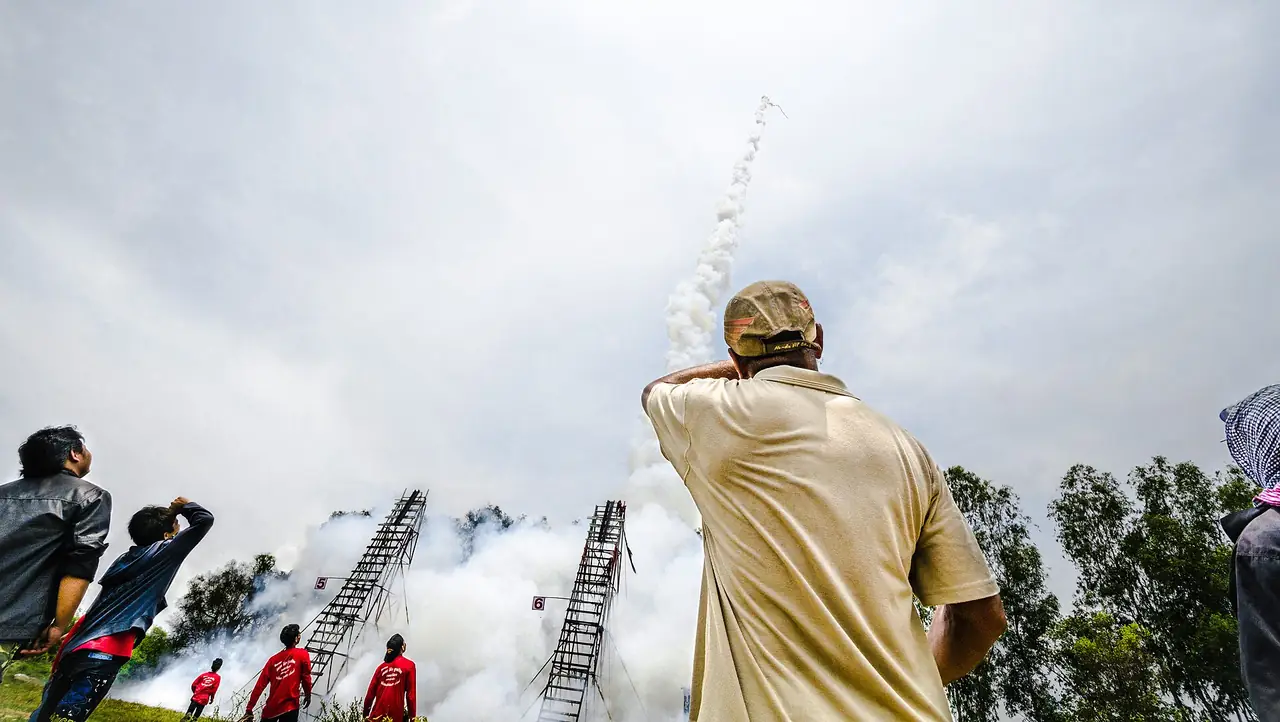
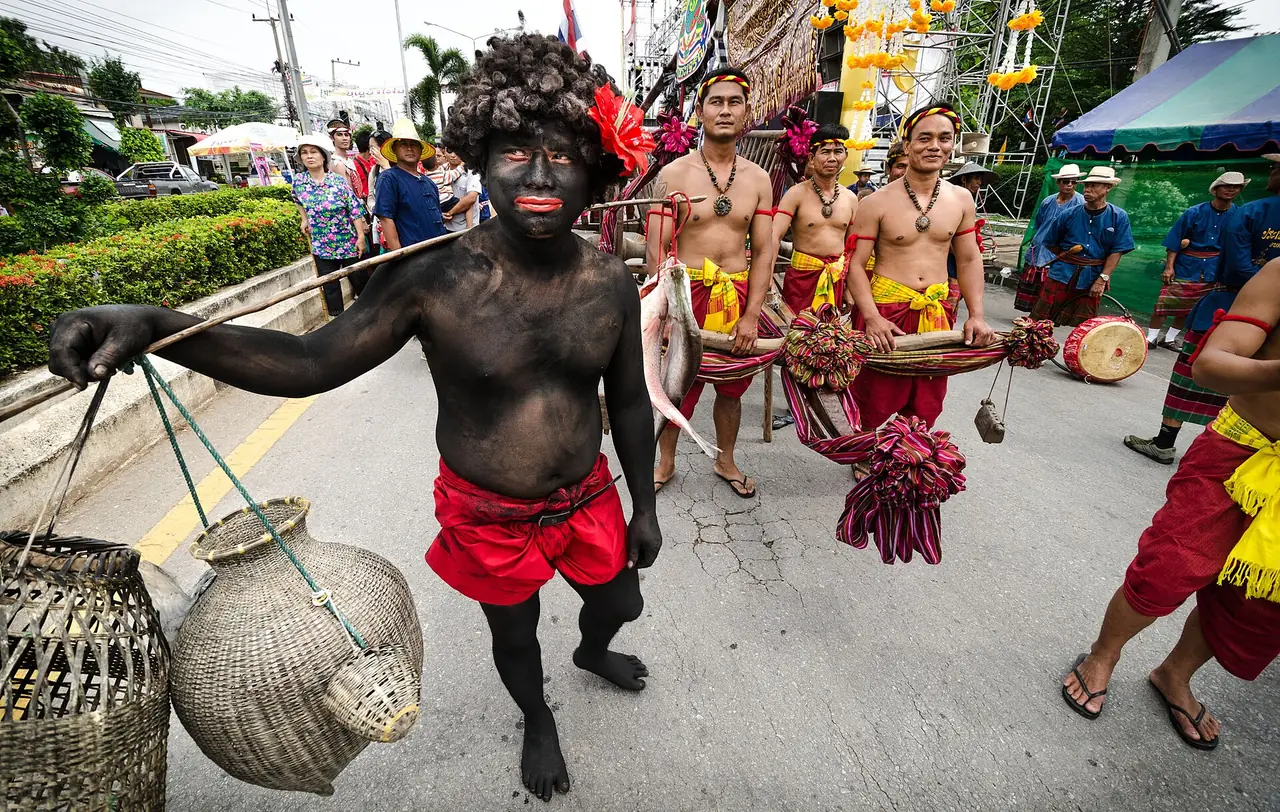
Bun Bang Fai is an Isaan rain-making custom linked to Phaya Thaen, the sky god in local belief. Thai Wikipedia names Yasothon's event as one of four big rocket festivals nationwide, alongside Suwannaphum, Phanom Phrai and the Ta Lai Lan Kut Wa event, and says the Tourism Authority of Thailand has promoted it since 1980.
English Wikipedia describes the rhythm. On Friday the main street becomes a parade ground with mor lam stages along both sides. Saturday is the parade competition, with dance troupes and rocket floats, many telling the legend of Phadaeng and Nang Ai. On Sunday the action moves to Phaya Thaen Park on the eastern edge of town and becomes a contest of whose rocket stays in the air longest. Thai Wikipedia adds that traditional rocket processions and folk dances come from all nine districts, and that parades from nine temple neighbourhoods compete for a royal trophy.
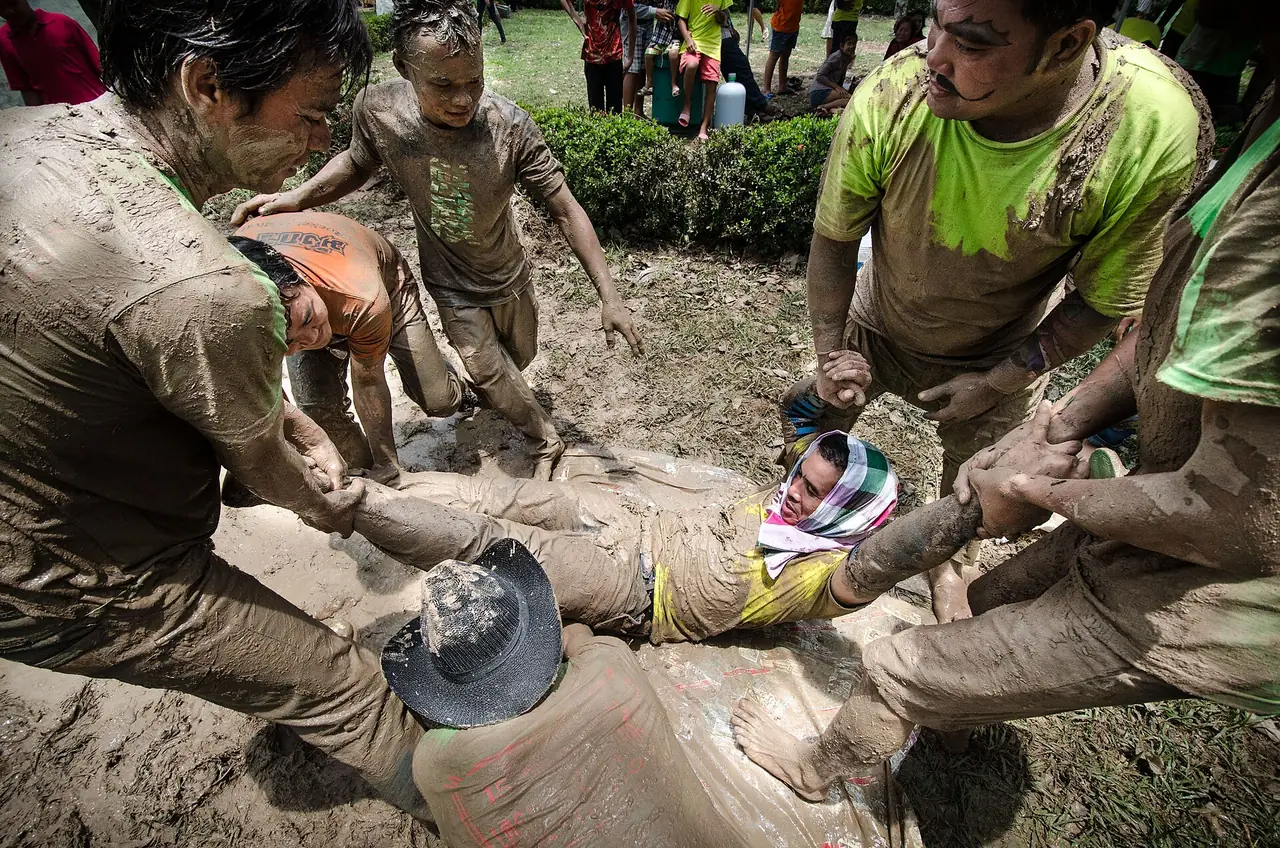
Wikivoyage says rockets are classed by gunpowder weight. Bang Fai Kilo holds a kilogram, Bang Fai Muen holds 12 kilograms and Bang Fai Saen holds 120 kilograms. Villagers build their own or hire a specialist. The 2013 photos we use here also record the custom of covering people in mud on launch day, which Wikivoyage describes: misfiring rockets and poor performers are punished by tossing the crew into mud.
On safety, English Wikipedia records that on 10 May 1999 a 120 kg rocket exploded about 50 metres up, two seconds after launch, killing four people and injuring 11. If you watch the launches, stay in the areas organisers mark off and follow staff. We have not checked the latest safety rules.
Other festivals in Thai Wikipedia's list: the rice-popcorn garland festival at Ban Fa Yat in Maha Chana Chai district the day before Makha Bucha, the Tum Ka fire festival at Ban Thung Tae, and the star procession at Ban Song Yae at Christmas. Phaya Thaen Park also hosts the annual short-boat race and Songkran. Wikivoyage says the garlands are made of popped rice, 4 to 6 metres long, decorated with flowers and beads.
Temples and museums in town
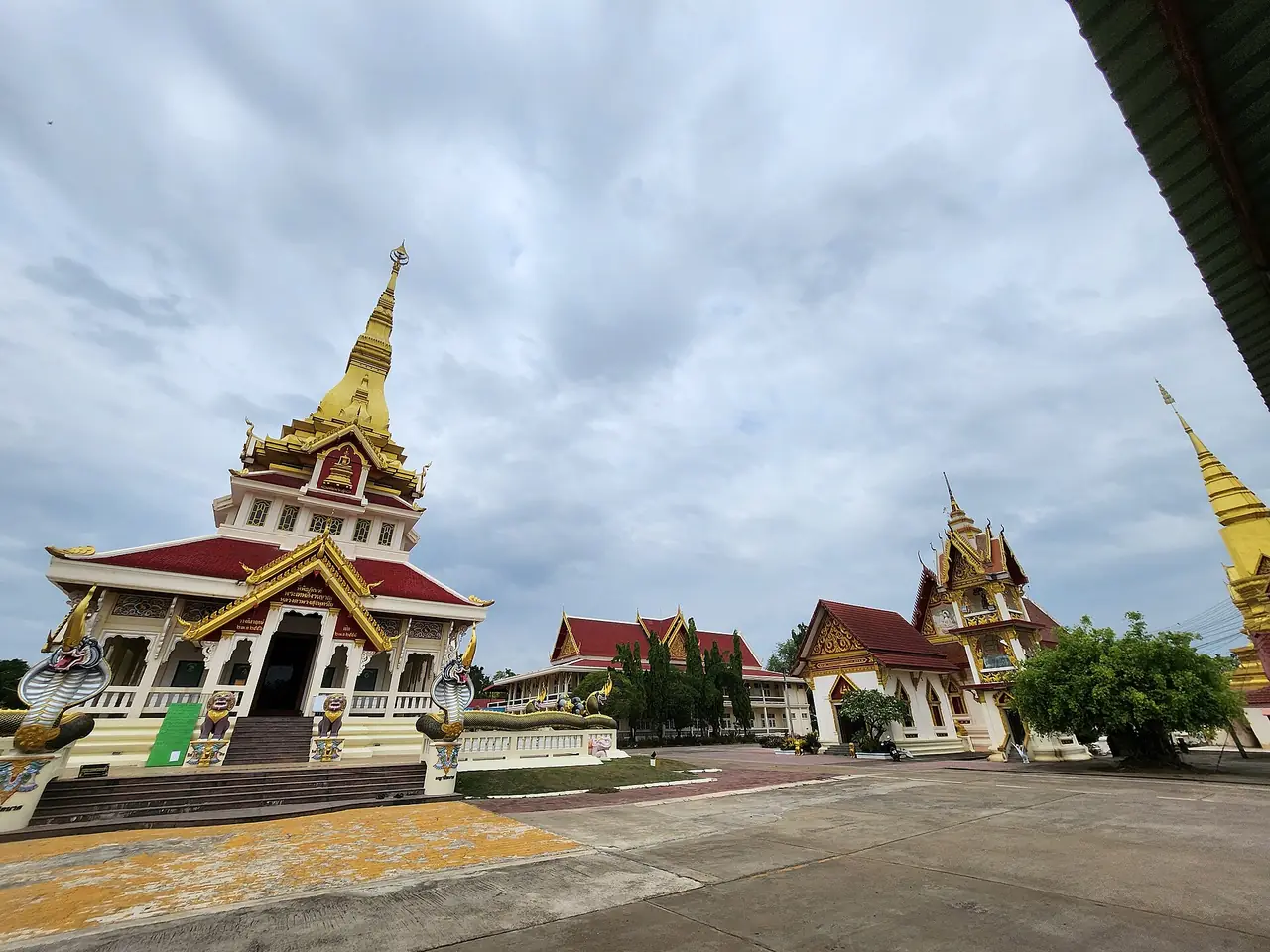
Wat Maha That
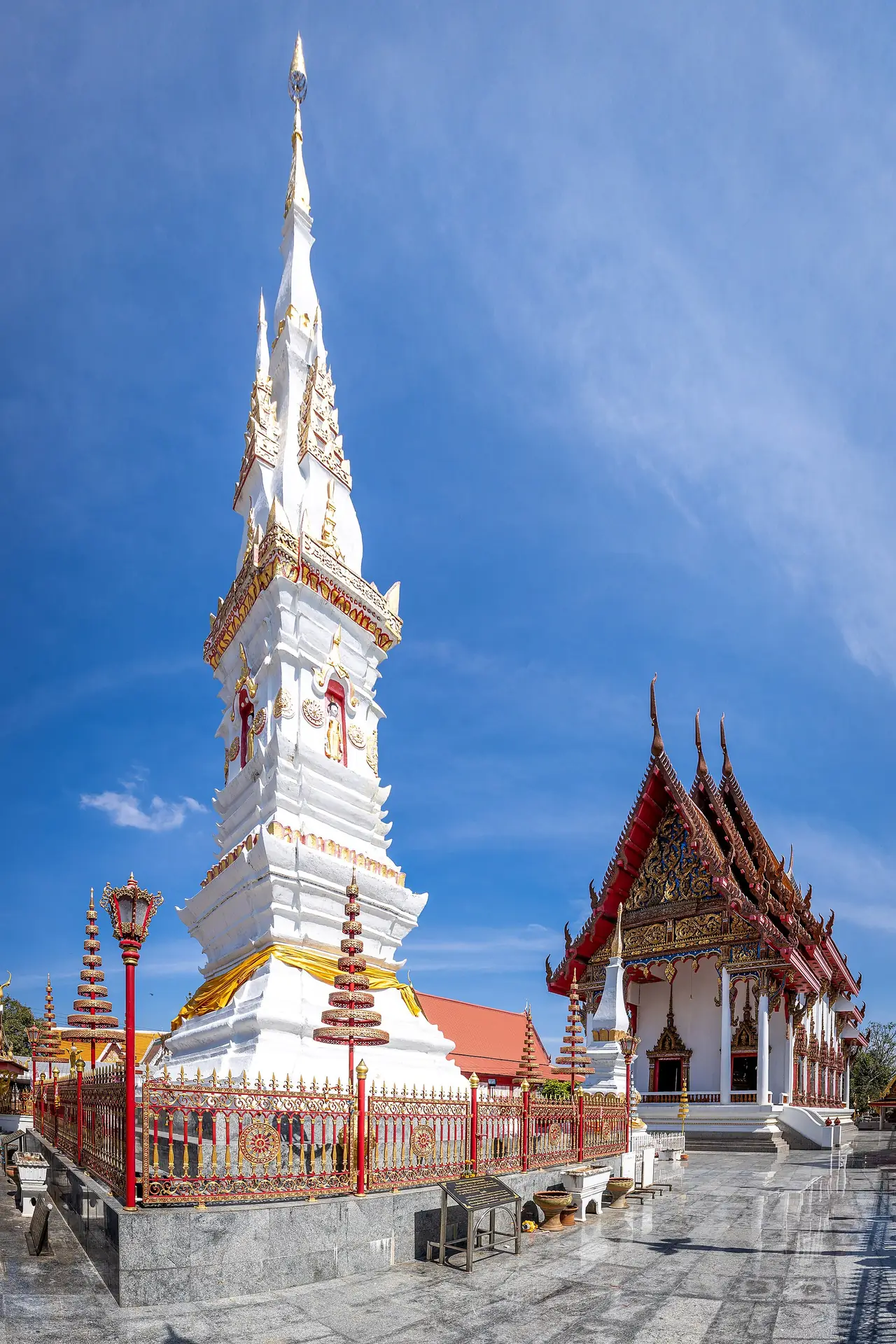
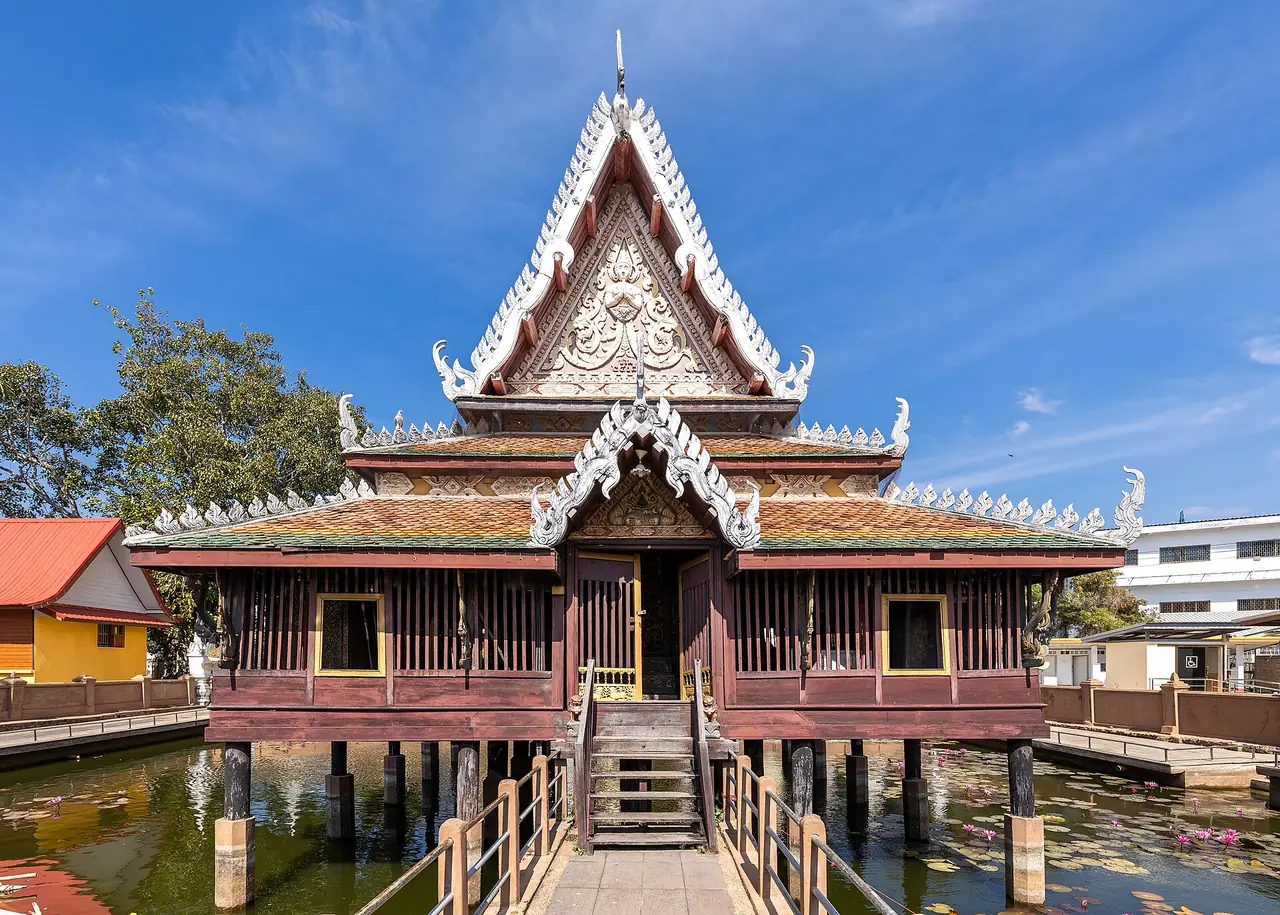
Wat Maha That has been the city's temple since the founding. Thai Wikipedia says it was first called Wat Thung Sawang and took its present name after Thao Fai Na restored the large stupa around 1778. It names three key things. The first is Phra That Anon (also called Phra That Yasothon), in front of the ordination hall. Legend says it was built in 675 CE (Buddhist Era 1218) and holds relics of the Buddha's disciple Ananda; the article says no firm date is known and that restoration was recorded in 1947. A festival is held on the 13th to 15th waxing days of the third lunar month. Wikivoyage says its top resembles Phra That Phanom.
The second is Phra Phuttha Patima Butsayarat, or the Dew Drop Emerald Buddha, a seated Chiang Saen-style image that the Thai article calls the smallest city-protecting Buddha in Thailand (that claim is Wikipedia's; we did not check it with the temple or the Fine Arts Department). The third is the wooden scripture library standing in a pond. Thai Wikipedia says it was built around 1830 to hold palm-leaf manuscripts brought from Vientiane, that the current design is thought to date from the reign of King Rama IV or V, and that it was last restored in 2008. The Fine Arts Department registered the site as an ancient monument in 1948.
Wat Si Thammaram
Wat Si Thammaram is a third-class royal temple of the Dhammayut order. Thai Wikipedia says it was founded around 1852 and renamed several times before getting its present name in 1957. It enshrines the Phra Suk Buddha image in the Phra Suk Chedi and Phra Thepsangwaranyan Museum, which held a celebration on 2 April 2016 according to the commemorative book the article cites. The article is open that the origin story of the Phra Suk image is unclear and that parts remain unverified. We have not checked the museum's opening hours.
Wat Sing Tha and the old quarter
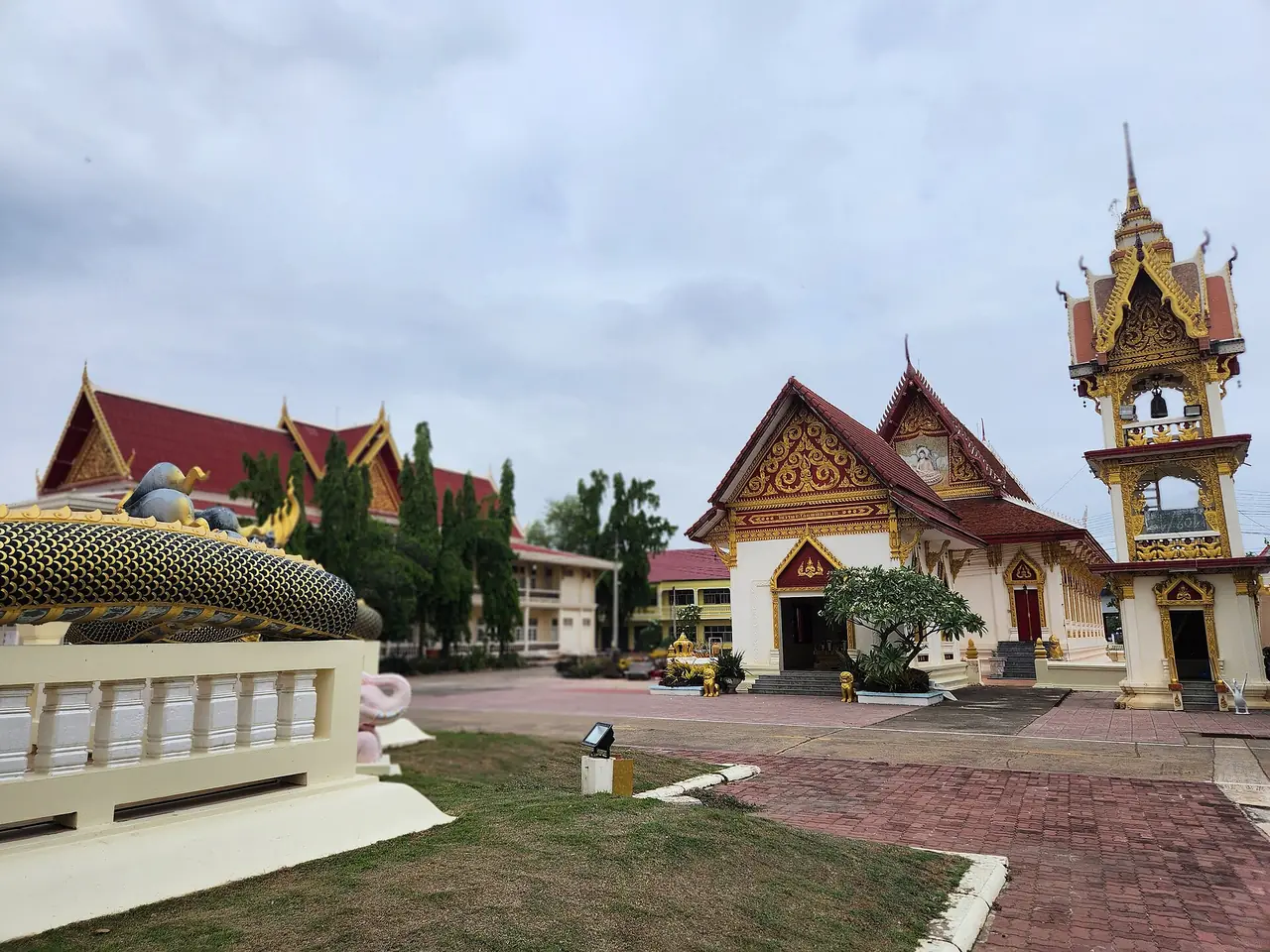
Wat Sing Tha stands on the Chi River in Nai Mueang. Thai Wikipedia says it was built in 1781 with the founding of the town, on an abandoned temple site where a stone lion and a large brick-and-plaster Buddha were found, and so was first called Wat Phra Chao Yai. The Fine Arts Department registered it on 28 December 2002. Wikivoyage says the Ban Khum Singha Tha quarter in the municipality is the old area whose name appears in the town's history, and English Wikipedia says Wat Thung Sawang Chaiyaphum, with its nine-spire chedi, marks where General Bodindecha regrouped his army in 1826 to 1828.
Wiman Phaya Thaen, the toad museum and the naga museum
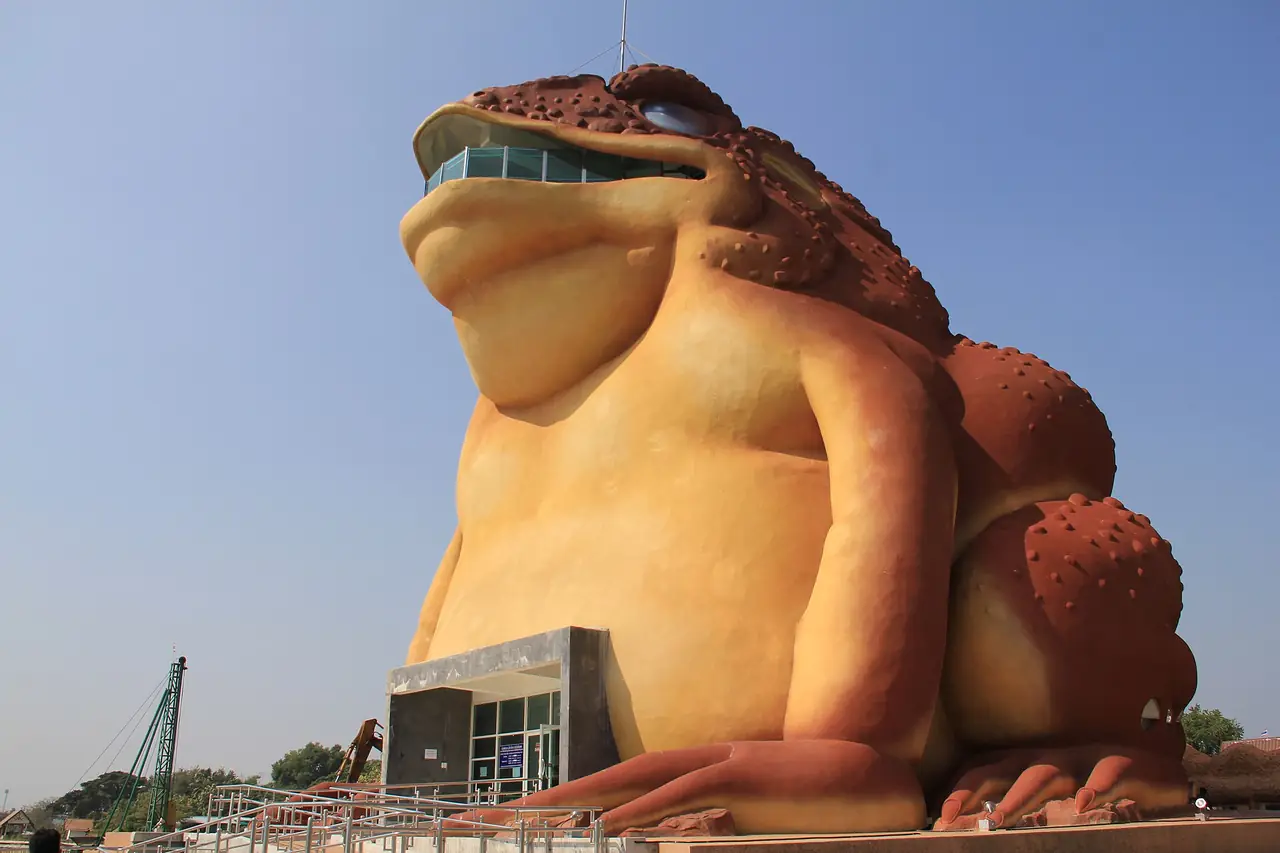
Wiman Phaya Thaen is on the right bank of the Lam Thuan on Mongkhon Burapha Road. Thai Wikipedia describes it as an open-air learning site and museum tied to the rocket festival legend, with a planned total budget of about 200 million baht. The best-known part is the Phaya Khankhak (King Toad) Museum, a giant toad building 19 metres high with 835 square metres of floor space and five exhibition floors: the history of Yasothon, the legend of Phaya Thaen and the toad king, the rocket story, the city's identity, and a viewpoint on the top floor. English Wikipedia says a five-storey toad-shaped museum was built in 2015 to encourage tourism.
Just north along the river is the Naga Museum. Thai Wikipedia gives its building as 99 metres long and 12.5 metres wide, costing 45 million baht, with five zones from the toad-king legend and naga belief in Buddhism and Hinduism to the legend of the Mekong's creation and the biology of snakes. We have not checked opening hours, entry fees or whether either museum is currently open, so call or check a provincial announcement before going.
Phaya Thaen Park
Phaya Thaen Park is in the town centre on Chaeng Sanit Road beside the Lam Kwang. Thai Wikipedia gives its size as 18 rai 2 ngan 57 square wah and lists flower gardens, an outdoor stage, a playground and a health park. It hosts the rocket launches, the short-boat race and Songkran. The article says it won a regional outstanding public park award in 1982.
Outside town
Phra That Kong Khao Noi (Phra That Tat Thong)
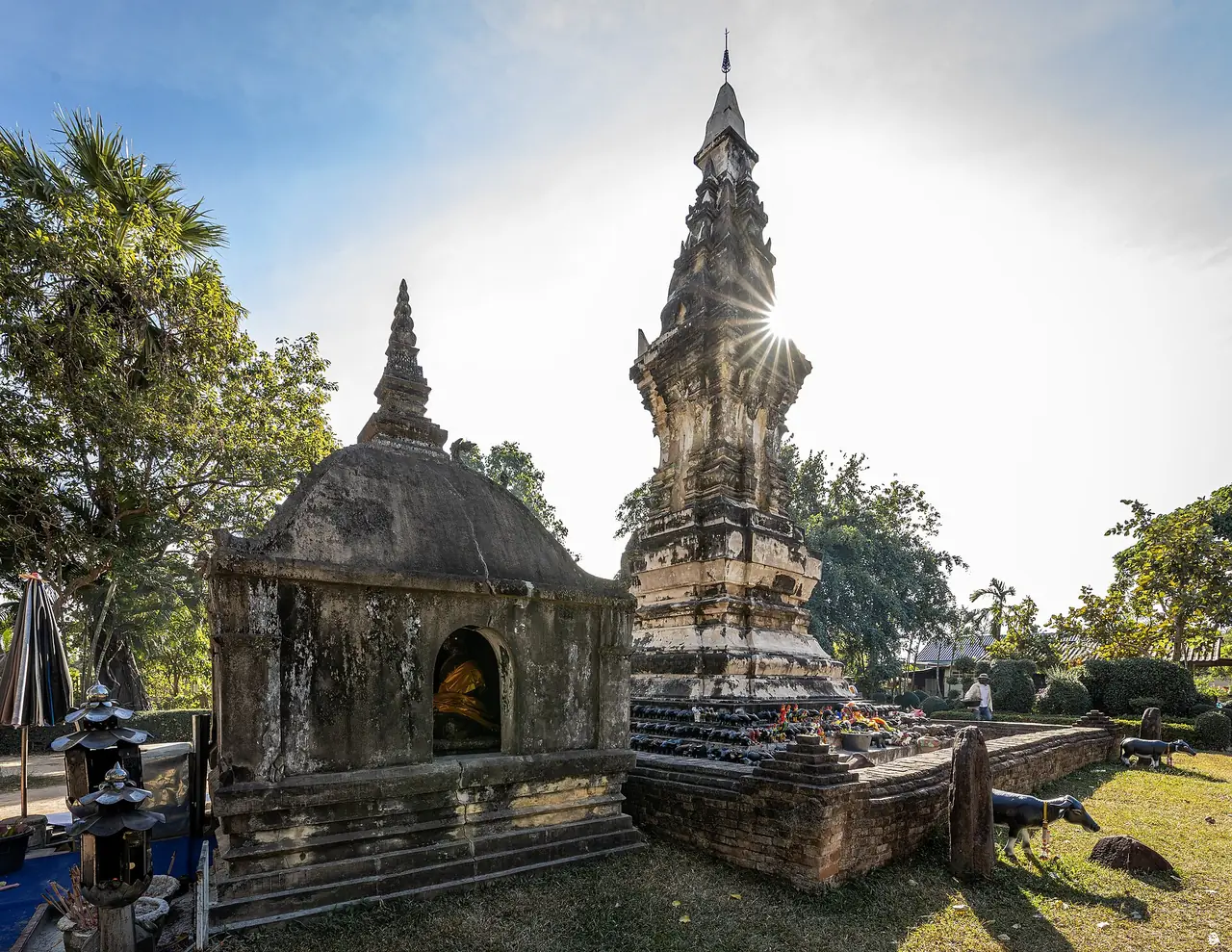
This brick stupa stands in rice fields at Ban Tat Thong, about 9 km from town by Thai Wikipedia's count: along Highway 23 towards Ubon, turn left at km 194 and go 1 km. It is a square-plan mandapa-style chedi with a lotus-bud finial, dated by its style to the 24th century of the Buddhist Era (roughly the mid-1700s to mid-1800s CE). The Fine Arts Department registered it on 27 September 1936, and Thai Wikipedia says it was last restored in 2002. Each April there is a ceremony of bathing and gilding the Buddha image.
The name comes from a folk tale about a young farmer who killed his mother because she brought his lunch late and the rice basket (kong khao noi, "little rice basket") looked too small, then built a stupa to atone. Sources do not agree which monument is the stupa of the tale. Wikivoyage tells the story under the heading Phra That Kong Khao Noi without saying which one. Thai Wikipedia says the Fine Arts Department thinks the smaller stupa at Wat Thung Sa Dao in Ban Sadao, Tat Thong, which one person could have built, matches the tale, and that the larger Tat Thong stupa, about as large as Phra That Anon, would be better called Phra That Tat Thong. Both were registered on 27 September 1936, so ask which one people mean when you go.
Dong Mueang Toei and Ban Song Pueai
In Kham Khuean Kaeo district (25 km from town), Wikivoyage and Wikipedia describe the ancient town of Dong Mueang Toei, where the remains are temple foundations and a town wall, and where an inscription names Sankhapura. English Wikipedia's province article says one scholar places it about 400 km from Sambor Prei Kuk along the Chi, but that the evidence is not enough to place it inside Chenla's political reach. Wikivoyage adds that Wat Ban Song Pueai has a small antiques museum with finds from Dong Mueang Toei and a brick Buddha over 200 years old. We have not checked access or opening hours, so treat this as a list of things to ask about locally.
Song Yae church, Thai Charoen
Wikivoyage and Thai Wikipedia both place a Catholic community at Ban Song Yae. Wikivoyage says the church was founded in 1908 and the present wooden building dates from 1947, built with timber given by villagers, and calls it the country's biggest wooden church at 16 metres wide and 57 metres long (that entry was last updated in December 2015). A star procession is held every year at Christmas. Thai Charoen district is 55 km from the provincial centre.
Phu Sa Dok Bua, Loeng Nok Tha side
Thai Wikipedia says Phu Sa Dok Bua National Park lies where Mukdahan, Yasothon (Loeng Nok Tha district) and Amnat Charoen meet, but its headquarters are in Don Tan district, Mukdahan. English Wikipedia gives it as 231 square kilometres, with 11 stone pools on a hilltop each holding a different lotus, and a large cave that was a Communist Party of Thailand stronghold. The province's own Thai article puts the Yasothon portion at about 42,500 rai. Loeng Nok Tha is the farthest district in the distance list, at 72 km. Our Mukdahan guide covers the park's other side.
Souvenirs and crafts
Wikivoyage lists what Yasothon is proud of: fragrant jasmine rice, red-fleshed round watermelons, and the Khit axe pillows of Ban Si Than in Pa Tio district. It also names Khit cloth, replica carts, sticky rice containers and basketry. Ban Thung Nang Oak and Ban Na Samai are named for bamboo basketry, and Ban Na Samai for carved miniature carts. The same page lists preserved sour fish, royal featherback fish and sweet rice noodles as good foods. Searches for the town often add "duck larb", but we found no source for it that we could verify, so we say nothing about it. We have not checked shop locations or opening days, so ask the villages before going.
A 1 to 2 day plan
This plan is our suggestion, built from the distances in the sources, not a timetable from the sites.
- Half a day in town: Morning at Wat Maha That (Phra That Anon and the pond library), then Wat Si Thammaram and Wat Sing Tha. Afternoon at Wiman Phaya Thaen by the Lam Thuan, up to the viewpoint floor of the toad museum, and an evening walk in Phaya Thaen Park.
- One full day: Add Phra That Kong Khao Noi, about 9 km along Highway 23 towards Ubon, in the morning, then return and walk the town.
- Two days: On day two head to Kham Khuean Kaeo (25 km) for Dong Mueang Toei and Ban Song Pueai, or to Ban Song Yae in Thai Charoen (55 km) if you have a car.
- If you come for the festival: Save Saturday for the parade and Sunday for Phaya Thaen Park, and do not plan other trips on days when the main street closes for the parade.
Where to stay in Yasothon
Our rule is to name only hotels whose own official websites we can open and whose facts pass two rounds of checking, and to publish a stay page only when at least 8 pass. On 16 October 2026 we looked up the names that appear in Wikivoyage and in searches, and did not find enough hotels with a readable official site. Most results were pages on booking sites or social media. So this page names no hotels, and there is no separate stay page.
In the meantime, choose a base by area, using the sights above.
- Town centre near Wat Maha That and the Lam Thuan: Wat Maha That, Wat Si Thammaram, Wiman Phaya Thaen and Phaya Thaen Park are within a short ride, which suits visitors without a car. The Wikimedia Commons description of our Wat Maha That photo puts the temple on Wariratchadet Road.
- Beside Highway 23 and the bypass: English Wikipedia says the bus terminal is on the bypass. A base here suits arrivals by long-distance bus and drivers heading on to Phra That Kong Khao Noi or Ubon, but you will need a ride into the centre if you want to walk about.
- Other districts: If you plan Kham Khuean Kaeo or Loeng Nok Tha, check the distances from the provincial centre in the getting-around section before choosing where to sleep.
We have no confirmed information on room availability during the rocket festival. If you plan to go then, assume rooms in town may be harder to find than usual and sort out a place to stay before you buy your bus ticket.
Nearby destinations
- Mukdahan: the next province north, with the Ho Kaeo tower, Indochina Market and Phu Pha Thoep
- Ubon Ratchathani: about 100 km east, with the airport and the railway station
- Isaan overview
- Getting around Thailand
- Thailand overview
- Amnat Charoen: Phu Sa Dok Bua, Mekong riverside and quiet Isaan temples
- Roi Et: Phra Maha Chedi Chai Mongkhon and Bueng Phlan Chai
FAQ
Does Yasothon have an airport or a train station?
No. Thai Wikipedia says the province has neither, and that train and air travellers land at Ubon Ratchathani and continue by bus or van. A railway line through Loeng Nok Tha and an airport there are planned, not running.
How do I get to Yasothon from Bangkok?
Most people take a bus. The 12Go page we opened on 16 October 2026 showed 29 buses from THB 589 and 7 taxis from THB 6,685. By car it is about 531 km and roughly 7 hours per Wikivoyage, via Korat, Maha Sarakham and Roi Et. Read the drop-off name before you book, because some trips end outside the town.
When is the Yasothon rocket festival?
Thai Wikipedia and Wikivoyage say the Saturday and Sunday of the second week of May, at Phaya Thaen Park. We have not confirmed next year's dates, so check the provincial announcement before booking.
How many days do I need in Yasothon?
Half a day to one day covers the town. Add Phra That Kong Khao Noi, Kham Khuean Kaeo or Ban Song Yae and plan on two days, as in our suggested plan above.
What is the toad museum?
The Phaya Khankhak Museum at Wiman Phaya Thaen is a toad-shaped building 19 metres high with five exhibition floors on the town's history, the Phaya Thaen and toad king legend, rockets, the city's identity and a viewpoint, according to Thai Wikipedia. We have not checked opening hours or fees.
Where should I stay in Yasothon?
We have no hotel list checked against official websites, so we only suggest areas. Without a car, stay in the centre near Wat Maha That and the Lam Thuan. If you drive, beside Highway 23 also works. See the stay section above.
Which stupa is Phra That Kong Khao Noi?
Thai Wikipedia places Phra That Tat Thong, popularly called That Kong Khao Noi, at Ban Tat Thong, about 9 km from town on Highway 23. It also says the Fine Arts Department thinks a smaller stupa at Wat Thung Sa Dao is the one linked to the folk tale. Ask locally which one people mean.
Can I cross into Laos from Yasothon?
Not directly. The province does not border the Mekong or Laos. The nearest crossing in this area is Mukdahan's Second Friendship Bridge; see the Mukdahan guide, and check border rules with the Thai authorities, as we have not confirmed them.
Official sources and further reading
- Yasothon province (Wikipedia)
- Yasothon (Wikipedia)
- Yasothon (Wikivoyage)
- Yasothon province (Thai Wikipedia)
- Mueang Yasothon district (Thai Wikipedia)
- Wat Maha That, Yasothon (Thai Wikipedia)
- Wat Si Thammaram (Thai Wikipedia)
- Wat Sing Tha (Thai Wikipedia)
- Wiman Phaya Thaen (Thai Wikipedia)
- Phaya Thaen Park (Thai Wikipedia)
- That Kong Khao Noi (Thai Wikipedia)
- Bun Bang Fai (Thai Wikipedia)
- Phu Sa Dok Bua National Park (Wikipedia)
- 12Go Bangkok to Yasothon
Prices, schedules and entry rules change. Figures here are approximate as of 2026; always confirm on the official or operator page before you book. Spotted something out of date? Tell us.