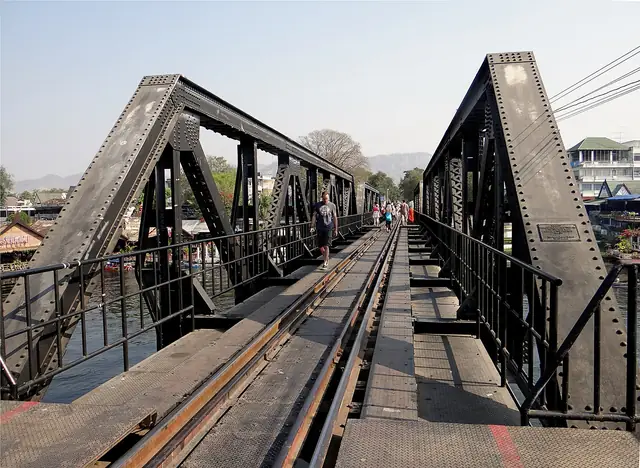
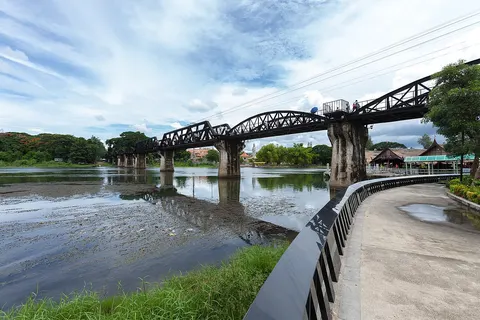
The bridge is the best-known sight in Kanchanaburi and the one visitors most often misunderstand. It is not a stage set from the film. It is the real bridge on the real railway, a few kilometres north of the town centre, and trains still cross it. The film (1957) was shot in Sri Lanka, and the story it tells differs a great deal from what happened here.
This page covers what actually happened, where the film and the facts part ways, how to walk the bridge without getting in the way of a train, which trains cross it and roughly when, the seasonal light show, boat rides, where to eat by the river, what else is within walking distance, half-day plans with and without a car, hotels near the bridge and the tours that include it. Hours and train times change, so where something is only a guide the page says how to check it.
We earn a commission if you book through our links. The price you pay does not change. How we choose
Quick facts before you go
| Cost | Free to walk the bridge. Boats, souvenirs and food nearby cost extra |
|---|---|
| Hours | Open to walkers every day with no ticket gate. It is officially open 24 hours, but go between about 06:00 and 19:00, when there is light and railway staff are around. It is a working railway, so follow staff and signs |
| Time needed | 30 to 45 minutes for the walk and photos; a half day with the museums, cemetery and a boat ride |
| Where | Maenamkwai Road, Tha Makham, on the Khwae Yai river, about 3 to 4 km north of the Kanchanaburi town centre along Highway 323 |
| Length | A little over 300 metres. About 10 to 15 minutes to cross at an easy pace |
| Getting there | Songthaew, tuk-tuk, taxi, bicycle or scooter from town; train to the River Kwai Bridge halt; day tour from Bangkok |
| Trains | Ordinary trains from Kanchanaburi to Nam Tok cross it. Confirm times with the State Railway of Thailand (hotline 1690) or at Kanchanaburi station |
| Night show | Only during River Kwai Bridge Week, normally late November to early December. Dates are announced by the province each year |
| Official information | State Railway of Thailand (railway.co.th) for trains; Tourism Authority of Thailand for festival dates |
The calm times to walk the bridge are early morning and the hour before sunset. Tour coaches arrive from late morning, and the bridge can be crowded between 11:00 and 15:00.
What happened here: the Death Railway and its bridges
In 1942 the Japanese army decided to build a railway about 415 km long from the Nong Pla Duk junction at Ban Pong in Thailand to Thanbyuzayat in Burma, to supply its forces without using the sea routes. The line crossed jungle, mountains and rivers, and the bridge over the Khwae Yai at Kanchanaburi was one of its main structures.
Why here? Parts of the Khwae Yai are deep and fast, but the ground under this spot was the firmest, so the Japanese engineers chose it. A temporary wooden bridge was built first, about 100 metres from today's bridge, in around three months. A permanent steel bridge followed beside it, on concrete piers, with curved steel spans brought in from elsewhere in Southeast Asia. The steel bridge opened in 1943.
The railway was built by about 60,000 Allied prisoners of war, British, Australian, Dutch, American and New Zealand, together with more than a hundred thousand Asian labourers recruited or conscripted from across Southeast Asia. Over 12,000 Allied prisoners are recorded as dying during construction, and estimates for Asian labourers run to tens of thousands, with figures up to about 90,000 quoted. All these figures are estimates. The line was finished in October 1943. The name Death Railway comes from these deaths, most of them from disease, hunger and brutal treatment.
A short timeline
| Year | What happened |
|---|---|
| 1942 | Japan decides to build the Thailand-Burma railway and construction starts |
| 1943 | A temporary wooden bridge and a permanent steel bridge are built. The steel bridge opens. The two halves of the railway join in October |
| 1944 to 1945 | Allied aircraft bomb the bridge several times and the middle spans collapse |
| 15 Aug 1945 | Japan announces its surrender and the war ends |
| 1946 | The Thai government buys the Thai section of the railway from Britain for 50 million baht |
| 1957 | The film The Bridge on the River Kwai is released |
| About 1960 | This stretch of river starts to be called the Khwae Yai, the name people know from the book and film |
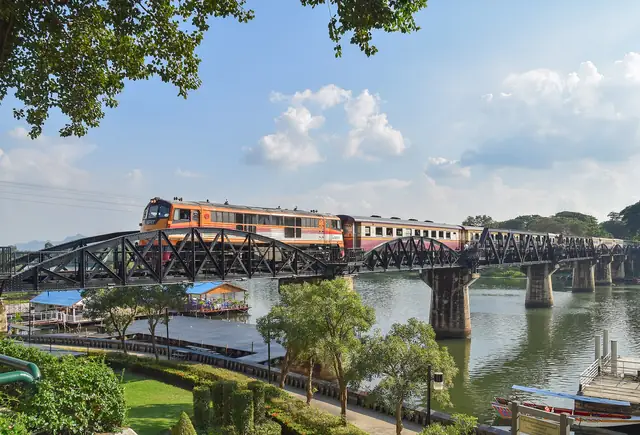
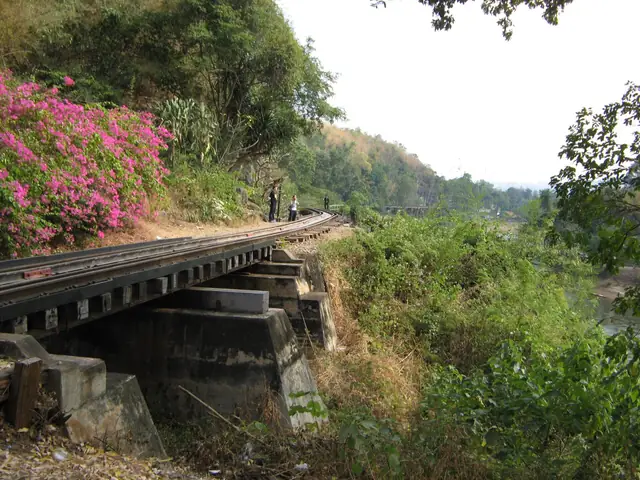
Allied aircraft bombed the bridge repeatedly in 1944 and 1945, until the middle spans fell into the river. After the war the Thai government bought the Thai section of the railway from Britain for 50 million baht and the bridge was repaired. Most of the curved spans are original. Two straight spans were built to replace the ones that were bombed, so you see curved and straight trusses joined on the same bridge. The bridge is a little over 300 metres long.
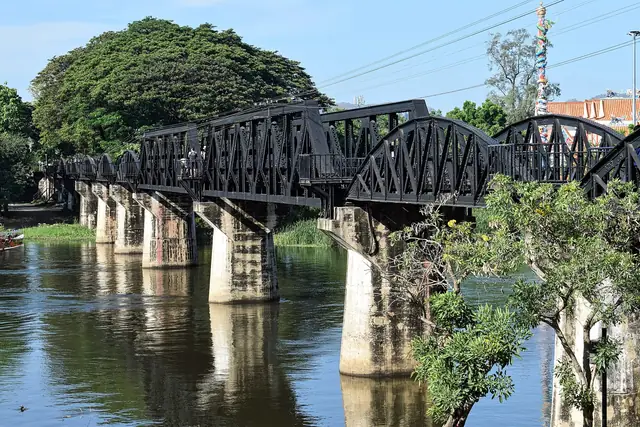
Today the railway runs as far as Nam Tok; the section on towards Burma is disused. The bridge is a reminder of the many people who died. Visitors come from several countries to remember family members, so speaking quietly and not playing on the bridge are the courtesies to keep in mind.
The word khwae means a river branch. When the bridge was built this stretch of river was known as the Mae Klong. After the book and film became famous it came to be called the Khwae Yai, the big branch, and the name Kwai in the film title became the name visitors use for this bridge.
War cemetery and museums: JEATH, the Thailand-Burma Railway Centre and Don Rak
The film against the facts
Most people know the bridge from The Bridge on the River Kwai, released in 1957. It was based on a novel by Pierre Boulle and won seven Academy Awards. It is fiction: the characters and the plot are not history. This table sets the usual misunderstandings against what happened.
| Question | In the film | In reality |
|---|---|---|
| Where was it filmed? | Sri Lanka, on a bridge built near Kitulgala | The real bridge is in Kanchanaburi. The film was not shot here |
| The senior prisoner | Colonel Nicholson, an invented character who helps the Japanese finish the bridge | Lieutenant Colonel Philip Toosey was the senior Allied officer at this bridge. He did not collaborate as in the film and tried to slow the work |
| How did the bridge fall? | Commandos blow it up as a train crosses | Allied aircraft bombed it several times in 1944 and 1945 |
| The river | The River Kwai | The bridge is on the Mae Klong, a stretch later called the Khwae Yai |
| The novelist | Pierre Boulle wrote the novel in 1952 | Boulle never visited the area. The story is imagined |
| The human cost | Told through invented characters | Over 12,000 Allied prisoners and tens of thousands of Asian labourers died along the railway |
To see the real story of the people who built the railway, visit the Thailand-Burma Railway Centre and the war cemetery after you walk the bridge. Both draw on the real records, and the cemetery has names and ages you can read. The 2013 film The Railway Man, based on the life of a former prisoner, is another that stays closer to the facts.
Walking the bridge: how to do it safely
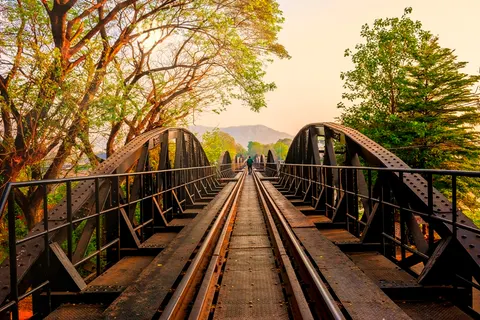
A walkway runs along the bridge beside the rails, with small side bays at intervals where you can stand while a train passes. The crossing is a little over 300 metres long and takes 10 to 15 minutes at a relaxed pace, longer if you stop for photos. Trains crawl across the bridge, but they are real trains that cannot stop in time.
What to do on the bridge
- Walk on the marked walkway and keep clear of the rails. The gaps between the planks are wide, so watch your footing, particularly in sandals and with children.
- When a train approaches, go to the nearest side bay and stay there until it has passed. Do not try to outpace it, and do not take photos from the track.
- Keep a hand on small children. The edges are open.
- It is hot and shadeless at midday. Bring water and a hat, or come early.
- Follow the instructions of the railway staff. They stop visitors from entering the bridge when a train is due.
- The steel and wood get slippery when wet, so wear shoes with grip after rain.
- Use a toilet before you step onto the bridge. There are none on it.
The approach and the photo spots
From town, follow Saeng Chuto Road past the Allied war cemetery, then follow the signs onto Maenamkwai Road before the railway crossing. If you are driving along Highway 323, turn left after about 400 metres where the signs point to the bridge. The River Kwai Bridge halt is right beside the bridge, and stalls with souvenirs and coffee line the approach.
The best view of the whole structure is from the riverbank downstream on the town side, where the curved spans sit against the water. Cafes and stalls along the bank also have shade. To photograph a train on the bridge, stand on the bank or in a side bay, never on the track. In the morning the side light shows the detail of the steel; in the evening the warm light turns the river gold.
If you walk to the far end and back, you see the river and the town from both sides of the bridge at no extra cost.
Trains that cross the bridge
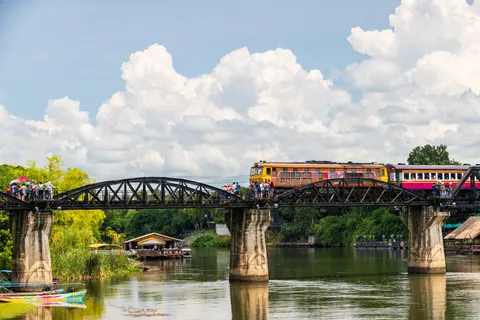
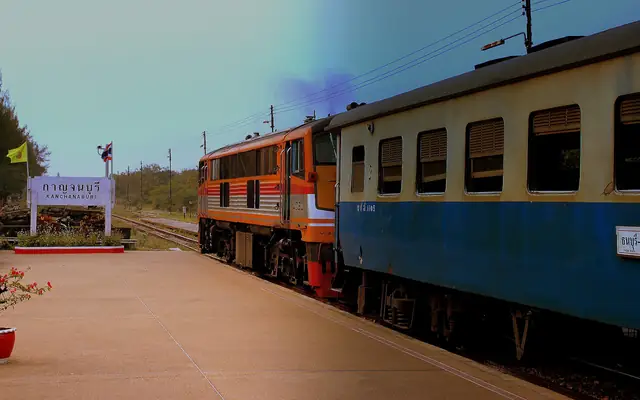
The bridge carries the same line as the Death Railway ride to Nam Tok. Ordinary passenger trains from Thon Buri in Bangkok to Nam Tok pass over it. The morning train reaches Kanchanaburi station at about 10:30 and the River Kwai Bridge halt at about 10:37, and there is another in the afternoon. The timetable changes, and floods closed the line beyond Tha Kilen in late September 2026 before it reopened on 3 October. Do not plan your day around a remembered time.
| Train | Direction | Approximate times |
|---|---|---|
| 257 (ordinary) | Thon Buri to Nam Tok | Thon Buri 07:45, Kanchanaburi about 10:30, River Kwai Bridge halt about 10:37, Nam Tok about 12:05 |
| 259 (ordinary) | Thon Buri to Nam Tok | Thon Buri 13:55, Kanchanaburi about 16:20, Nam Tok about 18:15 |
| 260 (ordinary) | Nam Tok to Thon Buri | Nam Tok 05:20, Kanchanaburi about 07:05, Thon Buri about 09:35 |
| 258 (ordinary) | Nam Tok to Thon Buri | Nam Tok 13:00, River Kwai Bridge halt about 14:35, Kanchanaburi about 14:43, Thon Buri about 17:40 |
| 909 and 910 (special) | Bangkok to Nam Tok and back | Saturdays, Sundays and holidays, with a stop of about half an hour at the bridge. Booked through D-Ticket |
The River Kwai Bridge halt is about 7 minutes after Kanchanaburi station on the way to Nam Tok, and about 2.5 km from the station by road. If you want to get off at the bridge, tell the ticket seller you are going to the River Kwai Bridge, not Kanchanaburi station. The fare for foreign visitors on the Nam Tok line is about 100 baht for any distance, and about 25 baht for Thai passengers. Buy at the window on the day. There is no advance booking on the ordinary trains.
Check the current timetable and whether the line is open at Kanchanaburi station (tel. 034 511 285), with the State Railway of Thailand (hotline 1690, railway.co.th), or ask your hotel. As of 7 Nov 2026 no new closure has been announced, but heavy rain between about May and October can close this line again.
Three ways to see the bridge with a train
- Watch from a side bay or the riverbank as a train crosses. It is free and you see the whole train.
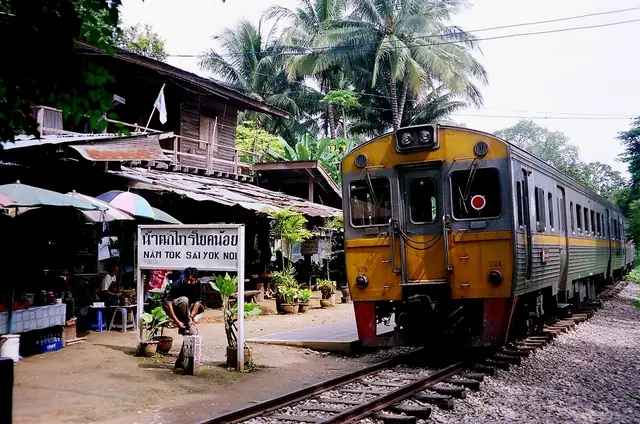
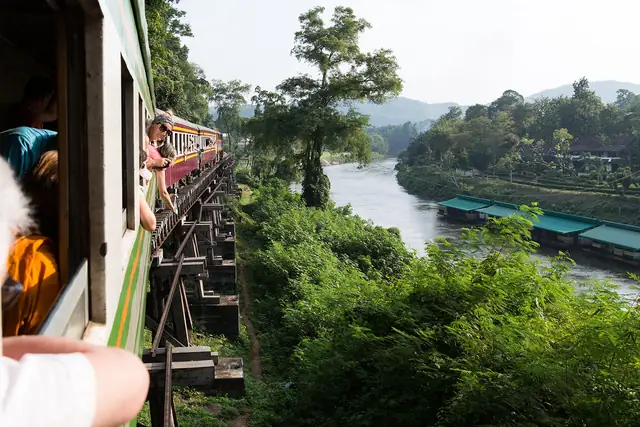
- Ride across on an ordinary train and carry on past Tha Kilen and Tham Krasae to Nam Tok. It is also the best way to see the wooden viaduct at Wang Pho.
- Get off at the River Kwai Bridge halt, spend time at the bridge and the nearby museums, then take the afternoon train back to Bangkok.
The Death Railway ride: Kanchanaburi to Nam Tok, fares and timetable
Bangkok to Kanchanaburi: train, bus, van and the return journey
The night show: River Kwai Bridge Week
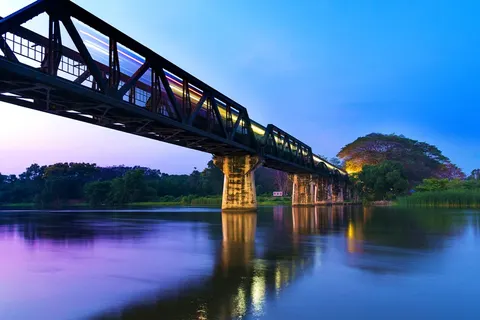
The bridge is lit by a sound and light show only during the annual River Kwai Bridge Week and Red Cross Fair, held in Kanchanaburi from late November into early December. The 2025 festival ran from 27 November to 7 December. The 2026 festival is expected in the same weeks, to be confirmed by the province, and it is only a few weeks away.
Earlier editions staged the show after dark each evening at about 19:00, with an extra show on Saturdays at about 20:30. It lasted about 40 minutes and recreated the history of the bridge and the bombing, followed by fireworks. Entry has been free, and there are screenings in Thai and in English. Some nights are replaced by other performances: on 4 and 5 December 2025 the show was cancelled and a classical masked dance was staged instead. The schedule is set each year. Outside the festival there is no regular show.
What else is on during the week
- The Red Cross Fair and market, on the grounds beside the Kanchanaburi Provincial Administrative Organization in Tha Makham, close to the bridge.
- Historical and archaeological exhibitions, folk performances and stalls selling local products.
- Food stalls, with dishes such as papaya salad, grilled fish and satay.
- In some years, old trains on show or running as part of the festival.
Making the most of the show
- Seats are limited. Arrive well before the show, about an hour if you want a good seat.
- Saturday nights and holiday weekends are the busiest. Pick a weekday evening if you can.
- Agree a meeting point with your group. Phone signal can be slow when the crowd is big.
- Taxis and songthaews can be hard to find after the show. If you stay far away, ask your hotel about transport back first.
If the festival dates fit your trip, book accommodation early; rooms near the bridge fill up. Check the dates and ticket details with the Tourism Authority of Thailand or your hotel before you plan around them. Hotels near the bridge are listed in the stay section below.
Boats on the river
Longtail and larger boats run from piers near the bridge, offering short rides along the Khwae Yai that show the bridge from the water, a view you do not get if you only walk across. Prices are set locally and negotiated. Some day tours from Bangkok include a river boat ride, as shown in the booking boxes below.
Agree three things before you board
- The route and the time. How far it goes and how long it takes. A loop around the bridge is shorter than a ride far upriver.
- The price per boat or per person. Longtail boats are often priced per boat, so ask how many people the price covers.
- Where you get on and off, whether the boat brings you back to the same pier, and whether life jackets are provided.
Longtail boats are loud and the spray is real. Keep phones and bags in a waterproof bag. In the afternoon bring a hat and sunscreen, and keep small children in a life jacket for the whole ride.
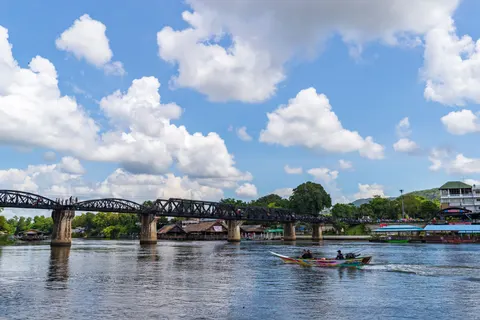
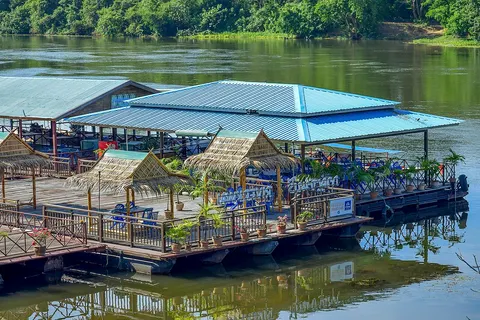
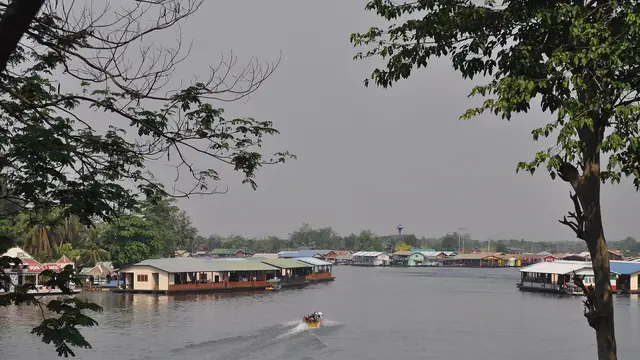
Floating restaurants and raft houses line the river upstream and downstream. For a night on the river, see the raft and riverside hotels page.
Where to stay in Kanchanaburi: town, river and raft houses
Getting around Kanchanaburi: songthaew, bicycle, boats and car hire
What is near the bridge
- World War II Museum and Art Gallery: close to the bridge entrance, within walking distance. It holds weapons and equipment, the skeletons of prisoners of war and wartime photographs, plus an art gallery with stamps, old postcards and jewellery. Entry is 20 baht for Thai visitors and 40 baht for foreign visitors; open daily 07:00 to 18:30, tel. 034 512 596.
- JEATH War Museum: a small, old-fashioned museum of wartime objects and photos in the riverside part of town. Entry is about 50 baht; hours are roughly 08:30 to 16:30, so check at the door.
- Thailand-Burma Railway Centre (Death Railway Museum): the most complete account of the railway, with a cafe on the roof. Entry is about 150 baht and it closes at about 16:00 to 17:00, so do not arrive in the last hour. It is opposite the Don Rak cemetery.
- Kanchanaburi War Cemetery (Don Rak): a quiet, well-kept cemetery with 6,982 graves of Allied prisoners. Entry is free. It is open in the daytime and closes at about 16:00 to 17:00, so check at the gate (tel. 034 511 500) and do not leave it late in the afternoon. Dress and behave respectfully.
- Kanchanaburi Skywalk: a glass-floor walkway about 150 metres long and about 12 metres above Song Kwae Road, in the town near the bus terminal. It is not at the bridge. Entry is about 60 baht and hours are roughly 08:00 to 19:00, so check at the ticket desk. It appears in some tour itineraries.
- Pak Phraek Walking Street: open on Saturdays only, about 16:00 to 21:00 (check before you go), with food, handicrafts and stage shows.
- Riverside cafes, noodle shops and the town night market.
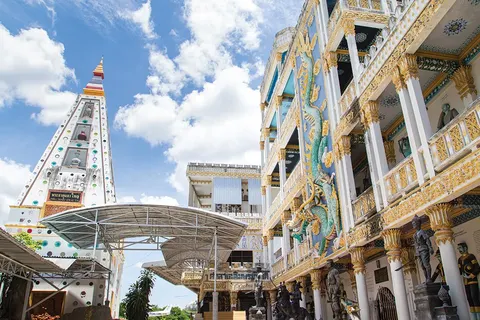
Most visitors combine the bridge with the museums and the cemetery in a half day. The details and the walking order are on the museums page. The skywalk can wait for the evening or a drizzly hour, since it is in town and does not take long.
War cemetery and museums: hours, fees and etiquette
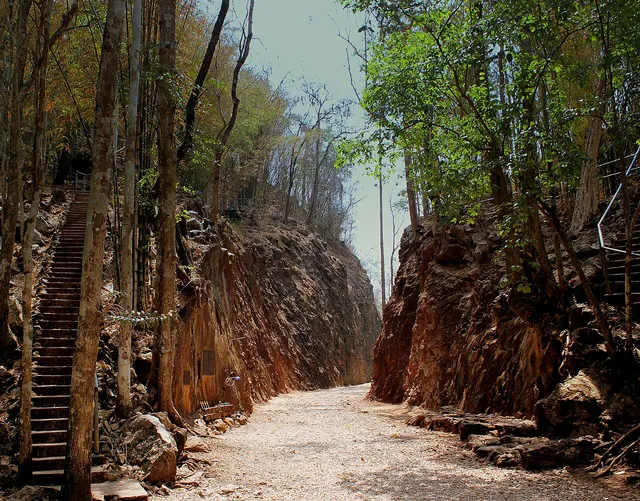
If you have another day, the railway takes you well beyond the bridge. The Tham Krasae viaduct is along the line, Sai Yok Noi is beside Nam Tok station at the end of it, and Hellfire Pass is about 80 km from town. Check the latest status of each on its own page.
Hellfire Pass Memorial Museum: hours, closures and how to get there
Eating and resting near the bridge
There are three kinds of place around the bridge. First, Thai restaurants on the river with a view of the bridge, such as Keereetara. They tend to cost more than ordinary restaurants in town, but you get a seat that looks at the bridge and a train crossing while you eat. For a riverside table, arrive before midday.
Second, small coffee shops within a few hundred metres of the entrance, such as Srisawat Coffee, Kafae Boran Phi Ben and Cha-Khun. They are good for a rest out of the sun after the walk. Opening times vary from day to day, so look in before you plan to sit there.
Third, the stalls and community souvenir stands along the approach, which sell cold drinks, snacks and souvenirs. They can be quiet on weekdays and in the late afternoon, and busier at weekends.
Evening in town
- The town night market near the railway station, open in the evening with many kinds of street food.
- Pak Phraek Walking Street, on Saturdays only, roughly 16:00 to 21:00.
- Riverside restaurants in town, good for a slow dinner after the bridge.
It is very hot. Do not wait until you are thirsty: buy cold water before you step onto the bridge and carry enough for the whole walk.
When to go: time of day and month of the year
Time of day
| Time | What it is like | Best for |
|---|---|---|
| 06:30-09:00 | Cool, few people, soft light | Walking the bridge and photos; elderly visitors and families with young children |
| 09:00-11:00 | Warming up, tour coaches not yet arrived | Followed by the museums close to the bridge |
| 11:00-15:00 | Hottest and busiest | A riverside lunch or a boat ride. Skip the walk if you dislike heat |
| 15:30-18:00 | Warm light, crowds thinning | An evening walk and photos at sunset |
| After 18:00 | No regular show, except during the festival | The festival show, or dinner by the river |
From November to January the sun sets at about 17:40 to 18:10. For golden light on the bridge, be there at about 16:30.
Month by month
- November to February: coolest and driest, and the busiest. Book rooms early for the end of November because of River Kwai Bridge Week.
- March to May: very hot. Walk only early in the morning or in the evening, and carry plenty of water.
- June to October: rainy season with fewer visitors, a high green river, but heavy rain can close the Nam Tok line, as it did in late September 2026. Bring a rain jacket and check the railway first.
Weekdays are much quieter than Saturdays, Sundays and long holiday weekends. If you can choose, go on a Tuesday, Wednesday or Thursday.
Half-day plans: with and without a car
Plan A: a one-hour stop
For people with a car and little time. Arrive in the morning, walk across and back, and photograph the bridge from the bank. It takes about 45 to 60 minutes. Then add the Don Rak cemetery and the Railway Centre, which are on the way back into town.
Plan B: a morning from town, without a car
- About 07:30: take a songthaew or tuk-tuk from your hotel to the bridge. Agree the price before you get in.
- 07:45 to 08:30: walk across the bridge and take photos while it is quiet.
- 08:30 to 09:30: the World War II Museum and Art Gallery near the entrance, which opens at 07:00.
- 09:30 to 10:15: coffee near the bridge, then a ride to the Don Rak cemetery.
- 10:30 to 11:15: the cemetery.
- 11:15 to 12:30: cross the road to the Thailand-Burma Railway Centre, which is air-conditioned and good for the hot hours.
- 12:30: lunch in town. Keep JEATH for the afternoon if you still have energy.
Plan C: a day from Bangkok by train
Take train 257 from Thon Buri at 07:45 and get off at the River Kwai Bridge halt at about 10:37. That gives you about 4 hours before train 258 leaves the halt at about 14:35. Walk the bridge, have lunch by the river and visit one museum near the bridge. To add the cemetery and the Railway Centre as well, you need a songthaew or tuk-tuk there and back, and enough time to catch the train. If you miss train 258, see the bus options on the Bangkok to Kanchanaburi page.
Kanchanaburi in one day: a timed plan
Plan D: evening during River Kwai Bridge Week
Arrive at the bridge at about 16:30, walk across and take photos in the golden light, eat at a riverside restaurant or at the fair at about 17:45, then find a seat before 19:00. Go back into town when the fireworks end. If you are staying the night, book ahead.
Plan E: two days and one night
With more than half a day, make day one the bridge, the cemetery, the museums and a riverside dinner, then spend day two at Erawan Falls or on the Death Railway, following the two-day plan.
With children, older visitors, and when it rains
Young children
Keep a hand on children all the way across. The edges are open and the gaps between the planks are wide. With very small children, walk out to the middle and come back. A pushchair is hard to use on the planks, so a carrier is easier. In the early morning it is cooler and quieter than later in the day.
Older visitors and people who find walking hard
You do not have to cross the bridge to see it. The riverbank on the town side gives the best view of the curved spans and has cafes with seats. A wheelchair is not suited to the surface of the bridge. If walking is hard, take a longtail boat or have lunch at a riverside restaurant. The Thailand-Burma Railway Centre is fully air-conditioned and suits the hot hours.
If it rains
- The bridge is slippery. Walk slowly in shoes with grip, and leave the bridge if there is lightning.
- The Thailand-Burma Railway Centre is air-conditioned and takes 60 to 90 minutes. The World War II Museum and Art Gallery is another indoor option.
- The skywalk in town suits a break in the rain, but the glass floor can be slippery when wet.
- If the Nam Tok line is closed for flooding, ask at the station before paying for a tour that includes the train.
Approximate costs
| Item | Cost | Note |
|---|---|---|
| Walking the bridge | Free | No entry fee |
| World War II Museum and Art Gallery | 20 baht Thai, 40 baht foreign | Open daily 07:00 to 18:30 |
| JEATH War Museum | About 50 baht | Buy at the door |
| Thailand-Burma Railway Centre | About 150 baht for adults | Check the price at the ticket desk |
| Don Rak war cemetery | Free | Daytime, closes about 16:00 to 17:00. Check at the gate |
| Skywalk | About 60 baht | In town |
| Nam Tok line train | About 100 baht foreign, about 25 baht Thai | Any distance. Buy at the window |
| Longtail boat | Agree at the pier | Ask whether the price is per boat or per person |
| Songthaew or tuk-tuk in town | Agree before you get in | Short rides are usually inexpensive |
If you go into all three museums, the World War II museum, JEATH and the Railway Centre, entry for a foreign visitor comes to about 240 baht, not counting transport, food and boats. A day tour from Bangkok covers transport and a guide, and some include lunch and the train ticket. See the details in the booking boxes below.
How to get to the bridge
| Option | Best for | Notes |
|---|---|---|
| Songthaew or tuk-tuk | A quick ride from the centre | Agree the price before you get in. Usually inexpensive for the short ride. If you want a ride back too, agree a return price |
| Bicycle or scooter | Flexible days around town | Rental shops are in the town centre and along the river road. The town is fairly flat |
| Own car or hire car | Combining Erawan or Sai Yok in one day | From the town centre go north along Highway 323 for about 3 to 4 km. Parking fills early at weekends and during River Kwai Bridge Week, so go early |
| Train | Arriving by rail | The ordinary train to Nam Tok passes over the bridge. Get off at the River Kwai Bridge halt. Confirm the timetable and the state of the line first |
| Day tour from Bangkok | One day, no planning | About 12 hours, with a guide, often with the Death Railway train or boat. See the booking boxes below |
| Walking from the river hotels | Staying near the bridge | Some riverside hotels are a few minutes away on foot or by bicycle |
If you are coming from Bangkok without a tour, see the train, bus, van and private car options on the Bangkok to Kanchanaburi page. Every route reaches the town first, and you then take a songthaew or tuk-tuk about 3 to 4 km to the bridge.
 12Go
Bangkok to Kanchanaburi on 12Go
From US$4
Price as of 5 Nov 2026Compare bus, van and taxi times from Bangkok to Kanchanaburi. Buses leave from the Southern Bus Terminal. Choose your date and time on the booking page.
Book on 12GoWhere to stay if you want to be near the bridge
There are three kinds of stay near the bridge. First, riverside hotels on the town side, from which you can walk or cycle to the bridge. Second, hotels in the middle of town, close to the night market and restaurants, from which you take a songthaew or tuk-tuk to the bridge. Third, raft houses on the river, which are mostly towards Sai Yok, much farther from the bridge; see the stay page to compare.
 Upscale
U Inchantree Kanchanaburi
Mae Nam Khwae Road, riverside near the bridge
Upscale, on Mae Nam Khwae Road by the river, near the bridge. Suits guests who want to walk to the bridge morning and evening. Check dates and prices on the booking page.
See prices and availability on the booking page
 Upscale
Felix River Kwai Resort
Tha Ma Kham, riverside, town side
Upscale, riverside on the town side. Suits guests who want to sleep beside the water and reach the bridge by car or bicycle. Check dates and prices on the booking page.
See prices and availability on the booking page
 Mid-range
Good Times Resort Kanchanaburi
Mae Nam Khwae Road, town centre
Mid-range, in the middle of town. Suits guests who use the hotel mainly as a bed and walk to the night market in the evening. Check dates and prices on the booking page.
See prices and availability on the booking page
 Mid-range
Natee The Riverfront Hotel Kanchanaburi
River Kwai Road, town centre
Mid-range, on Mae Nam Khwae Road in the middle of town. Suits a middle budget and a visit to both the bridge and the museums. Check dates and prices on the booking page.
See prices and availability on the booking page
During River Kwai Bridge Week, rooms near the bridge are gone weeks ahead. Book early and choose a free-cancellation rate if you can.
Where to stay in Kanchanaburi: 12 places compared across town, rafts and the Erawan side
Tours that include the bridge
There are three kinds of day tour from Bangkok that include the bridge: those built around the bridge and the Death Railway, those that add Erawan Falls, and those that start in Kanchanaburi for visitors already staying in town. Always read the itinerary on the booking page to see how long you get at the bridge and which fees are included.
Built around the bridge and the railway, from Bangkok
 KKday
Kanchanaburi & River Kwai Day Tour from Bangkok
From US$51.07
Price as of 5 Nov 2026From US$51.07. A 12-hour Kanchanaburi and River Kwai day tour from Bangkok with an English or Chinese guide. The railway ticket and a River Kwai boat ride are included. Pickup point can be chosen, for example Khlong Tan Nuea (as of 5 Nov 2026).
Book on KKday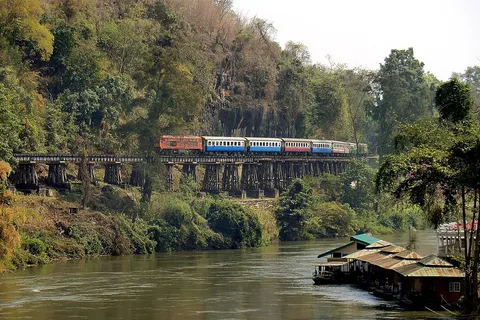 KKday
Kanchanaburi Day Tour from Bangkok: Death Railway & River Kwai
From US$71.32 (Adult price. Child aged 3 to 10: US$53.48.)
Price as of 4 Nov 2026From US$71.32. A 12-hour Death Railway and River Kwai day tour from Bangkok with an English or Thai guide. Includes admission, a Thai lunch, the Death Railway train ticket and a longtail boat ride, with hotel pickup (as of 5 Nov 2026).
Book on KKday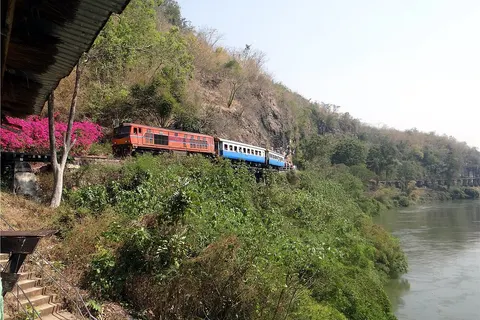 KKday
Kanchanaburi River Kwai Bridge & Death Railway Day Tour
From US$69.04
Price as of 5 Nov 2026US$69.04 per person. Bridge and Death Railway day tour of about 10.5 hours with an English guide, taking in the Thailand-Burma Railway Centre, the war cemetery, the bridge, the train and lunch. Bangkok meeting point; free cancellation up to 1 day before (as of 5 Nov 2026).
Book on KKdayPhotos, prices and reviews from Klook
Kanchanaburi highlights including the bridge and the Death Railway area, about 11.5 to 12.25 hours, Chinese or English guide, with hotel pickup from Bangkok. Check the itinerary on the booking page for exactly which stops are included.
Book on KlookPhotos, prices and reviews from Klook
Death Railway, Safari Park and the bridge, 13 hours, join-in or private, with transfer from Bangkok and a meeting point at Siam Paragon. Check the itinerary on the booking page for exactly which stops are included.
Book on KlookPhotos, prices and reviews from Klook
Death Railway train, bridge, cemetery and lunch, 12 hours, join-in tour with an English guide from Bangkok. Since 27 Sep 2026 this tour has gone to Captive Cave instead of Hellfire Pass (as of 5 Nov 2026), so check the itinerary before you book.
Book on KlookIncluding Erawan Falls, from Bangkok
 KKday
Kanchanaburi River Kwai and Erawan Falls Day Tour from Bangkok
From US$66.88
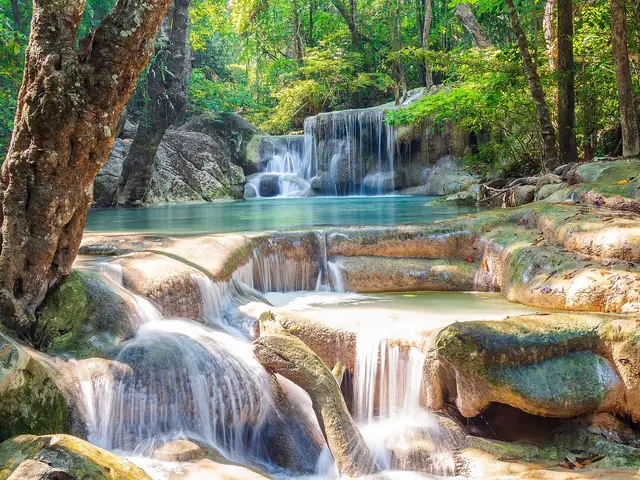
Price as of 5 Nov 2026From US$66.88 (the package with admission is US$79.02). Erawan, River Kwai Bridge and JEATH in 12 hours with an English guide. Meeting point 06:30 at Silom MRT exit 2. Free cancellation up to 2 days before. The cheapest package excludes admission (as of 5 Nov 2026).
Book on KKday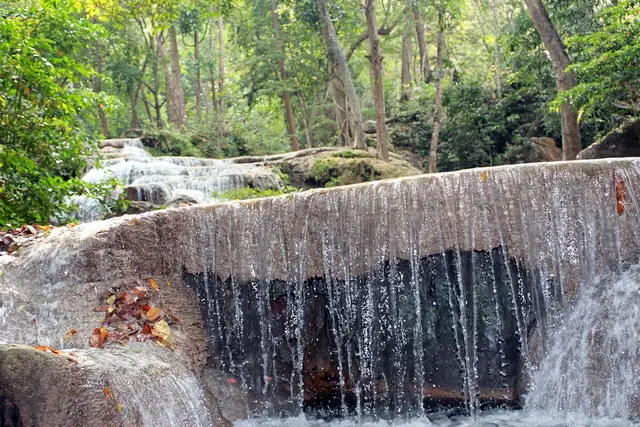 KKday
Erawan National Park & River Kwai Bridge Day Tour
From US$54.75
Price as of 5 Nov 2026From US$54.75. Small group, Erawan, the bridge and JEATH in 12 hours, leaving at 07:00 from MBK. The cheapest package excludes admission: JEATH (about 50 baht) and Erawan (300 baht for foreign adults) are paid on top, and lunch is not included (as of 5 Nov 2026).
Book on KKdayPhotos, prices and reviews from Klook
Erawan, River Kwai Bridge, the skywalk and the Allied war cemetery in 12 hours, join-in or private, English guide, free cancellation, from Bangkok.
Book on KlookStarting in Kanchanaburi, for guests who sleep in town
 KKday
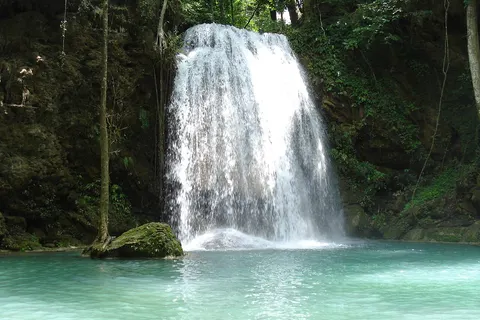
Erawan Waterfall & Bridge over River Kwai Day Tour
From US$68.81
Price as of 5 Nov 2026US$68.81 (child US$65.79). Erawan, the bridge and JEATH in 7 hours, starting 09:30 with hotel pickup in Kanchanaburi. Admission is included, lunch is not. Free cancellation up to 1 day before (as of 5 Nov 2026).
Book on KKdayPhotos, prices and reviews from Klook
Erawan, the bridge and JEATH in 7 hours, 09:30 to 16:30, small group of 1 to 20 with an English guide. Pickup from hotels in Kanchanaburi, not Bangkok. Food and insurance are not included.
Book on KlookPrivate, choose your own route
Photos, prices and reviews from Klook
A private tour from Bangkok of 13 hours with a route you choose, for example the bridge, the Death Railway, Mallika, Erawan and Meena cafe.
Book on KlookTour prices, inclusions and times are set by the operators and can change. Read the current details on the booking page. Booking through these buttons does not change your price.
Kanchanaburi tours from Bangkok: compare prices and inclusions
Common mistakes
- Going to the bridge between 11:00 and 15:00, the hottest and most crowded time. Choose morning or evening if you can.
- Standing on the track for a photo when a train is coming. Use a side bay or the riverbank.
- Walking the planks in sandals or heels. The gaps between the planks are wide.
- Planning a whole day around a train time you remembered. Timetables change, and the line closes when it floods.
- Expecting a light show every night of the year. It runs only during River Kwai Bridge Week at the end of the year.
- Thinking the skywalk is at the bridge. It is in town, separate from the bridge.
- Buying a tour without reading the itinerary. Check how many minutes you get at the bridge and whether museum entry is included.
- Reaching the Don Rak cemetery late in the afternoon, when the gate may be closing. Go by mid-afternoon at the latest.
- Getting off at Kanchanaburi station and thinking you are at the bridge. The station is about 2.5 km from it. Get off at the River Kwai Bridge halt if you want to walk the bridge.
- Visiting during River Kwai Bridge Week without a booked room. Rooms near the bridge go weeks ahead.
Frequently asked questions
Is the Bridge over the River Kwai free?
Yes. Walking the bridge costs nothing. You pay only for things nearby such as boat rides, food, museums and parking. Tours that include it set their own price.
Can you walk across the River Kwai Bridge?
Yes, along the walkway beside the rails. It is a working railway bridge, so step into a side bay when a train comes, watch the gaps in the planks, and follow the instructions of the staff.
Is the bridge in the film the real one?
The bridge in Kanchanaburi is real, but the 1957 film was shot in Sri Lanka and the story is fictional. The history of the Thailand-Burma Railway, its labourers and its prisoners is well documented.
Do trains still cross the bridge?
Yes, ordinary trains on the Nam Tok line cross it. Times and whether the line is open can change, particularly after floods, so confirm with the State Railway of Thailand (1690) or at Kanchanaburi station.
Can I take the train to the bridge, and where do I get off?
Yes. Ordinary trains on the Nam Tok line stop at the River Kwai Bridge halt, right beside the bridge. Tell the ticket seller you are going to the River Kwai Bridge, not Kanchanaburi station, which is about 2.5 km away. The morning train from Thon Buri reaches the halt at about 10:37; confirm the time before you go.
How long do I need at the bridge?
30 to 45 minutes for the walk and photos. Allow half a day if you add the museums, the war cemetery and a boat ride.
Is there a light show at night?
Only during River Kwai Bridge Week, normally late November to early December, with dates set by the province each year. Outside the festival there is no regular show.
When is River Kwai Bridge Week in 2026?
In 2025 it ran from 27 November to 7 December. The 2026 festival is expected in the same weeks, but wait for the province to confirm the dates. In recent years the show started at about 19:00 and was free.
What is the best time to visit the bridge?
Early morning or the hour before sunset, when it is cooler and quieter. November to February is the coolest season, but also the most crowded.
Can I take a boat from the bridge?
Yes, boats run from piers near the bridge. Agree the price, the length of the ride and the number of people before boarding. Some day tours include a boat ride.
Can I do the bridge as a day trip from Bangkok?
Yes. Day tours of about 12 hours start in Bangkok, and you can also go by bus or train. A tour is simpler; going yourself gives you more time at the bridge and museums.
Is the bridge suitable for children and older visitors?
Children must be held by the hand the whole way, because the edges are open and the planks have gaps. Older visitors who find walking hard can skip the crossing and watch from the riverbank on the town side, with a seat at one of the cafes. A wheelchair is not suited to the surface of the bridge.
Where the facts come from
- State Railway of Thailand
- Tourism Authority of Thailand: River Kwai Bridge Week and Red Cross Fair
- Commonwealth War Graves Commission: Kanchanaburi War Cemetery
- Timeout: Thailand-Burma Railway Centre
- Tourism Authority of Thailand
- Visit Thailand Today: Bangkok to Kanchanaburi, updated 8 Oct 2026
- Seat61: the Bridge on the River Kwai and the trains
- Wikipedia: River Kwai Bridge
- Pattaya Mail: River Kwai Bridge Week and Red Cross Fair 2025
Keep planning
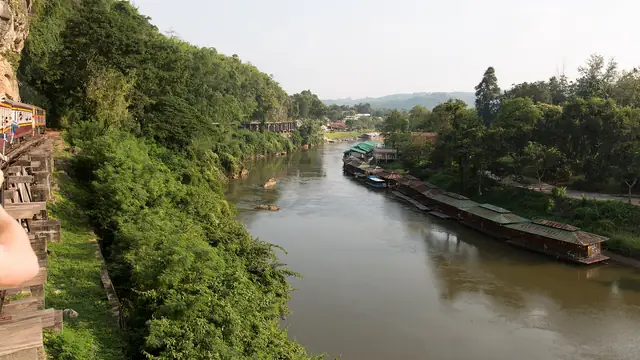 Plan your Kanchanaburi tripHow many days, what to see, fees and where to stay
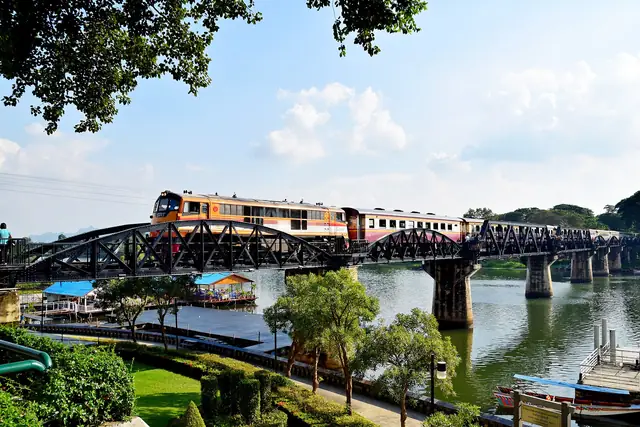 Kanchanaburi in one dayAn hour-by-hour plan from Bangkok
 Kanchanaburi in 2 days and 1 nightHistory, the train, a night by the river, then Erawan
 Kanchanaburi in 3 days and 2 nightsAdd Hellfire Pass and Sai Yok Noi
 Kanchanaburi tours and dealsDay tours and train options with prices
 Where to stay in KanchanaburiTown, riverside, raft houses and the Erawan side
 Bangkok to KanchanaburiBus, van, train and taxi compared
 Getting around KanchanaburiScooter, taxi, songthaew and train
 Erawan FallsFees, hours, the 7 tiers and how to go
 The Death RailwayTimetable, fares and Tham Krasae
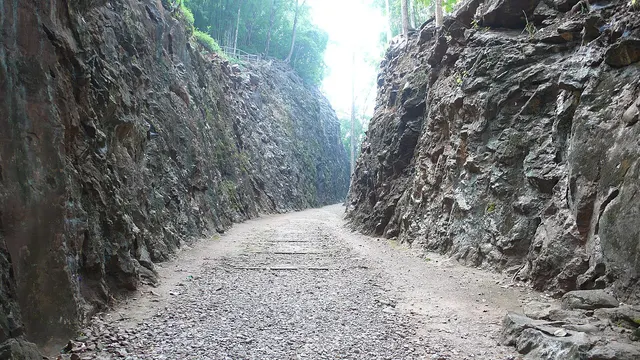 Hellfire PassFree museum, walking trails and current status
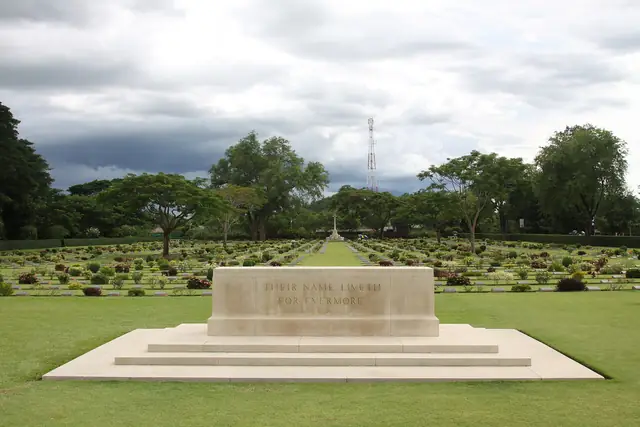 War cemetery and museumsDon Rak, JEATH and the Railway Centre
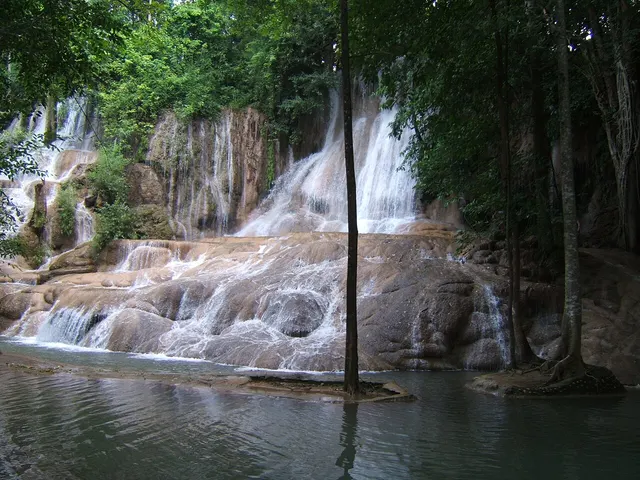 Sai Yok Noi waterfallBy Nam Tok station, not the same as Sai Yok Yai
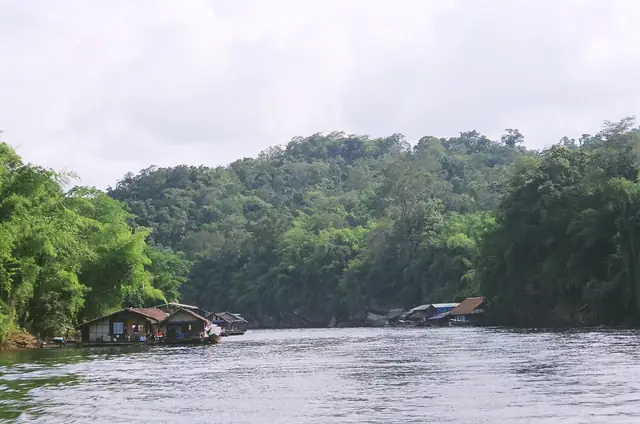 Elephant sanctuariesHow to choose one and what to ask