
Elephant tourism in Thailand has changed fast. Many camps have dropped rides and shows after pressure from visitors and welfare groups, but the new wording (sanctuary, retirement home, haven) is often used on places that still treat elephants as a photo attraction. There is no legal definition of the word and no inspection body that visitors can check, so the work of judging a place falls on you.
Below you will find a checklist you can apply to any operator, a plain explanation of why bathing is the most argued point, what a visit day usually looks like, how to contact a place directly, red flags in bundled tours, and three places around Kanchanaburi worth researching. Prices and rules can change, so confirm them in writing.
We earn a commission if you book through our links. The price you pay does not change. How we choose
Quick answer
| Avoid | Riding, chairs on the back, shows, painting, tricks, posed selfies, short chains, bullhooks in view, baby elephants on display |
|---|---|
| Look for | Observation or feeding from the ground, elephants free to walk, rest and leave, small groups, a vet, staff who use food and calm handling |
| Certification | None official in Thailand. A badge on a website is marketing, not proof |
| Distance | ElephantsWorld picks up from Kanchanaburi city (about 35 minutes). Sai Yok sites are further, so ask for pickup times |
| Time | Half day about 4 to 5 hours with transfers, full day 6 to 8 hours. From Bangkok add about 2 to 2.5 hours each way to Kanchanaburi town |
| Prices listed (check before you go) | ElephantsWorld: half day 1,800 baht, full day 2,500 baht per adult, lower for children 4 to 11. Elephant Haven: single day from 2,500 baht, overnight from 6,000 baht |
| Booking | Direct with the place. Not offered on this page |
If a place lets you ride or hold an elephant for a photo, that is already your answer. Elephants that carry people or perform have almost always been through harsh training as calves.
The checklist: what an elephant place should and should not do
Use this as a scoring list. A failure on any of the first five lines is a reason to walk away. The later lines separate a good place from an average one.
- No riding and no chairs. This is the baseline, not a bonus. A place that still offers rides to some guests is not a sanctuary, whatever its name.
- No shows, painting, football, hula hoops or tricks. These behaviours are trained, usually with fear.
- No chains in the daytime and a clear answer about the night. Short chains hold the animal in one spot and stop it from walking, foraging or socialising. Welfare groups note that chaining often happens after visitors leave, so ask directly where each elephant sleeps. A few industry standards allow limited, long-line restraint for safety, so ask how long and how often rather than only whether chains exist.
- No bullhooks used on the animals. A hook carried for show is a bad sign, a hook used to steer is worse. Ask how mahouts guide elephants and what the reward is (food and voice, not pain).
- No breeding for visitors. Baby elephants on site usually mean breeding for tourism, and these animals can never be released. World Animal Protection campaigns for a ban on commercial breeding of elephants for tourism.
- Close contact is limited or absent. Elephants should be free to refuse. If staff push elephants towards visitors for hugs, kisses or photos, that is performance by another name.
- Group size and daily visitor numbers. A place that can name a ceiling (a few small groups a day) is thinking about the elephants. A place that takes any number of coaches is not.
- Feeding limits. Feeding is common and often fine, but it should be planned: fruit, vegetables or fodder prepared by staff, set amounts, no sugary snacks, no queue of guests feeding one elephant in turn. Ask what share of the diet comes from visitors.
- Vet care and records. Ask who the vet is, how often they visit, and what happens to old, blind, injured or disabled elephants. A real retirement home has them.
- Where the elephants came from. Ask who owns each elephant and whether any were bought, rented or still work elsewhere. Rescue from logging, trekking camps or street begging is a common answer, but ask for specifics.
- Staff ratio. Ask how many mahouts and carers there are per elephant. Fewer staff than elephants means restraint is more likely.
- Space, shade and water. Elephants should be able to walk away from visitors, reach shade and water all day, and have room for dust and mud.
World Animal Protection judges venues on five areas: nutrition, environment, health, behaviour and mental state. Use the same five on the day. Does the elephant eat well, move freely, look healthy, act naturally and seem calm?
Bathing: why many experts discourage it
Bathing sounds gentle, and it is the activity that makes many places feel like sanctuaries. It is also the most argued. World Animal Protection says nearly all elephants used for close contact such as bathing have gone through a breaking-in process as calves, where they are separated from their mothers and punished until fear makes them controllable. Tourist demand for bathing keeps that training going out of sight.
A second problem is control. An adult Asian elephant can weigh up to 4,000 kg and move at about 25 km/h, so a place that lets paying visitors into the water with elephants has to rely on strict control of the animals or accept a risk to people. Welfare groups point to tourist deaths during elephant bathing in Thailand and India, including one in Thailand in 2025. There are also no studies on how routine public bathing affects an elephant's stress levels, and a timetable can push elephants into the water whether or not they want to go.
Opinions are not identical. Some projects that are widely seen as good have offered bathing, and several Kanchanaburi places have offered it, while many welfare groups and travel companies have dropped bathing entirely. The practical conclusion for a visitor is simple: if bathing is the headline of the day, treat it as a warning sign, and if it is offered, apply the careful version below.
What bathing looks like when it is done carefully
- Visitors watch from a raised walkway or the bank. They do not climb on, scrub or give commands.
- The elephants walk into the river and leave when they choose. There is no timetable that depends on tourists.
- It is the normal washing routine carried out by carers, not a show built for photos.
- No chains, no hooks, and the operator can explain how the elephants are guided.
If you want to be sure, tell the operator when you book that you prefer an observation-only visit and ask them to confirm in writing. Their reply is useful information in itself.
Places around Kanchanaburi to research
These three are known in the area. The list is not a recommendation and this site does not certify any of them. Read recent independent reviews, then ask the questions above.
ElephantsWorld, Wang Dong
A non-profit on the edge of Kanchanaburi city, about 35 minutes by pickup. It was founded in 2008 by Dr Samart and his wife Khun Fon, a veterinarian, and takes in old, abused and disabled elephants, many from logging, trekking camps or street begging. Listed prices are 1,800 baht for a half day (adult 12 and over, 1,300 baht for children 4 to 11) and 2,500 baht for a day program (1,800 baht for children). Hours are about 09:30 to 15:00 with activities from 10:00, and pickup in Kanchanaburi city from a hotel, the bus station or the train station is free. Check all of this before you go.
The point to check: the day is hands-on, with guests preparing food, feeding the elephants and sometimes bathing them. Because bathing is the contested part, ask exactly what the program includes, whether you can skip it, and how the elephants are kept at night. A tip for the mahout may be asked for on the spot, so ask about extras.
Elephant Haven, Sai Yok
A former trekking camp in Sai Yok district that now says it offers no riding. It is linked to the Chiang Mai organisation Elephant Nature Park, so ask the camp how close that link is. Its booking page lists a single day program from 2,500 baht with pickup around 08:00 from Kanchanaburi bus station or nearby hotels and a return around 16:00, and an overnight program from 6,000 baht. A half day option may also exist, so ask.
The point to check: the day can vary. Feeding, walking and bathing may be part of it, bathing may not be offered every time, and one reviewer mentioned seeing elephants chained during an overnight stay. Do not rely on any single review. Ask by email which activities are included on your date and whether elephants are chained at night, and keep the answer.
Somboon Legacy Foundation
A small hands-off project for four old rescued elephants, in the Dan Makham Tia area of Kanchanaburi province. It says no riding and no performances, no bathing and no selfies, with visitors watching from a distance. Hours are about 09:00 to 16:00 daily. A visit usually includes an introduction to each elephant, observation, helping prepare food, a small museum and lunch. The foundation is moving its elephants to a new home, so confirm the location and schedule before you set out. Phone +66 61 572 8761, email [email protected].
If you want the least contact, a place that states observation only is easier to defend than one where bathing is an option. If you accept more contact, choose the one that answers your night-chaining, group-size and vet questions plainly.
What a visit day looks like, hour by hour
Every operator sets its own timings. This sample follows the published hours of ElephantsWorld (09:30 to 15:00, activities from 10:00) and the Elephant Haven single day program (about 08:00 pickup, return about 16:00). Use it to plan, then replace it with the schedule the operator sends you.
| Time | Full day, typical |
|---|---|
| 08:00 to 09:00 | Pickup from your Kanchanaburi hotel or the bus station, a drive of about 35 minutes (longer to Sai Yok) |
| 09:30 to 10:00 | Arrival, briefing, safety rules, meet the carers |
| 10:00 to 11:30 | Meet the elephants, hear their stories, prepare food (chopping fruit, vegetables, fodder), first feeding |
| 11:30 to 12:30 | Lunch for visitors, usually provided. Elephants rest in the shade |
| 12:30 to 14:00 | Walk with the herd or watch from a distance, mud and dust time. Bathing only if the place offers it and you choose to join |
| 14:00 to 15:00 | Free time, showers if offered, closing talk, a tip for the carers if you wish |
| 15:00 to 16:00 | Return to Kanchanaburi. Add 2 to 2.5 hours if you continue to Bangkok |
A half day drops lunch and compresses the rest, so expect about 3 to 4 hours on site. ElephantsWorld's half day saves 700 baht against its full day but loses most of the walking and the quiet middle of the day, which is when elephants rest and you see the least staged behaviour.
Getting there
- From Kanchanaburi town: a transfer is part of most programs. Pickup at ElephantsWorld is free within the city and takes about 35 minutes. Give your hotel name when you book, since far-out hotels may not be covered.
- From Bangkok: it is a long day. The drive to Kanchanaburi town takes about 2 to 2.5 hours, then you add the transfer to the site. A taxi from Bangkok may be arranged with ElephantsWorld. Staying a night in Kanchanaburi is easier on you.
- Sai Yok sites: pre-booked or private transport is advised because they sit on rural roads. Ask for a map pin, not just a name, since several elephant camps in Sai Yok have similar names.
What to wear and bring
- Clothes you can get dirty or wet, long trousers, and closed shoes or sandals with grip.
- Sunscreen, a hat and insect repellent. ElephantsWorld provides water.
- A change of clothes and a plastic bag for wet items, even if you decide not to bathe.
- Some cash in small notes for tips and extras.
- A towel if the place does not give one. Elephant Haven has showers and towels (check).
Booking direct: what to ask in writing
Booking with the place itself gives you a written record of what was promised and avoids a reseller margin. ElephantsWorld takes bookings through a form on its website and by email at [email protected], and uses phone, WhatsApp and Line on +66 86 335 5332 for urgent requests. Elephant Haven shows its programs on a booking page on elephanthaventhailand.org and lists the phone 061 287 7205. Somboon Legacy publishes 061 572 8761 and [email protected].
Paste these into your first message:
- Which activities are included on my date, and can I choose observation only?
- Do you offer or allow riding, chairs, tricks, painting or posed photos with the elephants? Please confirm none.
- Are the elephants chained at night or when no visitors are present? How are they kept?
- How many elephants live at the site, how many visitors come per day, and what is the largest group?
- Who is your vet and how often do they visit?
- Where did each elephant come from? Do any work elsewhere?
- What is the total price per person, what does it include (transport, lunch, insurance) and are tips expected?
- What is your cancellation and rain policy? Is there any refund if I leave early or the program changes?
- Pickup time and place. Can you collect me from my hotel?
ElephantsWorld gives no discount or refund if you leave a program early, and asks you to contact it as early as possible to cancel. Get the cancellation terms before you pay anything, whichever place you choose.
Welfare versus photo traps
- Photo with a baby elephant. Calves on display point to breeding for tourism. Walk away.
- Mud baths or paint-on-skin sessions arranged for guests. If the elephant is held in position for them, it is a show.
- Hugging, kissing or sitting on the neck for a photo. Not hands-off, and the trained behaviour behind it is the problem.
- Feeding by dozens of guests in turn. Fast feeding can overfeed and teaches elephants to crowd every person.
- A website made of staged photos with people in the water. It shows what the real program is.
- Words like happy, rescued, retired and free used without detail. Ask what changed and when.
Experts do disagree on some details. Some researchers say hooks and chains are not stress factors in themselves but become so when misused, and some industry standards allow limited chain use under rules, while World Animal Protection pushes towards observation-led visits. Where experts differ, take the stricter view as a visitor, because you cannot audit a camp in a few hours.
Red flags in tours that mix elephants with Erawan
Day tours from Bangkok sometimes bundle an elephant stop with Erawan Falls, the River Kwai Bridge and lunch. These are the signs to avoid.
- The tour name uses elephant riding, trekking or bathing as a selling point.
- The itinerary lists an elephant stop without naming the operator. Without a name you cannot check anything.
- Elephants, Erawan and the bridge in one day from Bangkok. Erawan is in a different direction from the sanctuaries, so the elephants tend to become a short stop between long drives.
- No mention of group size, or a large coach group.
- Elephant activities sold as optional extras paid for on site.
- Reviews that describe a short stop, a queue for photos or elephants on chains.
If you want Erawan and an elephant visit, do them on separate days or as one early start from Kanchanaburi rather than a rushed Bangkok round trip. Erawan National Park charges foreign adults 300 baht, and arriving early beats the crowds.
Fitting an elephant visit into your trip
An elephant visit takes half a day to a full day and does not mix well with the railway and war sites. Treat it as its own block.
- One day: skip it. The bridge, the museums and either Erawan or the Death Railway already fill the day.
- Two days, one night: put the elephants in the first morning, then the bridge and cemetery in the afternoon. Erawan moves to day two.
- Three days, two nights: a full-day program on day two, between the war sites on day one and Erawan on day three.
Kanchanaburi in 2 days and 1 night
Season and heat
November to February is the coolest and most comfortable period. March to May is very hot, so pick the morning slot, drink steadily and expect elephants to rest in shade through midday. June to October is the wet season: the ground is muddy, rivers rise and programs can change at short notice, so ask what happens in heavy rain. In any season the morning is cooler and the elephants are more active.
Heat also decides what you see. Elephants lie in shade or mud around midday, so a long lunch break is a feature of a good program, not a gap in it.
Frequently asked questions
Are there ethical elephant sanctuaries near Kanchanaburi?
Some places say they are, but Thailand has no official certification. Judge each with the checklist above and recent independent reviews. ElephantsWorld, Elephant Haven and Somboon Legacy Foundation are three names to research.
Is elephant bathing ethical?
World Animal Protection and other groups advise against it, because elephants used for close contact have usually been through harsh training, and a bathing timetable can put visitors before the animals. Watching a normal wash routine from a distance is the careful version.
Can I ride an elephant in Kanchanaburi?
Some places still offer rides. We advise against them, as they rely on training and loads that can harm the animals.
Is ElephantsWorld ethical?
It describes itself as a non-profit home for old, abused and disabled elephants, with no riding. The program includes feeding and may include bathing, so ask what your program includes and how the elephants are kept at night.
How much does an elephant visit cost?
ElephantsWorld lists a half day at 1,800 baht and a full day at 2,500 baht for adults 12 and over, with lower child prices. Elephant Haven lists a single day program from 2,500 baht and an overnight program from 6,000 baht (check before you go). Prices change and tips may apply, so confirm the total in writing.
How long does the visit take?
A half day is about 4 to 5 hours with transfers and a full day 6 to 8 hours. Add 2 to 2.5 hours each way if you travel from Bangkok.
How far is it from Bangkok?
Kanchanaburi town is about 2 to 2.5 hours by road, and the sites are another 35 minutes or more from town. Stay overnight rather than doing it as a rushed day trip.
What should I wear?
Clothes you can get dirty or wet, long trousers, closed shoes or sandals with grip, a hat, sunscreen and insect repellent. Bring a change of clothes.
Can I book an elephant visit on this site?
No. No elephant product is sold here. Contact the place directly after asking the questions on this page.
Can I combine an elephant visit with Erawan Falls in one day?
It is possible but rushed, and bundled tours often shrink the elephant part to a short stop. Do them on separate days if you can.
Where the facts come from
- ElephantsWorld, official site (programs, prices, contact)
- ElephantsWorld FAQ (hours, pickup, cancellation)
- Elephant Haven, booking page (single day and overnight programs)
- Elephant Haven, Visit Thailand Today
- Elephant Haven, Bangkok Beyond
- Somboon Legacy Foundation, Visit Thailand Today
- Somboon Legacy Foundation, official site
- World Animal Protection: the cruelty involved in elephant bathing
- World Animal Protection: elephant friendly tourism
- Responsible Travel: is it okay to bathe elephants?
- Action for Elephants UK: what does an ethical elephant sanctuary look like
- Fodor's: elephant tourism is more complex than you think
Keep planning
 Plan your Kanchanaburi tripHow many days, what to see, fees and where to stay
 Kanchanaburi in one dayAn hour-by-hour plan from Bangkok
 Kanchanaburi in 2 days and 1 nightHistory, the train, a night by the river, then Erawan
 Kanchanaburi in 3 days and 2 nightsAdd Hellfire Pass and Sai Yok Noi
 Kanchanaburi tours and dealsDay tours and train options with prices
 Where to stay in KanchanaburiTown, riverside, raft houses and the Erawan side
 Bangkok to KanchanaburiBus, van, train and taxi compared
 Getting around KanchanaburiScooter, taxi, songthaew and train
 Erawan FallsFees, hours, the 7 tiers and how to go
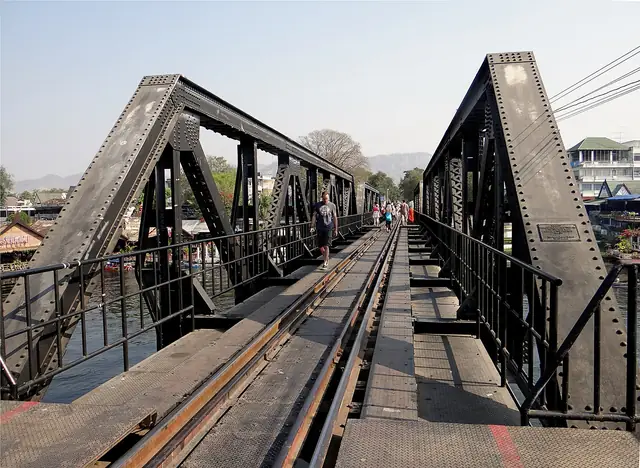 River Kwai BridgeHow to walk it, ride it and when to go
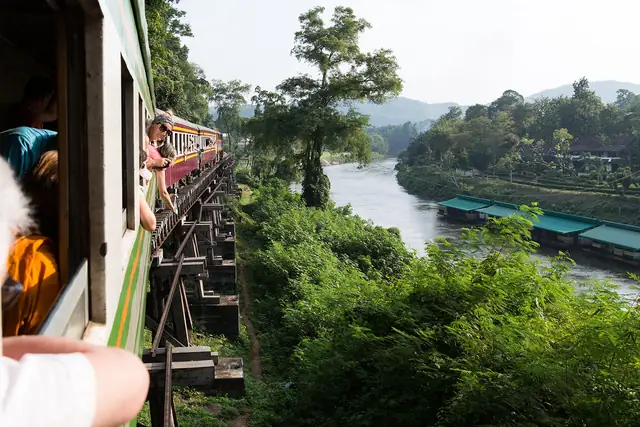 The Death RailwayTimetable, fares and Tham Krasae
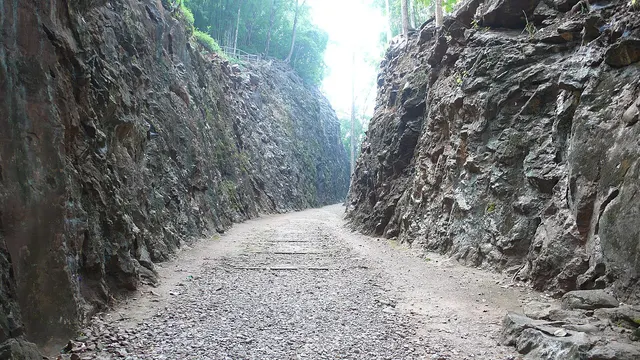 Hellfire PassFree museum, walking trails and current status
 War cemetery and museumsDon Rak, JEATH and the Railway Centre
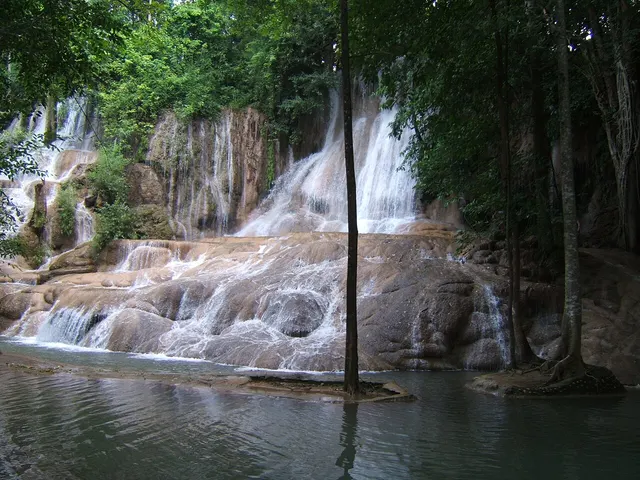 Sai Yok Noi waterfallBy Nam Tok station, not the same as Sai Yok Yai