Ubon has three kinds of temple visit. The first is the city wats you can reach on foot or by songthaew. The second is the forest monasteries of the Ajahn Chah tradition outside town toward Warin Chamrap. The third is the glowing temple at Chong Mek, the farthest and the most asked about. This page runs through them by location, with the best time, fees and the mistakes people make, and adds where to eat, cafes, night markets, a one-day walk, a no-car route and where to stay by area. For a day by day plan see Ubon Ratchathani in 2 days and 1 night.
For Pha Taem, Sam Phan Bok and Khong Chiam see Khong Chiam and Pha Taem. If you arrive in July read the Candle Festival page too, because several wats here are where the candles are made.
We earn a commission if you book through our links. The price you pay does not change. How we choose
Ubon city and temples in one minute
| Best for | Temple and photo fans, followers of the Thai forest tradition and Ajahn Chah, and anyone who wants Vietnamese-Isan food and an old town walk |
|---|---|
| Glowing temple | Wat Sirindhorn Wararam Phu Phrao, Chong Mek, about 1.5 hours from the city. Arrive before sunset and wait for dark; the glow is clear from about 18:30. Free, open about 06:00 to 20:00, possibly until 21:00 (check before you go) |
| Forest monasteries | Wat Nong Pa Phong about 12 km and Wat Pah Nanachat about 15 km from the city. Go in the morning, dress modestly, reach Wat Pah Nanachat before 08:00 to join the meal |
| City wats | Thung Si Mueang park (05:00 to 22:00), Wat Thung Si Mueang and Wat Phra That Nong Bua (about 06:00 to 18:00), Wat Maha Wanaram (about 08:30 to 16:30), Wat Si Ubon Rattanaram, Wat Supat Narama, Wat Chaeng |
| Museum | Wednesday to Sunday about 09:00 to 16:00, closed Monday and Tuesday. Entry 20 baht for Thais, 100 baht for foreigners |
| Time needed | City wats half a day, forest monasteries a morning, glowing temple an afternoon and evening |
| No car | City wats on foot and by songthaew, forest monasteries by bus or a hired car, the glowing temple by taxi or rental car. See no car |
Do not combine the glowing temple with Pha Taem on one day. They lie in opposite directions, south to Chong Mek and east to Khong Chiam. Without your own car, split them over two days.
Which temple first and how long each takes
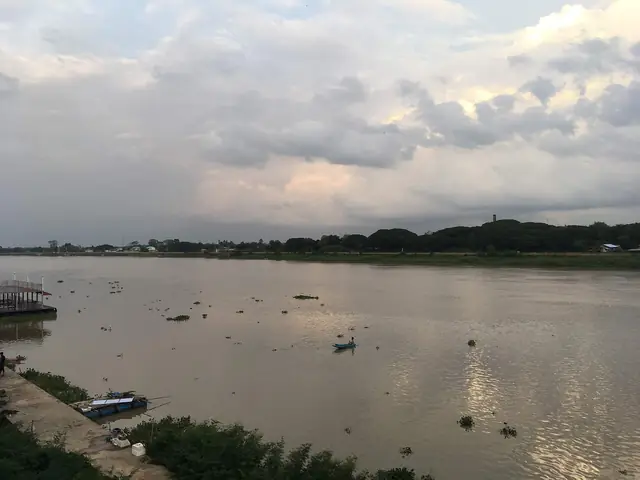
The order that wastes the least time is the forest monasteries on the Warin Chamrap side in the morning, the city wats and the museum from late morning to mid afternoon, and dinner by the Mun River. The glowing temple is its own half day: leave town at about 14:00 or 15:00 so you arrive before sunset.
| Where | From the city | Time there | Best time |
|---|---|---|---|
| Wat Pah Nanachat (Ban Bung Wai) | About 15 km | 1 to 2 hours | Arrive before 08:00 |
| Wat Nong Pa Phong | About 12 km | 1 to 1.5 hours | 08:00 to 10:00 |
| City wats (Thung Si Mueang, Nong Bua, Maha Wanaram) | In town | Half a day | Morning or late afternoon, out of the heat |
| National Museum | In town | 1 hour | Wednesday to Sunday |
| Wat Sirindhorn Wararam Phu Phrao | About 1.5 hours to Chong Mek | 1 to 2 hours at the temple | Arrive before sunset, stay until dark |
Wat Sirindhorn Wararam Phu Phrao (the glowing temple): when to see the glow
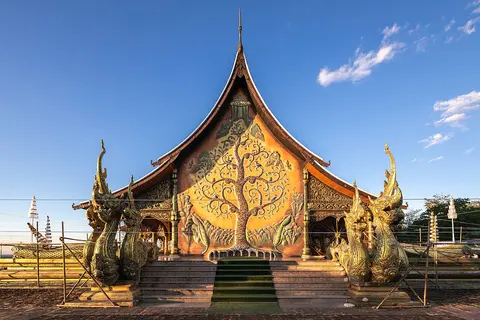
Wat Sirindhorn Wararam Phu Phrao, also called Wat Phu Phrao, sits on top of Phu Phrao hill in Chong Mek subdistrict, Sirindhorn district, beside Highway 217 and about 5 km from the Chong Mek border post. The ordination hall is modelled on Wat Xieng Thong in Luang Prabang but more than twice as long, with naga statues beside the steps. From the terrace behind it you see the Chong Mek checkpoint, Sirindhorn reservoir and the hills. A Lao monk from Champasak, Phra Ajarn Bunmak, founded the temple around 1973, it stood empty for decades until 1999, and the glowing painting was added later.
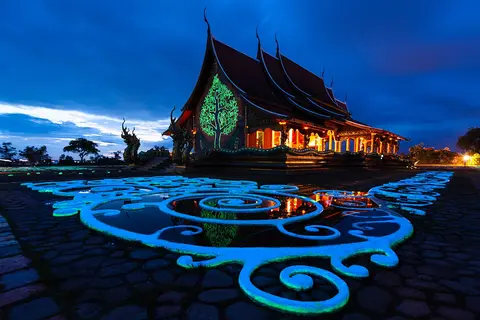
What glows is a painted kalpapruek tree on the wall behind the hall, which shines green after dark, and the patterned paving in front, which shines blue. It is not a real bodhi tree. The paint absorbs daylight and gives it back after dark. By day you see the same painted gold tree and the architecture, but no glow.
When to go
- Arrive at about 17:00 to 18:00 for the sunset and the view. The glow is clear from about 18:30 and stays good until about 19:30 to 20:00. Allow 1 to 2 hours.
- The temple opens about 06:00 to 20:00, possibly until 21:00, and it is free. Check before you go.
- There is wide parking and a paved road that an ordinary car can climb to the hall, with only a few steps at the building. Dress modestly, because it is a working temple.
Getting there and back
By car it is about 1.5 hours from the city. Without a car, a fixed-price airport taxi to Chong Mek costs about 1,000 baht one way (check before you pay). Have the driver wait and bring you back, because there is almost no public transport back after dark. Cross-border buses to Pakse pass through Chong Mek: see Getting to Ubon Ratchathani. To sleep in the south instead, see Sirindhorn and the south.
Keep the flash off and do not shine a torch at the painting. A tripod or a rest for your phone and night mode make the green and blue much stronger. Use the torch only for the walk back to the car, and ask the temple first if you want to shoot the Milky Way.
Bamboo Resort Chong Mek
Sirindhorn, Chong Mek area
In the Chong Mek area, close to the glowing temple and the border, so you do not drive back in the dark. Works if you cross to Pakse next morning. Check rooms and prices on the booking page.
See prices and availability on the booking page
 Klook
Ubon Ratchathani Province Car Rental
From US$37.09 (Starting price per day, compact car, as of 13 Nov 2026)
Price as of 13 Nov 2026To drive to Wat Phu Prao yourself, pick up a rental car at Ubon airport and set your own return time. A compact car such as a Toyota Vios starts at about US$37 a day, as of 13 Nov 2026. The price changes by date and car.
Book on Klook 12Go
Ubon Ratchathani to Pakse on 12Go
From US$8 (Starting price for the bus)
Price as of 6 Nov 2026To go on to Pakse after the glowing temple, check the cross-border bus and taxi options here and pick a morning departure. Times and prices change by date.
Book on 12GoPhotos, prices and reviews from Klook
A one-day tour from a hotel in Pakse (Laos) to Tad Ngueang and Tad Fane waterfalls and Vat Phou, for people who cross at Chong Mek and want a guide. It starts in Pakse.
Book on KlookWat Nong Pa Phong: Ajahn Chah's monastery
Wat Nong Pa Phong is in Non Phueng subdistrict, Warin Chamrap district, about 12 km south-east of the city. Ajahn Chah founded it in 1954, and it is the mother monastery of a forest tradition with branches in Thailand and abroad. The Sri Bodhiyan chedi holds his ashes, and a three-storey museum shows his story and belongings, with a wax figure on the third floor.
| Open | About 08:00 to 16:30 daily, check before you go |
|---|---|
| Entry | Free. Phone 0 4526 7563 |
| Dress | Long trousers and covered shoulders, shoes off where signed |
| Best time | 08:00 to 10:00 to see the morning routine |
| Language | Little English signage or staff. Many foreign visitors go to Wat Pah Nanachat instead |
This is a working monastery first and a sight second. Speak quietly, ask before photographing monks and do not walk through chanting. Without a car, take a pink songthaew to Ban Gor and then walk or take a tuk-tuk for the last 2 km. Agree the return before you leave.
 Klook
Ubon Ratchathani Province Car Rental
From US$37.09 (Starting price per day, compact car, as of 13 Nov 2026)
Price as of 13 Nov 2026The two forest monasteries are about 20 minutes apart and buses are not frequent. A rental car from the airport starts at about US$37 a day, as of 13 Nov 2026.
Book on KlookWat Pah Nanachat (the International Forest Monastery): visiting and rules
Wat Pah Nanachat is at Ban Bung Wai, Warin Chamrap, about 15 km from the city. Ajahn Chah founded it in 1975 as a training monastery for non-Thai monks, and its first abbot was Ajahn Sumedho. English is the main language and many of the monks are from abroad.
- Arrive before 08:00 if you want to offer food and join the meal, which is the monastery's only meal of the day.
- Day visitors can usually come about 06:00 to 18:00. The guest monk is often free about 09:00 to 11:00. Check with the monastery before you go.
- To stay overnight you must register with the guest monk with your passport and visa, and you should write ahead. Late arrivals after 16:00 are normally not accepted.
- Overnight guests keep the eight precepts. Men who stay more than a few days shave their head, eyebrows and beard and wear modest white.
- Dress modestly, no shorts or vest tops, and silence your phone.
Buses from Ubon toward Si Saket pass the monastery, or you can take a bus or songthaew to Warin Chamrap and change to a red songthaew (about 10 baht, check the fare before you board). By taxi or car, allow time to wait, as return transport is not frequent mid morning. Read more on the monastery's own website.
Thung Si Mueang: the city park and candle tower
Thung Si Mueang is the city park on Uparat Road in front of the old provincial hall, now the National Museum. It is open daily from 05:00 to 22:00 and free. It was once the ruler's rice field, and King Rama V made it a place for townspeople to relax and hold festivals.
The landmark is a candle tower about 22 m high, built in 2000 as the symbol of the city. The City Pillar Shrine and a monument to the city's founder, Phra Pathum Worarat Suriyawong (Chao Kham Phong), are close by. During the Candle Festival this is where the candles are displayed.
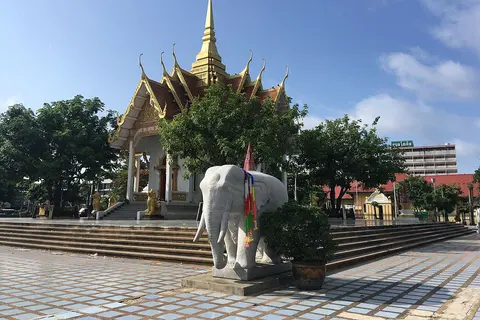
In the evening locals jog and sit here, and a small market sets up from about 16:00 until about 21:00 (days change). Half an hour to an hour is enough, and it is the best start for an old town walk. For festival dates see the Candle Festival programme, and for hotels near the park see stays by area.
Wat Thung Si Mueang: the scripture hall in a pond
Wat Thung Si Mueang is at 95 Thanon Luang, Nai Mueang, and opens about 06:00 to 18:00 daily (phone 0 4524 6060). People come for the wooden scripture hall (Ho Trai) standing on stilts in the middle of a pond, its fine wood carving, and a replica of the Buddha's footprint. The best light is in the morning when the water is still.
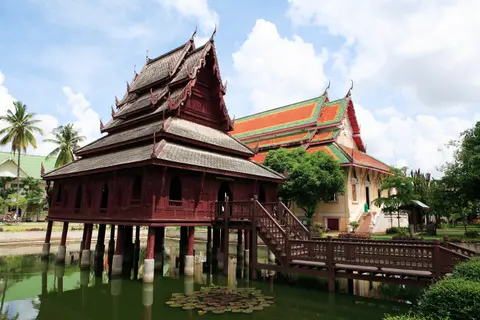
The temple is thought to date from the reign of King Rama II or III. Its founder, Phra Ariyawongsachan Yanawimon (Sui Lakkham), studied at Wat Saket in Bangkok and brought a replica footprint of the Buddha from there. The scripture hall is a four-room Thai-style house that keeps the Tripitaka and local manuscripts, with a stepped roof showing Burmese influence passed on through Lao art.
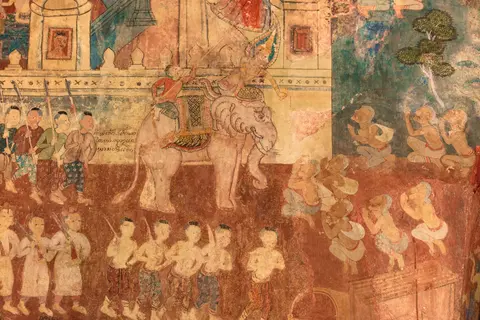
The hall is old, so stay outside the barriers and do not climb. There is no fee, but the donation box helps the upkeep of the wooden buildings. Allow 30 to 45 minutes. Thung Si Mueang park is a 10 to 15 minute walk away.
Wat Maha Wanaram (Wat Pa Yai)
Wat Maha Wanaram on Sappasit Road, known locally as Wat Pa Yai, opens daily about 08:30 to 16:30 and is free. A stone inscription behind the principal Buddha, Phra Chao Yai Inplaeng, gives the founding year as 1807 (BE 2350). It began as a meditation hermitage and later became the ruler's own temple, Wat Pa Luang Maneechot. Townspeople also call it Wat Nong Taphang after the nearby pond.
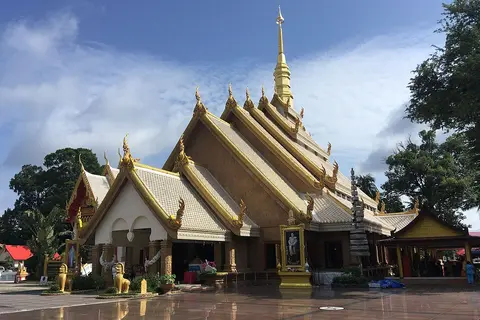
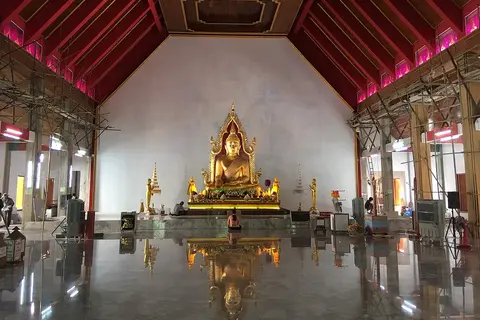
The key treasure is Phra Chao Yai Inplaeng, a Lao-style Buddha in the Subduing Mara posture, built of gilded brick and plaster. Each year on the full moon of the fifth month the temple holds alms giving, a Mahajati sermon and the bathing and gilding of the image. Allow about 30 minutes. In festival season ask the temple whether candle carvers are working and open to watch: see watching the carving. The gate closes about 16:30, so arrive before 16:00.
Wat Phra That Nong Bua: the white chedi modelled on Bodh Gaya
Wat Phra That Nong Bua is on Thammawithi Road, Nai Mueang, and opens daily about 06:00 to 18:00 (check before you go). It is a Dhammayut temple and its main feature is the Sri Maha Pho chedi, a white chedi modelled on the Mahabodhi temple at Bodh Gaya in India.
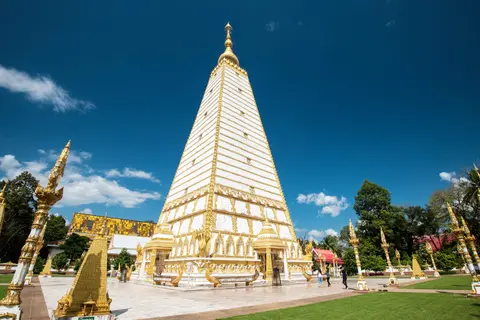
The first chedi was built in 1957 to mark 25 centuries of Buddhism. A new one, 17 m wide and 56 m tall, was built around it and finished in 1969. Carved Buddhas and Jataka scenes run round the faces, nagas, garudas and giants hold up the base, and two rainbow-coloured nagas guard the entrance, where visitors make a wish.
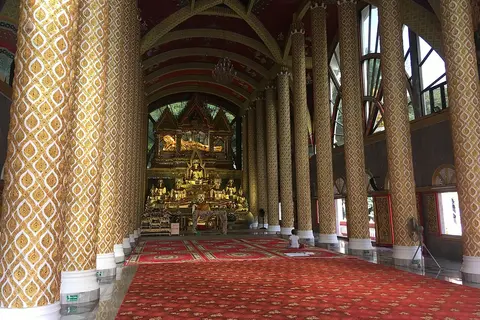
It photographs well in the morning and again in the evening after the lights come on. In 2026 the temple ran a candle display through 3 to 17 August, so check the same period next year. Allow 30 to 45 minutes. The ground is flat and easy for older visitors.
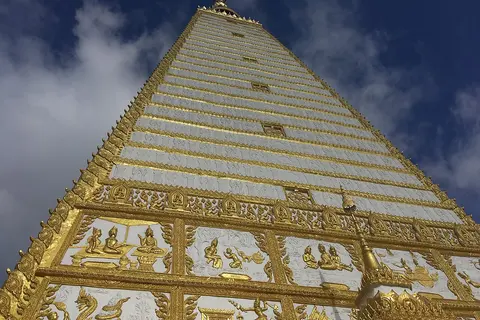
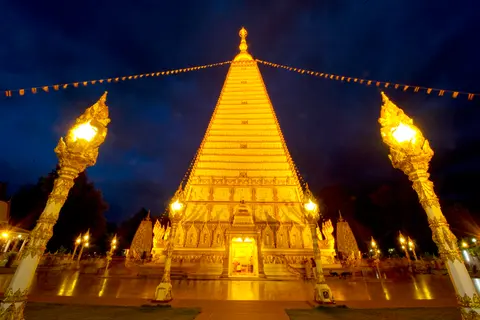
Just after sunset the chedi glows gold from base to tip, but the closing time is about 18:00, so ask the temple how late the gate and the lights run that day. From Thung Si Mueang take a songthaew or tuk-tuk (about 20 to 40 baht, agree first).
Wat Si Ubon Rattanaram (Wat Si Thong): the city's topaz Buddha
Wat Si Ubon Rattanaram, formerly Wat Si Thong, stands south of the old provincial hall on Uparat Road, a few minutes on foot from Thung Si Mueang. It is a Dhammayut temple founded in 1855 under King Rama IV. The ordination hall was built on the plan of Wat Benchamabophit in Bangkok, and it houses Phra Kaew Busaracum, the topaz Buddha that is the city's guardian image.
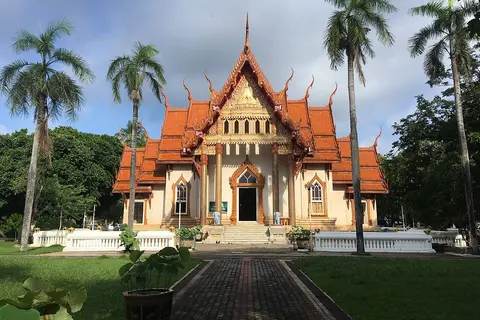
The land was once the garden of Upahat Tho of the Na Ubon family, and the story goes that a golden light rose there the night it was given, hence the name Wat Si Thong, Golden Temple. There is no clear opening time, so go in the morning and ask whether the hall is open for the topaz Buddha that day. Free, about 20 to 30 minutes.
Wat Supat Narama: the first Dhammayut temple in Isan
Wat Supat Narama Worawihan on Supat Road, Nai Mueang, is the first Dhammayut temple in the north-east. Work began in 1850 at the royal faith of King Rama IV and finished in 1853. The name means a temple with a good landing: it was the pier where senior monks of Ubon boarded boats to study in Bangkok.
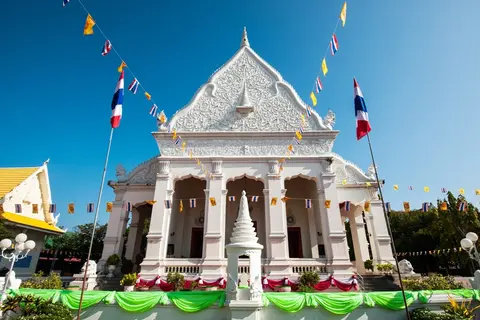
The ordination hall was built between 1917 and 1936, 20 m wide, 34 m long and 22 m high. It has a Thai roof, a western middle and a Khmer-style base, and inside sits a polished bronze Buddha in the Subduing Mara posture, left ungilded, copied from Phra Phutthachinnarat. The temple joins the candle carving each year. It is free and has no published opening hours, so go in the morning and check. Allow 20 to 30 minutes.
Wat Burapharam and Wat Chaeng: an old forest temple and an Isan wooden hall
Wat Burapharam, at 24 Phalo Rangrit Road, began as a hermitage in an open forest where Luang Pu Thasi and Luang Pu Sao practised. In 1915 Luang Pu Man Phuritatto came from Bangkok to become their pupil, marking the start of the Vipassana lineage. Two wooden Tripitaka halls stand side by side. Free, no published hours, 20 to 30 minutes.
Wat Chaeng on Sappasit Road was founded in 1888 and opens daily about 06:00 to 18:00 (phone 0 4526 3653). Look at the small wooden ordination hall (sim) of 1912, 6 m wide and 15 m long, with a single tiled roof and stair rails shaped like crouching crocodiles, a style found only in Isan. The gable carries a carved wooden beeswax motif in local style. It is one of the few wooden halls of this kind left.
Wat Tai Phra Chao Yai Ong Tue
Wat Tai Phra Chao Yai Ong Tue, called Wat Tai for short, has the large Phra Chao Yai Ong Tue as its principal Buddha. It lies in the old town and is easy to reach by walking or a short songthaew ride from Thung Si Mueang. Entry is normally free and hours are about 06:00 to 18:00 (check before you go).
Another temple often asked about is Wat Si Ubon Rattanaram (Wat Si Thong), which holds the topaz Buddha: see Wat Si Ubon Rattanaram above.
Wat Luang
Wat Luang is an older city temple that suits a stop during an old town walk better than a trip of its own. The usual rules apply: dress modestly, take off your shoes, and visit from morning to mid afternoon. There are no confirmed opening hours, so check the location and hours on a map before you go.
Small city wats you can add on the way
These are better as quick stops than as targets. Each takes no more than 15 to 20 minutes.
- Wat Sa Prasan Suk (Wat Ban Na Mueang): the ordination hall, built in 1927, stands on a base shaped like a replica of the Suphannahong royal barge. A strong photo stop.
- Wat Chaeng: wooden hall of 1912 with crocodile stair rails. See Wat Burapharam and Wat Chaeng.
- Wat Si Nuan Sawang Arom: a short stop. Check the location and opening hours on a map before you go.
- Wat Don That: a short stop. Check the location and opening hours on a map before you go.
Ubon Ratchathani National Museum
The museum stands at 318 Khuan Thani Road, at the corner with Uparat Road, in the former provincial hall built in 1918. Phone 0 4525 1015. It opens Wednesday to Sunday, about 09:00 to 16:00, and is closed on Monday and Tuesday. Entry is 20 baht for Thais and 100 baht for foreigners (check before you go, and ask the museum about public holidays).
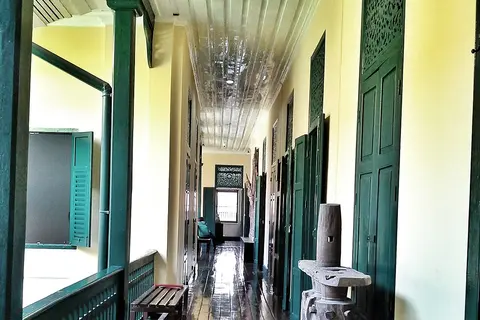
- Room 3, prehistory: finds from Ubon and a copy of the Pha Taem rock paintings on the wall. See it before you visit Pha Taem.
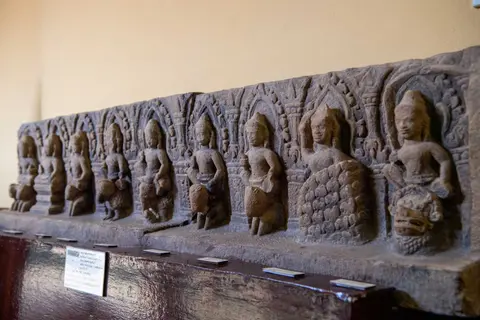
- Rooms 4 and 5: Dvaravati, Chenla and Angkorian Khmer art, with architectural pieces from ancient sites in the province.
In the Khmer room look for lintels from several temples in the province, among them Prasat Ban Ben, with Indra on the elephant Erawan and the nine celestial guardians. Read the labels. If you plan to visit the site, see them here first. See Prasat Ban Ben. Allow about an hour.
Ubon Ratchathani Zoo
Ubon Ratchathani Zoo in Kham Yai subdistrict lies in the Dong Fa Huan national forest reserve and is laid out as a jungle park. It opened officially on 12 July 2013. It has several deer species and big cats such as tigers.
| Open | Daily 08:30 to 16:30. Phone 0 4525 2761 |
|---|---|
| Entry | Thai adult 130 baht, child 40 baht. Foreign adult 350 baht, child 120 baht |
| Free | Children under 3, visitors aged 60 and over, disabled visitors, veterans, monks and novices |
It suits families who want a break from temples, Allow 2 to 3 hours and go in the morning before the heat. Check fees and hours with the zoo before you go.
Night markets and the Rim Mun walking street: where to go this evening
Ubon is quieter after dark than the big tourist cities, but a few markets and riverside spots are good for a walk and a bite. Days and hours change, so check with your hotel.
| Where | When | What |
|---|---|---|
| Thung Si Mueang evening market | Stalls from about 16:00, usually done by about 21:00 | Thai, Vietnamese and Isan food, small |
| Rim Mun walking street | Weekends, late afternoon to night | Handmade goods, street food, local performances. Check the day with the municipality |
With one evening, start at Thung Si Mueang and move to the Mun River as it gets dark; on a weekend add the walking street. For a sit-down meal by the river see what to eat in Ubon.
What to eat in Ubon: nam neung, guay jub and riverside dishes
Ubon eats Isan food with a strong Vietnamese strand. Vietnamese families settled in Ubon long ago, and several old shops sell Vietnamese dishes made for generations. Look for Vietnamese-style noodle soup (guay jub yuan), naem nueang (grilled pork sausage rolled with vegetables in rice paper), steamed rice rolls (pak mor yuan), banh xeo and shrimp on sugarcane. Prices, hours and menus change, so check before you go.
| Place | Area | What to order | Hours (about) |
|---|---|---|---|
| Indochine | Sappasit Road, old town (170 Sappasit Rd) | Open since 1972. Vietnamese family recipes, hand-milled rice batter fermented for five days, naem nueang, spring rolls, banh beo | Phone 045 245 584, check before you go |
| Agave | Phalorangrit Road (153 Phalorangrit Rd) | Naem nueang in pork or fish, fish noodles, khao jee mu phuang (a sticky-rice waffle topped with sun-dried pork) | Phone 045 900 241, check before you go |
| Jae Nueang | Phalochai Road (40 Phalochai Rd) | Vietnamese noodle soup with a peppery broth, thick noodles, pork ribs and soft egg. Breakfast and lunch, go early | Check before you go |
| Guay Jub Ubon | Old town | Rolled noodles in rich broth, a three-generation shop | Check before you go |
| Pak Mor Robot | Old town | Vietnamese-style pak mor (steamed rice rolls), sold for over 30 years | Check before you go |
| Kor Lhai Toh | Sappasit Road (285 Sappasit Rd) | Seafood and river fish, stir-fried beef with young galangal, toddy palm dessert | Mon, Tue, Thu to Sun 11:30 to 14:00 and 16:30 to 22:00, closed Wednesday |
| Som Tum Jinda | Phichit Rangsan Road (63/1 Phichit Rangsan Rd) | Isan food since 1974, spicy fish roe stew, crispy catfish papaya salad, air-conditioned | Phone 045 255 223 |
| Somtam Porntip | Sappasit Road (136 Sappasit Rd) | Papaya salad and grills, lap pla thepho, air-conditioned, cash only | Phone 089 720 8101 |
| Larb Sangsiri | Sappasit Road (287 Sappasit Rd) | Larb, grilled fermented pork in banana leaf, spicy river fish soup, cash only | Phone 097 326 0985 |
| View Mun | On the Mun River (Ban Thap Thai, Chaeramae) | Deboned river fish, u-phung pla, sunset over the river | Phone 09 4538 3939 |
| Chomjan | Warin Chamrap, by the river near the Somdet Phra Srinagarindra 100-year bridge | Fried snakehead fish stir-fried with aubergine | Check before you go |
Many of these places are on the Michelin Guide's list for Ubon. For strong Isan flavours go to Som Tum Jinda, Somtam Porntip or Larb Sangsiri, and for Vietnamese food Indochine, Agave and Jae Nueang. Try Agave or Indochine in the afternoon, then sit by the Mun River in the evening. See night markets and the walking street.
 12Go
Bangkok to Ubon Ratchathani on 12Go
From US$7 (Cheapest fare seen, a bus)
Price as of 6 Nov 2026Trains, buses, flights and private cars from Bangkok to Ubon Ratchathani. On the example date of 12 Nov 2026 buses started from about US$7, trains from about US$8 and flights from about US$39. Prices change by date.
Book on 12GoCafes in Ubon: an air-conditioned break between temples
Cafes make a good afternoon break between two temples when the sun is strongest. Hours change, so check before you go.
- Abe Specialty Coffee (Uparat Road): a white, minimalist, air-conditioned room for a rest after the museum and the park.
- Anna Coffee Roasters: a small glass room with a drip bar.
- Wisdom Coffee: coffee under 100 baht, open Monday to Saturday.
- Impression Sunrise: a cafe and bar open about 08:30 to 24:00, a place to sit late after the markets.
Shopping and souvenirs in town
The big mall in town is Central Ubon, air-conditioned and handy on a wet or very hot afternoon. Warin Chamrap market opens about 05:00 to 21:00 and sells vegetables, fruit, snacks and cheap household goods. Easy edible souvenirs are Vietnamese-Isan snacks from the old shops; ask how long they keep. For woven cloth, silk and brass see crafts and souvenirs of Ubon, and for something handmade without a village trip the weekend walking street has small stalls. Carry cash.
Temple etiquette in Ubon: dress, shoes and photos
| Topic | Do | Do not |
|---|---|---|
| Dress | Trousers or a skirt to the knee, shoulders covered, a light scarf in your bag | Shorts, vest tops, see-through tops |
| Monks | Show respect and sit so your feet do not point at a Buddha image or a monk | Women should not touch a monk or his robe. Pass items on a cloth or let a man hand them over |
| Photos | Ask before photographing a monk, flash off indoors, photograph the scripture hall and chedi from outside the barrier | Use flash in a hall, walk through chanting, fly a drone over a temple without permission |
A one-day walk in Ubon: wats, museum, lunch and the river
With one day in town and no glowing temple, this order works on foot and by songthaew or with a car. On a Monday or Tuesday, swap the museum for another temple.
| Time | Where | Notes |
|---|---|---|
| 07:00 to 08:00 | Thung Si Mueang | Open from 05:00, coolest of the day. See the candle tower and the City Pillar Shrine |
| 08:00 to 09:00 | Wat Thung Si Mueang | Still water, soft light, the best time to photograph the scripture hall |
| 09:00 to 10:30 | Museum (Wed to Sun) and Wat Si Ubon Rattanaram | Side by side on Uparat Road |
| 10:30 to 12:00 | Wat Supat Narama and Wat Burapharam | In the heat take a songthaew or tuk-tuk, about 20 to 40 baht |
| 12:00 to 14:00 | Lunch on Sappasit Road | Larb Sangsiri, Somtam Porntip or Indochine, then a cafe |
| 14:00 to 16:00 | Wat Chaeng and Wat Maha Wanaram | Wat Maha Wanaram closes about 16:30 |
| 16:00 to 17:30 | Wat Phra That Nong Bua | Late afternoon, before dark |
| 17:30 to 21:00 | The Mun River and a night market | Weekend walking street, or dinner at a riverside restaurant on a weekday |

Laithong Hotel
Ubon city centre
In the centre of Ubon, handy for a one-day walk: start at Thung Si Mueang and come back for a midday rest. Check rooms and prices on the booking page.
See prices and availability on the booking page
No car: seeing Ubon's temples on foot, by songthaew and with a hired car
Ubon city is flat and the main wats are close together, so a day in town without a car is easy. Songthaews run set routes for about 10 baht a ride, tuk-tuks charge about 20 to 40 baht (agree the price first), and ride-hailing apps sometimes work. At the airport, fixed-price taxi coupons cost about 100 baht to most places in the city, with no meters.
 Klook
Ubon Ratchathani Province Car Rental
From US$37.09 (Starting price per day, compact car, as of 13 Nov 2026)
Price as of 13 Nov 2026Rent a car for one day for the forest monasteries and the glowing temple. A compact car starts at about US$37 a day, as of 13 Nov 2026. Split between three or four people it usually beats several taxis.
Book on Klook KKday
Ubon Ratchathani Private One-Day Tour: Pha Taem, Saeng Chan Waterfall and Sam Phan Bok from Ubon City Hotels
From US$129.62 (Starting price per car)
Price as of 6 Nov 2026For a second day at Pha Taem, Saeng Chan Waterfall and Sam Phan Bok without driving: a private 10-hour tour from a hotel in Ubon city. From US$129.62 per car as of 6 Nov 2026, park fees extra, free cancellation up to 3 days before.
Book on KKday 12Go
Bangkok to Ubon Ratchathani on 12Go
From US$7 (Cheapest fare seen, a bus)
Price as of 6 Nov 2026Coming from Bangkok without a car, book the train, bus or flight to Ubon here, then take a songthaew or taxi to your hotel. The railway station is on the Warin Chamrap side.
Book on 12GoA rainy day: how to change your plan in Ubon
- The National Museum (Wednesday to Sunday, 09:00 to 16:00), about an hour.
- The Luang Pu Chah museum at Wat Nong Pa Phong, three floors, open 08:00 to 16:30.
- Ubon Ratchathani Zoo, open daily 08:30 to 16:30, mostly outdoors, so bring a rain jacket.
- Central Ubon and an air-conditioned cafe, then the wats when the rain stops.
- A long lunch at a Michelin-listed place such as Indochine, or the air-conditioned Som Tum Jinda.
The scripture hall in its pond and the Nong Bua chedi are views from outside, so wait for the rain to stop. The glow at Wat Phu Prao is weaker in rain; if it pours from the afternoon, move the visit to the next day. For a whole-trip plan see the rainy day plan.
A hot day, March to May: walking the wats without overheating
- Start very early. Thung Si Mueang opens at 05:00, Wat Thung Si Mueang and Wat Phra That Nong Bua about 06:00. Be done by 10:00.
- Rest from 11:00 to 15:00 in air conditioning, for lunch, a cafe or your hotel.
- Go out again after 16:00. Wat Maha Wanaram closes about 16:30, so do it first and leave Nong Bua for the evening.
- The glowing temple works well in the hot months because you go in the evening, but the drive back is dark, so carry water and fill the tank.
For the whole-trip hot season plan see the hot season plan.
Centara Ubon
Next to Central Ubon
Next to Central Ubon, so an air-conditioned mall is a short walk away. Handy in the hottest weeks and on wet days for a midday rest. Check rooms and prices on the booking page.
See prices and availability on the booking page
Stays by area: where to sleep for the wats and the markets
To walk the wats and markets, stay near Thung Si Mueang. For the forest monasteries, stay on the Warin Chamrap side, and for the glowing temple, near Chong Mek (hotels are in that section). A fuller comparison is in where to stay in Ubon Ratchathani.

Tohsang Heritage Ubon Ratchathani
Palochai Road, Ubon city centre
On Palochai Road in the centre of Ubon, close to restaurants and the old town wats. Suits travellers without a car. Check the reviews and the map on the booking page.
See prices and availability on the booking page
The Regent Ubon
Ubon city centre
A hotel in the centre of Ubon, suited to a day in town on foot and by songthaew. Check rooms and prices on the booking page.
See prices and availability on the booking page

The Vela Warin
Thahan Road, Warin Chamrap (south bank of the Mun)
On Thahan Road in Warin Chamrap, on the south bank of the Mun, near the road to the two forest monasteries and not far from the railway station.
See prices and availability on the booking page
Common mistakes with the temples and the city
- Visiting the glowing temple by day and leaving. The glow shows only after dark, so arrive before sunset and wait.
- Going to the museum on Monday or Tuesday. It is closed both days, so move it to Wednesday to Sunday.
- Reaching Wat Pah Nanachat late and missing the meal. Be there before 08:00.
- Wearing shorts or bare shoulders at the forest monasteries. Carry a scarf or long trousers.
- Not arranging a ride back from the glowing temple. There is almost no bus back after dark.
- Putting the glowing temple and Pha Taem on the same day. They are far apart in different directions.
- Photographing monks without asking, or using flash inside a hall. Ask first every time.
- Going to Wat Phra That Nong Bua after dark and finding the gate shut. It opens about 06:00 to 18:00, so call the temple first if you want to see the chedi lit up.
Read next
 Ubon Ratchathani in 2 days and 1 nightDay by day: the city and temples or Khong Chiam and Pha Taem, plus a 3-day loop
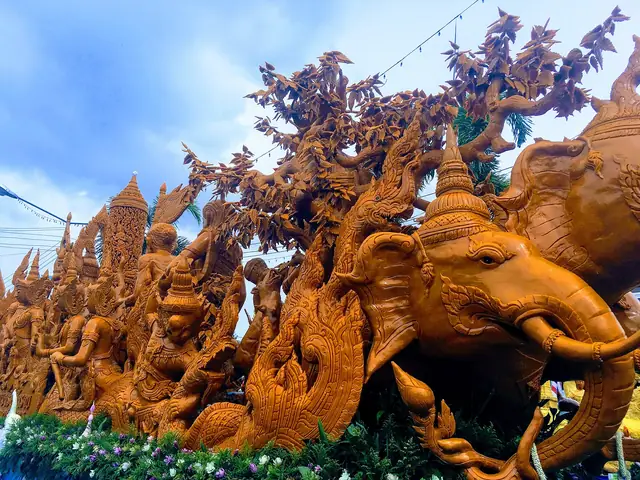 Ubon Candle FestivalThe programme, the 2027 dates, watching candle carving and craft villages
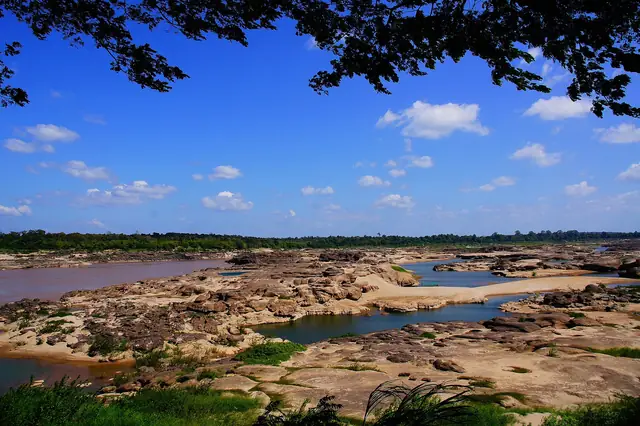 Khong Chiam and Pha TaemPha Taem, Sam Phan Bok, the two-colour river, Kaeng Tana, Chong Mek and fees
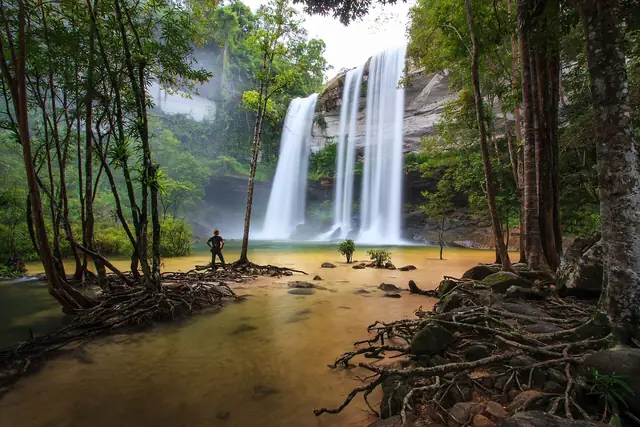 Sirindhorn and the southSirindhorn Dam and floating solar, Phu Chong Na Yoi, Prasat Ban Ben, Kaeng Saphue
 Getting to Ubon RatchathaniFlights, trains, buses, the Chong Mek crossing to Pakse and getting around
 Where to stay in Ubon RatchathaniThe city, Warin Chamrap and Khong Chiam riverside, with 26 hotels
Frequently asked questions
Where is the glowing temple in Ubon and when should I go?
Wat Sirindhorn Wararam Phu Phrao is at Chong Mek in Sirindhorn district, about 1.5 hours from the city. Arrive before sunset and wait for dark; the glow is clear from about 18:30. It opens about 06:00 to 20:00, possibly until 21:00, so check before you go.
Is there an entrance fee at the glowing temple?
No. There is wide parking and no entrance fee. Dress modestly, keep the flash off and do not shine a torch on the glowing painting.
Can I visit Wat Nong Pa Phong and Wat Pah Nanachat in one morning?
Yes. They are about 20 minutes apart. Reach Wat Pah Nanachat before 08:00 for the meal, then go on to Wat Nong Pa Phong (about 08:00 to 16:30). Dress modestly at both.
When is the Ubon National Museum open?
Wednesday to Sunday, about 09:00 to 16:00, closed Monday and Tuesday. Entry is 20 baht for Thais and 100 baht for foreigners. Check before you go.
Can I walk between the city temples?
Thung Si Mueang, Wat Thung Si Mueang, Wat Si Ubon Rattanaram and the old town wats can be walked in half a day. Wat Phra That Nong Bua is better by songthaew or taxi if it is hot.
Is the glowing tree a bodhi tree?
No. It is a painted kalpapruek tree on the wall behind the ordination hall, and it glows green after dark. The patterned paving in front glows blue.
What should I eat in Ubon on a first visit?
Try naem nueang, Vietnamese-style noodle soup, steamed rice rolls and khao jee mu phuang in the old town, at places such as Indochine, Agave, Jae Nueang and Kor Lhai Toh. In the evening eat by the Mun River or visit the weekend walking street.
Can I cross to Pakse after the glowing temple?
The Chong Mek border is close to the temple. With a passport and, where needed, a Lao visa, you can continue to Pakse, but plan around the last buses. See the getting there page.
Can I see Ubon's temples without a car?
Yes for the city wats: walk, or take a songthaew (about 10 baht) or tuk-tuk (about 20 to 40 baht). The forest monasteries are reachable by bus or songthaew and a short onward ride. The glowing temple needs a taxi or rental car, so agree that the driver waits and brings you back.
What time does Wat Phra That Nong Bua open?
About 06:00 to 18:00 daily and free. To see the chedi lit up in the evening, call the temple and ask what time the gate closes that day.
Where can I go in Ubon on a rainy day?
The National Museum, the Luang Pu Chah museum at Wat Nong Pa Phong, Ubon Ratchathani Zoo, Central Ubon, air-conditioned cafes and a long lunch at a Michelin-listed restaurant. The glow is weaker in rain.
Where the facts come from
- Wikivoyage: Ubon Ratchathani
- MICHELIN Guide: 101 guide to Ubon Ratchathani
- MICHELIN Guide: restaurants in Ubon Ratchathani
- KTC: Ubon Ratchathani sights and restaurants (Thai)
- TrueID: 17 places in Ubon Ratchathani (Thai)
- Bucketlistly: Ubon city best things to do
- Wongnai: Wat Sirindhorn Wararam Phu Phrao (Thai)
- Supsaringkan: Wat Phu Phrao, the glowing temple (Thai)
- MGR Online: Wat Sirindhorn Wararam Phu Phrao (Thai)
- Wat Pah Nanachat: About
- Thai Holiday Guide: Wat Nong Pa Phong
- Wikipedia: Ubon Ratchathani