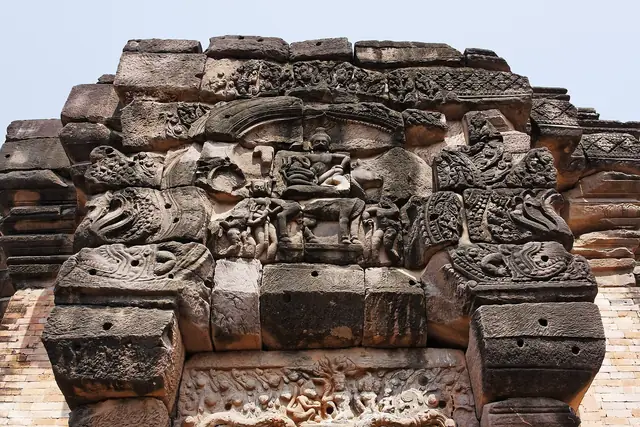
Sisaket has many Khmer ruins, but most are small temples inside wats or in rice fields, with no fence like a historical park and no ticket office. If you like village settings you will enjoy them, but if you expect the scale of Phimai or Phanom Rung you will be disappointed. This page says what each site offers, how far it is, when to go and how to order a route without driving back and forth.
Every site on this page is free to enter. Details are as of 13 Nov 2026, and hours are approximate because the temples sit in wats or villages, so check before you go, especially if you drive far.
We earn a commission if you book through our links. The price you pay does not change. How we choose
All the Khmer temples in one table
| Temple | From town | Look for |
|---|---|---|
| Sa Kamphaeng Noi | About 10 km | Single prang about 11 m tall, arogyasala layout |
| Sa Kamphaeng Yai | About 26 km | Three prangs on one base, many lintels |
| Ta Leng | About 55 to 65 km by road | Single prang on an indented base, Indra on the elephant |
| Ku Somboon (Wat Pa Neranchara) | About 42 km | Three prangs on one base, horseshoe moat |
| Ban Prasat | About 47 km | Three brick prangs, a fragment of the Churning of the Sea of Milk |
| Prang Ku | About 70 km | Three prangs, U-shaped moat |
| Ban Samo | About 52 km | Arogyasala, unfinished lintel with a Buddha |
| Tamnak Sai | About 81 km | Single brick prang, pair of stone lions |
| Prasat Yer | About 35 km | Ruined brick temple in a Yer village |
Distances are approximate by road. Prasat Don Tuan, inside Khao Phra Wihan National Park, can be visited only under the park's own conditions; see below.
If you can choose only two, choose Sa Kamphaeng Yai and Noi: same road, near town, and two periods, Baphuon and Bayon. The rest suit small-temple fans ready to drive far.
Before you go: what to look at in a small Khmer temple
Most Khmer temples here share the same parts. A prang is the tower holding the main shrine. A lintel is the carved slab over a doorway, usually a Hindu scene such as Vishnu reclining on the serpent. A gopura is the gateway in the wall and a baray is a reservoir near the temple.
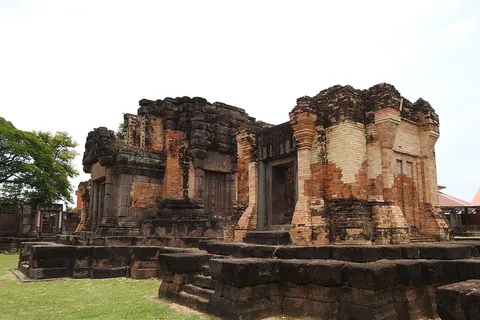
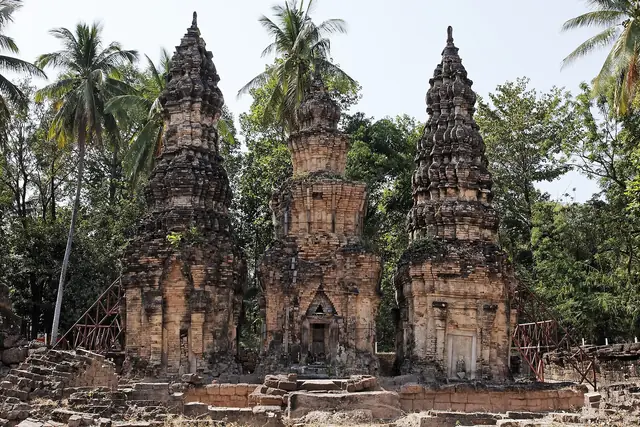
Prasat Sa Kamphaeng Yai (Sri Phruthesuan), Uthumphon Phisai
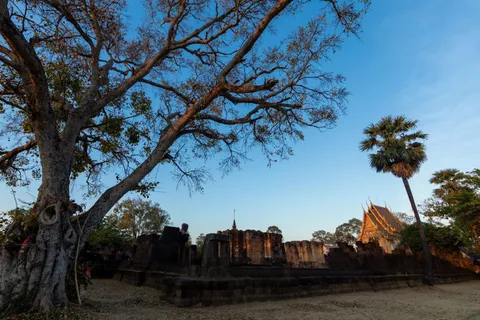
Prasat Sa Kamphaeng Yai is inside Wat Sa Kamphaeng Yai, Uthumphon Phisai district, about 26 km from Sisaket town on Highway 226. In Uthumphon Phisai take Highway 2083 toward Surin for about 2 km, then turn left. Built about the 11th century in Baphuon style as a Shiva shrine, it became Mahayana Buddhist about the 13th century. It is the largest and best preserved Khmer temple in the province.
Layout and what to see
A laterite and sandstone gallery with a gopura on each side encloses three prangs in a row from north to south on one base, all facing east. The central prang is sandstone with brick, the other two are brick, with another brick prang behind the south one and two brick halls in front. The lintels to look for are in the lintels section below.
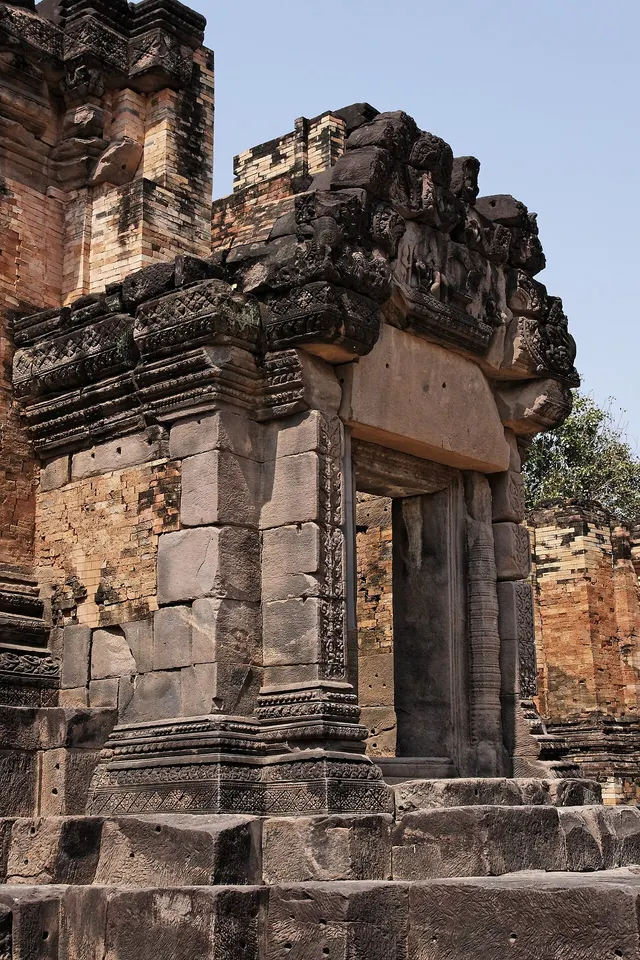
| Hours | About 08:30 to 16:30 daily, though hours may vary with temple activities. Call 06 2142 9261. |
|---|---|
| Fee | Free |
| Time | 1 to 1.5 hours |
| Best time | Before 10:00 or after 15:30. The temple faces east, so morning light falls on the lintels. |
History and finds
An inscription on a door frame records a gift of land to the Shiva shrine. A naga-sheltered Buddha and terracotta tablets show later Buddhist use. In 1989 a bronze figure of a young man about 126 cm tall was found at the south gate and is now kept in a national museum in Bangkok.
Getting there
- By car: about 35 to 45 minutes. Stop at Sa Kamphaeng Noi on the way.
Tenki Poolvilla Srisaket
Uthumphon Phisai
In Uthumphon Phisai district, so you reach Sa Kamphaeng Yai and Noi at opening without driving from town. Suits a small group with a car.
See prices and availability on the booking page
Prasat Sa Kamphaeng Noi, Uthumphon Phisai
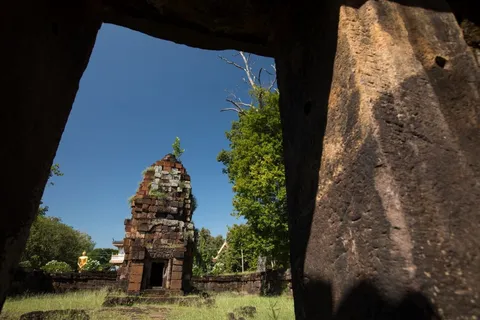
Prasat Sa Kamphaeng Noi is in Wat Thep Prasat Sa Kamphaeng Noi at Ban Klang, Khayung subdistrict, beside Highway 226 about 10 km from town, the closest Khmer temple to the city. It has a single prang about 11 m tall, a small hall, a walled gateway and a large pond in front. The layout matches an arogyasala of the time of Jayavarman VII.
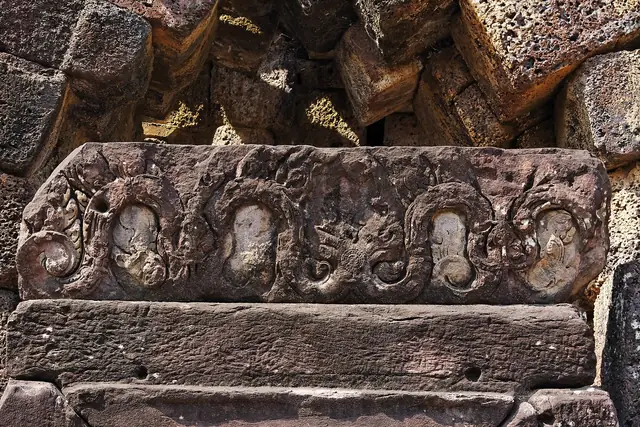
An older trace is a Baphuon lintel of the rain god Varuna on a hamsa goose over a kirtimukha face. It shows a Hindu shrine stood here about the 11th century before it became an arogyasala for the healing Buddha in the 12th to 13th century, one of 102 across the empire.
| Hours | About 08:00 to 16:00 daily |
|---|---|
| Fee | Free |
| Time | 30 to 40 minutes |
| Phone | The wat, 0 4569 1519 |
Prasat Ta Leng (Lumphuk), Khukhan
Prasat Ta Leng, also called Prasat Lumphuk, is at Ban Prasat in Prasat subdistrict, Khukhan district, about 55 to 65 km from Sisaket town by road. Take Highway 220 toward Khukhan, then a small lane of about 11 km off the highway. The 11 km you may see quoted is the length of that lane, not the distance from town. The temple is a single prang on a laterite base with twelve indented corners, facing east, with one real door and three false doors.
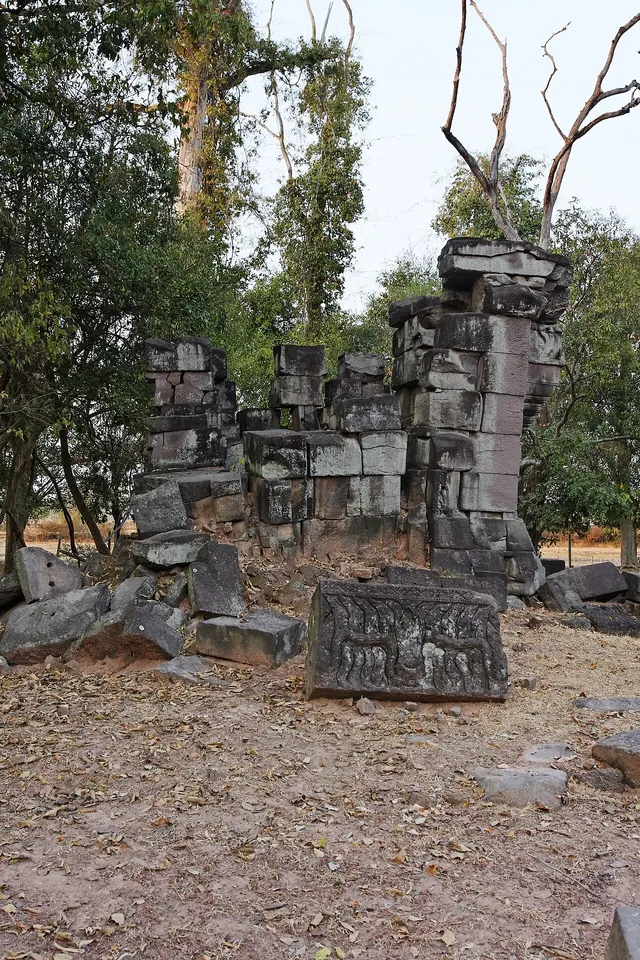
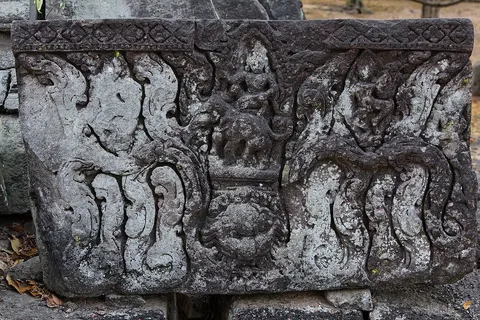
The door-frame colonnettes carry vine scrolls and flying hamsa geese, and the pediment shows a five-headed naga. Lintels lie on the ground, including Indra on the elephant Airavata and Indra on a hamsa. Dated about the late 11th to early 12th century, Baphuon style.
The legend of Ta Leng and Nang Nom Yai
The name comes from the legend of Nang Nom Yai (Niang Dao Thom), a village woman taken to be given to the Khmer king. Ta Leng, a man of her village, followed her to the stone terrace at Don Tuan, was killed by the escort and left in the forest. The tale links Ta Leng to Prasat Don Tuan.
| Distance | About 55 to 65 km by road, 2.5 to 3 hours of driving there and back |
|---|---|
| Hours | No fixed hours. It is open-air, so go in daylight. |
| Time | 20 to 30 minutes |
Ku Somboon inside Wat Pa Neranchara, Bueng Bun
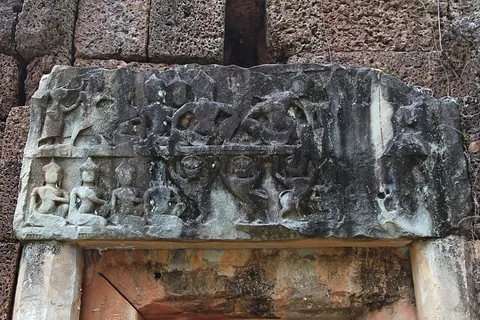
Ku Somboon is at Ban Nong Khu Yai, Po subdistrict, Bueng Bun district, inside Wat Pa Neranchara, about 42 km from Sisaket town and 6 km from Bueng Bun town. Three prangs of laterite, brick and sandstone stand on one laterite base facing east, with a horseshoe moat open on the south. The central prang is best kept; the north and south prangs are ruined down to the base.
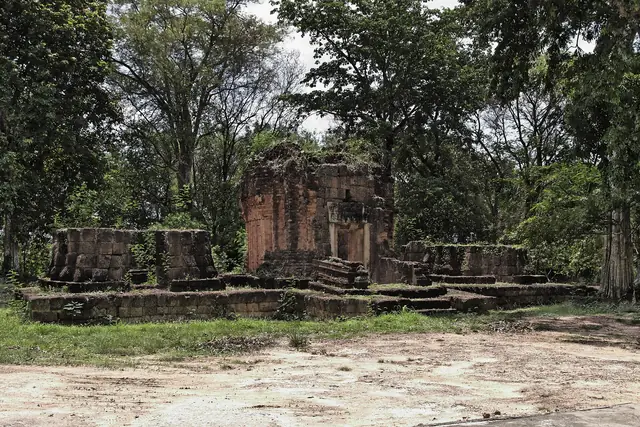
The temple is inside a wat and villagers hold a yearly offering to the guardian spirit of the site, so walk gently and do not climb the base.
| Hours | About 08:00 to 17:00 daily |
|---|---|
| Fee | Free |
| Time | 30 to 45 minutes |
Prasat Ban Prasat at Huai Thap Than, in Wat Prasat Phanaram
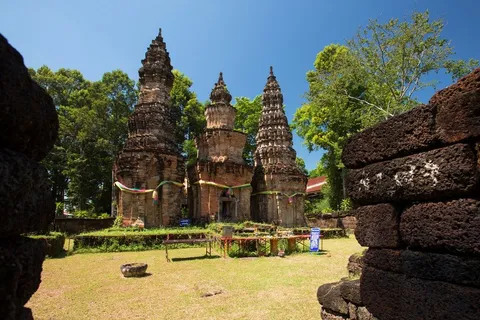
Prasat Ban Prasat is in Wat Prasat Phanaram, Huai Thap Than district, about 47 km from town: Highway 226 for about 39 km to Huai Thap Than, then right onto a village road for about 8 km. Three brick prangs stand in a row from north to south on one laterite base, with a laterite wall and gopuras on the south and east. The middle prang is slightly larger, with a sandstone door frame and a lintel of a standing figure over a kala face.
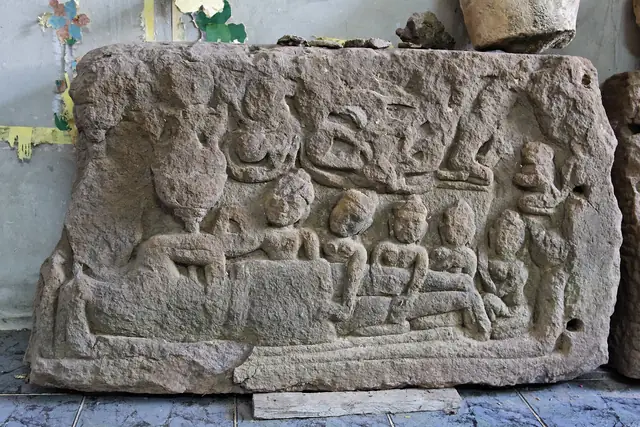
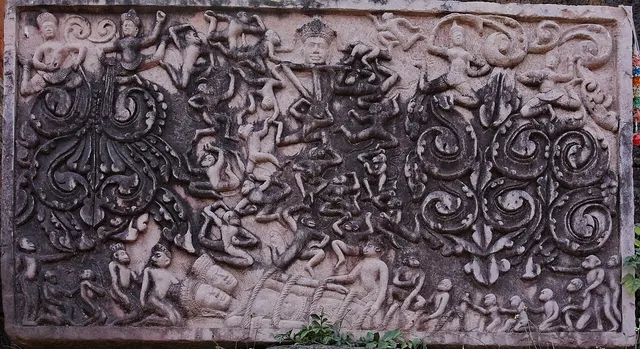
The north and south prangs have bricked-up doors, and a lintel fragment of the Churning of the Ocean of Milk lies near the south tower. Built as a shrine to the Trimurti, Brahma, Shiva and Vishnu, in the Kleang to Baphuon style about the 11th century, and registered as an ancient monument in 1935. It is still a wat and a village.
| Hours | About 06:00 to 18:00 daily |
|---|---|
| Fee | Free |
| Phone | The wat, 0 4561 1139 |
| Time | 30 to 45 minutes |
| Festival | Offering ceremony on Makha Bucha, 21 Feb 2027 (15th waxing day of the third lunar month). Ask the wat if it is held. |
| Know before you go | There is almost no shade, so bring water and a hat. There is no direct public transport. |
Prasat Prang Ku, Prang Ku district
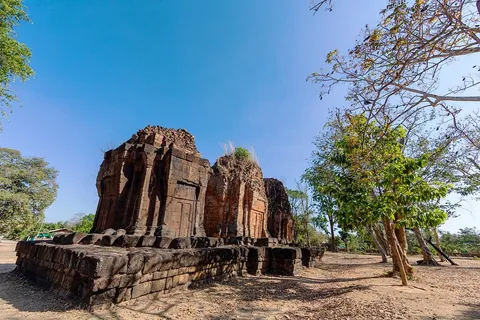
Prasat Prang Ku is in Ku subdistrict, Prang Ku district, and gave the district its name. It is about 70 km from Sisaket town, about an hour's drive. The Kuy call it Thiat So Ko. Three prangs stand on one laterite base inside a U-shaped moat: two brick prangs with carved door colonnettes and sandstone lintels, and a laterite north prang.
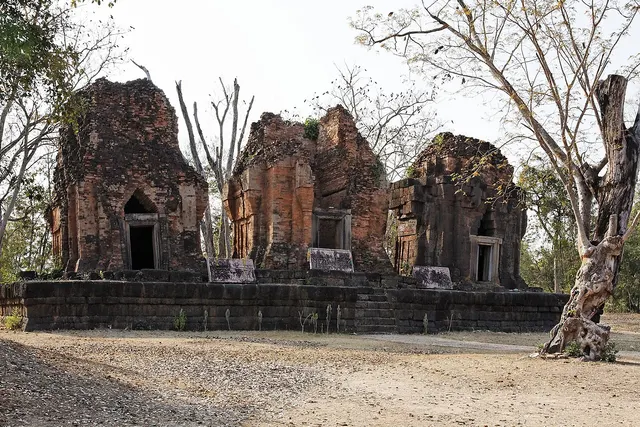
Built in the time of Jayavarman VII, about the 12th to 13th century, as an arogyasala like Prasat Sikhoraphum in Surin. A replica lintel stands in front, and the local Kuy community still honours the spirit Pu Phatthasen.
| Hours | About 06:00 to 18:00 |
|---|---|
| Time | 20 to 30 minutes |
| Combine with | Prasat Ban Samo in the same district |
Prasat Ban Samo, Prang Ku district
Prasat Ban Samo is in village 2, Samo subdistrict, Prang Ku district, about 52 km from town. Take Highway 220 and then 2167, about 8 km before the district town. At the signed junction turn right for about 3 km, then right again for about 500 m. It was built about the 12th to 13th century as one of the 102 arogyasalas of Jayavarman VII and was registered as a national monument on 8 March 1935.
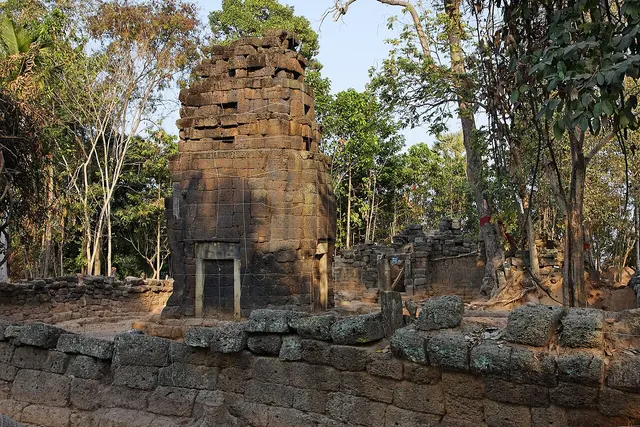
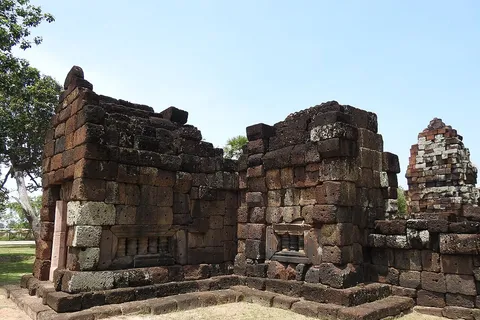
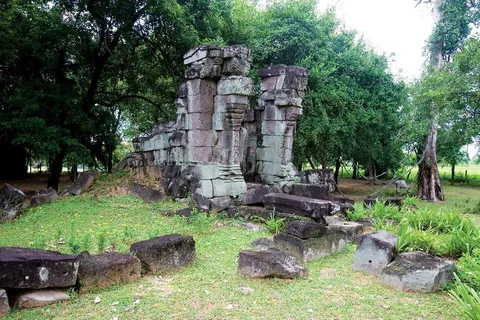
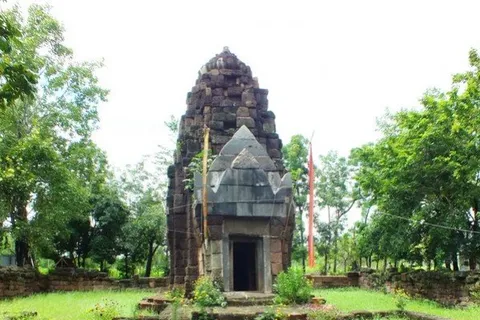
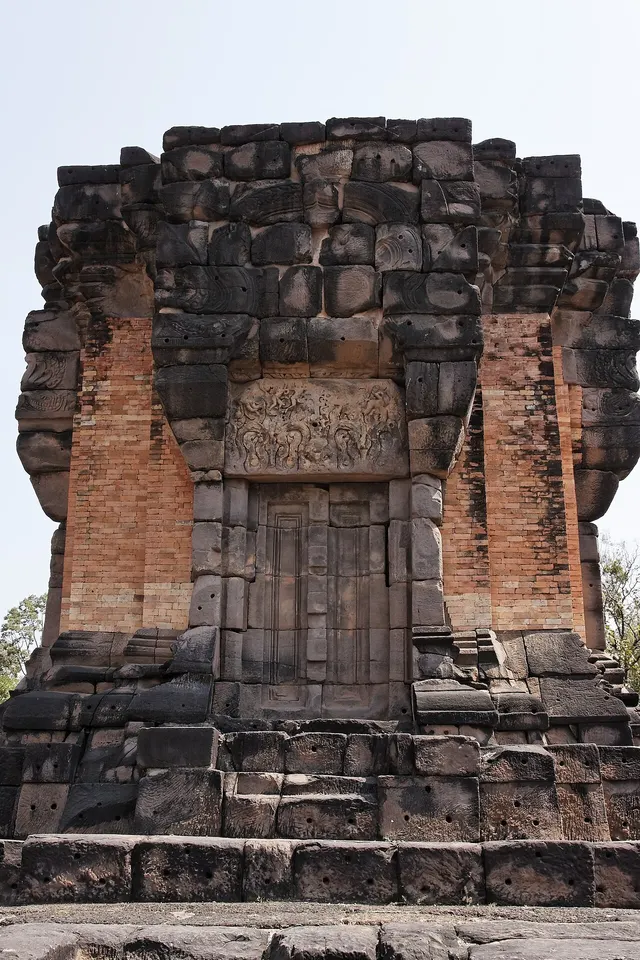
The small laterite prang has an eastern porch, three false doors and a sandstone door frame. The unfinished lintel over the south door shows a seated Buddha above a kala face with a garland. A laterite hall, a wall with a large east gopura and a small pond complete the plan.
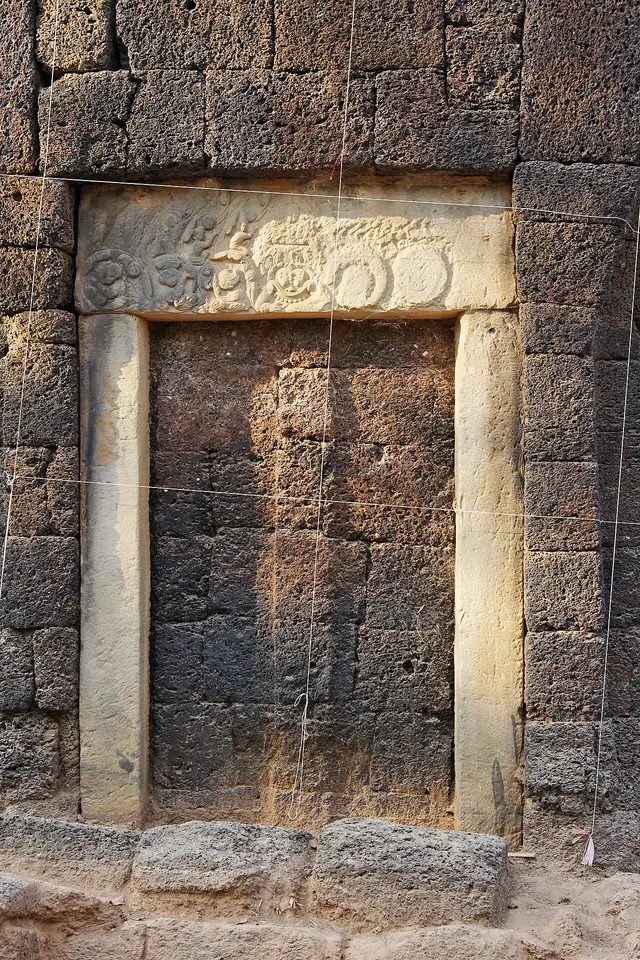
| Time | 20 to 30 minutes |
|---|---|
| Hours | No fixed hours. Go in daylight. |
Prasat Tamnak Sai, Khun Han
Prasat Tamnak Sai is at Ban Tamnak Sai, Bak Dong subdistrict, Khun Han district: a single brick sanctuary on a sandstone base, about 4 m square with indented corners, facing east, with a real east door in a sandstone frame and three false doors. A pair of stone lions stands near the entrance. It dates from about the second half of the 11th century and was a Shaiva shrine.
The original lintel showed Vishnu reclining with Lakshmi at his feet and Brahma on a lotus. It is now in the Phimai National Museum, so the temple itself is a door frame and a tower.
| Location | About 20 km from Khun Han town on Highway 2127 |
|---|---|
| Distance | About 81 km from Sisaket town, 1.5 to 2 hours' drive |
| Hours | About 08:30 to 16:30 daily |
| Nearby | Wat Lan Khuat and Samrong Kiat Waterfall are in the same district, about 10 to 14 km by road. |
Samrong Kiat Waterfall and orchards on the same trip
Coco Residence, Si Saket
Khun Han
In Khun Han district, so Tamnak Sai and Wat Lan Khuat are reachable in the morning without a two-hour drive from town.
See prices and availability on the booking page
Prasat Yer: ruined Khmer temple and Yer village, Phrai Bueng
Prasat Yer is in Wat Prasat Yoe Nuea at Ban Prasat Yoe, Phrai Bueng district, about 35 km from Sisaket town and 8 km from Phrai Bueng town. The ruined Khmer temple is brick on a laterite base with sandstone door frames and carved lintels, about the 11th to early 12th century, registered as an ancient monument in 1935 and 1982. Hours are about 08:00 to 17:00 and entry is by donation.
It is also a village of the Yer, one of the four peoples of Sisaket, who say they came from southern Laos more than 200 years ago. They hold the Mae Sa-Eng healing ritual and weave luk kaeo pattern silk and dark ceremonial cloth with silver buttons. A second temple, Wat Prasat Yoe Tai, is about 1 km south.
- Ask before photographing people or the ritual, especially the Mae Sa-Eng ceremony.
Prasat Don Tuan and the temples in Khao Phra Wihan National Park
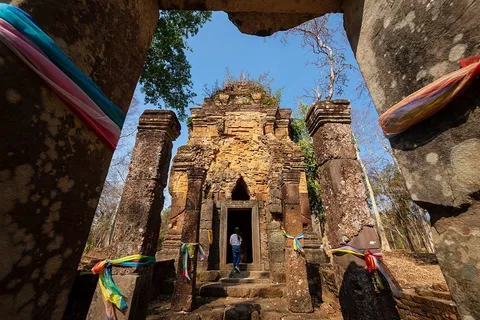
Prasat Don Tuan is at Ban Phum Sarol inside Khao Phra Wihan National Park, Kantharalak district, about 300 m from the border cliff. It is a Khmer shrine of sandstone and brick from about the 10th to 11th century. In the Ta Leng legend above, Ta Leng followed Nang Nom Yai to the stone terrace here.
When can you visit?
The park has been closed since 2025. A trial reopening on Saturday 17 and Sunday 18 Oct 2026 was for Thai visitors only, who booked in advance on the park's Facebook page. Up to 700 people a day were admitted from 08:30 to 15:30, checking in at Ban Phum Sarol market and taking park shuttles.
- As of 13 Nov 2026 no later round has been confirmed and none has been announced for foreign visitors.
- Check the park's page and phone 0 4581 6000 in office hours before you plan.
The Preah Vihear temple is in Cambodia and the Thai-side route to it is closed. Don Tuan, Pha Mo E Daeng and the twin stupas are on the Thai side inside the park.
Don Tuan, Pha Mo E Daeng and the latest visiting conditions
Phu View Hideaway
Kantharalak
In Kantharalak district, so if a park round opens you can check in at Ban Phum Sarol market early without a drive from town before dawn.
See prices and availability on the booking page
Two Khmer styles in Sisaket: Baphuon and Bayon
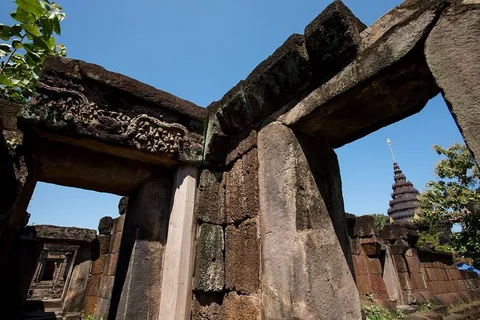
| Point | Baphuon (11th century) | Jayavarman VII (12th to 13th) |
|---|---|---|
| Religion | Hindu, shrines to Shiva or Vishnu | Mahayana Buddhist, the healing Buddha |
| Lintels | Story scenes in a frame, orderly carving | Less carving, sometimes a Buddha over a kala face |
| Material | Brick, sandstone and laterite | Mostly laterite, sandstone for door frames |
| Plan | Several prangs on one base, a gallery | A single prang, a small hall, a wall with an east gate |
| Examples here | Sa Kamphaeng Yai, Ta Leng, Ban Prasat, Tamnak Sai | Sa Kamphaeng Noi, Ban Samo, Prang Ku |
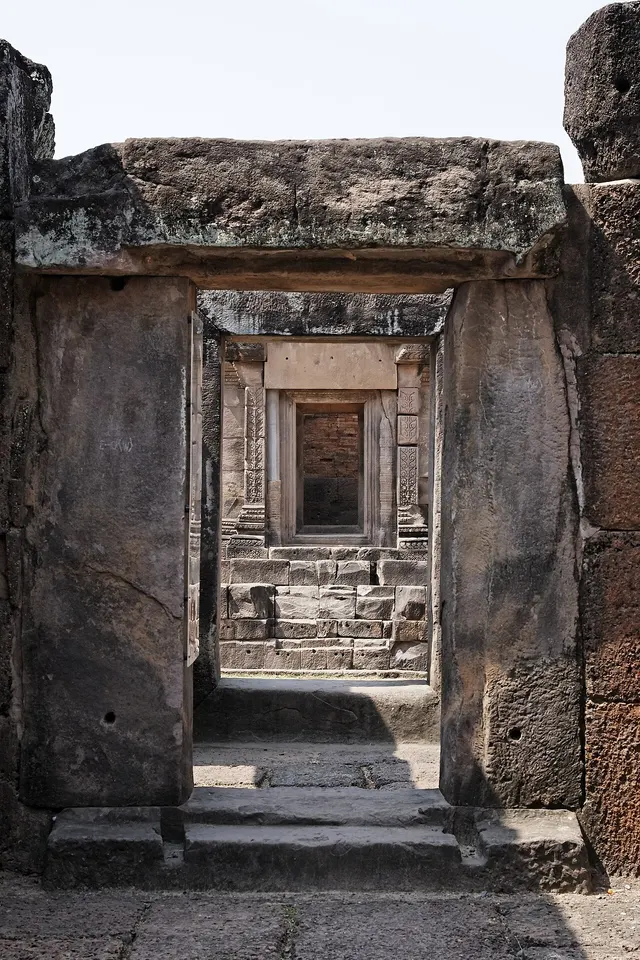
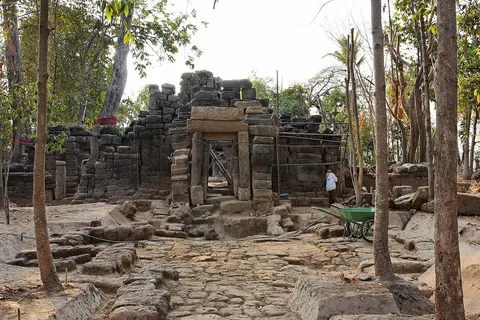
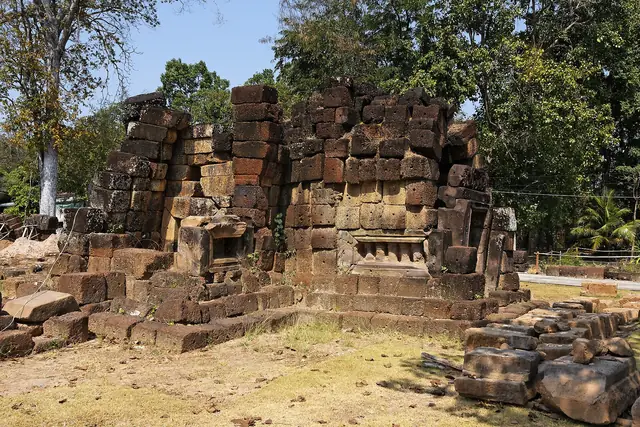
Arogyasalas follow one plan across the empire. In Sisaket they are Sa Kamphaeng Noi, Ban Samo and Prang Ku. The photo below shows the ruined laterite doorway and wall at Ban Samo.
Lintels in Sisaket: which carving is where and what it tells
| Temple | Lintel to look for |
|---|---|
| Sa Kamphaeng Yai (main prang) | Indra on the elephant Airavata over a kala face |
| Sa Kamphaeng Yai (north and south halls) | Vishnu reclining on the serpent Ananta, and Shiva and Uma on the bull Nandi |
| Sa Kamphaeng Yai (others) | Shiva Nataraja, Krishna lifting Govardhana, Krishna and horses, Hanuman with the ring |
| Sa Kamphaeng Noi | Varuna on a hamsa over a kirtimukha, older than the arogyasala itself |
| Ta Leng | Indra on Airavata and Indra on a hamsa, lying on the ground, so do not step on them |
| Ban Prasat | A standing figure over a kala face, and a Churning of the Sea of Milk fragment near the south prang |
| Ban Samo | A seated Buddha over a kala face and garland on the south door, left unfinished |
| Tamnak Sai | Original lintel of Vishnu reclining with Lakshmi and Brahma on a lotus, now in the Phimai National Museum |
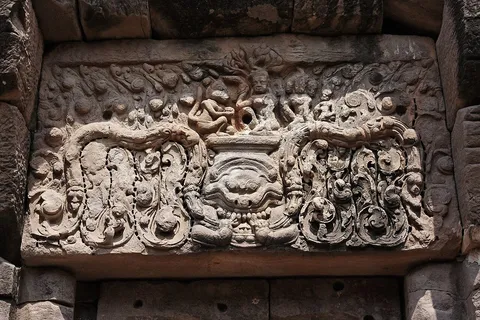
A kala or kirtimukha is a mythical beast's face in the centre of a lintel and above doors, believed to guard the entrance. A wide-mouthed face under a god is the standard Khmer lintel pattern. Indra guards the east, so he often appears on east doors. Low side light in early morning or late afternoon shows the relief better than noon light.
Ordering the temples so you do not drive back and forth
| Route | Temples | Time |
|---|---|---|
| The Uthumphon Phisai road (half day) | Sa Kamphaeng Noi, Sa Kamphaeng Yai | About 4 to 5 hours |
| Small temples in several districts (one day) | Prang Ku, Ban Samo, plus Ku Somboon or Ban Prasat | About 6 to 7 hours including driving |
| Khun Han (one day) | Tamnak Sai with Wat Lan Khuat and a waterfall | About 7 to 8 hours including driving |
| Ta Leng (a little over half a day) | Ta Leng, with a stop in Khukhan | About 3 to 4 hours including driving |
| Prasat Yer (half day) | Prasat Yer and Wat Prasat Yoe Tai | About 3 to 4 hours |
Pin every stop in your map app by its Thai name and let the app order the loop. Do not combine two far routes in one day. Prang Ku and Ban Samo are in the same district and link easily.
Timed plans for 1 day and 2 days 1 night
Samrong Kiat, Huai Chan and the Khun Han orchards
 Klook
Ubon Ratchathani Province Car Rental
From US$37.09 (Starting price per day, compact car, as of 13 Nov 2026)
Price as of 13 Nov 2026The small temples are spread along village roads with no public transport. A hire car from Ubon airport lets you choose the order and return when you are ready. A small Toyota Vios class car starts from about US$37.09 a day as of 13 Nov 2026, and the drive to Sisaket is a little over an hour. Prices change by date and car, so check the driver's age and deposit on the booking page.
Book on Klook Mid-range
Boonsiri Boutique Hotel
Wichit Nakhon Road, Sisaket town
On Wichit Nakhon Road in town, so you leave quickly and return for dinner. A good base for the half-day and one-day plans.
See prices and availability on the booking page
Half-day plan: Sa Kamphaeng Noi and Sa Kamphaeng Yai
This plan takes about 4 to 5 hours including driving, good for a free afternoon or a stop before a train. The times are examples.
- 07:45 Leave town on Highway 226 toward Uthumphon Phisai.
- 08:15 Reach Sa Kamphaeng Noi and spend 30 to 40 minutes. It opens about 08:00.
- 09:15 Drive on to Sa Kamphaeng Yai, about 16 km and 20 to 25 minutes.
- 09:45 Spend 1 to 1.5 hours at Sa Kamphaeng Yai. See every lintel and take photos in the morning light.
- 11:30 Head back, arriving about 12:15.
- 12:30 Lunch in town. See the food section below.
Eagle (Sisaket) Isan Restaurant Voucher
From US$14.72 (Starting price shown on the booking page)
Price as of 13 Nov 2026Lunch after Uthumphon Phisai at Eagle, an Isan restaurant in Sisaket town. The voucher starts from about US$14.72 as of 13 Nov 2026. The restaurant is open about 11:00 to 22:00 and closed Tuesday. The voucher cannot be cancelled or changed, so pick a day it is open before you buy.
Book on KKdayPhotos, prices and reviews from Klook
The QR code is emailed right after booking, so there is nothing to collect. Check that your phone supports eSIM and is not network locked before you buy.
Book on KlookOne day: Prang Ku, Ban Samo and one or two more small temples
This day suits people who like quiet ruins and drive themselves. Prang Ku and Ban Samo are in the same district and form the core. Add Ban Prasat (about 47 km) or Ku Somboon (about 42 km) by map.
- 07:00 Leave town. Fuel up and buy water; petrol stations are few on village roads.
- 08:15 Prasat Ban Samo, about 52 km. Allow 20 to 30 minutes.
- 09:30 Prasat Prang Ku, about 70 km from town. Allow 20 to 30 minutes.
- 10:30 to 12:00 A third temple by the map, 30 to 45 minutes.
- 12:30 Lunch in a district town on the way back, then a fourth temple if you still have energy. Go to shadeless sites before 10:00 or after 15:30.
- 16:30 Back in town.
 Klook
Ubon Ratchathani Province Car Rental
From US$37.09 (Starting price per day, compact car, as of 13 Nov 2026)
Price as of 13 Nov 2026A small-temple day needs a car, so hire one at Ubon airport and drive to Sisaket. A small car starts from about US$37.09 a day as of 13 Nov 2026. Plan 200 to 250 km for the day and pay for fuel at the pump. Prices change by date and car.
Book on KlookTwo days and one night, or three days
Two days is enough for the main temples. Spend the first half day on Uthumphon Phisai, the afternoon in town, and pick one far group for the second day. A hotel in town is the easiest base.
| Time | Day 1 | Day 2 |
|---|---|---|
| Morning | Sa Kamphaeng Noi and Sa Kamphaeng Yai | Leave early for the group you chose (small temples or Khun Han) |
| Afternoon | Wat Phra To and Wat Phra That Ruang Rong in town | The last temple, then back to town |
With three days, make the second day the small temples (Prang Ku, Ban Samo and one or two more) and the third Khun Han (Tamnak Sai, Wat Lan Khuat, Samrong Kiat waterfall). To add a neighbouring province, drop one day and add Sikhoraphum in Surin or Phanom Rung in Buriram.
Temples and sights in town for the first afternoon
Phanom Rung and Muang Tam, Buriram
 Mid-range
Gallery Design Hotel Sisaket
Ubon Road, Mueang Tai, Sisaket town
On Ubon Road in town, a good base for two or three days with restaurants close by.
See prices and availability on the booking page
Without a car: how to see the temples
Without a car you have three options.
- Hire a car with a driver by the day through your hotel, about 800 to 1,500 baht a day. Agree the price, route and waiting charge first.
- Rent a car at Ubon airport and drive to Sisaket. Shared by two to four people it is good value.
- See only the two temples near town: a van or songthaew from Sisaket bus terminal to Uthumphon Phisai, then a motorbike taxi or taxi to the wat. Agree the return price first.
As of 13 Nov 2026 there is no Sisaket Khmer temple tour you can book online in advance, so plan it yourself or rent a car.
Car hire and car with driver in Sisaket
HOP INN Sisaket
Sisaket town centre
A town-centre stay for people without a car who need an early start for the van or a hired car.
See prices and availability on the booking page
Getting to Sisaket before the temple day
Sisaket is about 530 to 570 km from Bangkok and has no scheduled airline. Come by train in about 7 to 10 hours (check that train 21 runs on your date), by bus from Mo Chit in about 8 to 10 hours, or fly to Ubon and take a train or taxi for about another hour.
Train times, fares and Sisaket station
Bangkok to Sisaket by train, bus or taxi on 12Go
From US$5.81 (Cheapest fare, a 3rd class fan train, as of 6 Nov 2026)
Price as of 6 Nov 2026See trains, buses and taxis from Bangkok to Sisaket and arrive before your temple day. Third-class fan trains are about US$5.81 to US$7.06 as of 6 Nov 2026. Times and prices change by date.
Book on 12GoUbon Ratchathani to Sisaket by train or taxi on 12Go
From US$1 (Cheapest fare, a Class 3 fan train, as of 13 Nov 2026)
Price as of 13 Nov 2026If you fly to Ubon, continue to Sisaket, about 65 km. Third-class trains start from about US$1 and take about 40 minutes to a little over an hour, and a taxi starts from about US$40 a car. Example day 17 Nov 2026, as of 13 Nov 2026.
Book on 12GoSurin to Sisaket by train on 12Go
From US$0.90 (Cheapest fare, a 3rd class fan train, as of 6 Nov 2026)
Price as of 6 Nov 2026Coming from Surin or Sikhoraphum, about 100 km. Trains start from about US$2, example day 17 Nov 2026.
Book on 12GoBuriram to Sisaket by train or taxi on 12Go
From US$2 (Cheapest fare, a train, as of 13 Nov 2026)
Price as of 13 Nov 2026Coming from Phanom Rung and Muang Tam, about 155 km. Trains start from about US$2, example day 17 Nov 2026.
Book on 12GoBest months: weather and temples month by month
Temperatures (degrees C) and rain are multi-year averages for Sisaket town.
| Month | Weather (high / low in C, rain per month) | Temples and events |
|---|---|---|
| January | 31 / 18, almost no rain | Best. Every route works |
| February | 34 / 20 | Very good. Makha Bucha on 21 Feb 2027 |
| March | 36 / 23 | Getting hot, go early. Lamduan festival mid-month |
| April | 36 to 37 / 25 | Hottest. Go before 10:00 or after 15:30 |
| May | 35, rain about 210 mm | Hot and wet. Durian starts late in the month |
| June | 34, rain about 178 mm | Green. Khun Han fruit season, go to Tamnak Sai early |
| July | 33, rain about 249 mm | Afternoon rain. Avoid dirt roads after heavy rain |
| August | 32, rain about 261 mm | Wet. Laterite is slippery |
| September | 32, rain about 289 mm, the wettest | Village lanes may be muddy |
| October | 32, rain about 126 mm | Rain easing, village roads drying |
| November | 32 / 22, little rain | Cooler and good. Loy Krathong on 24 Nov 2026 |
| December | 31 / 19, almost no rain | Good, cool mornings |
December to February is best. March to May is hot, so start before 07:30, rest between 11:00 and 14:30, go on after 15:30 and carry at least a litre of water each. In the rainy season go in the morning, before afternoon rain.
Rain: wet temples and covered alternatives
The rainy season runs from about May to October, wettest in September. Stone steps are slippery and dirt lanes may be muddy.
If it rains all day, covered options in town include the museum floors of Wat Phra That Ruang Rong, Wat Phra To, the Sisaket Aquarium (Tuesday to Sunday about 10:00 to 16:00) and the Lamduan Tower (closed Monday).
Families and older visitors: what to choose and what to skip
| Group | Choose | Skip |
|---|---|---|
| Small children | Sa Kamphaeng Noi and Yai with close parking, then Wat Lan Khuat or the zoo in town | Far temples with no toilets |
| Older children | Khun Han: temple, Wat Lan Khuat, waterfall and fruit | A single temple after a long drive |
| Older visitors | Sa Kamphaeng Noi and Yai, early morning or late afternoon | Ta Leng and Ban Prasat at midday, hot and shadeless |
| Wheelchair or stroller | Many sites have grass and uneven stone and are hard to enter, so phone the wat first | Steps to the base of the prangs |
Daily budget for a temple trip
Almost every temple is free, so the main costs are transport, a room and food. These are estimates per person per day, not including getting to Sisaket.
| Style | Per person per day | Includes |
|---|---|---|
| Budget | About 500 to 800 baht | A fan room at about 350 to 600 baht, street food, vans and motorbike taxis |
| Mid-range | About 1,500 to 2,500 baht | An air-conditioned room at about 800 to 1,500 baht, restaurant meals, a shared hire car or driver |
| Comfortable | About 3,500 baht and up | The best hotel in town, a car with driver all day, two or three temples and a waterfall |
Room and car prices change with the date and season, and are higher at festivals and long weekends.
What to eat and where between temples
Eat in town or a district town. Hours are approximate, so check before you go.
- Breakfast: Chio Kee, an old shop behind the railway station near the Mae Si roundabout, open about 06:00 to 13:30, with pan eggs and American fried rice.
- Lunch in town: Khao Kha Moo Yunnan, Chinese-style braised pork leg, open about 11:00 to 19:30, closed Sunday.
- On the Uthumphon Phisai road: Pak Tai Branch 3, southern Thai food at Nong Phai about 200 m from Big C, open about 06:00 to 16:00, with yellow curry and fish-gut curry.
Before you go: cash, maps, a SIM and what to bring
Signal can be weak in the villages and there is no shop at the gate.
- Small cash: small notes for donations and water. There are ATMs in town and the larger districts.
- Offline maps: download the Sisaket map and type the temple names in Thai in the app. Some pins are off.
- Language: little English is spoken outside hotels. Write the temple name in Thai for your driver.
Photos, prices and reviews from Klook
An AIS 5G eSIM for Thailand, installed through the Klook app or a QR code. Check that your phone supports eSIM before you buy. It helps with maps and ride-hailing in the villages. It starts from about US$0.80 as of 13 Nov 2026, and the final price depends on the days you choose.
Book on KlookPhotos, prices and reviews from Klook
A Thailand eSIM with the QR code sent by email, no counter pickup. Choose the days on the booking page. It starts from about US$5.29 as of 13 Nov 2026. Check that your phone supports eSIM first.
Book on KlookManners and safety at the ruins
- Do not climb the ruins and do not step on lintels laid on the ground. Many are fragile.
- Dress modestly at temples inside a wat: cover shoulders and knees and take your shoes off before a Buddhist hall.
- Ask before photographing monks, villagers or any ritual.
Common mistakes at the Khmer temples of Sisaket
- Expecting the scale of Phimai or Phanom Rung. These temples are small and some are only ruins, so look closely rather than rushing.
- Confusing Sa Kamphaeng Yai and Sa Kamphaeng Noi. Yai is the large Baphuon temple and Noi is the arogyasala near town.
- Expecting a guide or a restaurant at the gate. There usually is not one, so bring water and snacks.
Frequently asked questions
Which Khmer temple in Sisaket is the best to visit?
Prasat Sa Kamphaeng Yai: three prangs on one base and lintels of Indra, Vishnu and Shiva, about 26 km from town and free. Sa Kamphaeng Noi, about 10 km out, is the easy second stop.
What are the opening hours and fee at Prasat Sa Kamphaeng Yai?
About 08:30 to 16:30 daily, free. Hours may change with temple activities, so call 06 2142 9261 if you drive far. Allow 1 to 1.5 hours.
Do I need a car to see the temples?
Ideally yes. The temples are in wats and villages with no public transport to the door, so hire a car with a driver or rent one at Ubon airport. Sa Kamphaeng Noi and Yai are the easiest without a car.
What is the difference between Baphuon and Bayon style?
Baphuon (about the 11th century) has orderly carving and Hindu story lintels, as at Sa Kamphaeng Yai. Bayon (Jayavarman VII, late 12th to early 13th century) is simpler, with more laterite, less carving and Buddhist use, as at Sa Kamphaeng Noi and Ban Samo.
How far is Ta Leng from Sisaket town?
About 55 to 65 km by road. The 11 km you may see quoted is the lane off Highway 220 to the temple, not the distance from town. Allow 2.5 to 3 hours there and back.
Can I visit Prasat Don Tuan?
It is inside Khao Phra Wihan National Park, closed since 2025. A trial reopening on 17 and 18 Oct 2026 was for Thai visitors who booked ahead. As of 13 Nov 2026 no later round or foreign-visitor round is confirmed. Check the park's page and phone first.
Where the facts come from
- Prasat Sa Kamphaeng Yai (Thai Wikipedia)
- Prasat Sa Kamphaeng Yai (Wikipedia)
- Prasat Sa Kamphaeng Noi (Thai Wikipedia)
- Sa Kamphaeng Noi Khmer Ruins (Thai Holiday Guide)
- Huai Thap Than Khmer Ruins (Thai Holiday Guide)
- Prasat Ta Leng (Thai Wikipedia)
- Ta Leng Khmer Ruins (Thai Holiday Guide)
- Prang Ku Khmer Ruins (Thai Holiday Guide)
- Prasat Prang Ku (Thai Wikipedia)
- Prasat Ban Samo (Thai Wikipedia)
- Don Tuan Khmer Ruins (Thai Holiday Guide)
- Khao Phra Viharn National Park (Thai Holiday Guide)
- Khao Phra Wihan National Park (Wikipedia)
- 11 best things to do in Si Saket (Bucketlistly)
Keep planning
 Plan your Sisaket tripKhmer temples, wats, Pha Mo E Daeng, Khun Han falls, where to stay, getting there
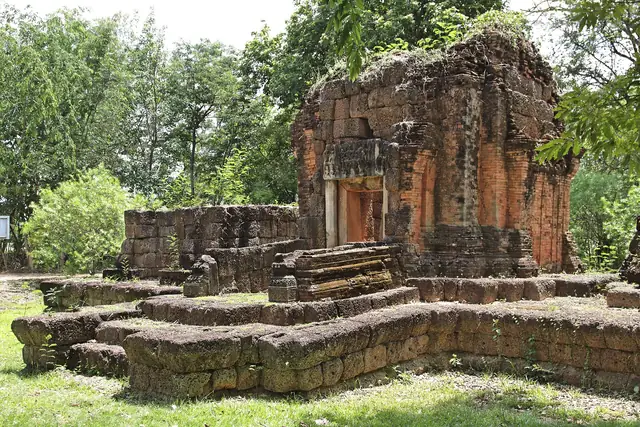 Sisaket in 1 day or 2 days 1 nightTimed plans for the town, the Khmer temples and Khun Han
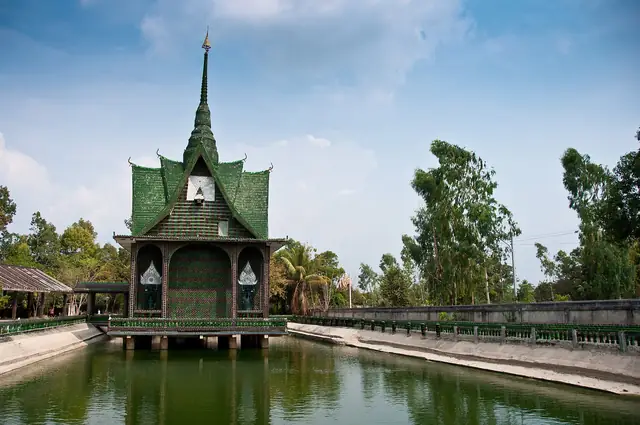 Sisaket town and templesPhra That Ruang Rong, Luang Pho To, the Million Bottle Temple, the lamduan festival
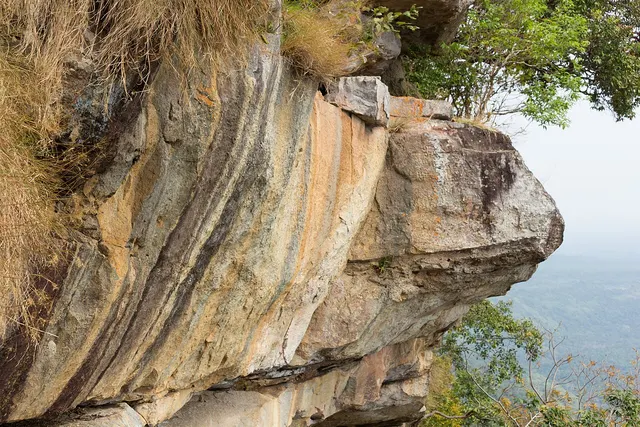 Pha Mo E Daeng and Khun HanKhao Phra Wihan National Park, border access, Samrong Kiat Waterfall, orchards
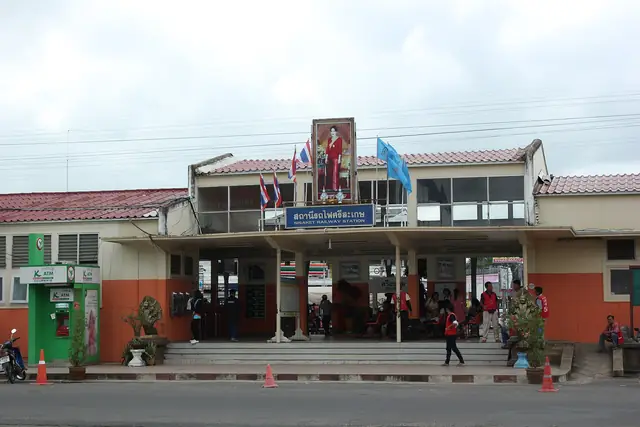 Getting to SisaketTrain, bus, flying to Ubon and onward, hiring a car
 Where to stay in SisaketTown, Kantharalak or Khun Han
 Sisaket tickets and booking optionsTrain and bus tickets, hotels, Ubon tours