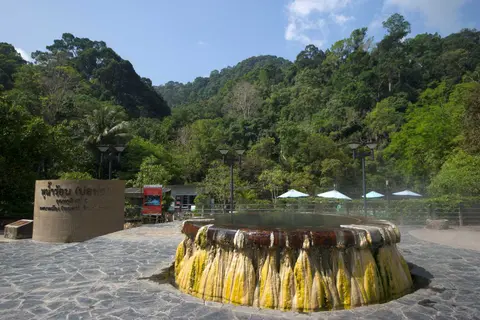
Most visitors treat Ranong as the place where the bus ends and the boat to Koh Phayam or Myanmar begins. The town itself has more to offer than that: natural hot springs with no strong sulphur smell, the residence and tomb of the Hokkien tin magnate who became the first governor, a teak palace where three Thai kings stayed, an old temple with a Burmese-style chedi, a market where signs are written in Thai and Burmese, and a long pier with a lighthouse you can climb for the view.
This page covers every stop in and around Ranong town: what each place is, how far it is, when it opens, what it costs, how long to allow, the best time to go and what to do when it rains, which in Ranong is a real planning question. If you only have a day, start with the one-day plan. For islands read Koh Phayam and Koh Chang and Laem Son; for Ngao waterfall, Punyaban and Ranong Canyon see waterfalls and canyon. Prices and hours are as of 7 Nov 2026; check again before you go.
We earn a commission if you book through our links. The price you pay does not change. How we choose
What to see in Ranong town: distance, hours, fees and time needed
The table lists every stop on this page. Distances are approximate road distances from the town centre. Where an opening time or fee is uncertain it says "about", so confirm it before you go.
| Place | From centre (about) | Time to allow | Hours and fee | Best for |
|---|---|---|---|---|
| Raksawarin hot springs and park | 2 km | 1 to 2 hours | Park open all day, free; soaking bath about 40 baht | Foot soaks, a bath, a riverside walk |
| Pornrang hot spring | About 5 to 10 km south | 1 to 2 hours | 06:00 to 18:00; foreigners 100 baht, Thais 20 baht | Soaking in a forest, combined with Ngao waterfall |
| Governor's residence | About 1 to 2 km | 30 to 45 minutes | 08:00 to 17:00, free | History, the family shrine |
| Governor's cemetery | About 3 km, hillside north of town | 30 minutes | 08:00 to 17:00, free | Chinese tomb art, photos |
| Ratana Rangsan Palace | About 1 to 2 km | 1 to 1.5 hours | Wed to Sun 08:30 to 16:00; foreigners 100 baht | A rainy day, royal history |
| Tian Shi house | About 1 to 2 km | 30 minutes | About 09:00 to 16:00; call first | An old Sino-Thai house |
| Wat Suwan Khiri | About 2 km | 20 to 30 minutes | Temple hours, free | A Burmese-style chedi |
| Wat Hat Som Paen | About 7 km east | 30 to 45 minutes | 08:30 to 16:30 | An old chedi, feeding fish in the canal |
| Pak Nam lighthouse and pier | About 6 to 8 km west | 1 to 2 hours | 09:00 to 19:00, normally no entry fee | Sunset, estuary views |
| Ngao mangrove research centre | About 10 km south | 1 to 2 hours | Call for times | A boardwalk through mangroves |
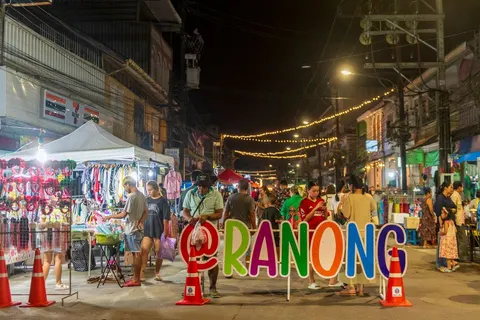
| Evening market and Rueang Rat Road | Town centre | 1 to 2 hours | Evenings; the walking street runs on Saturdays from Dec to Apr | Food, souvenirs, local life |
With a car and one day, follow this order: hot springs in the morning, the governor's residence and cemetery, lunch at the market, the palace (if it is Wednesday to Sunday), and sunset at Pak Nam. Hotels in town and near the springs are on the where to stay page.
A map of Ranong in words: what is where
Ranong town is small, and once you know which way things lie, planning is easy. Think of four sides.
The centre: the market and Rueang Rat Road
The streets around Rueang Rat Road are the heart of town: the old market, restaurants and cafes. On Saturday evenings from about December to April there is a walking street. The city pillar shrine and the statue of Phraya Damrong Sucharit Mahison Phakdi (Kho Su Chiang) stand in front of the municipality on Phoem Phon Road. Behind the shrine runs Hat Som Paen canal with a walkway and the evening market.
The north and Khao Niwet: residence, cemetery, palace
The Khao Niwet area, north to north-west of the centre, is the historic part of town. The governor's residence, the Tian Shi house on Dapkhadee Road, Ratana Rangsan Palace at the foot of Ratana Rangsan hill and Wat Suwan Khiri are close to each other, a short walk or drive apart. The governor's cemetery is on a hillside just a little further north.
The east: hot springs and the mining valley
Drive east along Highway 4005, beside Hat Som Paen canal. After about 2 km you reach Raksawarin hot springs. About 4 km beyond that is Wat Hat Som Paen, and about 3 km further is Ranong Canyon, an old flooded mine pit with emerald water. This is an inland tin-mining valley, not a seaside village.
The west and south: Pak Nam, the piers and Pornrang
Pak Nam, with the lighthouse and pier, lies west of the centre, about 6 to 8 km away. Nearby are the fish pier and the pier where boats cross to Kawthaung in Myanmar, and the boats to Koh Phayam also leave from the Pak Nam area (check the exact boarding point on the booking page). Pornrang hot spring and the Ngao mangroves lie south of town inside the Ngao Waterfall National Park area.
When to go: eight months of rain, four of sun
Ranong is nicknamed "eight months rain, four months sun" because it faces the Andaman Sea and takes the south-west monsoon head on. The town averages about 4,200 mm of rain a year over about 168 rainy days, among the highest in Thailand. The table uses long-term averages for the town.
| Month | Rain (mm) | Rainy days | What it is like |
|---|---|---|---|
| January | 41 | 3 | Dry and comfortable; everything on this page works |
| February | 20 | 2 | The driest month |
| March | 78 | 5 | Still dry, hotter |
| April | 154 | 10 | Rain starts |
| May | 486 | 20 | The wet season arrives |
| June | 638 | 22 | Heavy rain; Ngao waterfall at its fullest |
| July | 706 | 23 | Heavy rain, rough sea |
| August | 772 | 24 | The wettest month |
| September | 679 | 23 | Heavy and steady |
| October | 421 | 19 | Easing but still wet |
| November | 130 | 11 | Shoulder month, rain still falling |
| December | 59 | 5 | Dry and bright; a very good time to come |
In short: December to February is the best window for town and hot springs, March is dry but hot, and November and April are in between. From May to October it rains almost daily, yet the town still works because most stops are indoors or short visits, and hotel prices tend to be lower. What really suffers is boat service to the islands, which can be cancelled at short notice. If you come in the wet months, keep one spare day.
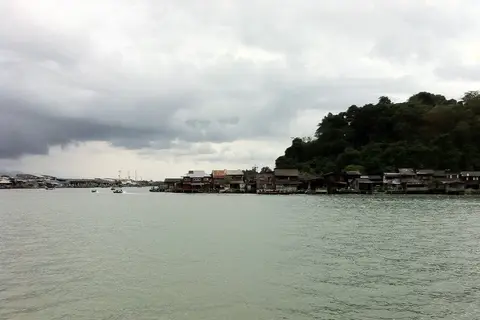
Rain in Ranong often comes in bursts, usually in the afternoon or evening, rather than all day. Do outdoor stops in the morning and save the palace, the old houses and the market for the wet hours. The rain-day plan is further down.
Raksawarin hot springs and park: foot baths, soaking baths, fees and how to bathe safely
Raksawarin hot springs and public park is the best-known hot spring in Ranong. It is on Chon Ra-u Road in Khao Niwet subdistrict, about 2 km from the town centre and 5 to 10 minutes by car. From Phetkasem road, turn at the Chon Ra-u junction and drive about 900 m along Highway 4005, which follows Hat Som Paen canal.
The three source pools: look, do not enter
The park has three natural hot springs, known as the father, mother and daughter springs. They average about 65 degrees Celsius, far too hot to enter. Do not step into the source pools. They are for looking, photos and boiling eggs, which many visitors do in the hottest pool. The water is known for having no strong sulphur smell, which is one reason people like it. If you want to drink the water, ask the staff first; do not scoop it yourself.
Foot baths and soaking baths
The municipality pipes spring water into purpose-built baths and mixes it with cool water to about 40 to 50 degrees. There are three options.
- Public foot bath: free. Sit on the edge and soak your feet. Good for families, older visitors and short stops. No soap in the foot bath.
- Whole-body soaking baths: about 40 baht per person. Shower first, and do not soak for more than about 30 minutes at a time.
- Hot yoga pavilion: a roofed concrete floor heated from below. Free. Sit or lie on it, no more than about 30 minutes.
Hours and fees
| Park entry and foot baths | Free |
|---|---|
| Soaking baths | About 40 baht per person; confirm on site |
| Opening | The park is open all day. Baths and services run roughly from morning to evening; about 10:30 to 19:30 is the window people quote most. Check on the day. |
| Time to allow | 1 to 2 hours |
| Contact | Mueang Ranong Municipality, 0 7781 1422 |
Opening times for the baths are not fixed and can change, so the safe approach is to go mid-morning or late afternoon and ask the staff before you pay.
What is in the park
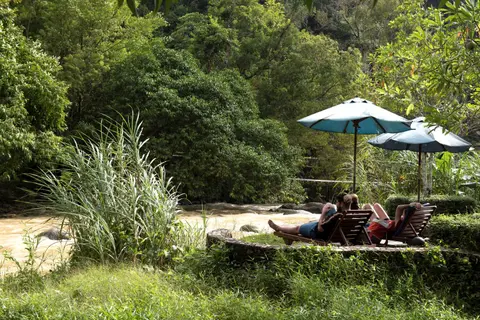
The park is shaded forest with rest pavilions, toilets, a wooden suspension bridge, walks along Hat Som Paen canal, exercise equipment, restaurants, a coffee shop, souvenir stalls and parking. In the dry season the canal beside the park is knee-deep and children can play in it. In the wet season the water turns brown and fast: look, but do not play.
Safety
- Test the water with your foot first and wear sandals with grip. The ground around the pools is slippery.
- Keep children close and away from the source pools.
- If your skin turns red or stings, rinse with cool water and leave the bath.
- If you have heart disease, high blood pressure, diabetes or are pregnant, ask a doctor before soaking. Do not bathe with open wounds.
- Steam is clearest and the air coolest in the morning or late afternoon, the best light for photos too.
Paid spas nearby
Across the road is a private paid spa, Siam Hot Spa. In town, Rajawadee Spa and Mineral Water at Ranong Hospital on Kamlang Sap Road is open about 08:30 to 20:30 daily with a mineral pool, massage and herbal steam (0 7781 2524). It is a good wet-day choice because it is indoors. Ask for prices at the counter.
Getting there
By car or taxi it is 5 to 10 minutes from the centre. By songthaew from the central market it is about 10 minutes and about 20 baht each way, though fares change, so ask the driver if the truck goes to Raksawarin before you board. Scooters rent for about 250 baht a day in town; ask for the current price. If you stay near the springs you can walk. Hotels near the springs are on the where to stay page.
 Mid-range
Thansila Resort
Phetkasem Road, Bang Rin (Raksa Warin hot spring 440 m)
A stay on Phetkasem Road in Bang Rin, about 440 m from Raksawarin hot springs, so you can walk over for a morning or evening soak.
See prices and availability on the booking page
 Mid-range
The Crest Hotel
Chollarao Road, Khao Niwet (Raksa Warin hot spring 490 m)
A stay on Chon Ra-u Road in Khao Niwet, about 490 m from Raksawarin hot springs. Handy if you want to soak more than once.
See prices and availability on the booking page
The springs feel best in the morning, in the evening, or on a cool day. A hot March afternoon turns hot air and hot water into a lot of heat.
Pornrang hot spring and the other hot springs of Ranong
Pornrang hot spring, inside Ngao Waterfall National Park
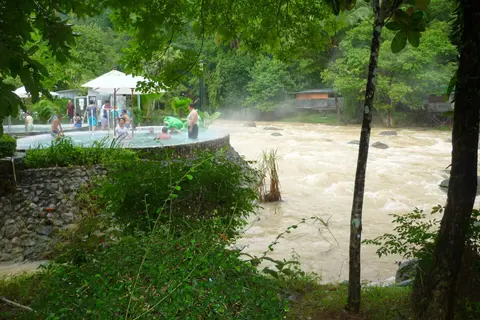
If Raksawarin is a hot-spring park in town, Pornrang is a mineral spring in the forest. It is in Moo 3, Ban Phon Rang, Ngao subdistrict, inside Ngao Waterfall National Park, about 5 to 10 km south of the town centre and 15 to 20 minutes by car. The distance is approximate.
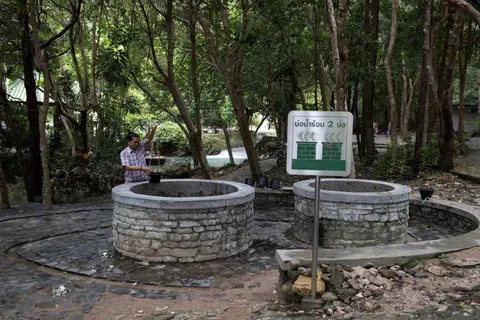
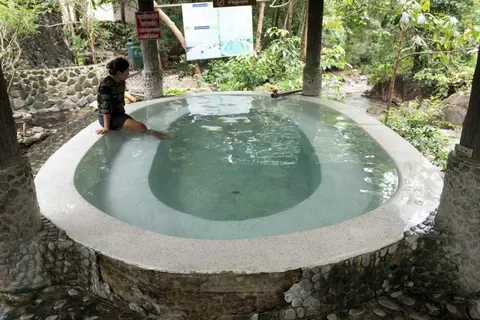
The spring has several eyes with clear water at about 35 to 40 degrees and no sulphur smell, and white calcite deposits on the rocks. On site there are a foot pool, several whole-body soaking pools, outdoor showers, toilets, a pavilion, parking, a restaurant and park accommodation. Two stone-lined pools are linked by wooden walkways, and in a shallow stream small fish nibble your feet for free. There is also a pool for cooking eggs.
| Hours | Daily 06:00 to 18:00 |
|---|---|
| Entry | Foreigners 100 baht, Thais 20 baht. Child rates and parking: ask at the gate. |
| Time to allow | 1 to 2 hours |
| Contact | Ngao Waterfall National Park office, 0 7781 0651 |
| Bring | A towel, a change of clothes and grip sandals. There are no lockers. |
The ticket sometimes covers Ngao waterfall in the same park on the same day; ask staff, because rules change. If you take a taxi or a ride-hailing app, show the driver the spring on a map, because English spellings vary (Pornrang, Phon Rang).
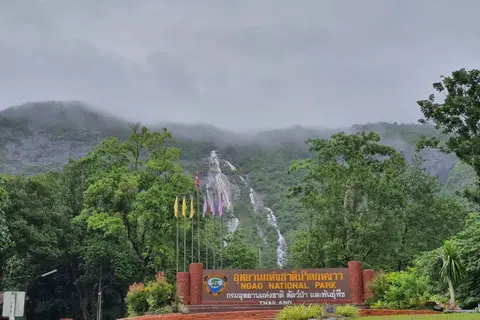
A good pairing is Pornrang in the morning followed by Ngao waterfall, which can be seen from the highway. Ngao has the most water around June, but the best months to visit are November to April. Details are on the waterfalls and canyon page. The "Chao Fa" in Ranong is the Ngao waterfall crab, a rare species found only here with a white body and purple-black legs. It is a crab, not a coffee.
Hat Yai hot spring
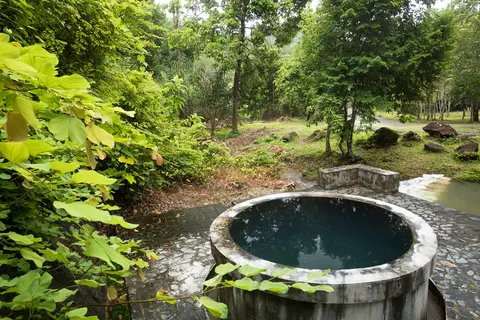
Hat Yai hot spring is north of town on the road to Punyaban and Ton Phet waterfalls. It has four small natural springs: two concrete wells about 1.5 m wide, a weir about 3 m long, an earth-banked pool about 30 cm deep, plus a drilled hole. It is more a roadside stop than a place to bathe, so ask locally about the fee and hours if you stop. It suits anyone already driving to the northern waterfalls.
Which hot spring should you pick?
| Place | Feel | Fee | Best for |
|---|---|---|---|
| Raksawarin | A town park with steam from the source pools | Park and foot baths free, soaking about 40 baht | Families, older visitors, short on time |
| Pornrang | In the forest, warm water, a stream, fish nibbling your feet | Foreigners 100 baht | Combined with Ngao waterfall, long soaks in nature |
| Hat Yai | Small springs by the road | Ask on site | A stop on the way to the northern waterfalls |
| Rajawadee Spa | An indoor paid spa in town | Ask at the counter | A rainy day, aching legs after travel |
The Governor Kho Su Chiang residence and cemetery: tin, Hokkien roots and Chinese tomb art on a hillside
To understand Ranong you need to know Kho Su Chiang (Khaw Soo Cheang in Hokkien), the Chinese merchant who grew rich on tin. He started as a tin tax collector under King Rama III and became Ranong's first governor. His descendants carry the surname Na Ranong, and his official title was Phraya Damrong Sucharit Mahison Phakdi. The old houses, shrines and Chinese signs that give Ranong its Hokkien-Thai character are largely tied to this family. It all happened in the 19th century.
The governor's residence
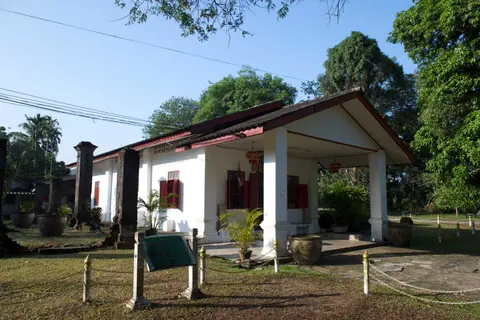
The residence is in the Khao Niwet area. It was built in 1877 by his second son, Phraya Damrong Sucharit Mahison Phakdi (Kho Sim Kong), for his father. Today it is the home of Na Ranong descendants. The part visitors come to see is a one-storey ancestral shrine with the Chinese sign 高陽 (Kao Yang, "lofty sun"), royal wreaths, an inscription slab and family archives. Locals call the place "Nai Khai", meaning inside the camp, because it has a defensive wall built after a Chinese secret-society revolt in the 1870s. It is a registered ancient monument and the grounds cover about 33 rai.
| Hours | Daily 08:00 to 17:00 |
|---|---|
| Entry | Free |
| Time to allow | 30 to 45 minutes |
| Good to know | It is a lived-in family home. The inside of the shrine may not be open every day; call Ranong Municipality on 0 7781 1422 first if you want to go in. |
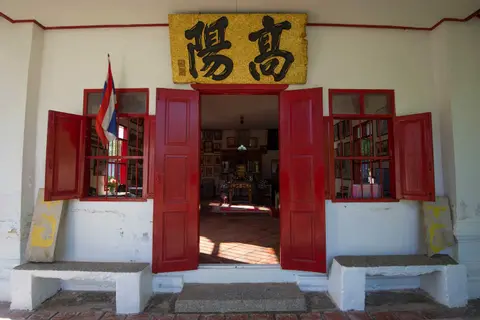
Do not expect a guide or staff to greet you. It is quiet, and walking around the outside is worth it for anyone who likes architecture and history.
The governor's cemetery
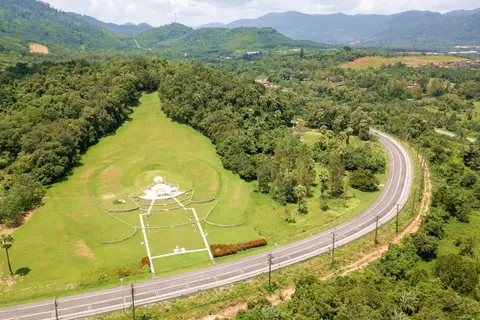
The cemetery is a Chinese tomb on a hillside north of town beside the road. It was built in 1883, a year after Kho Su Chiang died in 1882, on land granted by King Rama V. The layout follows feng shui, with its back to the hill and facing the sea. The approach is lined with stone statues of civil and military officials and auspicious animals, and there are stone inscriptions in Thai and Chinese.
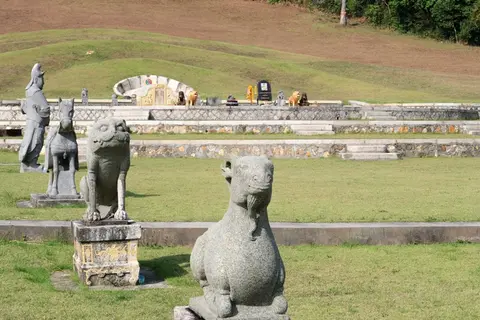
| Hours | Daily 08:00 to 17:00 |
|---|---|
| Entry | Free; ask on site to be sure |
| Time to allow | About 30 minutes |
| Contact | Ranong Municipality, 0 7750 2775 |
This is a burial site. Dress modestly, speak quietly, do not climb on walls or statues and do not leave things on the graves. The grassy hillside has no shade in the afternoon, so go in the morning or late in the day.
The monument and the city pillar shrine
In front of Ranong Municipality on Phoem Phon Road stands a statue of Phraya Damrong Sucharit Mahison Phakdi, installed on 23 November 2000, where locals come to pay respects. Next to it is the city pillar shrine. Behind the shrine runs Hat Som Paen canal with a walkway, and behind that is the evening market with local food. It is the easiest stop of the day and needs only a few minutes.
The governor story makes most sense if you start at the residence in the morning, drive up to the cemetery, then finish at Ratana Rangsan Palace and the Tian Shi house in the same area. Allow about 3 hours for the four.
Ratana Rangsan Palace: the teak palace where Rama V, VI and VII stayed
Ratana Rangsan Palace sits at the foot of Ratana Rangsan hill on Luang Road. It is a group of teak and hardwood buildings, a memorial to the stays of King Rama V (1890), King Rama VI (1909) and King Rama VII (1928). There is a throne hall, a working residence and an octagonal building linked by a wooden bridge. Exhibits cover the kings and the history of Ranong's trade.
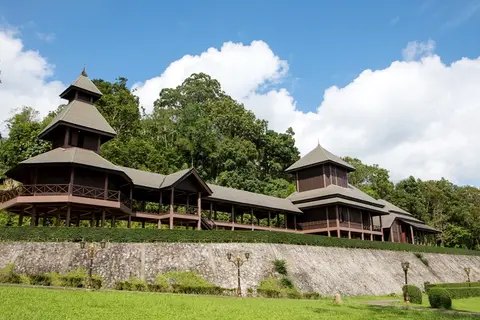
| Open | Wednesday to Sunday, 08:30 to 16:00. Closed Monday, Tuesday and public holidays. |
|---|---|
| Entry | Foreigners 100 baht; Thai adults 50 baht, children 20 baht |
| Time to allow | 1 to 1.5 hours |
| Dress | Modest. Take your shoes off before entering buildings. No photos in the throne room. |
| Contact | 08 9646 5534 or Ranong Municipality 0 7781 1422 |
Guided tours run at set times, but you can walk around on your own. Go in the morning, when it is still cool. The key warning is that the palace is closed on Monday and Tuesday, so do not plan your visit for those days. Nearby is a hall for the nine revered monks (Hor Phra Kao Ke Ji), a short stop for those who like to pay respects.
If you have time for only one old building in Ranong, make it this one. It is especially good in the rain, because you can walk through nearly all of it under cover.
To see every building, arrive before 15:00; the palace closes at 16:00.
Tian Shi house, Rueang Rat Road and the old market: Chinese, Thai and Burmese Ranong in one walk
The century-old Tian Shi house is on Dapkhadee Road in Khao Niwet. It dates from the reign of King Rama V and was the bridal house of Tian Shi and Chai Luan, who belonged to the Kho Su Chiang family line. It has two storeys, wood above and masonry below, a central courtyard, antique lotus-leaf floor tiles, old family photos and furniture that blends Thai, Chinese and European styles.
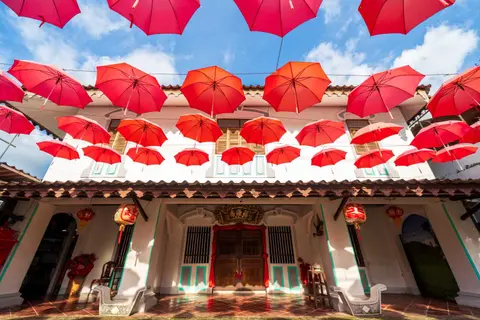
It is open daily about 09:00 to 16:00; call 08 1088 2629 before you go, and ask about the entry fee at the same time. It is a short stop of about 30 minutes for photos and old objects. Red umbrellas are often hung over the courtyard, which makes a standout photo.
Rueang Rat Road and the old market
Rueang Rat Road is the main street where Thai, Chinese and Burmese life sit side by side. The old market is busy from early morning to late at night, with a food court open all day selling curry pastes, fermented fish, spices, noodles, roast pork noodles, rice and curry, and khanom jeen noodles with massaman chicken curry. Many signs are written in Burmese script.
The Ranong walking street runs on certain evenings only, normally Saturday evenings from December to April. From May to November it usually does not run, so do not plan a trip around it in those months. Check start and finish times with your hotel.
The old part of Ranong is easy on foot. Park once and walk the morning. Allow about 2 hours if you stop to eat.
Wat Suwan Khiri (Wat Na Muang): Ranong's first temple and its Burmese-style chedi
Wat Suwan Khiri Wihan, known locally as Wat Na Muang, is at 8 Chat Chaloem Road. It is the first temple of Ranong and a third-class royal temple. It was moved from its earlier site because of flooding, on the order of King Rama V through Phraya Ratana Setthi (Kho Sim Kong). The highlight is a Burmese-style chedi about 100 years old on an octagonal base, about 13 m tall to the top of the finial.
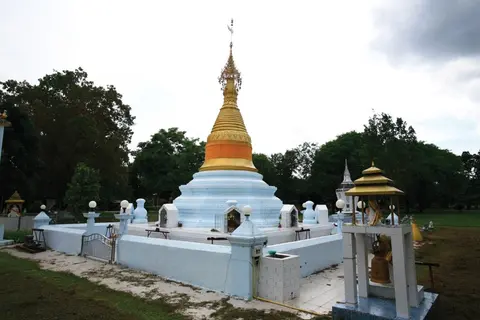
The temple is close to the governor's residence and the palace. Allow 20 to 30 minutes. It is free and open during normal daylight temple hours. Take your shoes off and dress modestly when entering the hall. It suits visitors who like Burmese-style architecture and want to understand why Ranong has such a mixed culture.
Wat Hat Som Paen and the mining valley: the name says beach, but it is a valley
The name Hat Som Paen leads many people to expect a beach or a sea-gypsy village. It is neither. It is an inland tin-mining valley community, about 7 km east of the town centre along Highway 4005, past Raksawarin hot springs. The sea-gypsy (Moken) villages are on the Koh Phayam and Mu Ko Ranong side, not here.
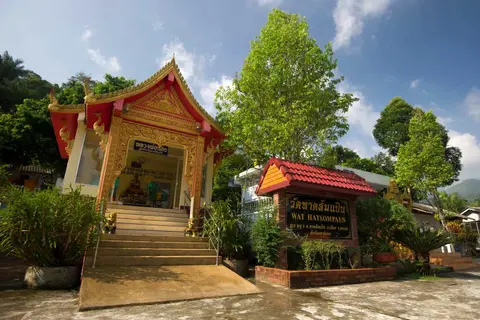
Wat Hat Som Paen
It is a small, well-known temple with a hexagonal chedi more than 100 years old. A new chedi was built over the old one in 1992, each side about 3 m. There is a shrine to the revered monk Luang Phor Khlai. The unusual part is that Hat Som Paen canal runs through the temple grounds, with big plwang fish that you can feed. Open daily 08:30 to 16:30; allow 30 to 45 minutes.
Ban Hat Som Paen: tin panning and ceramics
The community runs a tin-panning learning centre with old mining tools, where you can try panning all year, and a ceramics group that uses local kaolin and lets you colour your own pieces. Hours are about Monday to Friday 09:00 to 15:00. Phone ahead, because these are community activities.
Ranong Canyon is about 3 km further
About 3 km past the temple, at Ban Thung Kha, is what many people call the "Grand Canyon of Ranong". That is not an official name. The place is Ranong Canyon, or Emerald Pond (Bueng Morakot), a former tin-mine pit that flooded into an emerald lake. It is open about 05:00 to 18:00. There is no lifeguard, and swimming should not be assumed to be allowed; ask locals and take care on slippery rock edges. Mornings can be misty and evenings give a sunset view, though some jetties are in poor condition. More is on the waterfalls and canyon page.
Raksawarin, Wat Hat Som Paen and Ranong Canyon are on the same road and fit into half a day.
Pak Nam lighthouse and pier: sunset at the mouth of the Kra Buri river
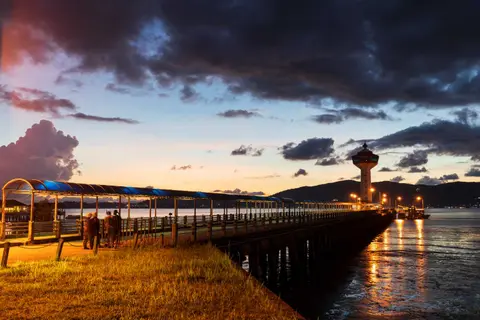
Pak Nam is a port and fishing community at the mouth of the Kra Buri river, about 6 to 8 km west of the centre, and one of the best sunset spots in Ranong. The highlight is the 80th Anniversary Lighthouse, at the end of a pier about 334 m long and 10 m wide that forms part of the Ranong customs pier, in Moo 5, Ban Khao Nang Hong.
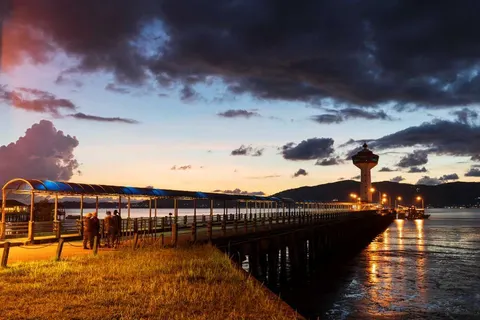
The lighthouse is an octagonal tower 48.5 m high with 9 floors. The top floor gives a 360 degree view over the Thai and Myanmar sides and the Kra Buri estuary. It is open daily 09:00 to 19:00, normally with no entry fee; allow 1 to 2 hours. To catch both the last light and the pier lights coming on, arrive about an hour before sunset.
The fish pier and boats to Kawthaung
Near Pak Nam are the fish pier and the pier where longtail boats cross to Kawthaung in Myanmar, a crossing of about 25 to 45 minutes. Rules and boat service can change at short notice, so check with Ranong Immigration (077 826 938) and at the pier on the day. As of 7 Nov 2026 nothing about the crossing is guaranteed. The full picture is on the Kawthaung border page. The pier is a working fishing area and smells of fish.
If you go to Pak Nam in the evening, know how you will get back into town. Songthaews and taxis are few late in the evening, so ask your hotel how late you can get a ride back.
Ngao mangroves: a boardwalk and giant trees
The Ngao Mangrove Research Centre sits in a large mangrove forest of about 190,000 rai with more than 20 rare mangrove species, including a rhizophora over 200 years old and a giant cannonball mangrove over 300 years old. There is a nature boardwalk of more than 800 m, and boat tours are offered. Phone 0 7784 8392 or 0 7781 1267 to ask for times and boat prices.
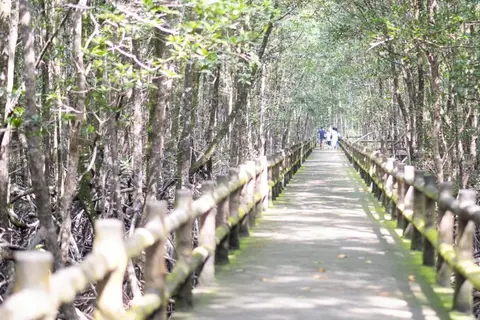
The boardwalk takes you past mangrove roots at close range. Wear grip shoes and bring drinking water. The centre is south of town, in the same direction as Pornrang hot spring, so the two fit into one half day.
What to eat in Ranong: the evening market, roti, crab-curry noodles and seafood
Food in Ranong town is southern Thai mixed with Burmese and Chinese. The list below is what to look for. Stalls and menus change, so ask locals or your hotel for current favourites.
- The evening market behind the city pillar shrine: beside Hat Som Paen canal, with local food in the evening. Look for Je An's khanom jeen with crab curry sauce, which comes with fish-kidney, green curry and coconut sauces.
- The old market and its food court: roast pork noodles, rice and curry, khanom jeen with massaman chicken curry, curry pastes and fermented fish. Go in the morning.
- Roti: Roti Naritsara in Ban Ngao serves plain roti with condensed milk, massaman chicken or beef, southern herb rice salad and Indian salad. Roti Bangnui is open for breakfast, about 06:00 to 16:00, closed on Fridays, with massaman curry.
- Coffee: there are several cafes in town, and some double as travel agents. Further away in Kra Buri, a grower roasts Robusta coffee the old way using cinnamon wood.
- Souvenirs: cashew nuts (kayu) are Ranong's famous gift, with dried fish and shrimp paste in the shops around Ban Ngao.
- Seafood: there are seafood restaurants in town. For a set you can book ahead, see below.
Mind the timing. The old market is busiest in the morning, the evening market is at its liveliest in the evening, and some roti shops close on Friday, so go for dinner at the start of the evening.
Kunlin restaurant, Khao Niwet: sharing sets for 2 to 4
If you want a seafood set you can book in advance without choosing a menu yourself, the Kunlin restaurant in Ranong town offers sharing sets.
 KKday
Kunlin Restaurant (Ranong): sharing sets for 2 to 4 people
From US$24.42 (As of 7 Nov 2026 the set for 2 people starts at about US$24, and the other sets cost more by group size and menu. Book ahead and arrive within 15 minutes of the booked time)
Price as of 7 Nov 2026Fish and seafood sharing sets with a drink at Kunlin restaurant in Khao Niwet, Ranong town. You eat at the restaurant; there is no pickup. Open daily 08:30 to 20:00. Sets for 2, for 3 and lobster sashimi sets for 2 or 4. Book ahead and arrive no more than 15 minutes before your booked time. Not cancellable or refundable.
Book on KKdayPhotos, prices and reviews from Klook
A 5G/4G data-only eSIM with hotspot sharing, valid across Thailand except Pattani, Yala, Narathiwat and a few districts of Songkhla. It arrives right after booking, and a full refund is possible before it connects to a network.
Book on KlookWhat to do in Ranong when it rains: indoor plans that still work
Because Ranong is so wet, the question is what to do on a rainy day. Much of what is on this page is indoors or a short stop.
- Late morning to afternoon (Wednesday to Sunday): Ratana Rangsan Palace, almost all under a roof, 1 to 1.5 hours.
- The Tian Shi house: a stop of about 30 minutes.
- Hot springs: rain makes warm water even better. Or choose the indoor spa at Ranong Hospital. Note that the stream beside the park turns muddy and fast; do not play in it.
- The old market and the evening market: khanom jeen, roti and rice and curry, mostly under cover.
- Wat Suwan Khiri: look at the chedi in a break in the rain.
- A cafe: wait for the rain to stop.
What not to do is visit a big waterfall during heavy rain, because flash floods rise fast, especially at the waterfalls and canyon, or take a boat to the islands in rough seas. Check conditions with the boat operator on the day.
If heavy rain cancels your island boat, spend a day in town and rebook, rather than booking non-refundable boats far in advance.
Sample plans: one full day, two half days and an evening
One full day in town (Wednesday to Sunday, with a car)
- 09:00 Raksawarin hot springs: steam and a foot soak, 1 to 1.5 hours.
- 10:45 Wat Hat Som Paen, and Ranong Canyon if you have time (same road).
- 12:30 Back to town for rice and curry or noodles at the market.
- 13:45 Ratana Rangsan Palace, 1 to 1.5 hours.
- 15:15 The governor's residence and the Tian Shi house.
- 16:15 The governor's cemetery on its hillside (closes at 17:00).
- 17:15 Drive to Pak Nam, climb the lighthouse and walk the pier for sunset.
- 19:00 Back in town for dinner.
Two half days (without a car)
- First half: the old town. Walk from your hotel to the market, the city pillar shrine, the Kho Su Chiang statue, Wat Suwan Khiri, the Tian Shi house and the governor's residence. It is all walkable if you stay in the centre.
- Second half: take a songthaew or motorbike taxi to Raksawarin, soak your feet and come back.
- Pak Nam and Pornrang are too far to walk; hire a taxi or a scooter and agree the price first.
Evening
In the evening go to the evening market behind the city pillar shrine, walk the canal and eat. On a Saturday from December to April, add the Rueang Rat walking street. For sunset go to Pak Nam first and eat in town afterwards.
With more than one day
With more days, split them into a town day and a nature day. The town day follows the plan above. The nature day goes to Pornrang and Ngao waterfall, then the mangroves. Another day goes to Laem Son and Bang Ben on Koh Chang and Laem Son, or you can sleep a night on Koh Phayam. The combined plans are on the one to three day plan.
How many days in Ranong, and where to stay
Town and hot springs fill one full day, or two half days if you go slowly. If you are just passing through to the Koh Phayam boat, one night is enough. Add waterfalls, mangroves and Laem Son and you need about 3 days, and a relaxed tour of the whole province takes 4 to 7. Most people should give the town one full day and spend the rest on the islands.
| Time you have | Suggested |
|---|---|
| Half a day | Raksawarin hot springs and the evening market, or the palace and the governor's residence |
| 1 day | The full-day plan above |
| 2 days, 1 night | Day one in town; day two the boat to Koh Phayam and a night on the island, or Pornrang, Ngao waterfall and the mangroves |
| 3 days | Town, nature, and one island |
Staying in town is handy for the market and the old streets. Staying near the springs suits people who want a morning and evening soak. Compare areas and hotels on the where to stay page. If you want to continue to Koh Phayam, the boat from Ranong takes about 35 minutes to 2 hours depending on the type of boat.
 Mid-range
The Iconic Hotel
Thamuang Road, Ranong town centre (food market 260 m)
A stay on Thamuang Road in the centre of Ranong, about 260 m from the fresh market. Easy for the morning market and dinner in town.
See prices and availability on the booking page
 Upscale
The Blue Sky Resort@ Ranong
Pak Nam, beachfront on the Ranong river mouth
A beachfront stay at Pak Nam on the Ranong river mouth, close to the lighthouse and pier. Good if you want sunset and a short walk home.
See prices and availability on the booking page
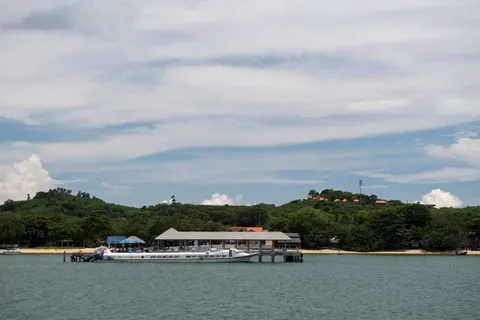 12Go
Ranong to Koh Phayam on 12Go (ferry, speedboat, van and ferry)
From US$7 (As of 7 Nov 2026 ferry from about US$7, van from about US$9, taxi from about US$20, bus from about US$23. Departures run from about 05:00 to about 14:50, around 11 a day. Sample on the booking page: ferry from Tai Kak pier 10:30 arriving 12:30, and van plus ferry from Ranong bus station 09:30 arriving 12:30. Boat times change with the day and the sea, so check the latest times on the booking page)
Price as of 7 Nov 2026Ferries, speedboats and van-plus-ferry options from Ranong to Koh Phayam. Boats leave from Ranong pier or Tai Kak pier, or take the van pickup from Ranong bus station, the airport and town hotels to the pier. About 11 departures a day, from about 05:00 to about 14:50. The ferry takes about 2 hours and the speedboat about 35 minutes. Check the real time on the booking page.
Book on 12GoGetting to Ranong and around town
Ranong is about 570 km from Bangkok, 8 to 9 hours by road. Ranong airport is about 24 km south of town, 30 to 40 minutes by car. There is no regular public transport from the airport, so use a taxi or a booked car and agree the price first. Flights from Don Mueang take about 1 hour 20 minutes; check the schedule when you book.
From Bangkok: overnight bus or flight
Buses leave from the Southern Bus Terminal and Mo Chit and take about 8 to 14 hours to Ranong bus station depending on the departure. Some arrive before dawn, so plan a place to wait or a hotel.
 12Go
Bangkok to Ranong on 12Go
From US$18 (As of 7 Nov 2026 buses start from about US$18 and flights from about US$81. Prices change by date and departure. Some overnight buses reach Ranong before dawn, so plan where to wait or sleep)
Price as of 7 Nov 2026Overnight buses from the Southern Bus Terminal and Mo Chit to Ranong, and flights from Don Mueang to Ranong airport. Check the schedule, price and exact pickup and drop-off points on the booking page.
Book on 12GoFrom Chumphon: van, bus or private car
Chumphon is about 120 km from Ranong, 2 to 2.5 hours by van or car over a hilly, winding road. If you come by train from Bangkok, get off at Chumphon and take a van on to Ranong. More is on getting to Ranong from Chumphon.
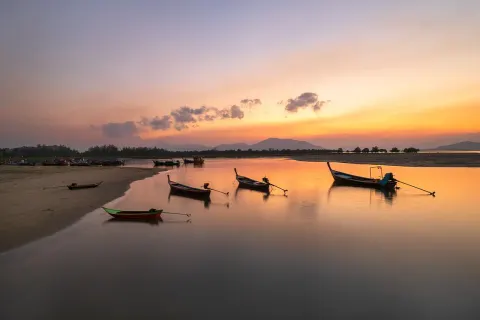 12Go
Chumphon to Ranong on 12Go
From US$7 (As of 7 Nov 2026 (sample travel date 13 Nov): buses from about US$7, vans from about US$10, taxis from about US$78 per car. Prices change by date and departure)
Price as of 7 Nov 2026Buses, vans and taxis from Chumphon to Ranong. Check times and pickup points on the booking page.
Book on 12Go KKday
Private one-way transfer between Chumphon city and Ranong city by eco car, premium car, MPV or VIP van
From US$82.99 (As of 7 Nov 2026 starting price per vehicle for the eco car. Booking confirmed 1 day after ordering)
Price as of 7 Nov 2026A private car with driver from Chumphon city to Ranong city, priced per car, with hotel drop-off as described on the booking page. Good for groups and heavy luggage.
Book on KKdayPhotos, prices and reviews from Klook
A Lomprayah bus and ferry ticket to Koh Tao, boarding in Chumphon, up the coast from Ranong. Free cancellation up to 24 hours before.
Book on KlookFrom Phuket, Krabi, Phang Nga and Khao Lak
From Phuket the bus takes about 5.5 hours. From Krabi it is about 5 hours, from Phang Nga about 1 hour 40 minutes and from Khao Lak about 3 hours. The Phang Nga to Ranong bus runs about twice a day; check times on the booking page.
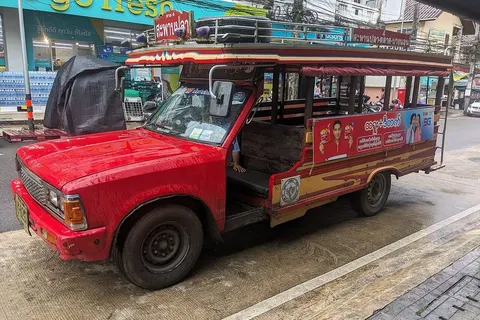 12Go
Ranong to Phuket on 12Go
From US$16 (As of 7 Nov 2026 buses from about US$16, flights from about US$46, taxis from about US$148 per car. Departures run from about 07:15 to about 20:00. Prices change by date and departure)
Price as of 7 Nov 2026Buses from Ranong bus station to Phuket, about 5.5 hours, and some flights. Useful for checking the return times or comparing options.
Book on 12Go KKday
Phuket City - Ranong City Private Transfer
From US$165.46 (As of 7 Nov 2026 from about US$165 per vehicle, more for larger vehicles. Both directions are on the same booking page. Peak-season surcharges apply, and pickup or drop-off at the Koh Phayam ferry pier area in Ranong carries an extra fee paid to the driver. See the booking page)
Price as of 7 Nov 2026A private car with driver between hotels in Phuket city and Ranong city, with both directions on the same booking page. You choose the vehicle size and cancellation is free up to 2 days before. A drop-off at the Koh Phayam pier on the Ranong side carries an extra fee paid to the driver.
Book on KKday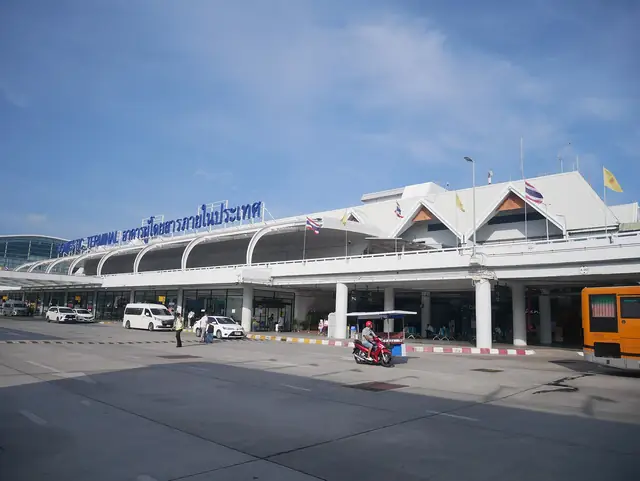 Klook
Phuket International Airport Transfers (private car)
From US$19 (to Patong, Karon, Kata or Old Town)
Price as of 3 Nov 2026Phuket airport transfers by private car, taxi or limousine. Choose the package on the booking page.
Book on KlookGetting around town
- On foot: the old town and market are walkable. From the bus station to Raksawarin hot springs is about 2 km, walkable but a songthaew is easier in the heat.
- Songthaew: several lines run in town for about 20 baht a ride. Ask the driver where the truck goes. There are fewer in the evening.
- Motorbike taxis and taxis: agree the price before you get in, and check whether the ride-hailing app works.
- Scooter hire: about 250 baht a day plus fuel (ask for the current price), the most convenient way to reach the hot springs, Pak Nam and the valley. Be careful on wet roads.
- The boats to Koh Phayam leave from the Pak Nam area; check the exact boarding point on the booking page before you travel.
For onward travel and boats, see getting to Ranong, which covers all the buses, flights and boats.
Budget for Ranong town, and who it suits
Entry fees on this page are very low and most places are free. The figures are for foreign visitors as of 7 Nov 2026; check again before you go.
| Item | About | Note |
|---|---|---|
| Raksawarin hot springs | Free to 40 baht | Park and foot baths free, soaking bath about 40 baht |
| Pornrang hot spring | 100 baht | Thais 20 baht |
| Ratana Rangsan Palace | 100 baht | Thai adults 50 baht, children 20 baht |
| Governor's residence and cemetery, Pak Nam lighthouse, temples | Free | Donations welcome |
| Songthaew ride | About 20 baht | Ask before you board |
| Scooter hire | About 250 baht a day | Fuel extra |
If you saw every paid place above in a day, the entry fees would total about 240 baht for a foreign visitor, before food, a bed and transport.
Who Ranong town suits
- Travellers who like a small, quiet town with history, old houses and mixed cultures.
- Families and older visitors who want a hot soak without a long walk.
- People passing through on the way to Koh Phayam or the border who want a day well spent.
- Anyone who dislikes crowds.
- It does not suit anyone who wants a white-sand beach and beach bars. Go to Koh Phayam for that.
Common mistakes in Ranong town
- Stepping into the source pools at about 65 degrees: look and boil eggs only; use the mixed baths.
- Going to the palace on Monday or Tuesday: it is closed. Plan it for Wednesday to Sunday.
- Expecting the governor's residence to have staff to show you around: it is a lived-in home, so call first if you want to enter the shrine.
- Planning beach days from June to September: heavy rain and rough sea. Plan town days instead.
- Thinking "Chao Fa" in Ranong is coffee: it is the name of the Ngao waterfall crab, found only there.
- Thinking Hat Som Paen is a sea-gypsy village: it is an inland mining valley.
- Looking for a "Grand Canyon Ranong": the real name is Ranong Canyon or Emerald Pond, and there is no lifeguard.
- Visiting the springs in the hot afternoon: morning or evening is more pleasant.
- Leaving Pak Nam too late: few rides head back into town in the evening.
- Booking non-refundable island boats several days ahead in the wet season: boats can be cancelled for rough seas.
Frequently asked questions
How many days do you need in Ranong town?
One full day for the town and the hot springs, or two half days if you go slowly. If you are only passing through to the Koh Phayam boat, one night is enough. Adding waterfalls, mangroves and Laem Son takes about 3 days.
What is the entrance fee and opening time of Raksawarin hot springs?
The park and foot baths are free and a whole-body soaking bath is about 40 baht. The park is open all day; the baths run roughly from morning to evening, with about 10:30 to 19:30 the window people quote most. Check on the day.
Can you swim in Raksawarin hot springs?
Not in the three source pools, which are about 65 degrees Celsius. Use the public foot bath or the soaking baths, which are mixed with cool water to about 40 to 50 degrees. If you have heart disease, high blood pressure, diabetes or are pregnant, ask a doctor first.
How much does Pornrang hot spring cost?
Foreigners pay 100 baht and Thais 20 baht. It is open daily 06:00 to 18:00 inside Ngao Waterfall National Park, about 5 to 10 km south of town. Ask at the gate about child rates and parking.
When is Ratana Rangsan Palace open?
Wednesday to Sunday, about 08:30 to 16:00. It is closed on Monday, Tuesday and public holidays. Foreigners pay 100 baht and Thai adults 50 baht. Dress modestly and take your shoes off before entering.
Do you pay to enter the governor's residence and cemetery?
No, both are free and open daily 08:00 to 17:00. The residence is a lived-in family home, and the inside of the shrine may not be open every day, so call Ranong Municipality on 0 7781 1422 first if you want to go in.
What is the best month to visit Ranong?
December to February is the driest and most comfortable, and February is the driest month at about 20 mm of rain. March is dry but hot. From May to October it rains almost daily, and August is the wettest at about 772 mm. Town sights still work, but island boats may be cancelled.
Is the Grand Canyon of Ranong the same as Ranong Canyon?
Yes. "Grand Canyon Ranong" is not an official name. People mean Ranong Canyon, or Emerald Pond, a former tin-mine pit near Wat Hat Som Paen that has flooded into an emerald lake. There is no lifeguard, and swimming should not be assumed to be allowed; ask locally.
How do you get to the Pak Nam lighthouse, and is it free?
Pak Nam is about 6 to 8 km west of the centre, 15 to 20 minutes by car. The lighthouse and pier are open 09:00 to 19:00 with normally no entry fee. Songthaews and motorbike taxis go there; agree the price first.
Is Chao Fa in Ranong a coffee?
No. Chao Fa in Ranong is the name of a rare crab found only at Ngao waterfall, with a white body and purple-black legs.
Where the facts come from
Keep planning
 Ranong: hot springs, Koh Phayam, Koh Chang, Laem Son and waterfallsThe whole province by zone, with best months, the rainy-season reality, budgets and transport
 Ranong itinerary: 1 to 3 daysOne day in town, 2 days 1 night on Koh Phayam, 3 days, and a rainy-day plan
 Koh Phayam, RanongBoats, seasons, beaches, where to stay and 1 to 3 day plans
 Koh Chang (Ranong), Mu Ko Ranong and Laem SonFees, closed season, Bang Ben beach and Ko Kam
 Waterfalls and Ranong CanyonNgao, Punyaban, Ton Phet, Chum Saeng and Emerald Pond
 Crossing to KawthaungThe pier, the longtail boat, documents and what to check before you go
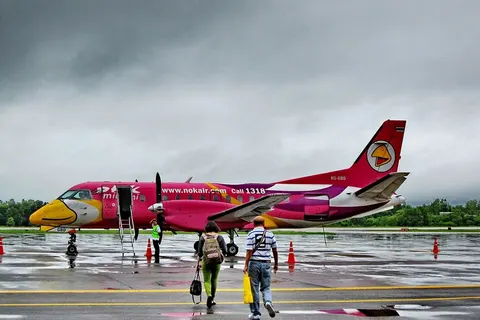 Getting to RanongBus, flight, van, driving and onward to the piers
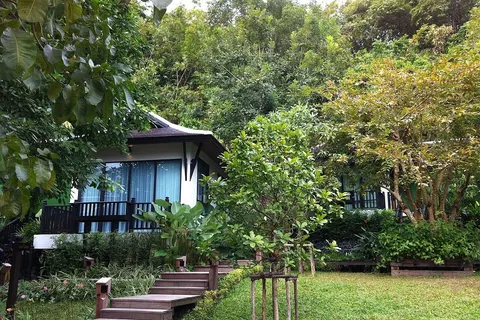 Where to stay in RanongPick the area to match your boat, hot springs and sea
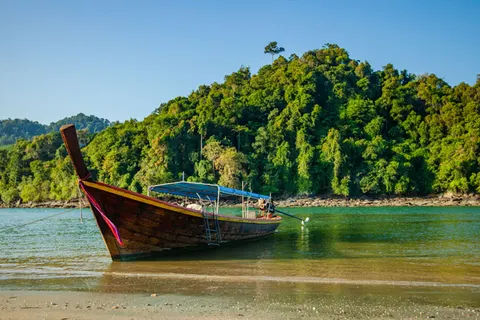 Ranong dealsTickets, Koh Phayam ferries, private cars, dinner sets and hotels