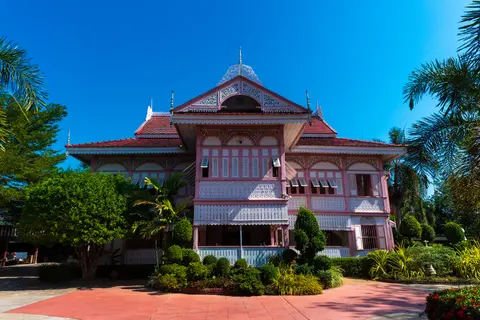
Phrae still has the earth wall and moat of a real Lanna town, and inside it sit centuries-old temples, a gingerbread-style palace of the last ruler, and the pink teak house that appears on almost every Phrae poster. All of it is packed into a quiet district called Nai Wiang where traffic is light and walking is easy. This guide covers hours, fees, walking distances and the things visitors most often get wrong, such as Wongburi House being closed on Sundays.
Hours and fees are as of 6 Nov 2026. Figures marked as about are estimates, so check before you go. Wat Phra That Cho Hae and other temples outside the wall are on temples outside Phrae town, while Phae Mueang Phi and the indigo villages are on nature and countryside in Phrae. For a ready-made route see the one day in Phrae plan, for transport see getting to Phrae, and for beds see where to stay in Phrae.
We earn a commission if you book through our links. The price you pay does not change. How we choose
Phrae old town at a glance
| Place | Highlight | Entry | Hours |
|---|---|---|---|
| Wat Luang | Viharn Luang Phon Nakhon, Phra Chao Saen Luang, Chai Chang Kham chedi, Phrae museum in the grounds | Free to enter the temple | About 08:00 to 17:00 |
| Wat Phra Non | Gilded stucco reclining Buddha, Chiang Saen-style ubosot without windows | Free to enter the temple | About 08:00 to 17:00 |
| Wat Phong Sunan | Golden reclining Buddha, glass-ball wall around a white viharn | Free to enter the temple | About 06:00 to 19:00, check before you go |
| Khum Chao Luang | Phrae city museum in a gingerbread-style palace built in 1892, plus basement cells | Free | Daily 08:30 to 16:30 |
| Wongburi House | Pink two-storey teak house, living museum, khao soi in the house restaurant | Adults 60 baht, ages 10 to 20 30 baht | Mon to Sat 09:00 to 16:00, closed Sunday, check before you go |
| Wichai Racha House | Lanna and gingerbread teak house with big teak pillars | Free, check before you go | About 08:30 to 16:30, gate may be shut |
| Teak Museum | Danish timber company buildings of 1906 on the old wall mound | Free, check before you go | Mon to Fri about 09:00 to 16:00 |
| Wat Chom Sawan | Teak Burmese and Tai Yai-style temple, bamboo Buddha, ivory scriptures | Free to enter the temple | Daily about 08:00 to 16:30 |
| Kad Kong Kao | Saturday evening walking street on Khamlue Road | Free | Saturday only, about 16:00 to 20:00, some say 21:00 |
The walkable core is a circle of about 500 metres around Wat Luang: Wat Luang, Wat Phra Non, Wat Phong Sunan, Wongburi House, Khum Chao Luang and the city pillar shrine. Wichai Racha House and the Teak Museum are another 400 to 500 metres to the south. Wat Chom Sawan, Wat Sa Bo Kaeo and the Seri Thai Museum lie about 900 metres to 1.5 km east of Khum Chao Luang. Distances are straight-line measurements on the map, so real walking routes run a little longer.
With half a day, start at Khum Chao Luang in the morning, then Wat Luang, Wat Phra Non and Wat Phong Sunan, and finish at Wongburi House before 16:00. On a Saturday, stay for the Kad Kong Kao walking street, which sits right outside Wongburi House.
The old city wall and moat
Old Phrae, called Wiang Phrae, is enclosed by a single earth wall and a single moat dug around three natural mounds of Yom River silt. The town is about 800 metres wide and 1,500 metres long, small enough to cross on foot in under half an hour. It originally had four gates: Pratu Chai, Pratu Yang Ma, Pratu Si Chum and Pratu Man.
Several digs have turned up pottery from the Sukhothai, Si Satchanalai, Lampang, Nan and Phayao kilns in the wall and inside the town, and the dating points to the 14th century. The far older dates in local legend are tradition, not evidence from the ground.
What you see today is not a tall brick wall like the one in Chiang Mai. It is a long earth bank and a line of moat, with roads running along the old route. Building 3 of the Teak Museum stands directly on the wall mound, so it is the easiest place to stand on the old wall.
Visitors expecting masonry battlements are usually disappointed. Treat the wall as a pleasant route to walk along the moat and a way to understand the town plan, not a sight in itself.
Wat Luang: the first temple of Phrae
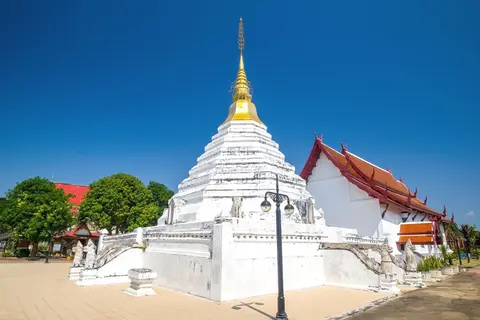
Wat Luang is in Nai Wiang on Khamlue Road, Soi 1. It is said to be the first temple built with the town. Excavated pottery dates the town to about the 14th century, while temple legend claims far greater age. It has been restored several times.
The highlight is Viharn Luang Phon Nakhon, which houses Phra Chao Saen Luang, a large seated Buddha in a mix of Lanna and Sukhothai style. It is the only viharn in Phrae with a roof finial shaped like a swan. Behind it stands Phra That Luang Chai Chang Kham, a whitewashed Chiang Saen-style chedi said to hold a relic brought from Pegu, with half-elephant figures around the base.
- Pratu Khong, an old gateway once reserved for the town's ruler, now holding a statue of a Phrae ruler.
- The Phrae museum in the grounds, with Buddha images, inscriptions over 500 years old, palm-leaf manuscripts, stone tools and a Stone Age skull.
- Khum Phra Lo, a model Lanna house with weaving looms and old cart wheels downstairs and everyday items such as charcoal irons and old umbrellas upstairs.
- The Phrae Cultural Hall, a teak building about 200 years old holding old chests and carved wooden coffins.
| Where | Khamlue Road Soi 1, Nai Wiang, about 200 m from Khum Chao Luang and 260 m from Wat Phra Non |
|---|---|
| Hours | About 08:00 to 17:00 daily |
| Entry | No fee for the temple, donation box. Check museum hours and conditions before you go |
| Time | 40 to 60 minutes with the museum |
Wat Phra Non: reclining Buddha and a Chiang Saen ubosot
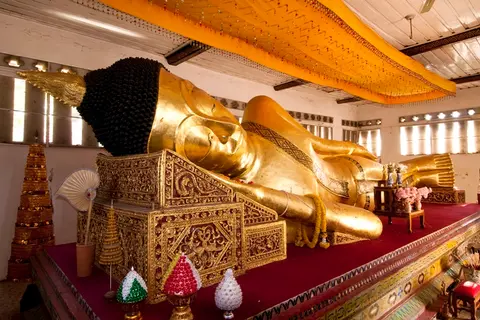
Wat Phra Non lies about 260 metres west of Wat Luang near the old wall line. The temple's story goes back to the Ayutthaya period. After it was abandoned during a war, villagers restored it and called it Wat Ton Muang. During the work they found a gold plate inscribed by Queen U Thong Si Phimpha, consort of Chao Phraya Chai Chana Songkhram, which revealed the temple's original name.
Look for the Chiang Saen-style ubosot, which has no windows and uses slits in the wall for light. Its gable is carved with scroll patterns in late Ayutthaya style and scenes from the Ramakien. The viharn follows the same form, with fretwork eaves and carved naga on the roof. Inside lies the gilded stucco reclining Buddha, about 5 metres long. Behind the ubosot is an octagonal bell-shaped chedi with Buddha images on four sides.
| Where | Nai Wiang, near the western wall line, about 130 m from Wongburi House |
|---|---|
| Hours | About 08:00 to 17:00 daily, parking available |
| Entry | No fee for the temple |
| Time | 30 to 40 minutes |
A market called Kad Phra Non runs beside the temple on Saturday evenings and links up with the Kad Kong Kao walking street. Dress neatly, remove shoes before entering buildings, and stay clear of any ceremony in progress.
Wat Phong Sunan: golden reclining Buddha and the glass-ball wall
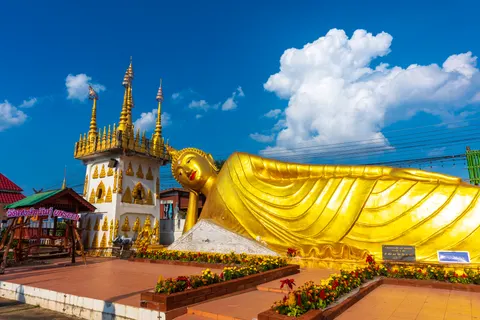
Wat Phong Sunan stands next to Wongburi House on Khamlue Road, less than 100 metres away. It was an abandoned temple called Wat Pong Sanuk until a flood in 1929 collapsed the viharn wall. Luang Phongphiboon and Chao Sunanta Wongburi, the owners of Wongburi House, led the rebuilding and renamed it.
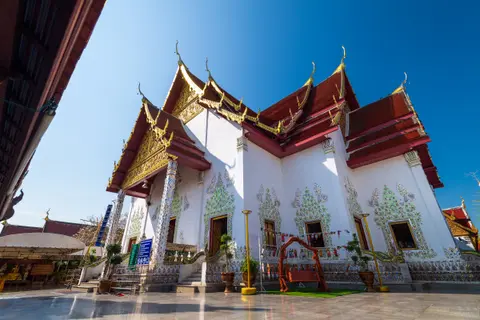
It is the most photogenic temple in town, with a golden reclining Buddha along the wall, an auspicious gate with 19 spires, and a white glass viharn holding a chedi with 108 spires, ringed by 108 glass balls. Through a ball you see the viharn and chedi upside down. The ubosot houses Phra Chao Saen Suk, a Mara-subduing Buddha image said to be 568 years old, which is the temple's genuinely old piece.
| Where | Khamlue Road, Nai Wiang |
|---|---|
| Hours | About 06:00 to 19:00, check before you go |
| Entry | No fee for the temple |
| Time | 20 to 30 minutes |
Each February the temple holds a relic bathing and worship fair, and it is busier than usual then.
Wat Chom Sawan: the Burmese-style teak temple
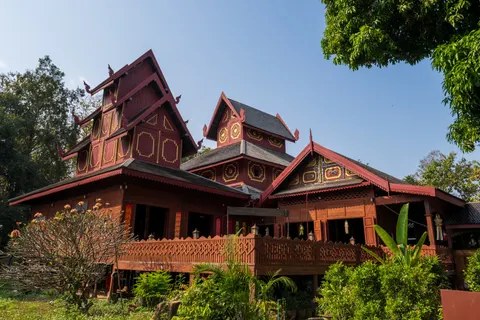
Wat Chom Sawan is on Yantarakitkoson Road in Thung Kwao, about 1.5 km east of Khum Chao Luang and about 1 km from the provincial hall. Ngiao merchants from Myanmar who traded in Phrae founded it in 1894, and Tai Yai (Shan) people later restored it, which is why it is described as Burmese-Tai Yai in style. It has stepped roofs trimmed with fretwork, and the whole building is teak, serving as ordination hall, viharn and monk's quarters. The ceilings and columns are carved and decorated with old-style coloured glass.
- Luang Pho San, a Buddha image woven from bamboo, lacquered and gilded.
- A Burmese-style ivory Buddha image.
- A Patimokkha scripture made of ground ivory pressed into thin sheets, written in red lacquer in Burmese script.
- A carved pavilion holding a marble Buddha.
On Makha Bucha day each year the temple holds a relic worship fair with a ceremony to robe the chedi and offerings of lucky banners. At Yi Peng in 2026 it hosts a lantern-lighting festival from 20 to 24 Nov; for 2027 expect about mid November, and check the dates before you go.
| Where | Yantarakitkoson Road, Thung Kwao, parking and toilets on site |
|---|---|
| Hours | Daily about 08:00 to 16:30, so arrive before 16:00 |
| Entry | No fee for the temple |
| Time | 30 to 45 minutes |
Wat Chom Sawan sits outside the wall, a 20 to 25 minute walk from Khum Chao Luang. In hot weather take a pedicab or taxi out and walk back. Wat Sa Bo Kaeo is about 700 metres west of it, so the two combine easily.
Wat Sa Bo Kaeo: a Burmese temple by the moat
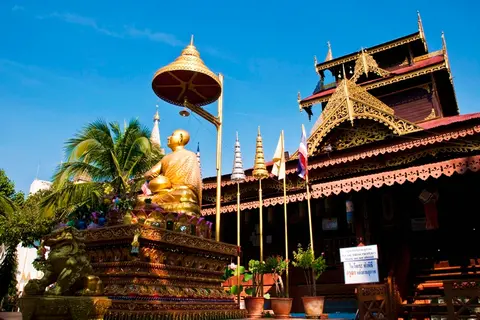
Wat Sa Bo Kaeo, also called Wat Chong Klang or Wat Sam Pho, is on Nam Khue Road beside the moat. Burmese families living on both sides of Nam Khue and Yantarakitkoson Roads built it, starting in 1876. The assembly hall, ubosot and chedi are Burmese in style, with marble Buddha images dressed in Burmese regalia, and the temple still houses Burmese monks studying in Thailand.
It is much quieter than Wat Chom Sawan, and it suits anyone who wants to compare two Burmese temples built in the same period. Allow about 20 minutes. Opening hours vary, so go at midday.
Khum Chao Luang: the Phrae city museum
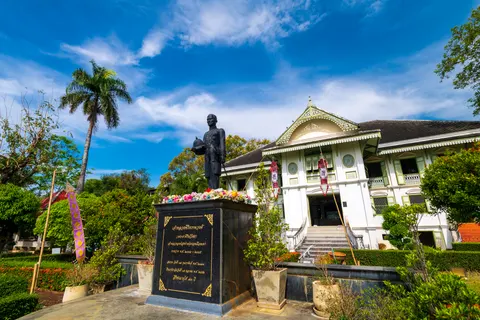
Khum Chao Luang was built in 1892 by Chao Phiriya Thepphawong, the last ruler of Phrae. Chinese and local craftsmen built it in the Thai-European style known as gingerbread: two storeys of brick and plaster with 72 doors and windows, standing on hardwood log foundations rather than piles. A statue of the ruler stands in front.
In 1902 an uprising by Ngiao (Shan) people led the ruler to flee to Luang Prabang, and he never returned. The palace passed to the state and later served as the provincial governor's residence, until the Phrae Provincial Administrative Organisation took it over and made it a museum in 2004. King Bhumibol and Queen Sirikit stayed here on 15 to 17 March 1958.
What to see inside
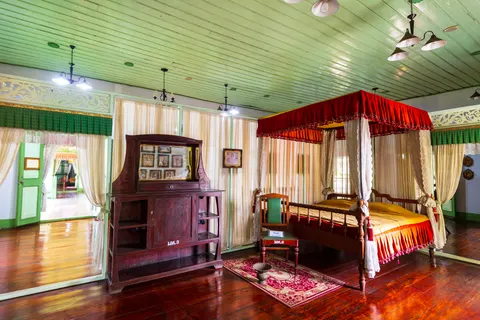
- Upstairs: enshrined relics, a statue and the bedroom of the last ruler.
- Ground floor: the audience room, a history gallery and household items of northern nobility.
- Basement: three kinds of cell, for slaves, minor offenders and a dark room for serious crimes, lit only by small slits.
| Where | Khum Doem Road, opposite Narirat School, Nai Wiang, about 120 m from the city pillar shrine |
|---|---|
| Hours | Daily 08:30 to 16:30, including public holidays |
| Entry | Free |
| Phone | 0 5452 4158 |
| Time | 45 to 60 minutes |
A city tram tour leaves from the museum at 10:00 and 14:00. Check with the office whether the rounds still run to this timetable, phone 054 532 485 ext. 102.
Wongburi House: the pink teak mansion
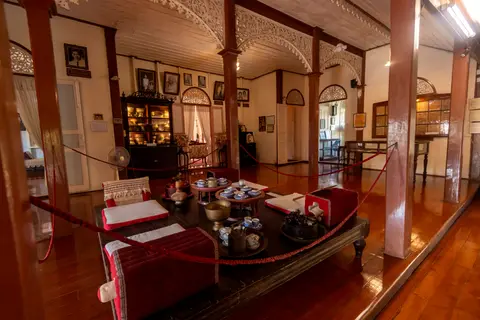
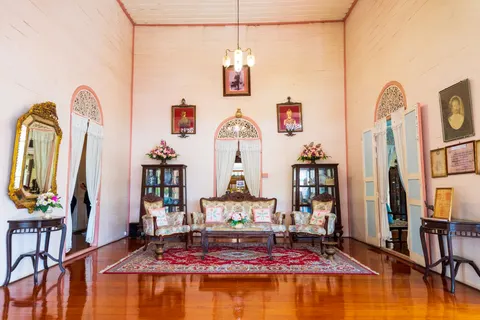
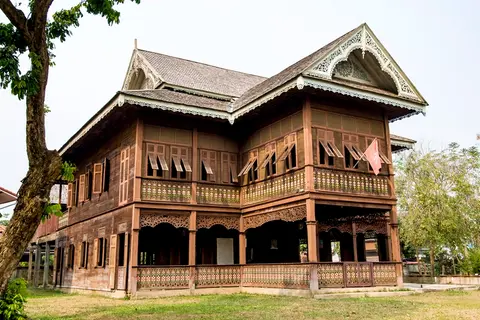
Wongburi House is the pink two-storey teak house at 50 Khamlue Road, the one you will have seen in pictures of Phrae. Craftsmen from Guangdong built it in the late 19th or early 20th century as the wedding house of Chao Phromwong Phra Thang (Luang Phongphiboon) and Chao Sunanta Wongburi, daughter of Chao Burirat. It is a European-influenced house with gingerbread fretwork, with joints pegged together without nails.
Inside is a living museum run by the family: reception rooms and bedrooms, silverware, glassware, ceramics, Chiang Saen and U Thong Buddha images, and rare papers such as royal commissions, slave sale records over 100 years old, logging concessions and elephant registration tickets. Some documents can be viewed but not photographed. A raised teak house, the original home, stands behind and connects by a walkway. It won a conservation award from the Association of Siamese Architects in 1993 and has been a film and TV location.
| Entry | Adults 60 baht, ages 10 to 20 30 baht (show ID or passport), free for ages 0 to 9, monks and guides. Rates from 1 Jan 2025 |
|---|---|
| Hours | Monday to Saturday 09:00 to 16:00, closed Sunday. Phone 08 2446 2628 to check before you go. The house restaurant opens Monday to Saturday 10:00 to 15:00 |
| Rules | Shoes off, stairs inside, photos allowed but no flash or video, no outside food or drink, no smoking |
| Time | 45 to 60 minutes |
Bring cash for the ticket. Go before 15:30 so you are not rushed, and before 15:00 if you want a bowl of khao soi in the house restaurant.
The house also hosts khantoke dinners, and groups who want a guide should book ahead.
 KKday
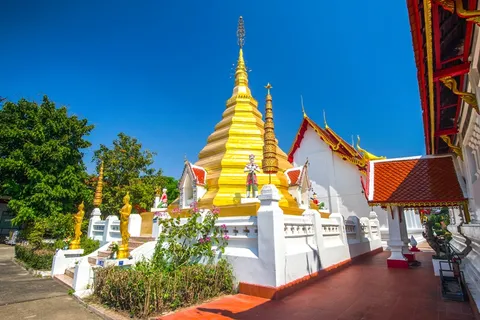
Phrae Day Tour: Wat Phra That Cho Hae, Wongburi House, Wat Phra That Suthon Mongkhon Khiri and a Mo Hom Dyeing Workshop
From US$121.68 (As of 6 Nov 2026: starting price for an adult)
Price as of 6 Nov 2026A one-day tour from Phrae town with an English-speaking guide: Cho Hae, Wongburi House, Suthon Mongkhon Khiri and a mo hom dyeing workshop, from about US$121.68 as of 6 Nov 2026, free cancellation up to 3 days before
Book on KKday Klook
Chiang Mai Province Car Rental (drive on to Phrae)
From US$36.65 (Starting price per day, compact car, as of 14 Nov 2026)
Price as of 14 Nov 2026A rental car from the supplier on the booking page, pick-up and drop-off at the places you choose, insurance and terms as listed. Drivers must be 30 to 65. Cancellation terms differ by car. See the booking page.
Book on KlookWichai Racha House: a Lanna teak house
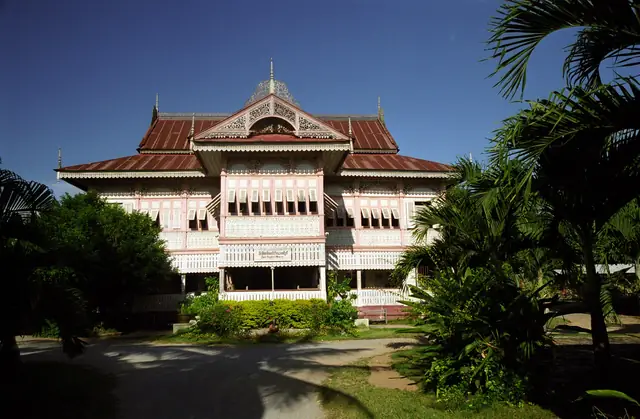
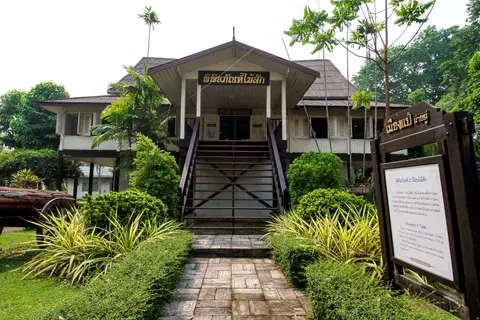
Wichai Racha House is on Wichai Racha Road, about 400 metres south of Khum Chao Luang. It mixes Manila-style and gingerbread features in Lanna architecture, with fretwork across the gables, eaves, balconies and the vents above doors and windows. The teak pillars are about 8 by 8 inches. It is thought to have been built before 1891 by Chao Nan Khanti, ancestor of the Saensiriphan family and a relative of the last ruler.
The interior is fairly bare, mostly signboards, and the gate is sometimes shut. Call 09 6080 2380 before you walk over.
| Hours | Daily about 08:30 to 16:30, check before you go |
|---|---|
| Entry | Free, check before you go |
| Time | 15 to 20 minutes |
The Teak Museum: timber company houses on the wall mound
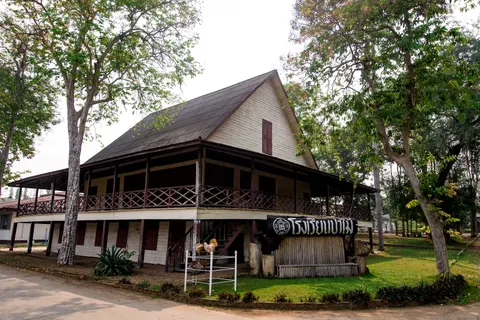
The Teak Museum sits inside the Phrae Forest Innovation Institute under the Department of National Parks, Wildlife and Plant Conservation. It has three two-storey teak buildings that were the office and home of the manager of the East Asiatic Company, a Danish firm with teak concessions on the Yom River in the reign of Rama V. They were built in 1906, and the Forest Department turned them into a museum in 1998.
Building 3 is the one to visit. It stands on the earth mound of the old town wall, with a fireplace in the ground-floor hall and displays on the timber trade, crafts and tools. It explains the logging background behind the teak houses all over town, and it makes more sense if you have already seen Wongburi House.
| Hours | Monday to Friday about 09:00 to 16:00, closed Saturday and Sunday |
|---|---|
| Entry | Free, check before you go |
| Phone | 0 5451 1270 |
| Time | 30 to 45 minutes |
If you are in Phrae only on a weekend, skip this museum. It is the least important stop and will not break the main plan.
Wat Phra Bat Ming Mueang: the town's guardian Buddha
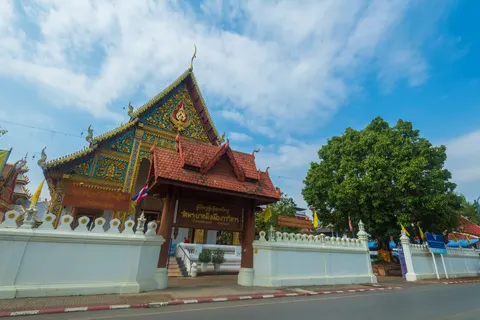
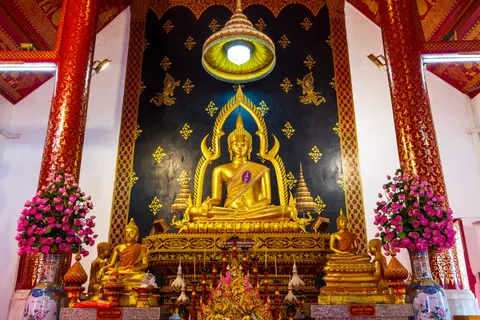
Wat Phra Bat Ming Mueang is on Charoen Mueang Road near the provincial hall and the Phrom Wihan Si roundabout. It was formed by merging two ancient temples, Wat Phra Bat and Wat Ming Mueang. It holds Phra Phutthakosai Sirichai Mahasakyamuni, the guardian Buddha of Phrae, the Ming Khwan Mueang Buddha, Phra Chedi Ming Mueang and a replica footprint of the Buddha. The temple also keeps a scripture embroidered in silk, with every letter stitched by hand.
It is the home of the Yakhob Memorial Foundation. Yakhob was the pen name of Chot Phraephan, a descendant of Phrae's last ruler, who wrote the novels Phu Chana Sip Thit, Phuean Phaeng and the Samkok retelling. Readers of Thai literature will find the stop more meaningful.
| Hours | Daily about 08:00 to 17:00 |
|---|---|
| Entry | No fee for the temple |
| Distance | About 220 m from Khum Chao Luang |
| Time | 20 to 30 minutes |
The Phrae city pillar shrine
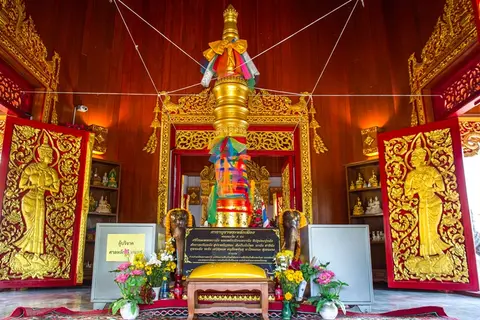
The shrine is on Khum Doem Road beside Narirat School near the provincial hall. The pillar is a new one, set up under an Interior Ministry policy in 1992, and it stands beside an older inscribed stone found at the abandoned Wat Si Bun Roeng, now the site of the provincial prison. The stone records the building of a temple in the time of King Ramkhamhaeng and is written in Tai Ahom script. The spot was once called the town's navel, with a small spirit shrine under a big tree.
The shrine is open for worship about 06:00 to 21:00, free, and takes 10 to 15 minutes. It sits between Khum Chao Luang and Wongburi House, so it is the easiest stop to add, and it is a parking spot for the Saturday walking street.
Seri Thai Museum, Pratubjai House and the Chai Burin monument
Seri Thai Museum
Phrae was the centre of the Free Thai (Seri Thai) movement in the north, and the first parachute operation landed here in September 1944. The museum opened in 2007 behind the Paradorn Hotel on Yantarakitkoson Road, about 450 metres from Wat Chom Sawan. Entry is free daily and it holds photographs, documents and weapons. Check hours before you go, phone 0 5451 1177, and groups should give notice.
Pratubjai House (Sao Roi Ton)
A full teak house in Pa Maet on Highway 1023 towards Long, built from 1972 to 1976 by Kitja Chaiwannakhup, who designed it himself without an architect. It stands on 130 giant teak pillars, each said to be about 300 years old, across roughly one rai. Hours about 08:00 to 17:00. Entry about 40 baht for Thais and 100 baht for foreigners, phone 0 5451 1282, check before you go. It lies south-west of the old town, about 1.3 km in a straight line from the centre, and needs a vehicle.
Phraya Chai Burin Monument
On Highway 101 about 4 km from the provincial hall. It commemorates Phraya Chai Burin, governor of Phrae from 1897 to 1902, who was killed by the Ngiao rebels in 1902 after refusing to sign the town over. It is a short stop if you are passing, not worth a special trip.
Kad Kong Kao walking street on Saturday evenings
Kad Kong Kao is a walking street on Khamlue Road in Nai Wiang, near Wongburi House and the city pillar shrine. It runs on Saturday evenings only, is free to enter, and sells northern Thai food, handmade goods and clothes, with folk music and performances at times. The Kad Phra Non market near Wat Phra Non is next door and can be walked together with it.
Opening times change with the season and the number of stalls. A safe window is about 16:00 to 20:00, and some sources say it runs to about 21:00, so check before you go. Arrive around 17:00, when the crowd is thin and parking is easy. People park beside Wongburi House or in front of the city pillar shrine.
- Food on sale includes grilled skewers, northern sausage, grilled chicken, sticky rice, fresh fruit and sweets, mostly for takeaway.
- Other stalls sell clothes, carved candles and handmade items.
Wongburi House closes at 16:00. To fit both on a Saturday, visit the house in the afternoon and walk straight out into the market.

SA-DUE-MUENG Homestay
10/3 Main Road, Nai Wiang, Phrae old town
A homestay in the old town about 190 m from Wongburi House, within walking distance of the Saturday market. Few rooms, so book early
See prices and availability on the booking page
Huen Him Kong Hotel Phrae
16/1 Chumchon Wat Luang Alley, Thung Kwao, Mueang Phrae
A hotel in the Wat Luang area near Kad Kong Kao, within walking distance of the Saturday market
See prices and availability on the booking page
What to eat in Phrae old town
Phrae is part of Lanna country, so the food is northern Thai: gaeng ho, nam prik num, khao soi, sai ua sausage and fried pork with makhwaen pepper. A snack to take home is old-style kanom krok. The places below close around 15:00 to 16:00, so plan for breakfast to early afternoon.
| Place | Known for | Where | Hours |
|---|---|---|---|
| Hom 2493 | Hom som tam, gaeng ho, fresh nam prik num, fried pork with makhwaen, in an old shaded wooden house | 102 Rob Mueang Road, Nai Wiang, phone 064 561 6807 | Daily about 09:00 to 16:00 |
| Khong Hor Tong noodles | Noodles wrapped in banana leaf, mostly takeaway | Rob Mueang Road, Thung Kwao, phone 082 864 5909 | About 10:00 to 14:00, check before you go |
| Wongburi House restaurant | Khao soi | Inside Wongburi House, Khamlue Road | Mon to Sat 10:00 to 15:00 |
| Slope Coffee, Baan Beaw | Coffee, banana cake, fresh bread in a Lanna wooden house | 11/1 Soi Khamlue 1, phone 084 043 4373 | About 09:00 to 17:30, may open later on Saturday evenings |
For dinner outside Saturday, ask your hotel in advance which place is open that night, because the places above close before evening. Good things to take home are sai ua sausage, kanom krok and indigo-dyed mo hom cloth from Ban Thung Hong. See nature and countryside in Phrae.
Getting around the old town: walking, bicycle, pedicab, tram
The old town is small and quiet, so walking is the best way to see the cluster around Wat Luang, Wongburi House and Khum Chao Luang. All of it sits within about 500 metres, and traffic is light.
- On foot: fine for the core. Carry water and a hat. Wat Chom Sawan is about 20 to 25 minutes' walk from Khum Chao Luang.
- Pedicab town tours: loops of about 2 to 2.5 hours at about 250 to 300 baht per round. Agree the price first and check before you go. Few drivers speak English, so show place names in writing.
- City tram: leaves from Khum Chao Luang at 10:00 and 14:00. Ask the museum to confirm.
- Bicycle: rental shops are few, so ask your guesthouse whether it lends or rents bikes. The streets inside the wall are flat.
- Taxis and hired cars: for Pratubjai House, the Chai Burin Monument and temples outside town. Ask your hotel to arrange one.
Without a car, stay in or near Nai Wiang and walk the old town, then hire a car for one day for Wat Phra That Cho Hae, Phae Mueang Phi and the indigo villages. Options are on getting to Phrae, and you can compare tours on Phrae deals and tours.
 12Go
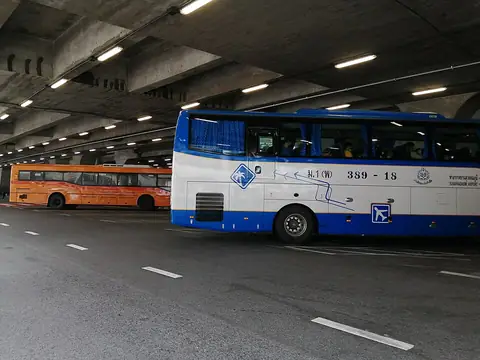
Bangkok to Phrae on 12Go
From US$19 (As of 6 Nov 2026: buses from about US$19, Class 3 train seats to Den Chai from about US$7, private vans from about US$357 per vehicle. Prices change by date and operator)
Price as of 6 Nov 2026Buses from Mo Chit to Phrae from about US$19 and trains to Den Chai from about US$7, as of 6 Nov 2026
Book on 12Go Klook
Chiang Mai Province Car Rental (drive on to Phrae)
From US$36.65 (Starting price per day, compact car, as of 14 Nov 2026)
Price as of 14 Nov 2026Pick up a car in Chiang Mai and drive up to Phrae. From about US$36.65 a day for a compact car as of 14 Nov 2026. The price changes by date and car
See Chiang Mai car hireHow long to spend and who it suits
| Time you have | What to see |
|---|---|
| 2 to 3 hours | Khum Chao Luang, Wat Luang, Wat Phra Non and Wongburi House |
| Half a day | Add Wat Phong Sunan, the city pillar shrine, Wat Phra Bat Ming Mueang and Wichai Racha House |
| Full day | Add Wat Chom Sawan, Wat Sa Bo Kaeo, the Seri Thai Museum, the Teak Museum (weekdays) and lunch at Hom 2493 |
| Saturday | Do the half-day plan by day and stay on for Kad Kong Kao in the evening |
The old town suits travellers who like wooden architecture, Lanna history and slow walking without competing with tour groups. Photographs of the teak houses are easy because crowds are small. It does not suit anyone looking for beaches, nightlife or a Chiang Mai-style cafe scene. Families with small children tend to enjoy the glass-ball wall at Wat Phong Sunan and Khum Chao Luang more than the quiet Lanna temples.
Season
April is the hottest month, with daytime highs often about 37 degrees or more. The rainy season runs roughly May to October, when fields around temples outside town are green but outdoor walking needs an umbrella. November to February is the most comfortable time to walk the town.
Mistakes visitors make in Phrae old town
- Going to Wongburi House on a Sunday. It is closed, so if you have only Saturday and Sunday, visit on Saturday.
- Arriving after 16:00 at Wongburi House. It closes then, so get there at least half an hour before closing.
- Expecting a tall brick wall. The old wall is an earth bank and moat.
- Planning the Teak Museum on a weekend. It opens Monday to Friday only.
- Assuming Wichai Racha House is always open. The gate can be shut, so phone first.
- Photographing old documents inside Wongburi House. Some are not to be photographed, so ask first.
- Walking at midday in April. Do mornings and evenings, and rest between 12:00 and 15:00.
- Confusing Wat Luang with Wat Phra That Cho Hae. Cho Hae is about 9 to 10 km outside town, see temples outside Phrae town.
Frequently asked questions
How long do you need in Phrae old town?
The core around Wat Luang, Wongburi House and Khum Chao Luang takes about 2 to 3 hours, or about 4 hours at an easy pace if you add Wat Phong Sunan and the city pillar shrine. Add Wat Chom Sawan, Wat Sa Bo Kaeo, the Teak Museum and the Seri Thai Museum and it becomes a full day. On a Saturday, leave the evening for Kad Kong Kao.
When is Wongburi House open and what does it cost?
Monday to Saturday 09:00 to 16:00, closed Sunday. Adults pay 60 baht and ages 10 to 20 pay 30 baht, with free entry for ages 0 to 9. Rates as of 6 Nov 2026, so check before you go. No flash or video, and shoes come off.
Is Khum Chao Luang free?
Yes. It is free every day from 08:30 to 16:30. Allow 45 to 60 minutes, and look at the basement cells, which most visitors find the most interesting part.
When is the Phrae walking street?
Kad Kong Kao runs on Saturday evenings only, on Khamlue Road near Wongburi House. Plan for about 16:00 to 20:00, and some sources say about 21:00. Free entry. Arrive about 17:00 for easy parking, and check times before you go.
Can you walk around Phrae old town, and do you need a car?
You can walk the core. Wat Luang to Khum Chao Luang is within about 500 metres. Wat Chom Sawan is about 1.5 km east, and a pedicab or taxi helps. A car is needed for Pratubjai House and temples outside town.
How much is a pedicab tour of Phrae?
About 250 to 300 baht per round, for a loop of about 2 to 2.5 hours. Agree the price and route before you start, and show place names in writing since few drivers speak English.
What is special about Wat Chom Sawan?
It is an all-teak temple in Burmese and Tai Yai style, built in 1894, with stepped roofs, a bamboo-woven Buddha called Luang Pho San, and an ivory scripture. It is quite different from the white-plaster Lanna temples such as Wat Luang.
What should you eat in Phrae old town?
Try gaeng ho, nam prik num and fried pork with makhwaen at Hom 2493, khao soi at the Wongburi House restaurant, banana-leaf noodles at Khong Hor Tong, and street food at Kad Kong Kao on Saturday evening. Most daytime places close by mid-afternoon.
Is Phrae worth visiting compared with Nan or Chiang Mai?
Yes if you want a quiet walled town with teak houses and few tourists. It is smaller than Chiang Mai and has fewer facilities than Nan, but the old town is compact, uncrowded and easy to walk in a day. Pair it with a day outside town.
Where the facts come from
- Fine Arts Department, Office 7: Wiang Phrae city wall and moat (Thai)
- Wongburi House: admission and visitor rules
- Wongburi House: opening hours and services
- ONEP: Khum Wongburi, over 100 years old (Thai)
- Phrae Provincial Administrative Organisation: Khum Chao Luang museum (Thai)
- KTC: Phrae Road Trip (Thai)
- KTC: 36 places in Phrae (Thai)
- Rod Prompt Kai: Kad Kong Kao walking street (Thai)
- Sanook: teak architecture heritage of Phrae (Thai)
- TAT Newsroom: Picture yourself in Phrae
- Wikivoyage: Phrae
Keep planning
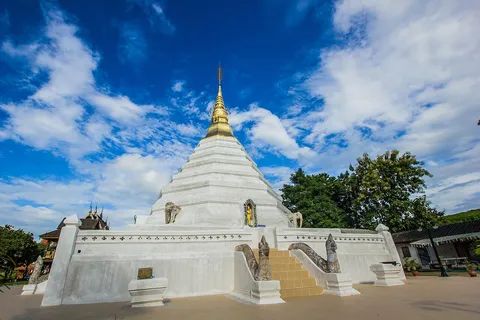 Phrae: old town, teak houses, Wat Phra That Cho Hae, Phae Mueang PhiThe whole province in three zones, with fees, season, how to get there and where to stay
 Phrae in 1 to 2 daysTimed plans on foot, by car, and for arrivals at Den Chai station
 Phrae dealsBuses, trains, private cars and a day tour, with prices and cancellation terms
 Phrae Nature and CountrysidePhae Mueang Phi, Doi Pha Klong, Wiang Kosai, Mae Yom, Ban Thung Hong mo hom and Ban Pin station, with hours, fees and one and two day routes
 Where to stay in PhraeOld town, town centre, Cho Hae side and Den Chai compared, with 20 hotels and homestays and when to book
 Cho Hae and Temples Outside TownWat Phra That Cho Hae, Chom Chaeng, Doi Leng and Suthon Mongkhon Khiri, with hours, fees and routes without a car
 Getting to PhraeTrains to Den Chai, buses from Mo Chit, flight status, driving and local transport, with times and prices