Most visitors come to Lopburi for Phra Prang Sam Yot and the monkeys, then leave before seeing the quieter riverside temples, which are just as old. Some have roots in King Narai's reign, some were places where members of the royal family came to make merit, and one has a chedi that has become a symbol of the town. This page covers the three riverside and hillside temples worth the extra time, plus the bat cave at Wat Khao Wong Kot, with opening hours, etiquette and how to join them to an old town route.
Information as of 13 Nov 2026. Hours can change on Buddhist holy days and festivals, so check before you go. Temples close to the palace, such as Wat Kawitsararam and Wat Sao Thong Thong, are on the old town and monkeys page, and the 1 to 2 day plan shows how to fit them in.
We earn a commission if you book through our links. The price you pay does not change. How we choose
The three temples at a glance
| Temple | Highlight | Approx. hours | Entry |
|---|---|---|---|
| Wat Choeng Tha | A riverside temple beside the palace, with a main chedi and the Hor Sophon Sin museum | 08:00 to 17:00 | Free |
| Wat Mani Chonlakhan | Luang Pho Saeng's square chedi and a bodhi tree sown by King Rama V | 08:00 to 16:00 | Free |
| Wat Phra Bat Nam Phu | A hillside temple with a Buddha footprint, a natural spring and a hospice | Check before you go | Free, with a donation box |
| Wat Khao Wong Kot (Ban Mi) | A large bat cave, with the colony flying out at dusk | Temple about 09:00 to 17:00, bats about 18:00 | No fee found, donation |
Hours are approximate as of 13 Nov 2026. For Wat Phra Bat Nam Phu, call or ask your hotel before you go.
Wat Choeng Tha, a riverside temple beside the palace
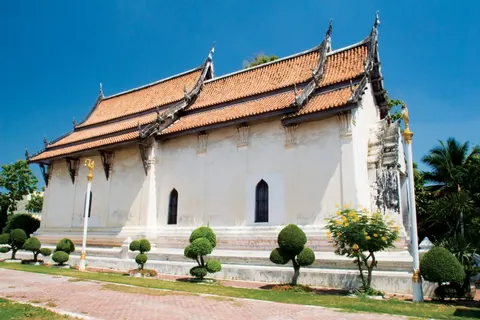
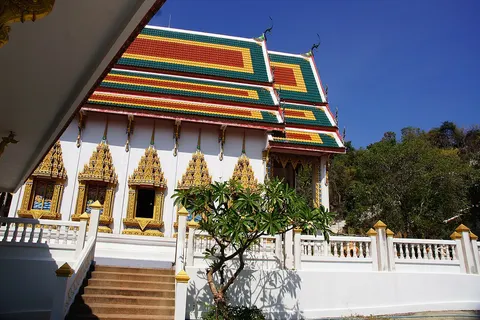
Wat Choeng Tha stands on the east bank of the Lopburi River. Its front side adjoins Narai Ratchaniwet Palace and its west side faces the river. Its old name was Wat Tha Kwian, because it was the landing where ox carts brought goods to the water in front of the temple, so it sat on the town's trade route. Buildings of heritage value today include the ubosot, the main chedi, a two-storey monks' residence in Chinese pavilion style, a three-roofed pavilion, the Wothan Thammasabha hall, a bell tower and the sermon hall.
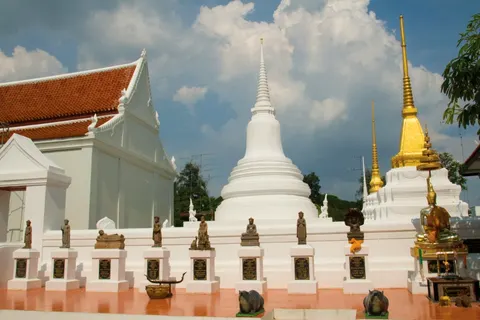
At the front you see a white chedi and a golden chedi close together, and a wall lined with rows of small Buddha images, which photographs well because the white walls reflect the light. The temple is open daily and free, and it is in the same area as Wat Kawitsararam, so you can walk on from the palace.
Hor Sophon Sin museum
Inside the temple is the Hor Sophon Sin museum, open since 1997. It covers the history of Wat Choeng Tha and Buddhist teaching about the Triple Gem. The objects on show are old treasures of the temple, some of them the personal collection of Phra Khru Sophon Thammarat, put out for people to study. If you have more time, the museum shows what the temple's life and stories are about rather than only its buildings.
- Hours: about 08:00 to 17:00 daily, free.
- Contact: tel. 036 618388 (Hor Sophon Sin museum).
- Time needed: about 30 to 45 minutes, including the museum.
- Getting there: walk from Narai Ratchaniwet Palace or Wat Kawitsararam.
- Good to know: the museum's hours may differ from the temple's, so ask a monk or staff before you go in.
Wat Mani Chonlakhan, the gate of Lopburi
Wat Mani Chonlakhan Royal Temple is in Phrommat subdistrict and is regarded as the gateway to Lopburi. It is thought to date from King Narai's reign. Its first name was Wat Ko Kaeo, because the temple stood in the middle of the Lopburi River. Later a road was cut through the temple and it ceased to be an island. King Rama V gave it the new name Wat Mani Chonlakhan.
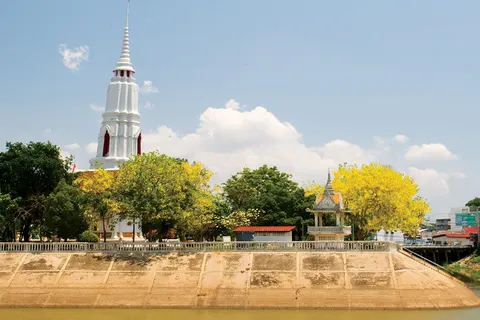
The feature you can see from furthest away is the Luang Pho Saeng chedi, a tall slender white square chedi that is the temple's symbol. It resembles square Chiang Saen or Lanna chedis and is venerated by the people of Lopburi and nearby provinces. Prince Damrong Rajanubhab recorded that the builder was Luang Pho Saeng, or Phra Achan Saeng, teacher of Somdet Phutthachan (To Phrommarangsi), who built it in the reign of King Rama IV.
The temple also has a Sri Maha Pho tree grown from seeds that King Rama V sowed and planted there. As a royal temple under the patronage of kings and the royal family, and because its setting as an island with water all round made it good for royal excursions, many senior royals came here to make merit.
- Hours: about 08:00 to 16:00 daily, free.
- Highlights: the Luang Pho Saeng chedi, the bodhi tree and the riverside setting.
- Light: late afternoon makes the white chedi stand out when seen from the river side.
- Time needed: about 20 to 30 minutes.
- Location: north of the town centre, on the way in from the north, so it is an easy stop if you arrive by car from that side.
Wat Phra Bat Nam Phu, a hillside temple with a hospice
Wat Phra Bat Nam Phu, also called Wat Phra Phutthabat Prathan Phon, is at Moo 3, Khao Sam Yot subdistrict, Mueang Lopburi, on a half-circle of hills at the foot of Khao Nam Phu. It is about 5 km from the town centre to the north-west along Route 3017. The temple is widely known for the Dhammarak Niwet project, which has cared for people in the final stage of AIDS since about 1992. It still looks after orphans, patients and elderly people without support, and depends mainly on donations.
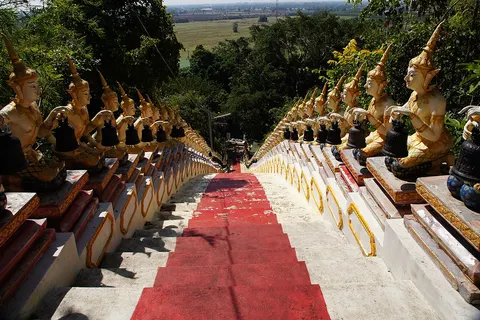
Inside the temple are a Buddha footprint enshrined in a mondop on the hill, a natural spring, the main Buddha in the ubosot, the Luang Pho Dam cave with an Ayutthaya-era Subduing Mara Buddha and nine bodhisattva figures, and the white Luang Pho Khao on the hilltop, built around 1980. The staircase up the hill is lined on both sides with rows of gilded angel figures and a red carpet along the whole way, which is the picture most visitors remember.
- Hours: morning to early afternoon is the best time, and call the temple or ask your hotel before you go.
- Entry: free. If you wish to help, put a donation in the box the temple provides.
- Getting there: from town drive about 5 km north-west along Route 3017, or take a songthaew or taxi if you have no car.
- Respect: because the temple is a place of care for patients and children, walk quietly, photograph only suitable places, and do not photograph residents' faces without asking.
- Time needed: about 45 minutes to 1 hour if you climb the hill.
The temple is home to many people. If you are not sure whether an area is open to visitors, ask staff at the reception point first and stay in the areas the temple opens to visitors.
Visiting Wat Phra Bat Nam Phu well
- Bring drinking water, a hat and shoes that slip off easily, because there are steps up the hill and you remove shoes at several buildings.
- There are monkeys in the grounds. Keep food and dangling items out of sight, as you would in the prang area.
- Hold small children by the hand on the stairs and ask them to walk quietly, since patients and elderly people live here.
- If you wish to make merit, use the donation box the temple provides.
- Allow about 45 minutes to 1 hour if you climb the hill to every point, and add time if you want to sit and rest.
The temple is in Khao Sam Yot subdistrict, north-west of the town centre. If you want to sleep near it and arrive in the cool of the morning, there are places to stay in the same subdistrict. Check prices for your dates on the booking page.

Narai Iyara Palace
Nareasuan Road, Khao Sam Yot, Mueang Lopburi
A place to stay in Khao Sam Yot, the same subdistrict as Wat Phra Bat Nam Phu, handy for a morning at the hill temple.
See prices and availability on the booking page

Benjatara Boutique Resort
123/33 Khao Sam Yot, Mueang Lopburi
A boutique resort in Khao Sam Yot, the same subdistrict as Wat Phra Bat Nam Phu.
See prices and availability on the booking page
Wat Khao Wong Kot, the bat cave in Ban Mi district
Wat Khao Wong Kot is at Moo 9, Sanam Chaeng subdistrict, Ban Mi district, Lopburi 15110. It is known for a large bat cave on the north side of the hill near the ordination hall, home to a colony of bats. At dusk the bats stream out of the cave to feed, and that is the sight people come for.
| Location | Sanam Chaeng subdistrict, Ban Mi district, car needed |
|---|---|
| Temple hours | About 09:00 to 17:00 daily |
| Bats fly out | About 18:00 at dusk, so arrive about 17:30 |
| Entry | No fee found, donation |
| Good to know | A strong guano smell near the cave and nearby buildings |
Getting there in time for the bats
The time the bats leave moves with sunset, which changes with the season. In November sunset is about 17:40 to 18:00, so arrive about 17:30 to find a spot and wait before the colony emerges. If you turn up after that you may miss the first stream.
- Leave town with time in hand and check the real driving time on a phone map before you set out.
- The drive back is in the dark. If you are not used to country roads at night, hire a car with a driver or join a group.
- Bring a mask if you are sensitive to smells, and wear clothes you do not mind carrying the smell.
- Turn off your flash and do not shine bright lights into the cave.
- There may be monkeys in the grounds, so keep food out of sight.
Do not confuse it with Wat Khao Wong Phra Chan
Wat Khao Wong Kot in Ban Mi is not Wat Khao Wong Phra Chan in Khok Samrong district, which has 3,790 steps and no toilets on the way. That one is on the dam, sunflowers and nature page. Check the district when you type the name into a map.
Ruins for a short stop: Wat Nakhon Kosa and Prang Khaek
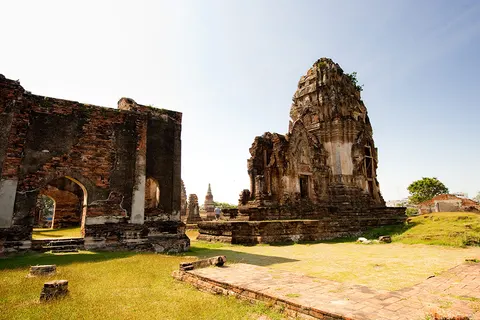
If you want old ruins without buying a ticket, there are two in town. Wat Nakhon Kosa is open to walk around at all hours and free. It is north of the railway station near San Phra Kan and has a large brick chedi and a Lopburi-period prang. Prang Khaek is a ruined Khmer-style prang on a road median, a few minutes' stop on the way to Ban Wichayen.
Both belong to the old town route. History, photos and where they sit in relation to the station are on the old town and monkeys page, so this page does not repeat them.
Why so many important temples stand by the Lopburi River
Before roads cut through the town, the Lopburi River carried travel and trade. Wat Choeng Tha was first called Wat Tha Kwian because carts brought goods to its landing. Wat Mani Chonlakhan was first Wat Ko Kaeo because it stood in the river like an island, which suited royal outings and merit-making. Once you see the river as the old high street, it is easy to understand why these two temples are where they are, and why King Narai's palace has one side facing the water.
If you have time, walk to the water's edge in front of Wat Choeng Tha and look back at the chedi and the temple buildings. The best front of the temple is the river side, where boats and carts once arrived, not the road side.
If you have limited time, which temple to pick
| You are | Choose | Why |
|---|---|---|
| Already walking the old town with under an hour left | Wat Choeng Tha | Beside the palace, so you can walk on without a ride |
| Fond of chedis and river photos | Wat Mani Chonlakhan | A tall white square chedi, visible from the river |
| Wanting a quiet atmosphere, with a car | Wat Phra Bat Nam Phu | Under a hill about 5 km from town, with fewer visitors |
| Interested in temple history and antiques | Wat Choeng Tha and the Hor Sophon Sin museum | A museum inside the temple |
| Travelling by train with no car | Wat Choeng Tha only | The other two need a ride |
If you only have time for one of the three, pick Wat Choeng Tha, because it is easiest to combine with the old town. Keep the other two for the second day of your trip, or for when you have your own car.
Choosing by time and car
| Temple | Time | Car needed | When to go |
|---|---|---|---|
| Wat Choeng Tha | 30 to 45 min | No | Late morning to afternoon |
| Wat Mani Chonlakhan | 20 to 30 min | Yes | Late afternoon |
| Wat Phra Bat Nam Phu | 45 min to 1 hour | Yes | Morning to early afternoon |
| Wat Khao Wong Kot | From arrival to the bats leaving | Yes | Dusk, about 17:30 |
Times are for the visit itself, not the drive. Check the driving time on a map each time before you leave.
A half-day route linking the three
The three temples are some distance apart and open at different times. With a car or hired driver, a good route is Wat Phra Bat Nam Phu in the cool of the morning, then back to town for Wat Choeng Tha in late morning, lunch in the old town, and Wat Mani Chonlakhan in late afternoon, when the light is good and it lies on the way out of town to the north.
| Order | Place | Time to allow | Why then |
|---|---|---|---|
| 1 | Wat Phra Bat Nam Phu | About 1 hour | Cool morning and quiet |
| 2 | Wat Choeng Tha and the Hor Sophon Sin museum | About 45 minutes | Beside the palace, so it joins up with the old town |
| 3 | Lunch | About 1 hour | Avoid the strongest sun |
| 4 | Wat Mani Chonlakhan | About 30 minutes | Late afternoon light on the white chedi |
Distances and driving times between the temples are approximate. Check the real route on a phone map before you set out.
Getting to the temples outside town
Wat Choeng Tha is a walk from the palace, but Wat Mani Chonlakhan, Wat Phra Bat Nam Phu and Wat Khao Wong Kot are further out. Your options are your own car, a rental, or a car with a driver for half a day. Agree a hire price before you set out.
- The blue local songthaew in town costs about 8 baht, a motorbike taxi about 20 to 50 baht and a tuk-tuk about 30 to 100 baht depending on distance. These are rough figures, so agree the price before you get in.
- Motorbike hire is about 300 baht a day if you can ride and hold a licence.
- Lopburi bus station is about 2 km from the town centre.
- Wat Khao Wong Kot at dusk and Wat Phra Bat Nam Phu in the morning suit a car with a driver best, because you do not have to find your way or park.
If you have not yet arranged transport from Bangkok to Lopburi, see the vans, buses and trains on the getting to Lopburi page first.
 12Go
Bangkok to Lopburi on 12Go
From US$5 (As of 6 Nov 2026: buses from about US$5, vans from about US$5 to US$7. Prices change by date)
Price as of 6 Nov 2026Vans and buses from Bangkok to Lopburi. The van leaves from Mo Chit new van terminal and takes about 2 hours 30 minutes. Transport to the temples outside town is arranged in Lopburi.
Book on 12GoFitting the temples into your day
You do not need every temple in one day. Each takes little time, but distances and opening hours do not line up. This table helps you choose a plan for the transport you have.
| Plan | Temples | Car needed | Good for |
|---|---|---|---|
| Walk the old town | Wat Choeng Tha, Wat Nakhon Kosa | No | Train visitors, one day |
| Half-day morning | Wat Phra Bat Nam Phu, then Wat Choeng Tha | Yes | Quiet seekers |
| Morning to afternoon | Wat Phra Bat Nam Phu, Wat Choeng Tha, Wat Mani Chonlakhan | Yes | Overnight stays |
| Afternoon to dusk | Wat Khao Wong Kot at dusk | Yes | Nature photographers |
Sample day plans
- Day one: walk the old town as on the old town and monkeys page, then walk on to Wat Choeng Tha before it closes.
- Day two: Wat Phra Bat Nam Phu in the morning, Wat Mani Chonlakhan in late afternoon, and Wat Khao Wong Kot to arrive about 17:30 if you still have energy.
- If you have only half a day: pick Wat Choeng Tha and Wat Mani Chonlakhan, which lie on the town side and take under two hours together.
- If you come while the sunflowers bloom, from about mid-November to early January, see the field and dam plan on the dam, sunflowers and nature page.
For a full-day plan that mixes temples with the prangs and the palace, see the 1 to 2 day plan.
Heat and rain: choosing the time to go
Lopburi is hot and most temple grounds are outdoors. The best months are November to February, April is the hottest at about 37 C, and the rainy season runs from about late April to October, with showers usually in the afternoon.
- Cool season and early dry months: you can visit at any hour, but the midday sun is still strong, so wear a hat and carry water.
- April: visit only very early or in the evening, and avoid midday and early afternoon.
- Rainy season: go in the morning before the afternoon showers, carry a folding umbrella or a rain jacket, and watch for slippery floors after rain, especially on the stairs at Wat Phra Bat Nam Phu.
- Wet days: Wat Choeng Tha has an indoor museum. If you want more, the air-conditioned galleries of Narai Ratchaniwet Palace are on the old town and monkeys page.
If you must take your shoes off in strong sun, the concrete outside a building can burn your feet. Wear thin socks that come off easily, or walk on shaded floors and cloth paths.
Families with children and older travellers
- Young children: Wat Choeng Tha and Wat Mani Chonlakhan are short stops with little walking, so they suit best. At Wat Phra Bat Nam Phu, hold hands on the stairs and ask children to walk quietly.
- Wat Khao Wong Kot: the bats leave at dusk, the drive back is in the dark and the smell is strong, so small children or anyone sensitive to smells may find it hard. Ask whether the children are up to it before you go.
- Older travellers: Wat Choeng Tha is a walk on from the palace with no car needed, and Wat Mani Chonlakhan is a short car stop of 20 to 30 minutes.
- Stairs and slopes: Wat Phra Bat Nam Phu has steps up a hill. If walking is hard, you can look from below, and skip Wat Khao Wong Phra Chan with its 3,790 steps.
- Wheelchairs: ramps at each temple are not certain, so ask the temple or your hotel before you go.
- With older relatives, go in the morning and rest in the shade between stops.
What to wear and how to behave
- Cover shoulders and knees. Sleeveless tops and shorts may be refused entry to the main halls, and some temples lend cloth if you forget.
- Take off your shoes before entering the ubosot and viharn, and put them where they do not block the way.
- Do not point your feet at a Buddha image, and do not sit higher than the image.
- Check the signs and ask before photographing inside buildings, and turn off the flash.
- Women should not touch a monk or hand things to him directly. Place the item on a cloth or let a man pass it on.
- Make merit by donation if you wish, in the box provided. You do not need to pay when no sign asks for money.
Extra points for each temple
- Wat Phra Bat Nam Phu: photograph only where it is allowed and do not photograph residents' faces without asking.
- Wat Khao Wong Kot: turn off your flash, walk quietly near the cave and do not disturb the bats.
- Wat Choeng Tha: ask at the temple before going into the museum, because its hours may differ from the temple's.
- Holy days and temple fairs: hours and access to buildings may change, so go by the signs at the gate.
- Noise and behaviour: speak softly, do not fly a drone without permission, and do not run inside the grounds.
Common mistakes when visiting temples outside town
- Confusing Wat Khao Wong Kot (Ban Mi, bat cave) with Wat Khao Wong Phra Chan (Khok Samrong, 3,790 steps). Check the district on the map.
- Reaching Wat Khao Wong Kot after dusk, when the first stream of bats has already gone. Aim to arrive about 17:30.
- Planning to reach Wat Phra Bat Nam Phu or Wat Khao Wong Kot by train and on foot. Both need a car.
- Wearing shorts or a sleeveless top to a temple. Cover shoulders and knees.
- Photographing residents at Wat Phra Bat Nam Phu without asking.
- Listing all four temples in one afternoon. They open and close at different times and have best light at different hours.
- Going at midday in April, when sun and floors are at their hottest.
Read next
 Lopburi: monkeys, Khmer prangs and sunflowersOld town, temples, Pa Sak Dam, sunflower fields and how to get there from Bangkok
 Lopburi old town and the monkeysPrang Sam Yot, San Phra Kan, Narai Palace and how to deal with the monkeys
 Lopburi in 1 to 2 daysTimed plans, the train from Bangkok and an overnight option
 Pa Sak Dam, sunflowers and natureThe floating train, Khao Chin Lae sunflowers, Khao Wong Phra Chan and waterfalls
 Getting to LopburiNorthern line trains, vans, buses, driving and getting around town
 Where to stay in LopburiOld town, Tha Sala, the sunflower area and Chai Badan
Frequently asked questions
Where is Wat Choeng Tha, and can I walk there from the palace?
It is on the Lopburi River, with its front side adjoining Narai Ratchaniwet Palace. You can walk on from the palace or from Wat Kawitsararam without a ride.
What is there to see at Wat Mani Chonlakhan?
The Luang Pho Saeng chedi, a tall white square chedi visible from far away, the bodhi tree that King Rama V sowed, and the riverside setting. It is open about 08:00 to 16:00 and free.
What kind of temple is Wat Phra Bat Nam Phu?
A hillside temple under Khao Nam Phu in Khao Sam Yot subdistrict, with a Buddha footprint, a natural spring and the Luang Pho Dam cave. It has cared for patients and orphans since about 1992. Visitors should walk quietly and respect residents.
How much does it cost to enter these three temples?
Entry is free at all three. If you wish to help, put a donation in the box. Check the opening hours and conditions of the Hor Sophon Sin museum with the temple before you go in.
Do I need a car for these temples?
Wat Choeng Tha is walkable from the old town. Wat Mani Chonlakhan and Wat Phra Bat Nam Phu are further out, so use your own car, a taxi, a songthaew or a motorbike taxi. Agree the price before you set out.
What should women wear at a Thai temple?
Cover shoulders and knees, wear long sleeves or a light shawl when going into buildings, and take your shoes off before the ubosot.
Are the temples open every day?
Wat Choeng Tha and Wat Mani Chonlakhan are open daily. For Wat Phra Bat Nam Phu, go from morning to early afternoon and call to check first.
What time do the bats leave Wat Khao Wong Kot?
About 18:00 at dusk. The time moves with sunset through the year. In November, arrive about 17:30.
Is there an entry fee at Wat Khao Wong Kot, and do I need a car?
No fee found, so donations are welcome. The temple is in Sanam Chaeng subdistrict, Ban Mi district. You need a car or a hired car with a driver, and the drive back is in the dark.
What is the difference between Wat Khao Wong Kot and Wat Khao Wong Phra Chan?
Wat Khao Wong Kot is in Ban Mi district and has a bat cave. Wat Khao Wong Phra Chan is in Khok Samrong district and has 3,790 steps up a mountain. They are different temples in different directions.
When is Wat Nakhon Kosa open and does it cost anything?
It is a ruin that you can walk around at all hours, and it is free. It lies north of the railway station near San Phra Kan. Details are on the old town and monkeys page.
Which temple suits older travellers best?
Wat Choeng Tha, because it is a walk on from the palace, needs no car and has no tall stairs. Wat Mani Chonlakhan is a short car stop. Wat Phra Bat Nam Phu has steps up a hill, so look from below if walking is hard.
What is the best time of year to visit temples around Lopburi?
November to February is coolest. Go in the morning to avoid the sun. April is hottest at about 37 C, and the rainy season from late April to October usually brings afternoon showers.