
Dan Kwian is the closest countryside stop for anyone who wants a Korat souvenir that is not a snack. It is only about 20 to 30 minutes by road from the city. This guide answers what people search for: where the ox-cart name comes from, which clay counts as local, what to buy and roughly what it costs, how to haggle and pack, how to get there, and what to add on so the trip is worth the drive.
The village is free to enter and open every day, but each shop sets its own hours. Arrive in the morning while the sun is low, and plan to finish before about 16:30 to 17:00, when many shops close.
We earn a commission if you book through our links. The price you pay does not change. How we choose
Quick facts before you go to Dan Kwian
| Where | Moo 7, Dan Kwian sub-district, Chok Chai district, Nakhon Ratchasima 30190, about 15 km south of Korat city along Highway 224 |
|---|---|
| How to go | Your own car, a car your hotel calls, a taxi or Grab, about 20 to 30 minutes from the city. There is no confirmed public bus. A songthaew may run, but ask about the return time first |
| Opening hours | The village is open about 08:30 to 18:00 daily. Each shop sets its own hours and many close around 16:30 to 17:00 |
| Entry | No fee to enter the village. You pay only for what you buy or for an activity a shop charges for |
| Best time to go | Morning to late morning, about 08:30 to 11:30, when it is cooler and shops are open. Weekends are livelier, and weekdays are fine too |
| Time needed | About 1.5 to 2.5 hours. With a pad mi lunch and a nearby stop, a half day |
| Payment | Bring cash. Small shops and roadside stalls mostly take cash |
| Rough prices | Small figures and ornaments from tens of baht to a few hundred, medium pots and vases in the hundreds, large jars and sets from about a thousand baht up. Check the price at the shop |
| The key thing to know | Local clay fires dark red-black. A lot of the ware sold now is white clay brought in from elsewhere. If you want local ware, ask before you buy |
In three lines: go in the morning, bring cash, and ask every shop whether the piece is Dan Kwian clay. If you are flying home, buy small pieces and have the shop wrap them twice.
Is Dan Kwian worth it, and who is it for
Dan Kwian is not a must-see in the way Phimai or the Ya Mo monument is. It is a very good stop if you like handicrafts, want unusual home and garden pieces, or need small, cheap gifts. Children usually like the brightly painted animal figures, and photographers get rows of pots and stalls packed along the road.
| Type of traveller | Go? | Why |
|---|---|---|
| Want souvenirs or home decoration | Yes | Many shops in one place, with pieces from a few tens of baht |
| Like handcrafts and want to see how it is made | Yes | Stop at shops with a workshop behind them to see wheels and wood kilns. Ask before taking photos inside a workshop |
| Have a car or can hire a driver for half a day | Yes | Easy to combine with Korat pad mi and the Pak Thong Chai silk community in one trip |
| Have one day in Korat and no car | Skip | The time and the return fare are better spent on Ya Mo, Wat Sala Loi and the night market |
| Do not shop and fly home within hours | Skip | The ware is heavy and fragile. If you buy nothing there is little else to see |
Compared with the rest of Korat, Dan Kwian is the shortest and cheapest stop, which is why it fits day 1 of Korat in 2 days and 1 night: pottery in the morning, back in the city by the afternoon. If you have a full day, see the combined plans below, which add a pad mi lunch in Chok Chai and the Pak Thong Chai silk community.
What Dan Kwian is, and where the ox-cart name comes from
The name and the history
The name Dan Kwian combines two words. Dan is a checkpoint or toll post on a route, and kwian is a wooden ox or buffalo cart used to carry goods. The community sat on an Ayutthaya-era trade route between Korat and the Khmer lands, so cart caravans stopped and passed through a checkpoint here. The village name literally means the cart checkpoint.
The village stands at a narrow point of the Mun River, a convenient crossing. Villagers farmed along the river and learned to make pots from the Kha people. At first they made household ware. Later the work grew into decorative and garden pieces, and the products began to travel.
Early pieces were real working vessels: water-storage jars of around 50 litres, lidded jars for fermenting fish, mortars and basins. They were not table crockery. From about 1972 decorative ware began to be made for city buyers in Bangkok, and university designers helped create pieces for hotels and homes. It began with water jars carved with decoration and spread to planters, vases, figures and the garden ornaments you see in the shops today.
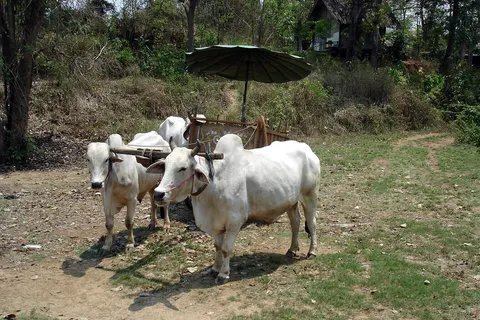
The photo above is a generic Thai ox cart, not taken at Dan Kwian. It shows what kind of cart the village name refers to.
What there is to see and do today
- Shops and workshops. Walk the shops lined along the road and the ones with a workshop behind. Some let you watch potters on manual wheels and wood-fired kilns. Ask before taking photos inside, because these are working premises.
- A cart display and community story area. Carts from several places are displayed. Hours and any fee are not known, so ask at a shop in the village or call the Dan Kwian sub-district administration on 0 4433 8105.
- Throwing or carving activities. Some shops give demonstrations and let you try, usually for a contribution. The cost varies, so ask the price before you start.
- Homestay. There is community homestay accommodation for anyone who wants to stay the night. Ask about prices at the sub-district office or at a shop in the village.
If you want to see real pottery work rather than only finished goods by the roadside, drive a little further in. See the two zones below.
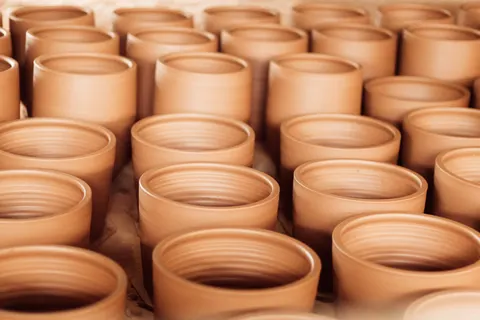
The photo above shows unglazed pots sold in the village, with the simple surface and ridged lines that make a pot easier to grip. The colour of unglazed pottery varies from brick orange to dark red-black depending on the clay and the firing. The next section explains how.
Dark red-black clay versus white clay: how to spot local ware
What makes the village special is its local, iron-rich clay. Fired, it turns dark red-black, a colour locals call samrit, meaning bronze. It looks good without any glaze. This is the signature of Dan Kwian, but it is getting rare because younger buyers' tastes have changed and local clay sources have dwindled. Many shops now make or sell pieces from white clay brought in from elsewhere.
Kilns and firing
Two firing styles are used locally, black firing and red firing. Black firing runs at about 1,200 to 1,250 degrees Celsius, while red firing gives a red surface. Most work is fired in above-ground, long tunnel-style wood kilns. If you want to see a kiln, ask a shop with a workshop when the next firing is.
| Type of ware | Colour to expect | How to tell |
|---|---|---|
| Local clay, black fired (samrit) | Dark red-black, matt, unglazed | Ask if it was fired here. Check the body colour at the base or an unpainted edge |
| Local clay, red fired | Red to brick orange | Even colour through the piece. Ask whether the clay is from Dan Kwian |
| White clay brought in | Pale, cream or off-white, often painted or glazed over | Pale body at the base or a chip. The price often differs from local ware. Just ask |
White-clay ware is not fake. It may be made by local potters or bought in and resold, but it is not what Dan Kwian is known for. If you came for the traditional look, choose shops that can tell you where a piece was made and fired.
How to check that a piece is local
- Ask first whether it is Dan Kwian clay and whether it was made in this village or elsewhere. Shops that make their own can usually answer at once.
- Turn the piece over and look at the base or any unpainted spot. The body colour shows whether the clay is dark red-black or pale.
- A fully painted piece may hide the clay colour. Check the base or the rim.
- See whether the shop has a workshop or kiln behind it. Makers have clay scraps, a wheel and unfired pieces on show.
- If a hundred pieces look identical, ask whether they are made by hand or in moulds. Hand-thrown pieces differ slightly from one to the next.
If you are not sure, ask to see the workshop or where the pieces are made. Most makers are happy to show you, and you may see the kiln too.
The two zones: the roadside area and the old village
The village is not one straight street. It splits into two clearly different parts, and knowing which one you are in helps you decide where to park and how many shops to visit.
| Zone | What it is like | Good for | Watch for |
|---|---|---|---|
| Dan Kwian Din Phao (roadside, Korat side) | Large shops and roadside stalls, parking at the front, the widest choice | Visitors short of time who want gifts and garden pieces | Mostly finished goods, and prices are often higher than deeper in |
| Old Dan Kwian village (Moo 7, further in) | Family workshops and wood kilns, smaller shops, away from the main road | Seeing pottery made and finding local ware | Further from the main road, so use a map and ask directions. Some shops open only when the owner is in |
The roadside zone is nearer Korat city. The old village lies about 2 km further in. Shops set back from the main road usually price lower and let you see the whole process of throwing, trimming and loading a kiln, while the shops on the main road focus on finished pieces.
How to work through it
- Park at the first roadside shop you like and look at the range and the prices without buying. Spend no more than 30 minutes.
- Drive into the old village and stop at two or more shops with a workshop. Ask the price of the same kind of piece you saw by the road.
- Buy your main piece last, after comparing. Small items can be bought anywhere, so there is no need to wait.
- Before you leave, look at the cart display if it is open.
On Highway 224 there is a shop called Lan Dan Kwian at number 59, phone 0 4433 8444, which makes a useful reference point. Its opening hours are not known, so call first. In the same sub-district there is also the Dan Kwian lime grove at 135 Moo 3, phone 0 4421 2696, an easy extra half hour if you have time. Check its hours before you go.
Shop hours and phone numbers can change. Check with the shop before you set out.
What to buy, roughly what it costs, and how to pack it
What is on sale divides easily by purpose. The price ranges below are estimates for planning a budget. Actual prices depend on size, design and shop, so check at the shop every time.
| Item | Rough price | Good for | Watch for |
|---|---|---|---|
| Animal figures and small pieces (ducks, sheep, frogs, small owls) | Tens of baht to a few hundred | Gifts for children, collectors and giveaways | Paint can scuff. Carry them in your hand luggage |
| Medium pots and vases | In the hundreds of baht | Home decoration, small plants | Fragile, so ask the shop to wrap them in padding |
| Jars, large pots and big sets | About a thousand baht and up | Visitors with their own car, garden or front-door decoration | Very heavy. Ask whether the shop can deliver |
| Large garden pieces (carved owls, garden figures) | Hundreds to a thousand-plus baht by size | Gardens, balconies, walkways | Heavy and fragile. Measure your car space before buying |
| Special pieces or ones the potter makes | Agree directly with the potter | Craft collectors | May need waiting or an order. Ask how long |
Gifts, easy for everyone
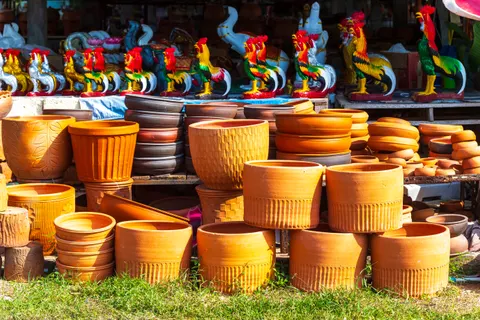
Small painted clay animals such as sheep, ducks and frogs are laid out in rows on the stalls. They suit children and anyone who needs several gifts. Small pieces are cheap and far lighter than pots, and they fit in a carry-on bag.

Garden pieces and large items, for when you have a car
Carved clay owls with cut-out patterns on wooden posts are a common garden ornament. You will also see stacked brick-coloured planters and painted roosters or swans. They suit visitors with their own car. These pieces load into a car far more easily than onto a plane.

For the home, and what to ask first
Unglazed pots are good for plants because the porous surface drains easily. If you plan to use a piece for food or drinking water, ask the shop first whether it was made for that, because many decorative pieces are designed to look good rather than to be used.
How to haggle politely
You can bargain a little at Dan Kwian, but it is not a flea market where you should push hard. Many shops price by the piece. Workshops tend to be less flexible than roadside shops selling finished goods.
- Ask the price of the same item at two or three shops before you start. You will know whether the first price you hear is high or low.
- Buy several pieces from one shop and ask for a total price. It is easier than haggling item by item. For example, 5 pieces at 80 baht each is 400 baht, so try asking for 350 to 380.
- Smile and ask whether they can take a little off, rather than opening with a very low offer.
- Do not haggle much over small pieces costing a few tens of baht. The difference is tiny and the money goes to a family.
- If a shop has fixed price tags, treat them as final and ask only for a small discount if you buy several pieces.
- Decide, buy and pay in cash straight away. Carry small notes of 20, 50 and 100 baht so that haggling and change are easy.
For a large piece costing a thousand baht or more, ask for one price that includes wrapping and loading into your car, and note it on your phone so there is no dispute at payment.
Packing fragile ware and getting it home
Pottery usually breaks in transit, not at the shop. Plan how you will carry things before you pay, especially if you are taking a bus or train back to Bangkok before a flight, because Korat has no scheduled flights.
At the shop
- Ask for double wrapping: a first layer of paper or thin foam around the piece, then an outer box or thick bag.
- Stuff paper or cloth into the mouth of pots and jars to cushion them and protect the rim from chips.
- Wrap lids and handles separately, because parts that stick out snap first.
- For small painted pieces, ask for paper between them so the paint does not rub off.
In a car
- Put heavy pieces on the boot floor and lighter ones above.
- Use a blanket or towels to pad and separate pieces so they cannot knock together.
- Stand wide-mouthed pieces with the opening facing up and never stack them.
- If you hire a hotel driver or private car, tell the driver you have fragile ware and keep the boot clear.
On a bus or train
The hold under a coach is often piled with other bags. Keep fragile ware with you or on the empty seat beside you. On a train, place it on the luggage rack inside a box, and never put anything heavy above it. If you have several boxes, a private car to Bangkok is easier, and your pieces ride with you.
 KKday
Private Transfer from Bangkok to/from Nakhon Ratchasima
From US$86.02 (Starting price per car (sedan, 1 to 2 passengers). SUV and van cost more)
Price as of 5 Nov 2026A private car from your Korat hotel to a Bangkok hotel, or the reverse, with 30 minutes of free waiting. Starting price per car (sedan). Limit: it is a hotel-to-hotel transfer and does not stop at Dan Kwian, so do the pottery first with a hotel-arranged car, then leave. Free cancellation up to 3 days before.
Book on KKdayPhotos, prices and reviews from Klook
A 5G/4G data-only eSIM with hotspot sharing, valid across Thailand except Pattani, Yala, Narathiwat and a few districts of Songkhla. It arrives right after booking, and a full refund is possible before it connects to a network.
Book on KlookIf you are flying home
- Put small pieces in your cabin bag, double wrapped, and keep the bag from being squashed.
- Pieces that must go in the hold belong in a hard box or wrapped in soft clothes in the middle of the suitcase, not at the edge.
- Weigh the bag before leaving your hotel. Pottery is heavier than it looks. Check the airline's baggage and fragile-item rules in advance.
If you buy a large piece
Many shops will wrap and send larger pieces. Ask whether they offer delivery, how much it costs, how many days it takes and who pays if it breaks on the way. Keep a receipt, or write down the price and address, and photograph the piece before it is wrapped. If you are sending abroad, check the customs rules at the destination.
Where to stay if you are going to Dan Kwian
Dan Kwian is about 15 km outside the city, so most visitors stay in Korat city and go for half a day. A hotel that will call a car and write the place name in Thai for the driver saves time. For the whole city, see where to stay in Korat.
 Budget
Sabai Hotel Korat
In the city, 1.8 km from the city centre
A budget hotel in the city, 1.8 km from the city centre. A base for a half-day at Dan Kwian and the rest of the day in town. Limit: you need a car every time you go to Dan Kwian.
See prices and availability on the booking page
 Mid-range
Centre Point Hotel Terminal21 Korat
Terminal 21 Korat, Mittraphap Road, 0.3 km from the city centre
A mid-range hotel at Terminal 21 on Mittraphap Road, 0.3 km from the city centre. Good if you like a mall and restaurants close by. Limit: it is away from the Wat Burapha night market, so you need a car or songthaew.
See prices and availability on the booking page
 Upscale
Centara Korat
Mittraphap Road, 1.9 km from the city centre
An upscale hotel on Mittraphap Road, 1.9 km from the city centre. Suits anyone hiring a private car for the day and wanting a comfortable base. Limit: you need a car every time you go out.
See prices and availability on the booking page
Getting to Dan Kwian from Korat
Dan Kwian is at Moo 7, Dan Kwian sub-district, Chok Chai district, about 15 km from the city on Highway 224, the road from Nakhon Ratchasima to Chok Chai. It takes about 20 to 30 minutes if the traffic is light. There is parking, and you can usually stop at the front of a shop. Put the pin in your map app before you leave, and show the driver the name Dan Kwian pottery village (Ban Dan Kwian) on the map.
| Option | Cost | Good to know |
|---|---|---|
| Own car or hire car | Car hire starts at about US$25 to 45 a day. Check before you book | The most flexible. Combine with Korat pad mi and Pak Thong Chai. You can park at the shops |
| A car your hotel calls | Agree a round-trip price including waiting time | Best if you have no car. Ask the driver to wait, and confirm the way back before they leave |
| City taxi | Ask the round-trip price with 1.5 to 2 hours of waiting before you get in | Taxis in Korat are not plentiful, so it is easier to have the hotel call one than to wait at the roadside |
| Grab | The price shown in the app. The return is harder to book than the outward trip | Korat is in Grab's service area, but a car back from the village may take a while to arrive. If none shows, ask a shop to help or return with a driver you have arranged |
| Songthaew or local bus | Ask at the stop | It is not confirmed that a direct route exists or when the last return runs. If you try, ask the driver on the way out how late you can get back, and have a taxi as a backup |
| KKday private tour from Bangkok | See the price on the booking page | This tour does not stop at Dan Kwian. Read the day 1 list before you book |
Agree the price clearly with the driver
- Ask for a round-trip price including 1.5 to 2 hours of waiting at the shops before you leave the hotel.
- If you want to go on to pad mi or Pak Thong Chai, list every stop and the total time at the start. The price is clearer than agreeing stop by stop.
- Ask whether the car waits or comes back for you. If it comes back, agree an exact time and a phone number.
- Carry small notes for both the driver and the shops.
If you are still coming to Korat from Bangkok
You can book a train, bus or taxi from Bangkok to Korat on 12Go, or book a private car to your hotel, then use the hotel's car for Dan Kwian the next morning. For all the routes, see how to get to Korat.
 12Go
Bangkok to Nakhon Ratchasima on 12Go
From US$4 (Cheapest for Sun 8 Nov 2026, searched for 2 travellers: train US$4, bus US$9, taxi from about US$78)
Price as of 5 Nov 2026Train, bus and taxi tickets from Bangkok to Nakhon Ratchasima on 12Go. Limit: the drop-off point differs between departures, so check the stop name before you book.
Book on 12Go KKday
Private Transfer from Bangkok to/from Nakhon Ratchasima
From US$86.02 (Starting price per car (sedan, 1 to 2 passengers). SUV and van cost more)
Price as of 5 Nov 2026A private car from a Bangkok hotel to a Korat hotel, or the reverse. Starting price per car (sedan). Limit: free cancellation up to 3 days before, and some holiday periods cost extra.
Book on KKdayPhotos, prices and reviews from Klook
A 5G/4G data-only eSIM with hotspot sharing, valid across Thailand except Pattani, Yala, Narathiwat and a few districts of Songkhla. It arrives right after booking, and a full refund is possible before it connects to a network.
Book on KlookWhat to do after Dan Kwian
Dan Kwian is quick, so it works as the start of a half day or a full day. What is left on the same trip is food, silk and, if you have time, the zoo or a museum. The table summarises every add-on before the details.
| Add-on | Approx. opening hours | Entry | Time | Good for |
|---|---|---|---|---|
| Pad Mi Kratok Pa Pleung (Chok Chai) | 09:00 to 15:00 daily, closed on Buddhist holy days | Pay for food. A plate of pad mi is usually about 40 to 69 baht | About 45 minutes | Lunch near Dan Kwian |
| Pak Thong Chai silk weaving community | 08:00 to 16:00 | Free | About 1 to 1.5 hours | People who like silk and weaving |
| Jim Thompson Farm | December to early January only, 09:00 to 17:00 | Check before you go | About 2 hours | Flowers and photos in the cool season |
| Nakhon Ratchasima Zoo | 08:00 to 17:00 | Thai adult 130, child 40. Foreign adult 350, child 120 | Half a day | Families with children |
| Khorat Fossil Museum | Tue to Sun 09:00 to 16:30, closed Monday | Thai adult 60, foreign adult 150 | 1 to 1.5 hours | A rainy day or fossil fans |
Korat pad mi in Chok Chai
Pad Mi Kratok Pa Pleung is at 1 Moo 8, Chok Chai 30190, the same district as Dan Kwian. It is open about 09:00 to 15:00 every day and closed on Buddhist holy days. Phone 086 246 9684. It is listed in the MICHELIN Guide. Check the distance from the village on a map app, and look at the calendar to see whether your day is a holy day.
Pad mi Korat is stir-fried thin rice vermicelli, usually the Korat or Takhu noodle from Pak Thong Chai district, cooked with fermented soybean paste, black soy sauce, palm sugar, chilli and pork. It tastes salty, sweet and spicy and looks dark. It is not pad Thai. A plate is generally about 40 to 69 baht, and some shops add a little lime or tamarind. See Korat food to compare other shops in the city.
Pak Thong Chai silk community
Pak Thong Chai is about 30 km south of Korat on Highway 304 and is the silk area of Korat. The weaving community at 145 Moo 2, Inthawat Road, Mueang Pak sub-district is open about 08:00 to 16:00 and free to enter. It covers several villages such as Ban Du, Ban Cha Po and Ban Han in Takhu. It makes plain silk, mudmee silk and printed-pattern silk, offers tailoring, and you can watch weaving through the day. Takhu is also home to the Takhu noodle used in Korat pad mi.
Arrive by 14:30 so you have time to browse and buy before it closes at 16:00. If you are coming on from Dan Kwian in the morning, eat lunch in Chok Chai and go to Pak Thong Chai in the afternoon. Check the route on a map first, because the two places are on different roads.
Jim Thompson Farm in the cool season
Jim Thompson Farm, at 2072 Takhop sub-district in Pak Thong Chai district, opens only from December to early January each year, 09:00 to 17:00. It is about 25 km off Highway 304 via the Lam Phra Phloeng dam road. As of 11 Nov 2026 the opening dates for the 2026 to 2027 season have not been announced, so check the farm's website or call 0 2216 7368 before you go. When it is open there are flower beds and cosmos fields to photograph.

The zoo and the fossil museum on the Pak Thong Chai road
Nakhon Ratchasima Zoo is about 18 km south of the city on the Ratchasima to Pak Thong Chai road. It opens 08:00 to 17:00 daily. Foreign adult 350 baht and child 120 baht (ages 3 to 12). Thai adult 130 baht and child 40 baht. A car is 50 baht and a motorbike 10 baht. The Lagoon water park is 50 baht for adults and 25 baht for children, and the tram starts at 15 baht. Go in the morning, because there is little shade.
The Khorat Fossil Museum is close to the zoo, about 5 km apart in a straight line. It opens Tuesday to Sunday 09:00 to 16:30 and is closed on Monday. Entry is 60 baht for Thai adults, 150 baht for foreign adults and 70 baht for foreign youths. It is a good option when it rains or the sun is fierce. The two sit on the same side of the city and pair easily, but they are on a different road from Dan Kwian. If you want to combine them with Dan Kwian in one day, check the drive time on a map.
Further out: Wang Nam Khiao for a full day
Wang Nam Khiao lies far toward Khao Yai, about 1.5 to 2 hours by road from Korat city, so check the time before you go. You need a car and it should be a separate day, not combined with Dan Kwian. It is known for vegetable farms, fields and mountain views. Between 1 November and 28 February, Flora Park is open, with adult entry about 250 baht. Khao Phaeng Ma is a wildlife no-hunting area with herds of gaur, open 06:00 to 18:00, foreign adult about 200 baht, and a four-wheel drive is advised, so check before you go. Pha Kep Tawan may be closed in the hot months, so check the fee and closure dates before you travel.

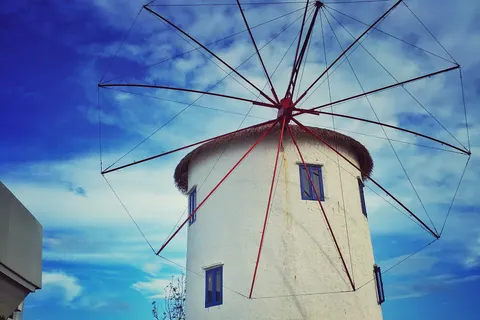

The vegetable photo shows a farm in the Wang Nam Khiao area. The windmill-style tower is the kind of building found in the tourist area there, and the gaur herd is in the Khao Phaeng Ma area. If Khao Yai and Wang Nam Khiao are your main interest, see Khao Yai, which is in another part of the site.
Half-day and full-day plans, with and without a car
Drive times between stops are estimates. Check the actual route in a map app before you leave and always allow some slack.
Plan A: half day in the morning, with a car
| Time (approx.) | What to do | Note |
|---|---|---|
| 08:00 | Leave your hotel in Korat city | About 20 to 30 minutes' drive |
| 08:30 | Arrive at the roadside zone and look over the range and prices | Do not buy large pieces yet |
| 09:15 | Drive into the old village, see workshops and kilns, ask for local ware | Ask permission before taking photos |
| 10:45 | Go back and buy what you chose, pay cash and have it wrapped | Ask for double wrapping |
| 11:15 | Pad Mi Kratok Pa Pleung in Chok Chai | Open 09:00 to 15:00, closed on holy days |
| 12:15 | Head back into the city | Afternoon: Wat Sala Loi and Ya Mo. See Korat city sights |
Plan B: full day with a car, adding silk
| Time (approx.) | What to do | Note |
|---|---|---|
| 08:00 | Leave the city | Fuel up and carry cash |
| 08:30 to 10:45 | Dan Kwian, both zones | Buy and wrap your pieces |
| 11:15 | Pad Mi Kratok Pa Pleung | Arrive before 12:00 to avoid the busy hour |
| 13:00 to 14:45 | Pak Thong Chai silk weaving community | Closes at 16:00, so arrive by 14:30 at the latest |
| 15:00 | The zoo or the fossil museum if you have children | Zoo closes 17:00, museum 16:30 |
| 17:30 | Back in the city, dinner at the Wat Burapha night market | Open about 17:00 to 22:00 |
Plan C: no car, a hotel-arranged car for half a day
| Time (approx.) | What to do | Note |
|---|---|---|
| 08:15 | Ask the hotel to call a car for the round trip and agree the price including 2 hours of waiting | Show the name Dan Kwian pottery village on the map |
| 08:45 | Arrive and walk both zones where the driver takes you | Walk, take photos and ask questions |
| 10:45 | Start back | Confirm with the driver where they will wait |
| 11:30 | Get out at a pad mi shop in the city, or at the night market in the evening | See Korat food |
Plan D: no car and no wish to hire one
If you do not want to hire a car, skip Dan Kwian and spend your time on the city, Ya Mo, Wat Sala Loi and Phimai. There is no confirmed public bus to Dan Kwian. If you want to try a songthaew or Grab, carry cash as a backup for a taxi on the way back and start in the morning so you have time in hand. See Korat in 2 days and 1 night for a plan without Dan Kwian.
An extra plan for December
If you go while Jim Thompson Farm is open (December to early January), make it a separate day. The farm is on the Pak Thong Chai side, so go early to beat the crowds, then continue to the Pak Thong Chai silk community before 16:00, and keep Dan Kwian for another day.
A half-day budget for Dan Kwian
Entry to the village is 0 baht, so the budget depends on the transport, what you buy and what you eat. The table uses approximate figures so you can do the sums yourself. Transport is the biggest single cost and must be agreed before you get in.
| Item | Budget | Mid-range | Comfortable |
|---|---|---|---|
| Village entry | 0 | 0 | 0 |
| One plate of pad mi (about 40 to 69 baht) | 40 | 69 | 69 |
| Gifts and small pieces | 200 | 500 | 1,000 and up |
| One medium pot or vase | 0 | About 200 to 500 | About 500 to 1,000 |
| Round-trip transport with waiting | Agree first (Grab or taxi) | Agree first (hotel car) | Hire car about US$25 to 45 a day |
| Total, excluding transport | 240 | About 770 to 1,070 | About 1,570 to 2,070 |
A worked example: one person, mid-range, with pad mi at 69 plus gifts at 500 plus a pot at 200 to 500 comes to about 770 to 1,070 baht, not counting transport. If two of you go, you split the car, so each person pays less. Adding Pak Thong Chai costs nothing extra because the weaving community is free to enter. The zoo adds the entry fees listed above.
Keep some budget for the piece you like best and buy it last, after both zones. That way you do not run out of money before you find the one you want.
When to go: seasons and annual events
Dan Kwian is almost entirely outdoors, so the weather affects your comfort more than whether you can go at all. The temperatures and rainfall below are long-term averages for the Korat weather station.
| Month | Average high (C) | Rain (mm) | Good for Dan Kwian? |
|---|---|---|---|
| January | 31.0 | 8.6 | Best. Cool and dry, comfortable even late in the morning |
| February | 33.5 | 12.7 | Good. Warmer by afternoon, so go in the morning |
| March | 35.7 | 46.3 | Hot. Arrive before 10:30 and carry water |
| April | 36.6 | 79.5 | Hottest of the year, with a record high of 44.0. Go early and keep it short |
| May | 35.4 | 151.7 | Hot, and the rain begins. Bring an umbrella and allow slack |
| June | 34.7 | 120.0 | Moderate rain. Go in the morning |
| July | 34.0 | 130.1 | Moderate rain. Go in the morning |
| August | 33.3 | 178.0 | Heavy rain. Check the forecast |
| September | 32.4 | 238.8 | Wettest month, about 14 rain days. Postpone if you have a choice |
| October | 31.3 | 135.0 | Rain easing. Becoming worthwhile |
| November | 30.9 | 19.6 | Cool and dry. Very good |
| December | 29.9 | 2.6 | Driest and cool. Very good, and Jim Thompson Farm opens |
The best window is November to February, when it is cool and dry and you can walk the outdoor shops in comfort. January mornings average about 19.2 degrees at the low end. March to May is hot, with an April average high of 36.6 degrees. The rainy season runs roughly May to October and is heaviest in September.
Events and special periods
- The Ya Mo festival is held every year from about 23 March to 3 April. 2026 was the 200th anniversary and 2027 dates have not been announced. If your trip falls in this window, the city will be crowded with heavy traffic.
- Songkran in 2026: Korat's Mahasongkran was about 12 to 15 April. Check with the shops whether they are open.
- Loy Krathong in 2026 falls on 24 November. The city is busy in the evening, but Dan Kwian is still fine in the afternoon.
- Jim Thompson Farm opens from December to early January, which is one more reason to go in this season.
Coping with heat and rain
When it is hot
- Arrive before 09:30 from March to May. Walk in short stretches in the sun and step into a shop for shade.
- Carry more drinking water than you think you need. Not every roadside shop sells drinks.
- Wear a hat, sunscreen and closed shoes. The ground and clay fragments can be hot and sharp.
- Plan a lunch break in town or at a shaded pad mi shop, and go out again only if you must.
When it rains
- If rain is heavy, postpone to another day. The road into the old village and the ground around workshops may be wet and slippery.
- In the rainy season low ground can flood. In May 2022 a flash flood hit the Dan Kwian community and damaged more than 50 houses. Check the forecast before you go in the wet season.
- Indoor options in the rain include the Maha Wirawong National Museum in the city, open Wednesday to Sunday 09:00 to 16:00 and closed Monday, Tuesday and public holidays, and the Khorat Fossil Museum.
If it rains for half the day, go to Dan Kwian in the morning after the rain stops and spend the afternoon on the city sights.
Visiting with children and older travellers
Young children
- Children love the brightly painted animals and want to pick them up. Tell them in advance to handle gently and ask first. A shop may ask you to pay for anything broken.
- Take them to a shop with a workshop. Many children are more interested in the wheel and wet clay than in the shelves. Ask permission before they touch anything.
- Bring your own water, snacks and a hat.
- Keep wide bags and strollers out of narrow shops where goods line the walkway.
- If you want children to make something, ask the shops that offer throwing or carving first, and agree the price clearly.
Older travellers and anyone who finds walking hard
- Drive or hire a car and park at the front of the shop, then make short walks between neighbouring shops.
- Go in the morning to avoid the heat and agree a clear time for the return car.
- The paths between shops and workshops may not always be smooth, so wear steady shoes.
- Ask the shops where you stop about toilets, because there is no confirmed information that every shop has one.
- For wheelchair users, check with the shop first whether the entrance is level and do not assume.
If the family includes both small children and older people, Plan A, the half-day morning, suits best. It is short, with little walking, followed by a pad mi lunch and a return to the hotel for the hot afternoon.
Common mistakes to avoid
- Arriving too late. Many shops close at about 16:30 to 17:00 even though the village is open until 18:00.
- Not asking whether a piece is Dan Kwian clay or imported white clay, then wondering later why the colour does not match the photos.
- Buying a large piece at the first shop. See both zones before deciding.
- Not carrying cash and small notes. Small shops often do not take cards and may have no change.
- Not agreeing the car price, especially the waiting time. Without that, a driver may not wait long or may charge extra.
- Not planning the wrapping. If you will then take a coach or train, fragile ware can be damaged on the way.
- Buying heavy pieces without checking the weight limit of your bag or flight home.
- Confusing Chok Chai district in Korat with Chokchai Farm in Pak Chong near Khao Yai. If you search the map just for Chok Chai you may find the farm. For the farm, see Chokchai Farm, which is a different place.
- Trying to do everything in one day without working out the drive times. Dan Kwian, Pak Thong Chai, the zoo and the city are in different directions.
- Going in heavy rain without checking the forecast. The road into the old village may be slippery and low ground can flood.
Frequently asked questions
Where is Dan Kwian?
At Moo 7, Dan Kwian sub-district, Chok Chai district, Nakhon Ratchasima, about 15 km from Korat city along Highway 224.
What time does Dan Kwian open?
The village is open about 08:30 to 18:00 daily, but each shop sets its own hours. Many close around 16:30 to 17:00, so go in the morning and check with the shops you plan to visit.
What day is best for Dan Kwian?
Any day works. Weekends are livelier and all the shops are open, but a weekday morning is also good if you want to walk comfortably and haggle more easily.
Is there an entry fee for Dan Kwian?
No fee to enter the village. You pay only for what you buy or for an activity the shop charges for.
How do I get to Dan Kwian from Korat?
By your own car, a car your hotel calls, a taxi or Grab. It takes about 20 to 30 minutes along Highway 224. There is no confirmed public bus, so agree the price and waiting time with the driver before you leave.
What can I buy at Dan Kwian?
Animal figures, pots, vases, jars and big sets, and garden ornaments such as carved owls. Small pieces cost from tens to a few hundred baht and large ones about a thousand baht and up.
What makes Dan Kwian pottery different?
Local clay fires to a dark red-black colour called samrit and looks good unglazed. But much of the ware sold now is white clay brought in from elsewhere, so ask before you buy if you want local ware.
Can I make pottery at Dan Kwian?
Some shops offer demonstrations or let you try throwing on a wheel or carving. The fee is not fixed, so ask at the shop first.
How long should I spend in Dan Kwian?
About 1.5 to 2.5 hours. With a pad mi lunch and a stop at Pak Thong Chai it becomes a half day to nearly a full day.
Do I need cash at Dan Kwian?
Yes. Bring cash in small notes, because small shops and roadside stalls mostly take cash.
Can I ship pottery from Dan Kwian home?
Many shops will wrap and send larger pieces. Ask about the shipping cost and who is responsible if it breaks, and get a receipt. If you are sending abroad, check the customs rules at the destination.
Is Dan Kwian good for children and older people?
Yes. Go in the morning, park at the front of a shop and keep walks short. Children like the figures and the wheel, and older visitors should wear steady shoes and ask the shop about toilets.
Where the facts come from
Keep planning
 Korat trip plannerHow many days, where to go, getting around, budget
 Korat in 2 days, 1 nightA timed plan: Dan Kwian, the city, Phimai
 Korat tours and ticketsPrivate tour, transfer, train and bus tickets, Muay Thai
 Where to stay in KoratAreas compared, with 16 hotels
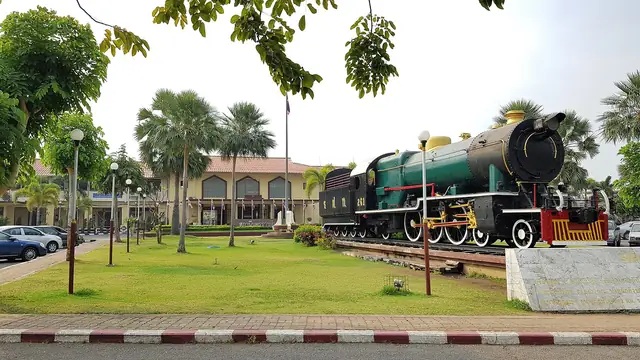 Getting to KoratTrain, bus, private car and from Khao Yai
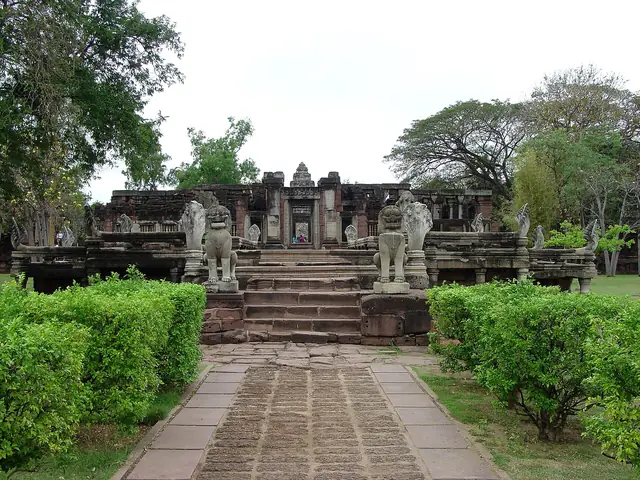
 PhimaiFees, hours, how to get there and the festival
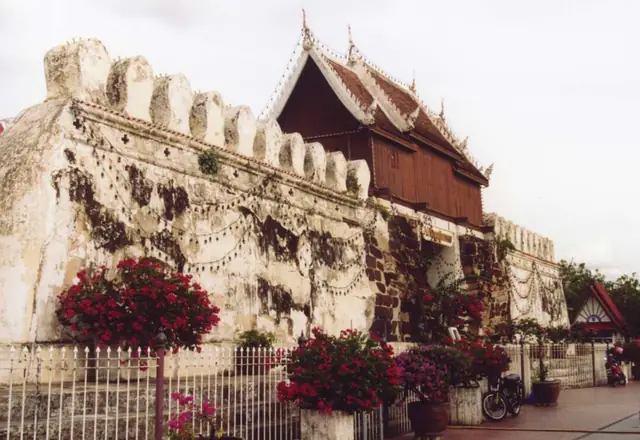
 Korat city sightsYa Mo, temples, night markets and malls
 Phanom Rung from KoratA day trip, fees and the sun through the doors
 Korat foodPad mi, shops to try, night markets