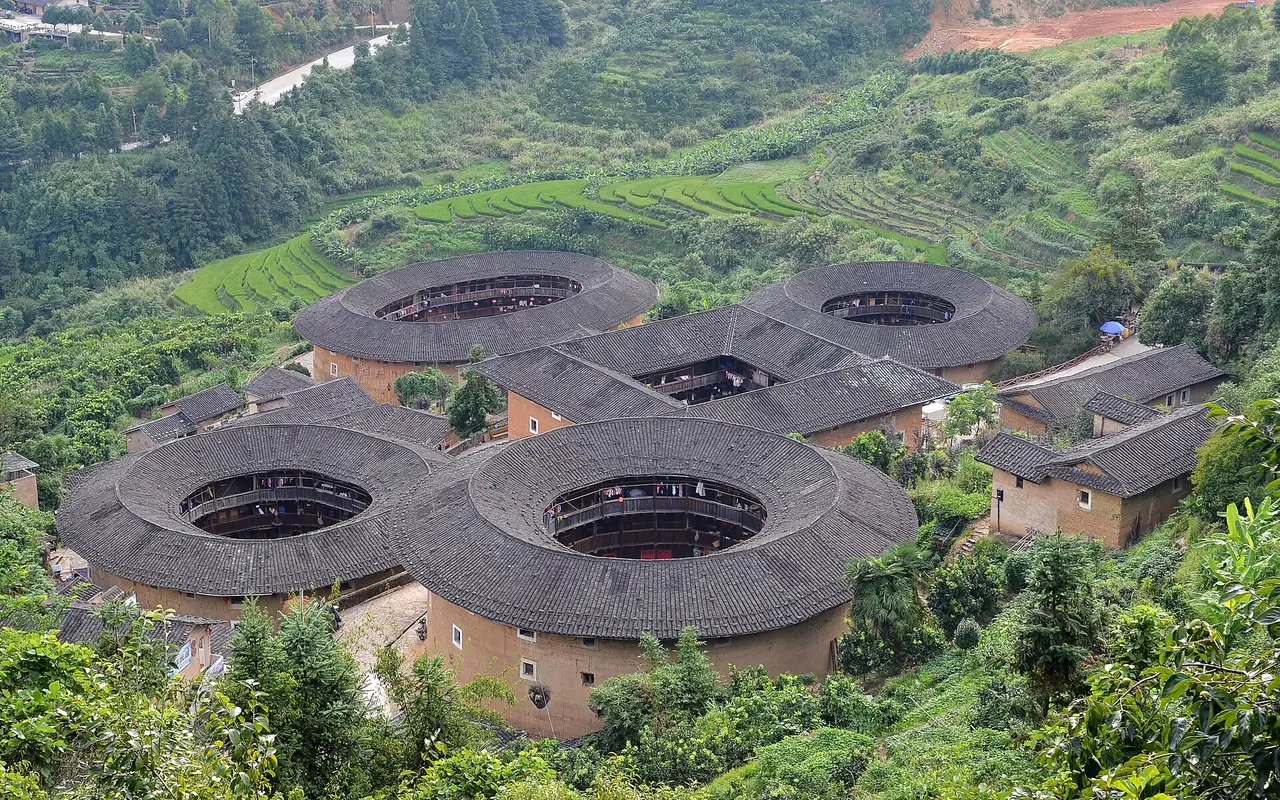
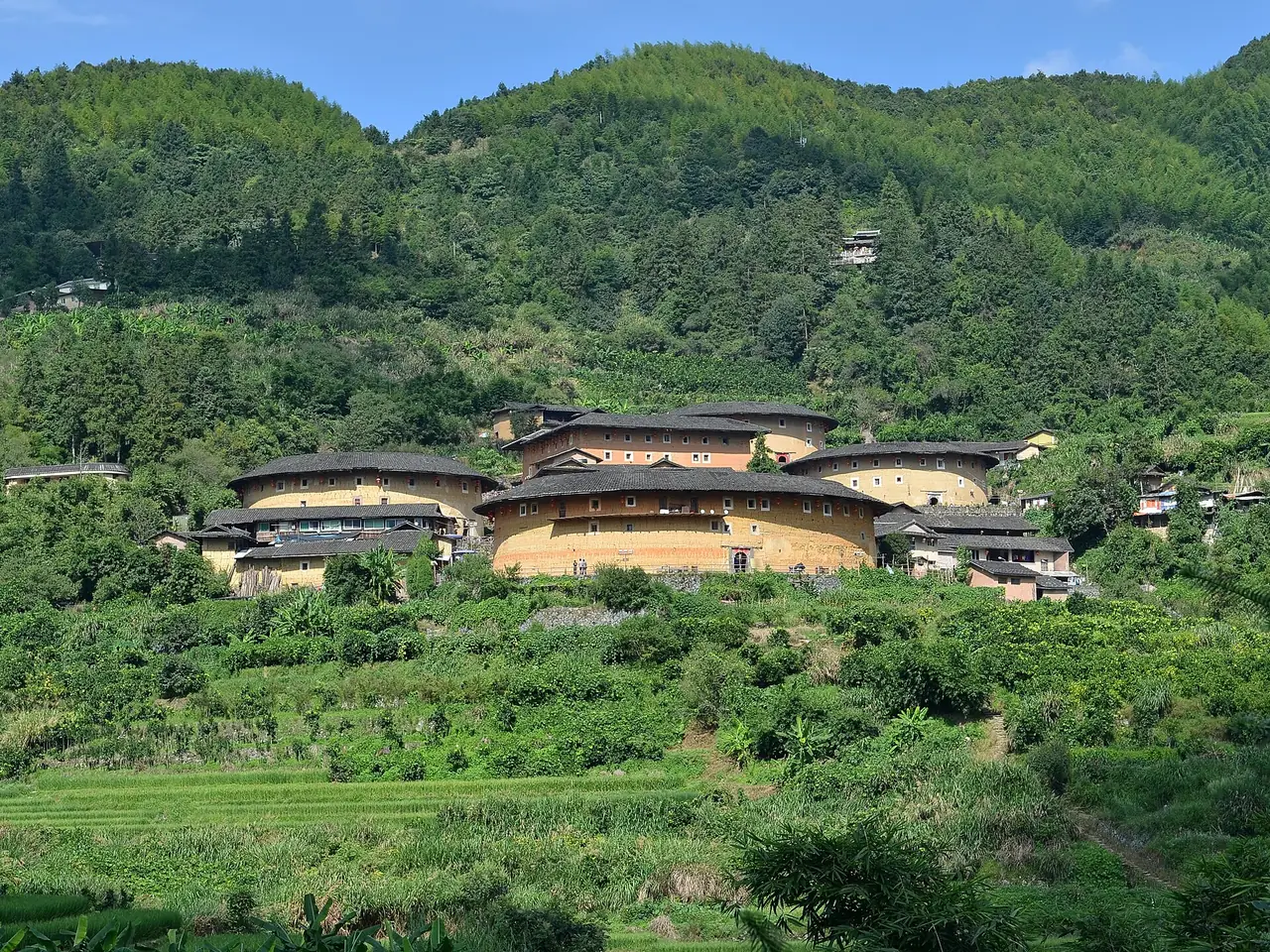
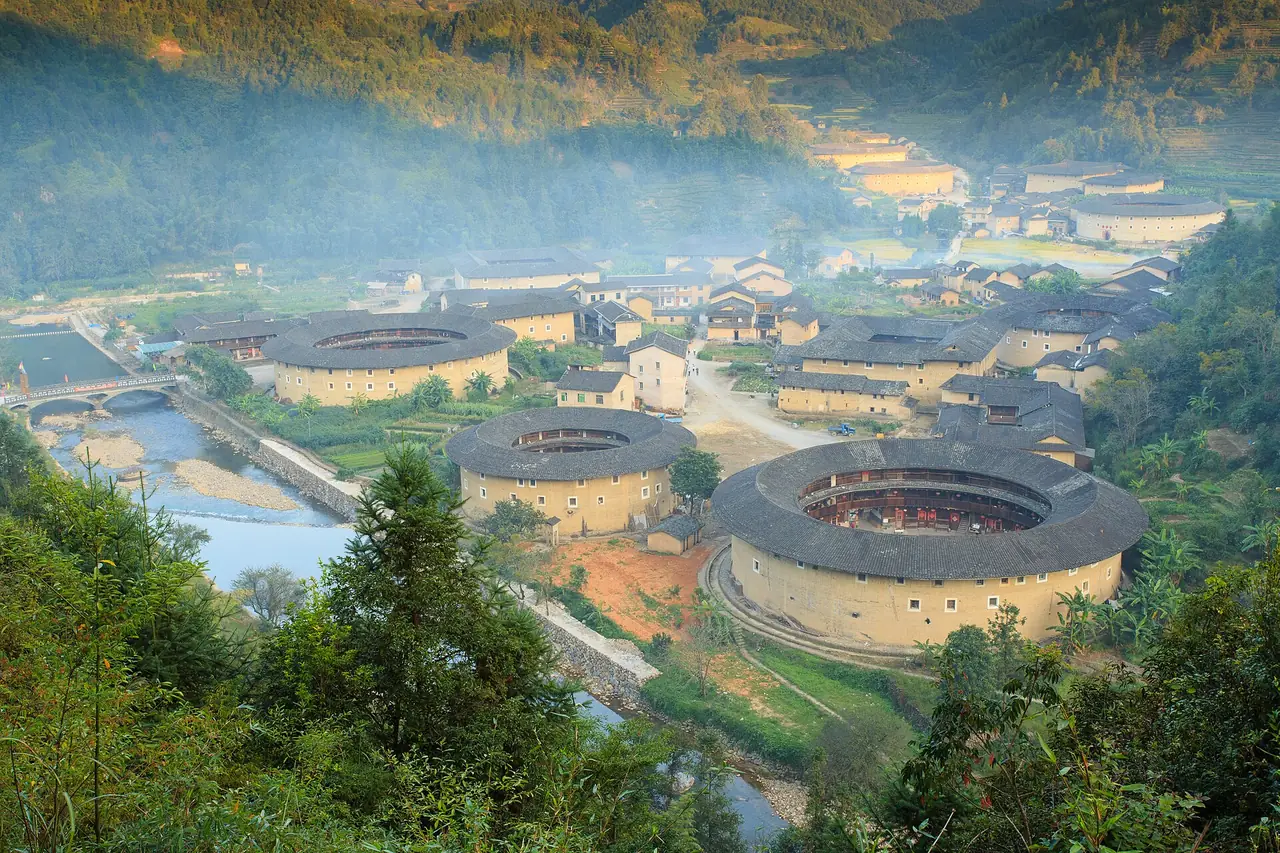
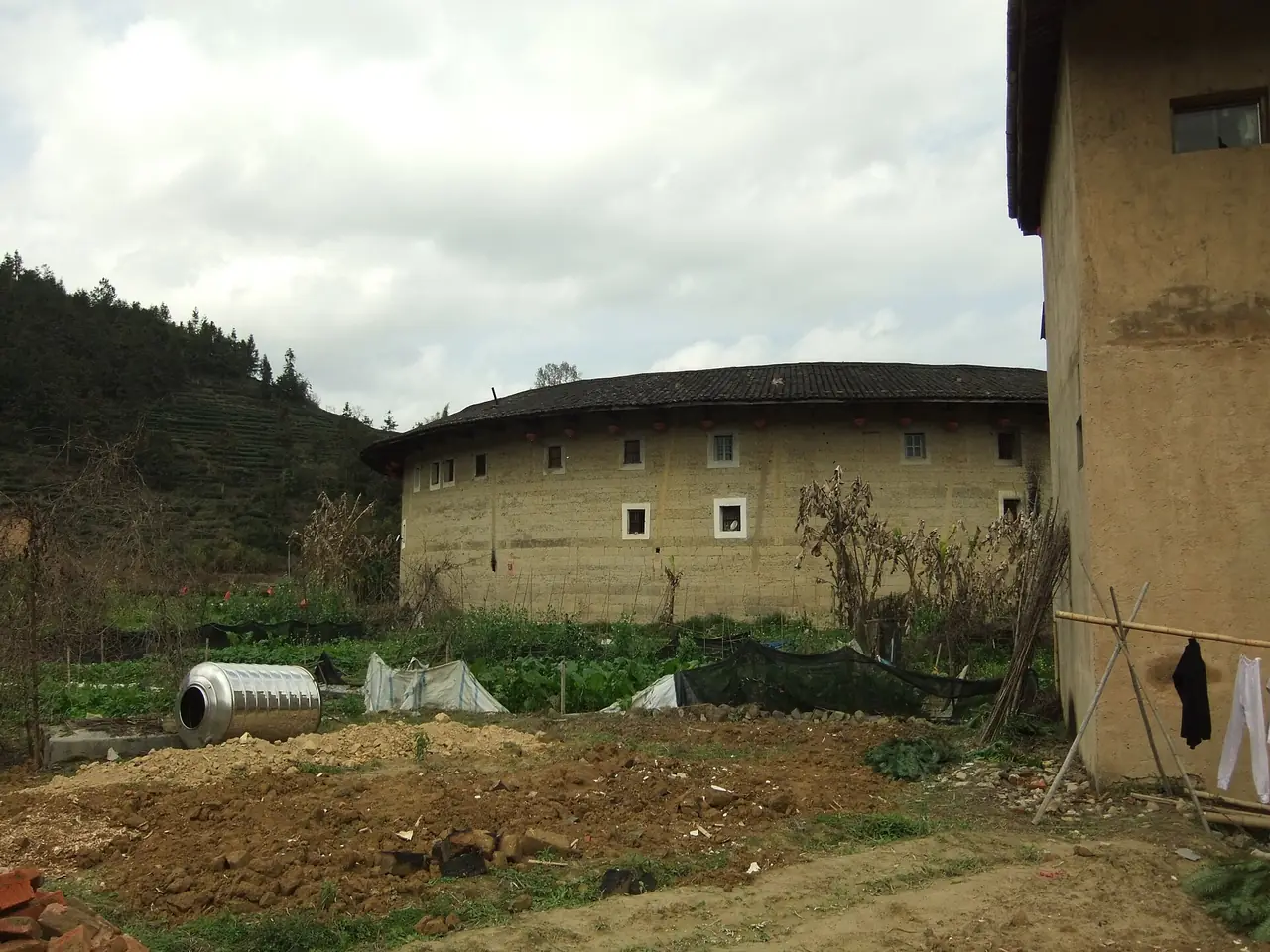
The Fujian Tulou (福建土楼) are round or square rammed-earth buildings where a whole clan lived together. The Hakka have built them since the 12th century, according to Wikivoyage, and most are in Yongding and Nanjing counties west of Xiamen. UNESCO listed 46 of them in 2008, as Wikipedia reports. What to know before you plan: the clusters are far from each other and 3 to 5 hours from Xiamen. We found no official fee table, so we give Wikivoyage's figures with the year it records and say they are unofficial. For the city and hotels, see the Xiamen guide. Checked on 17 October 2026.
Main clusters and the fees we found
| Cluster | County | Fee per Wikivoyage | Note |
|---|---|---|---|
| Hongkeng (洪坑) | Yongding | CNY 90, student 45 (updated Jan 2019) | A bus stop called "Tulou Station" next to the cluster; the easiest cluster to reach by public transport |
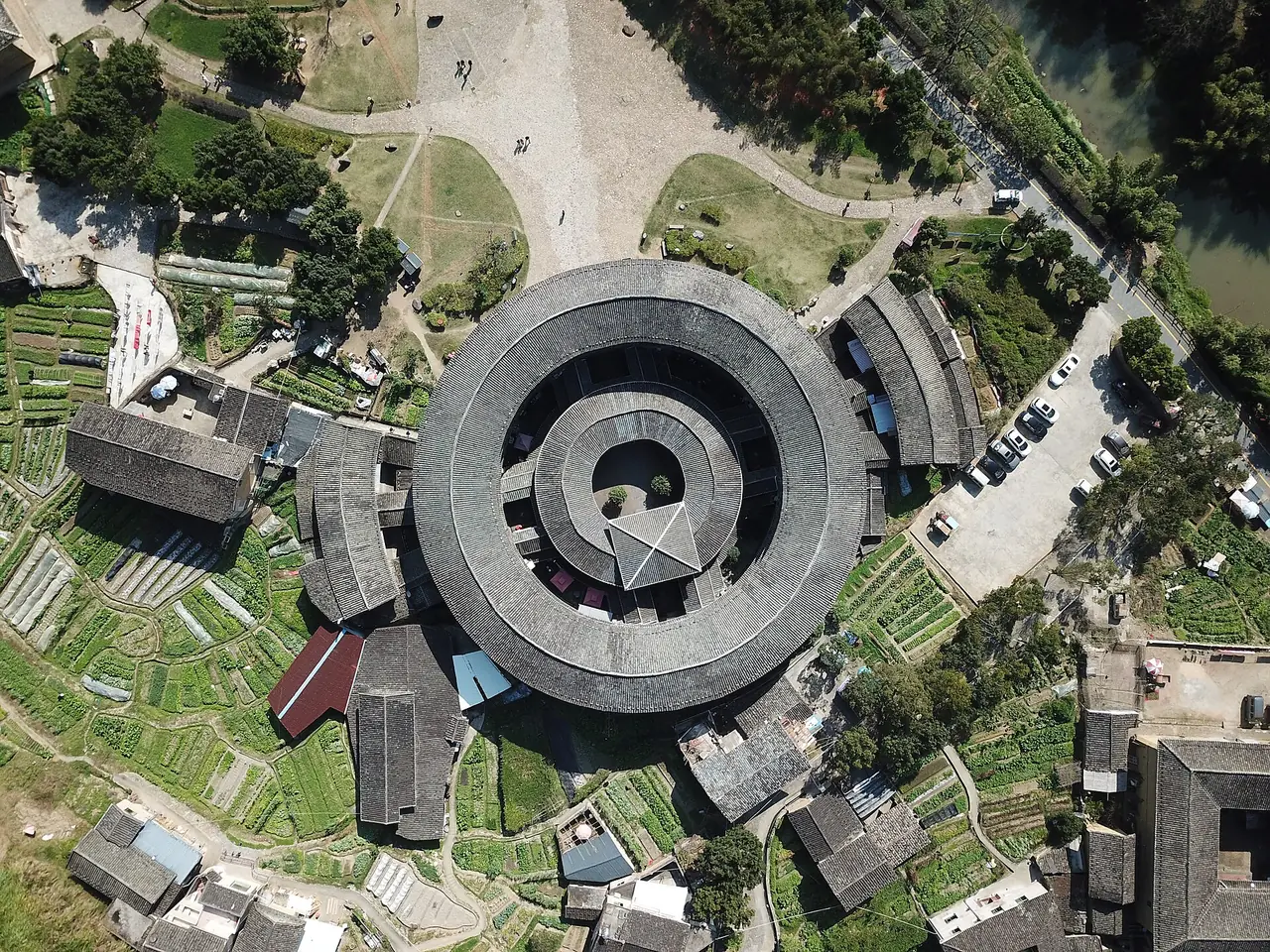
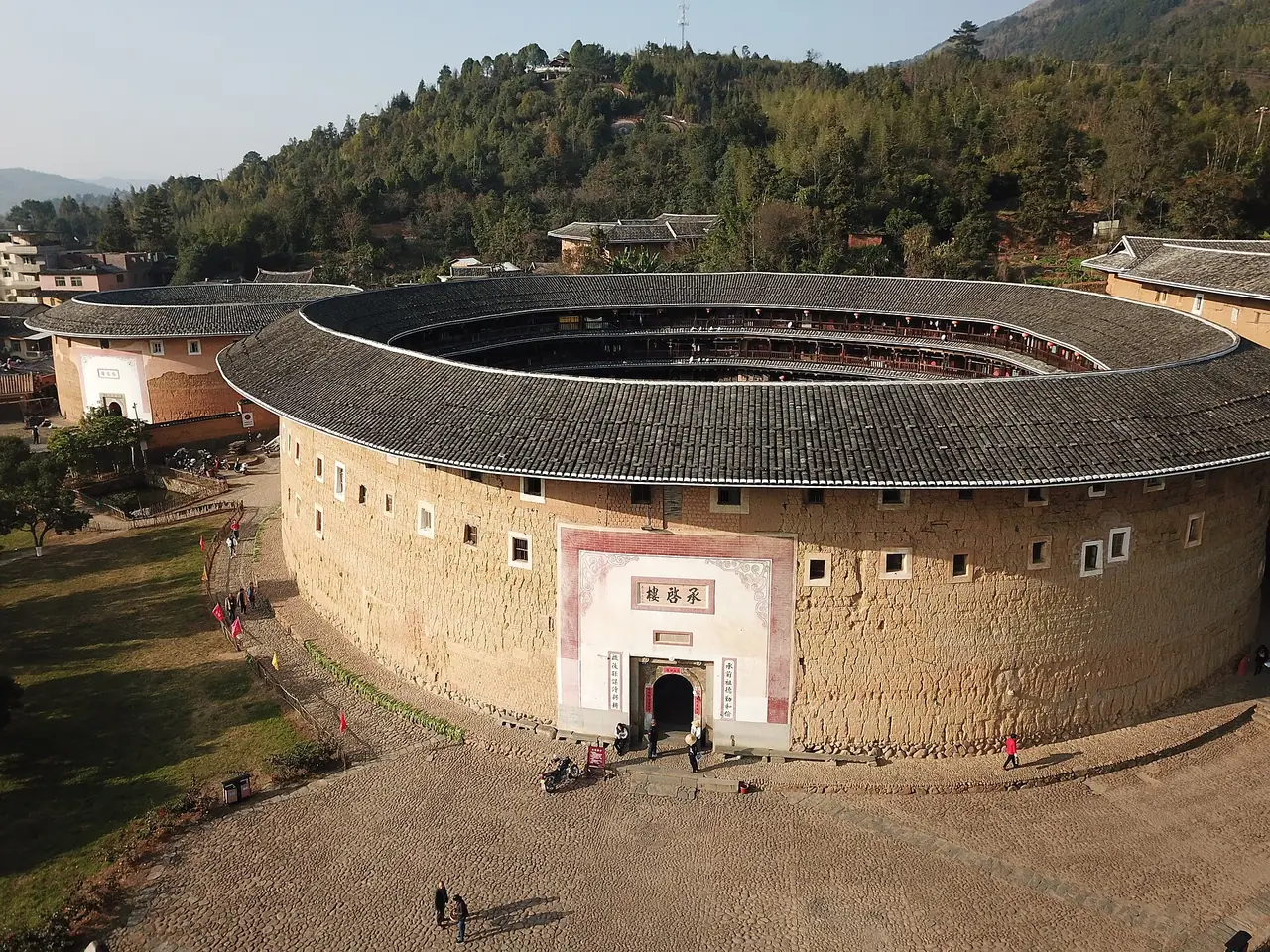
| Gaobei (高北) | Yongding | CNY 40, student 25, or a 2-day combination with Hongkeng (updated Jan 2019) | Has Chengqi Lou (承启楼), nicknamed the "king of tulou" |
| Tianluokeng (田螺坑) | Nanjing | CNY 100, student 50, including Yuchang Lou and the Taxia village (updated Nov 2017) | Five buildings on a slope: three round, one oval and a square in the middle |
| Chuxi (初溪) | Yongding | CNY 55, student 30 (no update year) | Wikivoyage says it may be the most beautiful cluster |
| Yunshuiyao (云水谣) | Nanjing | CNY 90 (updated Jan 2019) | An old town and tulou that are further apart |
| Hekeng (河坑) | Nanjing | Not given | 15 buildings along two streams |
| Fujian Tulou Museum | Yongding | Free (updated Feb 2019) | 8:30 to 11:30 and 15:00 to 17:30 in summer; 8:30 to 11:30 and 14:30 to 17:00 in winter |
Where sources disagree: Wikivoyage says Chengqi Lou was built in 1964, while Wikipedia says 1709. We have no official source for the year, so we use neither elsewhere on this page. All the prices in the table are 6 to 9 years old, and we could not open the clusters' official sites from our machine, so we have not verified them. Current figures may be very different.
Getting there from Xiamen
Wikivoyage lists these options. The data is old and unofficial, and prices may have changed.
| Way | What we found | Note |
|---|---|---|
| Direct bus from Xiamen | Two a day to Liulian/Tulou station, about 3 hours, CNY 64 (2017 data) | Board at Wucun bus station next to Xiamen railway station. Take care with the station name, since Xiamen has several |
| High-speed train, Xiamen North to Longyan | Under 1 hour 15 minutes, then a bus of about 2 hours to Liulian | Wikivoyage says buses from Longyan to Liulian run hourly from 7:00 to 17:00 |
| Train to Yongding station | Two trains a day (K230 and K298), about 3.5 hours, CNY 37.5 (old data) | Then a bus of about 1 hour from Yongding to Liulian |
| Getting around the clusters | Taxi or motorbike taxi with the price agreed first; about CNY 100 to 120 for half a day (old data) | Wikivoyage says not to rent or ride a motorbike yourself, and that ride-hailing apps did not work in the area at the time |
China Highlights' Xiamen transport page also lists a bus from Xiamen to Yongding Tulou as the best choice if you go to the Yongding clusters, but we did not use its timetable because it is not dated per route. Our suggestion, not official: if you do not speak Chinese, a one-day tour or a chartered car with a driver is easier than several public-transport changes. Round trips in one day mean more than 6 hours in vehicles by Wikivoyage's timings, so if you have time, sleep near the clusters and start early.
Which cluster to choose
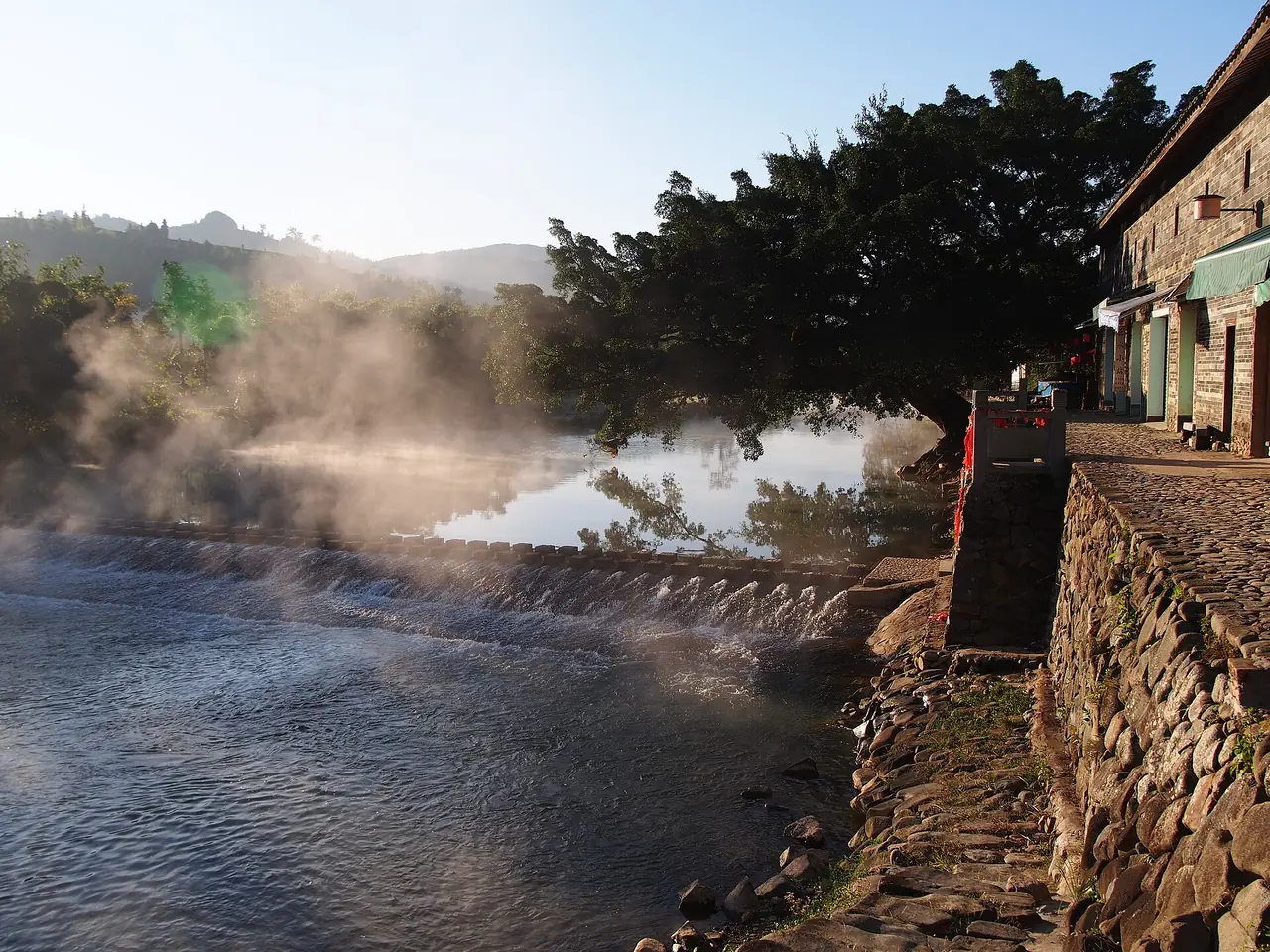
Wikivoyage advises starting at Hongkeng if you want to see the most. It is a state-run cluster with a bus stop and places to stay. It warns that Zhencheng Lou is staged as a show building and so looks "polished", and that families who still live in tulou tend to be in the small ones. Gaobei has Chengqi Lou, and Wikivoyage warns of many tourists there, so go early or late. Tianluokeng is the classic five-building photograph, and Wikivoyage says regional buses are few in the off-season. The Fujian provincial government reported on 29 January 2026 that Tianluokeng was a popular spot during the Spring Festival.
What to expect
Wikivoyage says tourist services are limited, the area is rural and little English is spoken, but signs and tourist maps are bilingual, and over 90 percent of the county's people are Hakka. Having place names in Chinese will help. Keep an offline map and a translation app on your phone, and set up mobile payments before you go; see the China hub.
Links on this page and our earnings
The tour button on this page opens the provider's own search page. As of 17 October 2026 we have no registered affiliate link for tulou tours and earn nothing from them yet. We have not compared prices or checked any particular tour operator. Our disclosure page explains how affiliate links work and what we never do.
Frequently asked questions
What is a Fujian Tulou?
A rammed-earth building, round or square, where a whole clan lived, 3 to 5 storeys high with walls about 1.5 m thick according to Wikivoyage. UNESCO listed 46 in 2008.
How long does it take from Xiamen?
Wikivoyage says 3 to 5 hours, depending on the cluster and the transport. Its bus and train details are old, so check the latest timetable first.
How much is the entry?
We found no official fee table. Wikivoyage gives CNY 40 to 100 depending on the cluster (data from 2017 to 2019). Ask at the ticket window or the tour operator before you go.
Can I do it as a day trip?
On timing, yes, but it is a very long day, with 3 to 5 hours each way. Staying near the clusters is less tiring (our suggestion).
When is the best season?
We found no reliable climate data for the tulou area. Use Xiamen's figures in the Xiamen guide as a guide, and watch for rain and typhoons from July to September.
Do I need to speak Chinese?
Not entirely. Wikivoyage says signs and maps are bilingual and tourism staff often speak some English, but most villagers speak Chinese or Hakka.
How this compares
We opened China Highlights' Xiamen transport page and its Xiamen and Fujian Tulou tour page. Lonely Planet's tulou page gave us no readable text. China Highlights sells tours and mentions the bus to Yongding; neither it nor Wikivoyage gives fees from a current official table. This page puts Wikivoyage's per-cluster fees with their update years in one table, says plainly that they are 6 to 9 years old, and lists transport options with their data year.
See also
- Xiamen travel guide
- Gulangyu: ferry, tickets and how to get there
- Nanputuo Temple
- Where to stay in Xiamen
- China travel guide for foreigners
Official sources and further reading
- Fujian Provincial Foreign Affairs Office (news of 29 Jan 2026, reprinted from People's Daily Online): tulou listed as World Heritage in 2008
- Wikipedia: Fujian Tulou (46 sites, cluster list; Chengqi Lou built 1709 per the article)
- Wikivoyage: Fujian Tulou (fees, transport; not official)
- Wikivoyage: Xiamen (trains and buses; not official)
- China Highlights: Xiamen transportation, buses to Yongding Tulou (benchmark, read 17 Oct 2026)
- China Highlights: 3-day Xiamen and Fujian Tulou tour (benchmark, read 17 Oct 2026)
Prices, schedules and entry rules change. Figures here are approximate as of 2026; always confirm on the official or operator page before you book. Spotted something out of date? Tell us.