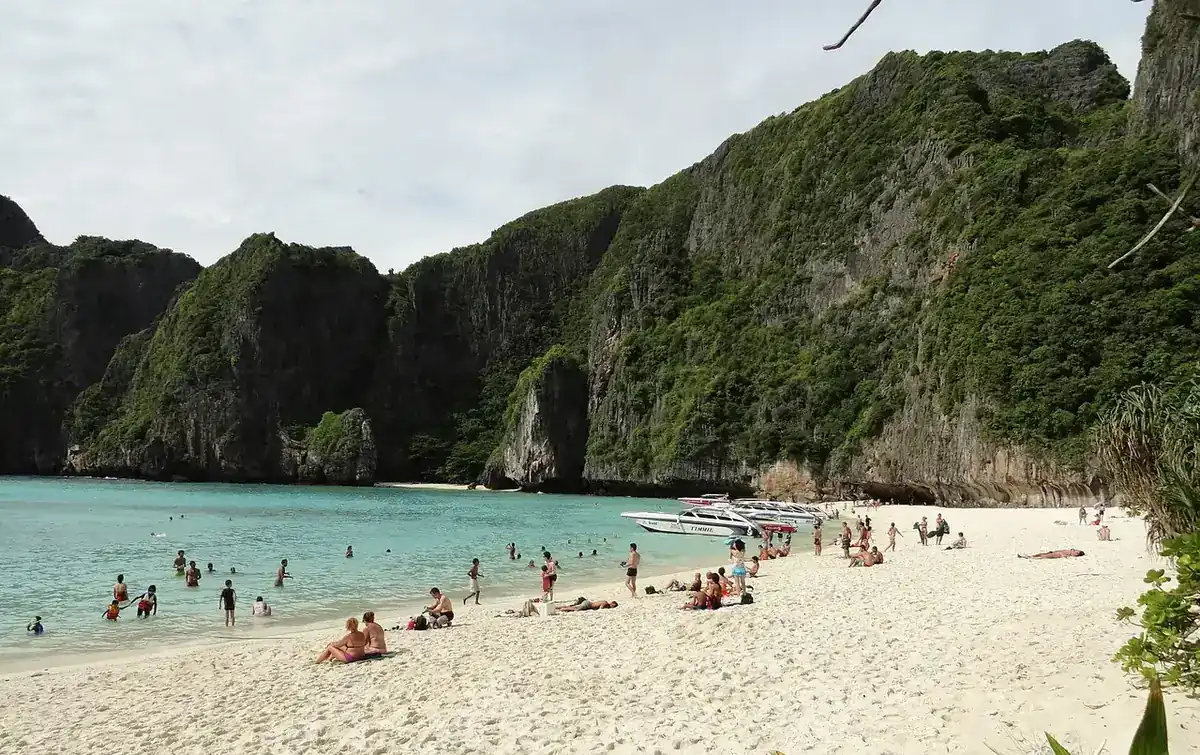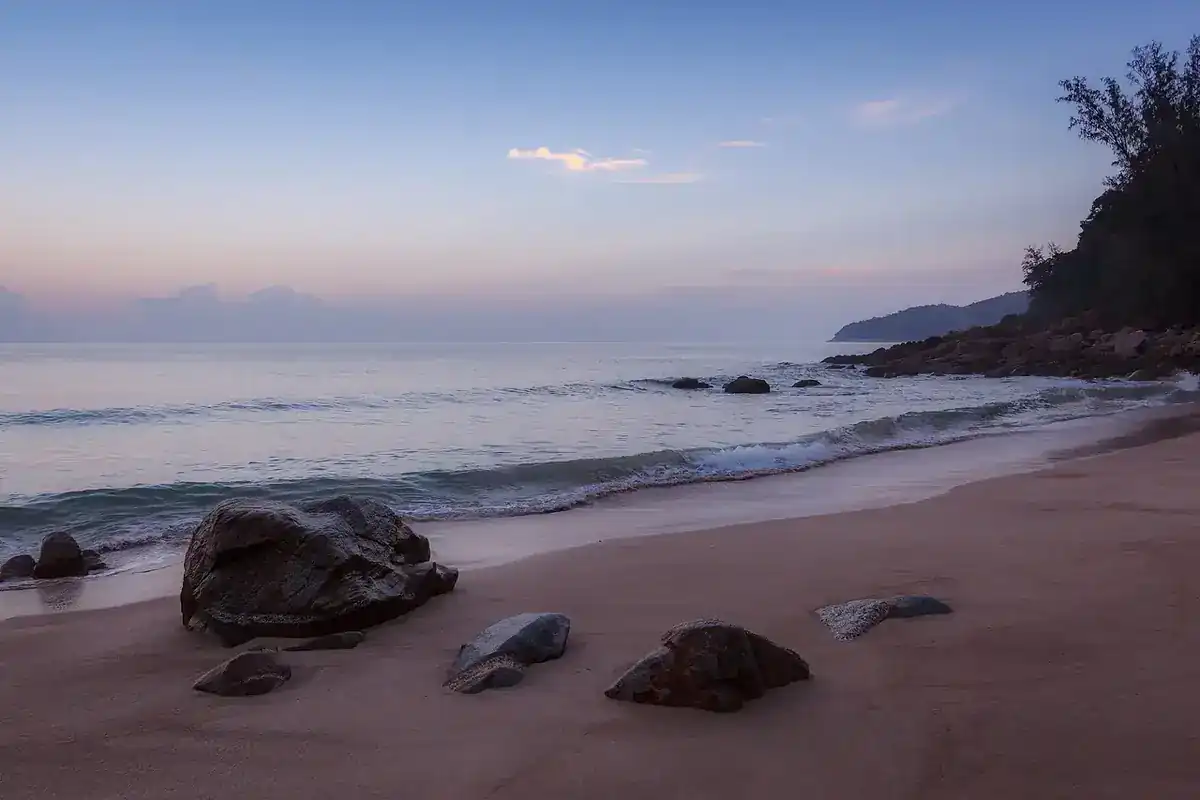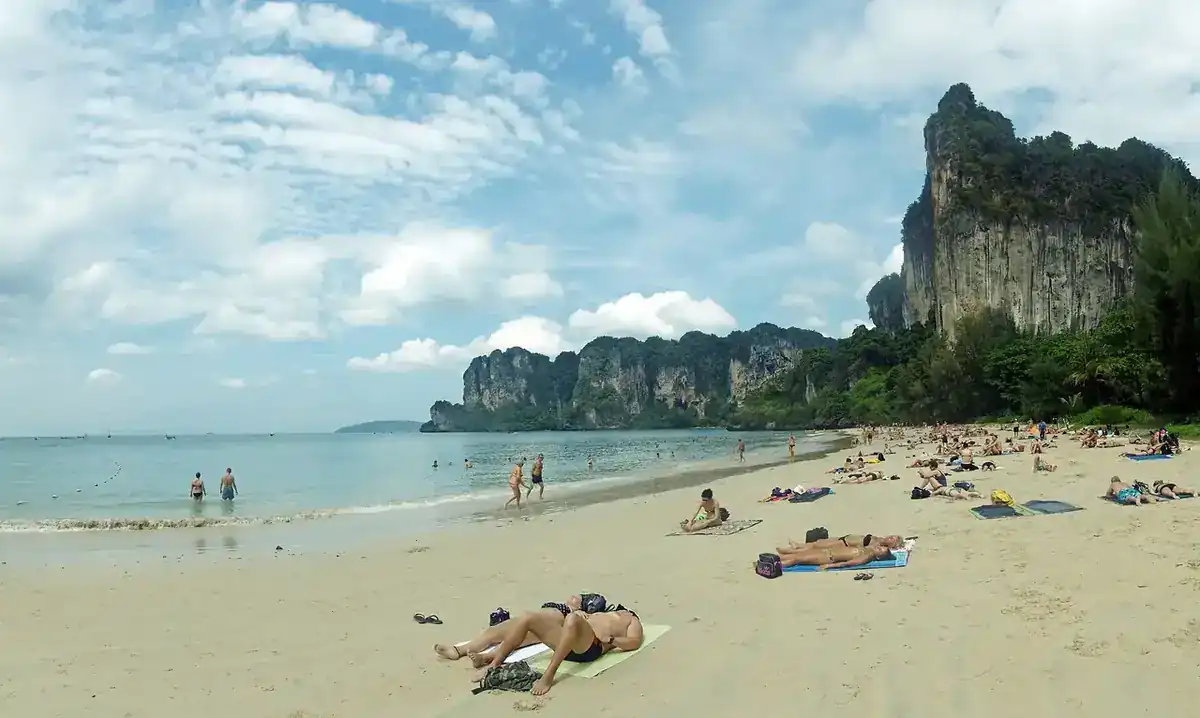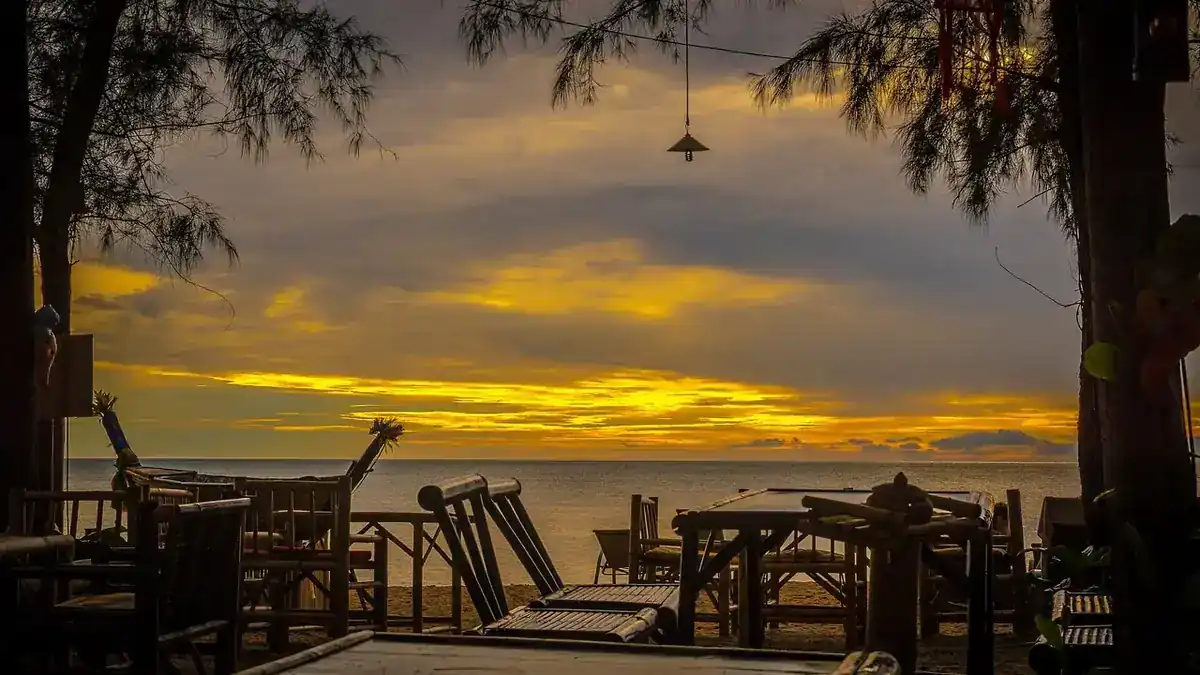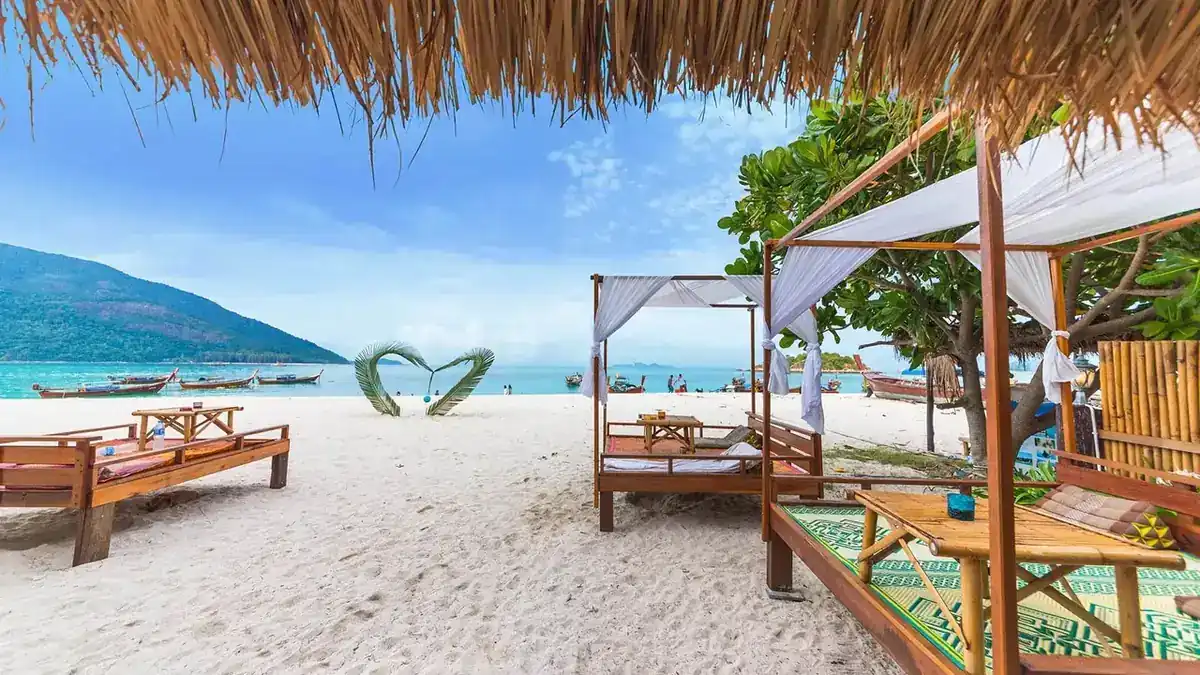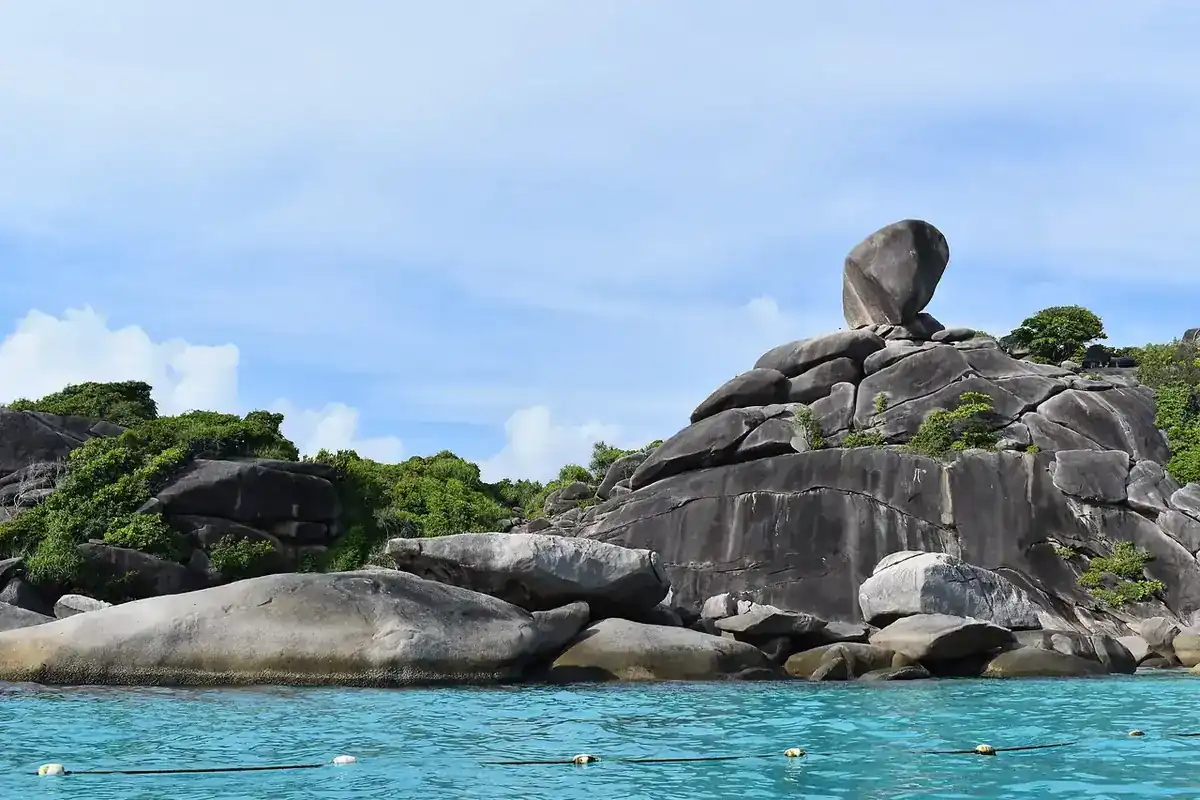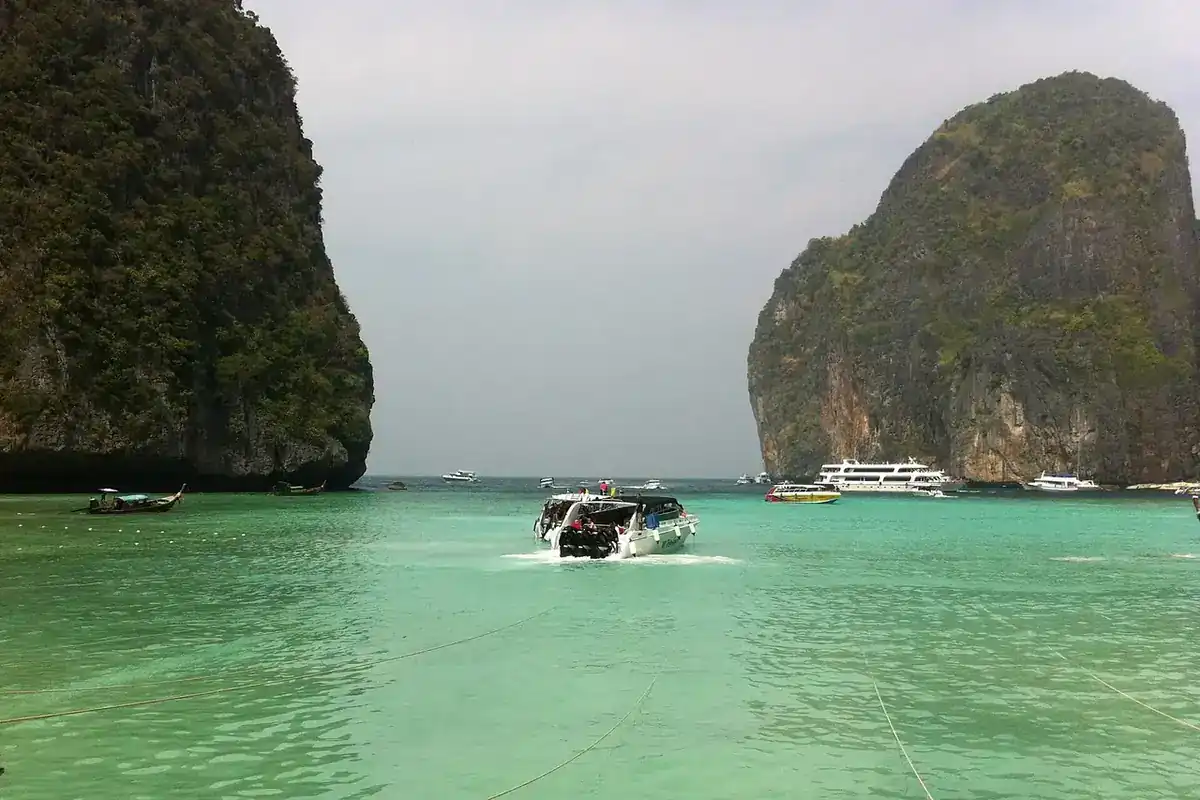
The Phi Phi islands sit in the Andaman Sea roughly halfway between Phuket and Krabi. Phi Phi Don is the main island, shaped like two hills joined by a narrow sandy isthmus with beaches on both sides. Phi Phi Leh, next door, has no hotels and is where Maya Bay and several snorkelling spots are found. There are no cars on Phi Phi Don; people walk, or use boats and porters.
The island is visited by two very different crowds: day-trippers on speedboats from Phuket and Krabi, and overnight guests who see it before and after the tour boats leave. Which one you choose changes the experience more than any beach choice does.
Areas and beaches on Phi Phi Don
| Area | What to expect |
|---|---|
| Tonsai Village and Tonsai Pier | The main settlement: ferry pier, shops, restaurants, dive centres, bars, accommodation at all prices |
| Loh Dalum Bay | Beach on the opposite side of the isthmus, with beach bars and evening activity |
| Long Beach (Hat Yao) | Quieter, reached by walking, longtail boat, or hiking; resorts and snorkelling nearby |
| Laem Tong | Northern tip with larger resorts and a calmer feel |
| Viewpoints | The main viewpoint hike above Tonsai is popular at sunrise and sunset |
Phi Phi Leh is a protected area. Maya Bay has reopened to visitors with restrictions since the recovery work, including limits on boats and swimming. Rules and the closure period can change, so check the national park information and your tour operator rather than relying on older blog posts.
How to get to Koh Phi Phi
- From Krabi: Ferries and speedboats leave from piers near Krabi Town and Ao Nang. Crossings take around 1.5-2 hours for ferries (approx.).
- From Phuket: Ferries leave from Rassada Pier in Phuket Town, around 1.5-2 hours (approx.). See the Phuket hub.
- From Koh Lanta: Seasonal ferries run in the high season, roughly 1.5-2 hours; they often do not run in the monsoon.
- Arrival fees: A small environmental fee is collected at Tonsai Pier in many seasons; check current amounts.
A full step-by-step guide with timetable tips is in How to get to Koh Phi Phi.
Book return ferries and airport connections with generous buffer time, especially in the rainy season. Ferries can be delayed or cancelled when seas are rough.
Best time to visit
The dry season, roughly November to April, offers the clearest water and the calmest crossings. December to February is peak, with higher prices and fuller boats. May to October is the monsoon period: expect rain, swell and cloudy sea visibility on many days.
- Ferries usually continue year-round, but individual crossings are cancelled or delayed for weather. Speedboats are generally affected first.
- Some beach clubs, restaurants and smaller resorts shut or reduce hours in heavier monsoon months.
- Maya Bay has been closed for a recovery period during some part of the rainy season each year; confirm current dates before building a trip around it.
- Water visibility and snorkelling conditions can be poor after storms even if the sun is out.
Monsoon seas around Phi Phi can be dangerous. Follow the flags, listen to boat crews and do not push operators to depart in unsafe conditions. Travel insurance that covers the activities you do is strongly recommended.
For the seasonal picture across the country, see Thailand best time by region.
Where to stay
- Tonsai Village for convenience: close to the pier, food and dive shops, but busy and noisy at night.
- Loh Dalum for beach access with a social atmosphere.
- Long Beach for a more relaxed pace and better swimming, with a transfer by longtail.
- Laem Tong for resort comfort away from the crowds.
Accommodation is limited in the island's footprint, so book early for December to February. Pack light: you will walk or use porters from the pier.
Top things to do
- Day tour to Phi Phi Leh and surrounding snorkel spots: Sold from Phuket, Krabi and Phi Phi itself. Compare itineraries in Phuket Phi Phi tour comparison.
- Sunrise or sunset viewpoint hike: Short but steep; bring water and sturdy sandals.
- Longtail boat to Monkey Beach and Pileh Lagoon: Popular snorkelling and swimming stops. Avoid feeding wildlife.
- Diving and snorkelling: Courses and fun dives are available; check operator licences and safety records.
- Beach evenings in Loh Dalum: Fire shows and beach bars are common (alcohol rules apply and noise can run late).
Reef-safe behaviour matters here: do not stand on coral, keep a respectful distance from marine life, and take your litter with you.
Budget table (approximate)
| Style | Per person per day | Notes |
|---|---|---|
| Budget | THB 1,500-2,300 | Dorm or basic room, simple meals; accommodation here costs more than on mainland Krabi |
| Mid-range | THB 2,800-5,000 | Air-conditioned room, a boat tour, restaurant meals |
| Comfort | THB 6,000+ | Beachfront resort and private boats |
All numbers are approximate as of 2026. Island accommodation and food cost more than on the mainland; check current prices on operators' own pages.
Nearby destinations and guides
- Krabi hub: ferry gateway with Ao Nang and Railay.
- Koh Lanta hub: quieter, family-oriented island to the south.
- Phuket hub: airport and larger tour operators.
- Koh Lipe and Khao Lak: other Andaman destinations.
- Thailand hub and which Thai island to choose.
FAQ
How long should I stay on Koh Phi Phi?
Two nights lets you see the island outside the day-tripper hours. One night works as a stopover; a day trip is possible but tight with ferry times.
Is there an airport on Phi Phi?
No. You arrive by sea. The nearest airports are Phuket (HKT) and Krabi (KBV).
Can I swim at Maya Bay?
Swimming has been restricted since the area reopened, and boats follow rules about docking. Always check current regulations with the national park.
Is Koh Phi Phi good in the rainy season?
It is quieter and cheaper, but crossings and tours may be disrupted. Allow spare days.
Are there ATMs and clinics?
There are ATMs and small clinics around Tonsai, but carry some cash and have travel insurance for anything serious. Emergency numbers are 191 police, 1669 medical and 1155 Tourist Police.
Official sources and further reading
Prices, schedules and entry rules change. Figures here are approximate as of 2026; always confirm on the official or operator page before you book. Spotted something out of date? Tell us.