Bangkok's rail network is the fastest way to cross the city, and most visitors need only two systems: the BTS Skytrain, which runs on elevated tracks above Sukhumvit, Silom and Phahon Yothin roads, and the MRT, which includes the underground Blue Line that loops through the old city and Chinatown. The short answer on paying: buy a Rabbit card (or single-journey tickets) for the BTS, and tap a contactless Visa or Mastercard on the MRT Blue and Purple Lines. We read the operators' own pages on 2026-10-16, and where two official pages disagree, this guide shows both.
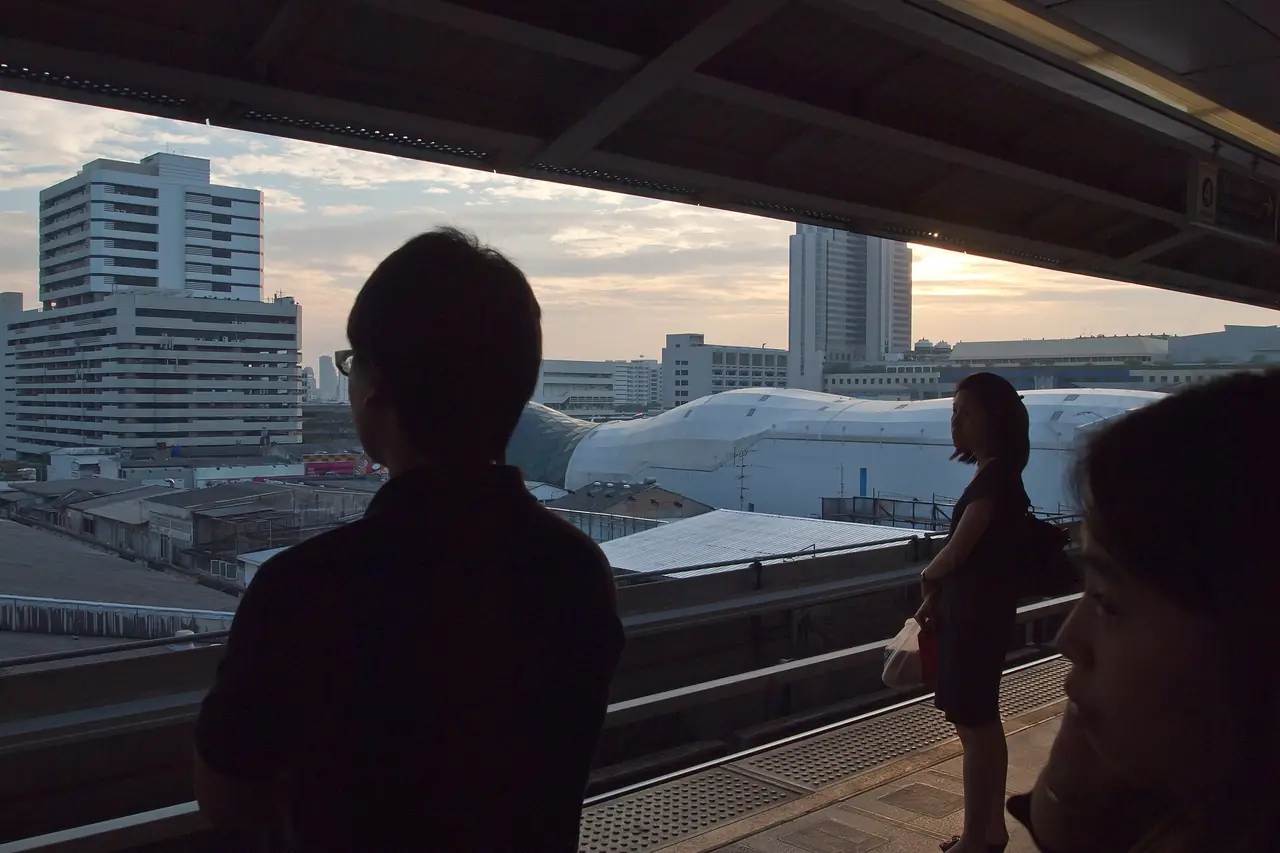
Verified facts, and where official pages disagree
| Item | What the operator says | Source, checked 2026-10-16 |
|---|---|---|
| BTS size | Two lines, about 68.5 km, 60 stations, one interchange at Siam | BTS "Structure and stations" |
| BTS hours | Service hours 05:00-01:00; last train from Siam to all stations about 00:02, and to Samrong, Ha Yaek Lat Phrao, Bang Wa and National Stadium about 00:15 | BTS timetable page (effective 1 Jan 2026) |
| BTS frequency | Gaps range from about 2.5 to 8 minutes on weekdays, longest after 22:00 (8 minutes); weekend gaps are about 4.5 to 8 minutes | Same page |
| Rabbit card | 120 baht card issuance fee, no deposit; stored value 100 baht minimum top-up, 4,000 baht maximum | BTS "How to purchase a new Rabbit card" |
| Single-journey ticket | 17 to 47 baht per journey, valid on the purchase date only | BTS "Single Journey Card" |
| Time limit | 300 minutes inside the paid area; overstay is charged the maximum published fare | Same page |
| One-day pass | 150 baht, Green Line only, unlimited trips on the day, sold at station ticket offices | BTS One-Day Pass page (Thai) |
| MRT ticket types | Single Journey Token and the MRT EMV Card (a prepaid Mastercard or Visa-standard card) | BEM "Ticket Types" |
| MRT contactless | Contactless cards with the EMV logo (Visa or Mastercard) pay fares on the Blue and Purple Lines | BEM "EMV Contactless" |
| EMV rollout | MRTA, BEM and the Ministry of Transport announced full EMV contactless fare payment from 1 June 2026 | MRTA news release, 27 Feb 2026 |
| Airport Rail Link | Station on Level B1 of the Suvarnabhumi main terminal, 05:30-24:00 | Airports of Thailand |
Three places where the sources do not agree, and what we recommend:
- BTS fares on the extensions. The BTS single-journey page quotes 17 to 47 baht. Nation Thailand reported on the Bangkok Metropolitan Administration's change from 1 November 2025: extension sections now charge 17 to 45 baht by distance instead of a flat fee, and a journey that links the main stations is capped at 65 baht. BTS's own Xtreme Savings page also names 65 baht as the maximum fare including extensions, but its Rabbit top-up page still describes an older flat 10 or 15 baht extension charge. Expect the distance-based fares and check the fare chart at the station.
- MRT Blue Line fares. BEM's corporate page lists the 2024 schedule (17 to 45 baht, valid 3 July 2024 to 2 July 2026). Nation Thailand reported on 27 May 2026 that a new schedule of 17 to 44 baht, set by the Mass Rapid Transit Authority and published in the Royal Gazette, starts on 3 July 2026, with senior citizens paying half and children 120 cm or shorter riding free. We could not read the new schedule on a BEM page, so treat 17 to 44 baht as reported rather than confirmed by the operator, and use BEM's fare calculator for an exact journey.
- MRT operating hours. MRTA's Blue Line page lists "06.00 am - 12.00 pm" daily, which reads as 06:00 to midnight, but BEM publishes first and last trains station by station on its timetable page, and some terminals start earlier. Use BEM's timetable for the station you need.
The network in one minute
| System | Where it goes | How you pay |
|---|---|---|
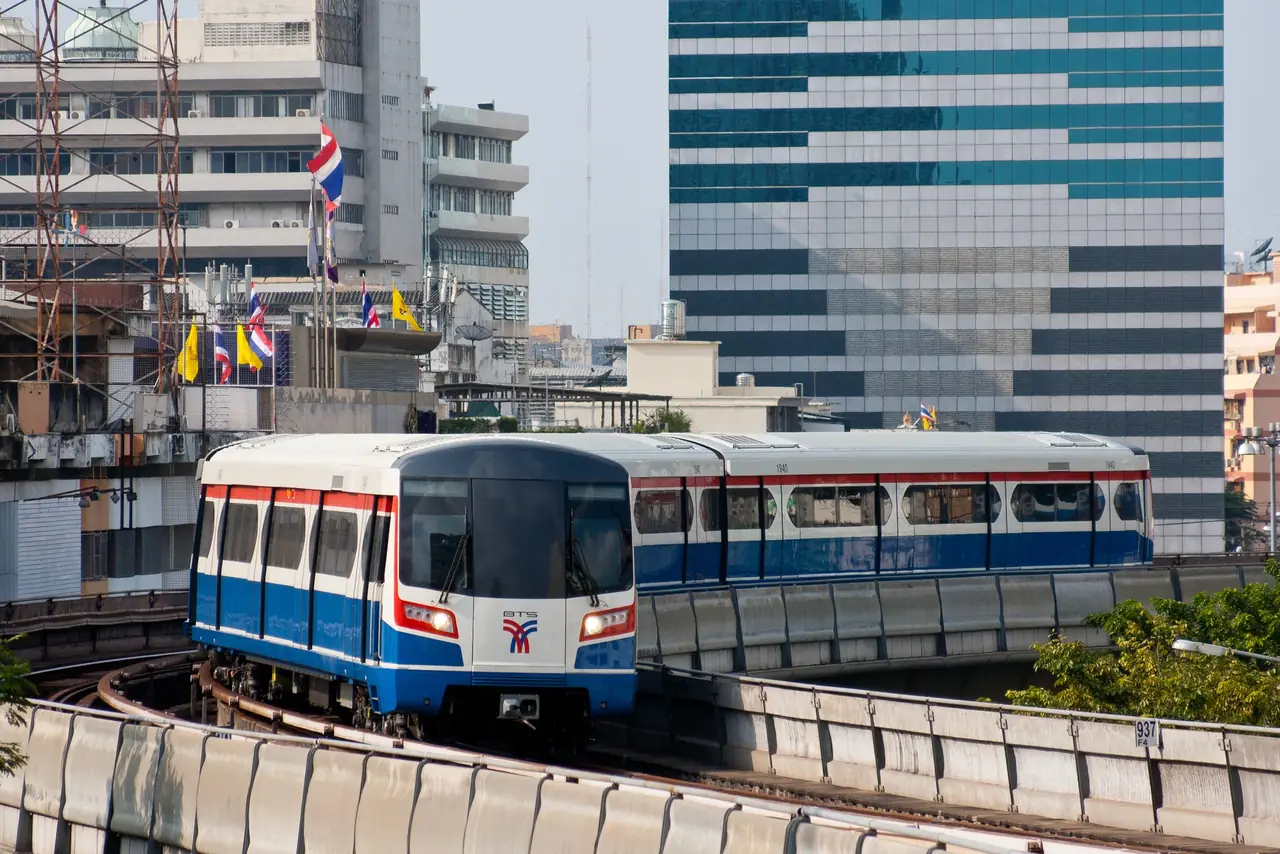
| BTS Sukhumvit Line | Khu Khot in the north through Mo Chit, Siam, Asok and Phrom Phong to Kheha in the east | Rabbit card or single-journey ticket |
| BTS Silom Line | National Stadium and Siam, then Sala Daeng, Chong Nonsi and Saphan Taksin to Bang Wa | Same |
| MRT Blue Line | A loop through Hua Lamphong, Sam Yan, Silom, Sukhumvit, Chatuchak and Bang Sue | Contactless card or token |
| MRT Purple Line | Northwest to Nonthaburi | Same |
| Airport Rail Link | Suvarnabhumi to Makkasan and Phaya Thai | Ticket from the station; check the fare chart |
| SRT Red Line | Bang Sue Grand Station towards Don Mueang and Rangsit, and towards Taling Chan | State Railway fare chart (adult fares listed on 2026-10-16 range from 12 baht for a short hop to 42 baht end to end) |
The BTS site also lists a Gold Line and refers to the Yellow and Pink lines; those are mainly suburban or short links and not needed for a typical visit. BTS says you can top up a Rabbit card at the MRT Yellow Line and Pink Line ticket offices, but check gate payment before relying on it.
How to pay
BTS: Rabbit card or single-journey ticket
A single-journey ticket is the simplest if you ride once or twice. You buy it at a ticket vending machine or ticket office, pick your destination, and the gate keeps it when you exit. It is good for the day of purchase only. If you will ride several times a day, the Rabbit card saves you queuing: pay the 120 baht issue fee, then add stored value of at least 100 baht. BTS says added value stays valid for two years from the last transaction. BTS also lists top-up through the My Rabbit app, but its instructions route payment through a mobile banking app, which may not suit visitors without a Thai bank app, so for a short stay a counter or machine top-up is the easier route.
A one-day pass costs 150 baht and works on the BTS Green Line only. As our own arithmetic from the official numbers, it pays for itself from the fourth ride if every trip costs the 47 baht maximum, but only from the ninth ride if each trip costs 17 baht, so it suits heavy sightseeing days, not a normal day.
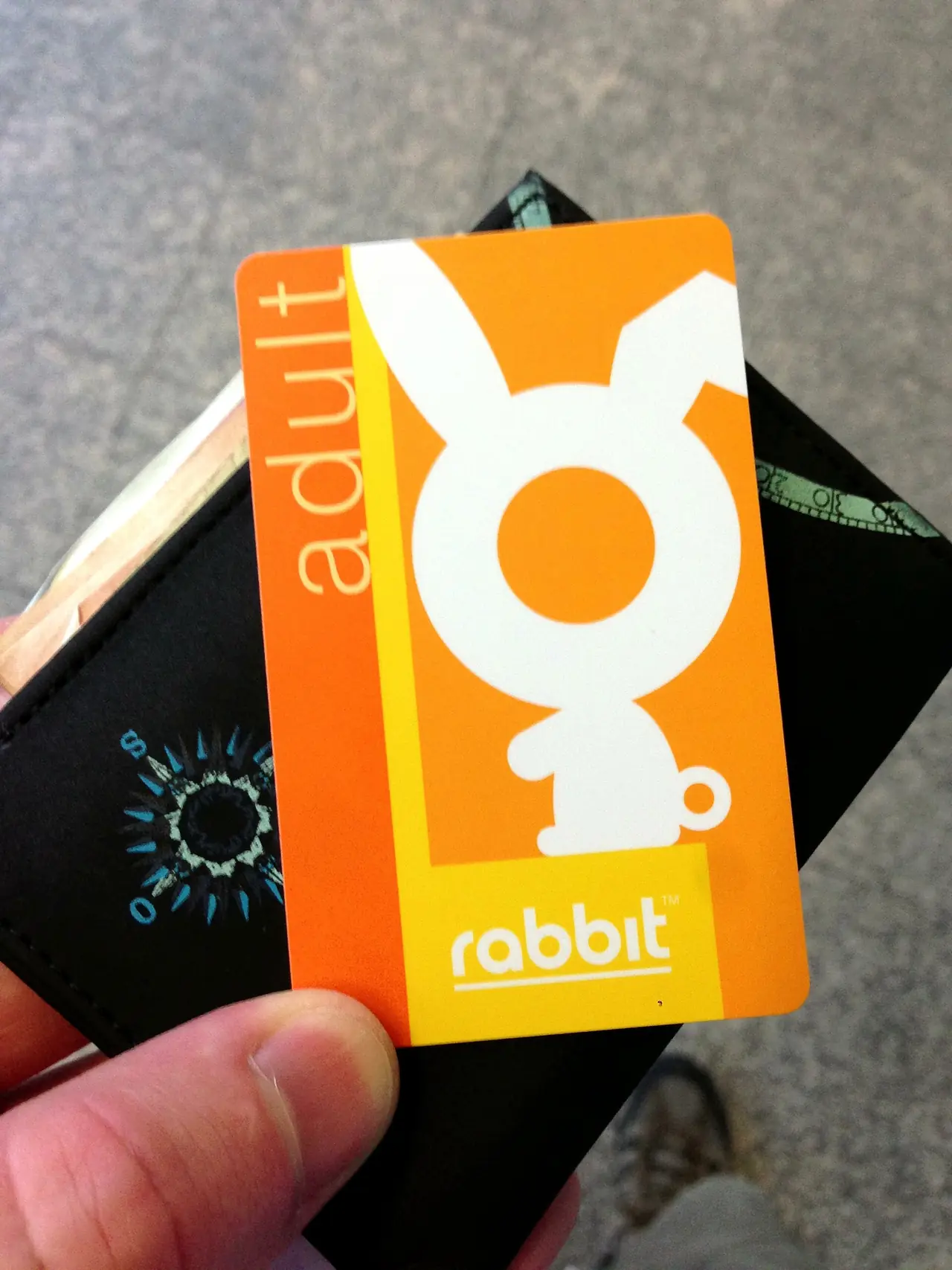
BTS does not yet take contactless bank cards at its gates. Pattaya Mail reported a target date of 1 January 2027 for an EMV joint-fare scheme on the Green Line, but we could not find that date on an official BTS or government page, so plan on a Rabbit card or tickets for now.
MRT: contactless card or token
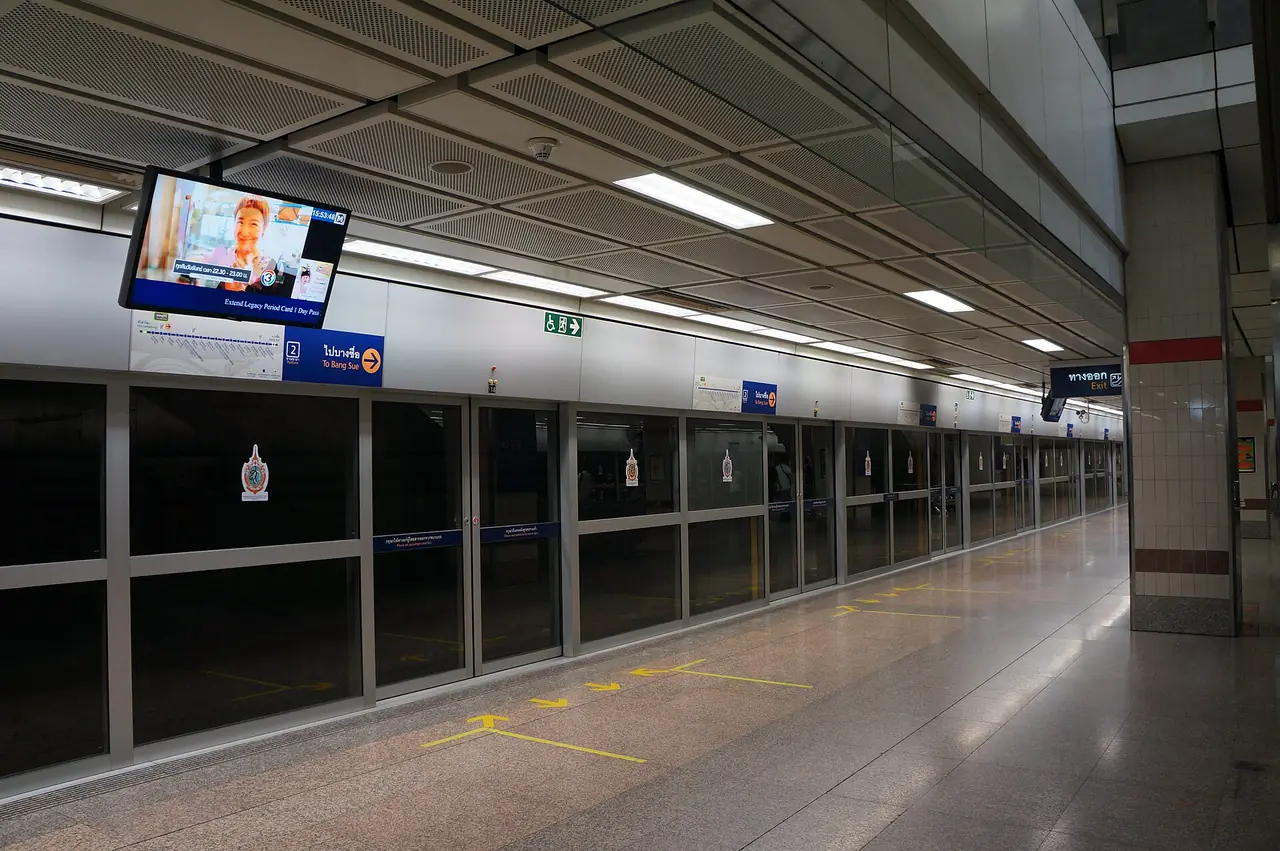
BEM's own ticket page lists two ticket types for the Blue and Purple Lines: a single-journey token and the MRT EMV Card. Its EMV page says that contactless cards bearing the EMV contactless logo, issued by any bank, can pay fares on both lines. In practice that means a Visa or Mastercard with the contactless symbol is enough: tap at the gate, tap again on exit, and use the same card both times. Your bank may add a foreign-transaction fee, so check that before you rely on it for a week of daily rides. If your card has no contactless logo, buy a token at the station.
Operating hours and busy times
The BTS timetable page lists service hours of 05:00 to 01:00. On weekdays the shortest gaps are 07:00-09:00 and 17:00-20:00, which are also the busiest periods, so a full train with luggage is the main thing to avoid. If you need the last train, remember that the last departure from Siam to all stations is about 00:02, and that some outer stations have earlier last trains. After midnight, plan for a taxi or ride-hailing app (see Bangkok airport to the city for how late arrivals work).
Interchanges and common trips
BTS and MRT are separate systems with separate gates, so changing between them means leaving one and entering the other, and paying each fare. Station names differ across the systems, so follow the signs rather than the map colours.
| From | Change at | Notes |
|---|---|---|
| BTS Sukhumvit Line to MRT Blue Line | Asok (BTS) and Sukhumvit (MRT); Mo Chit (BTS) and Chatuchak Park (MRT) | Walkways link the stations |
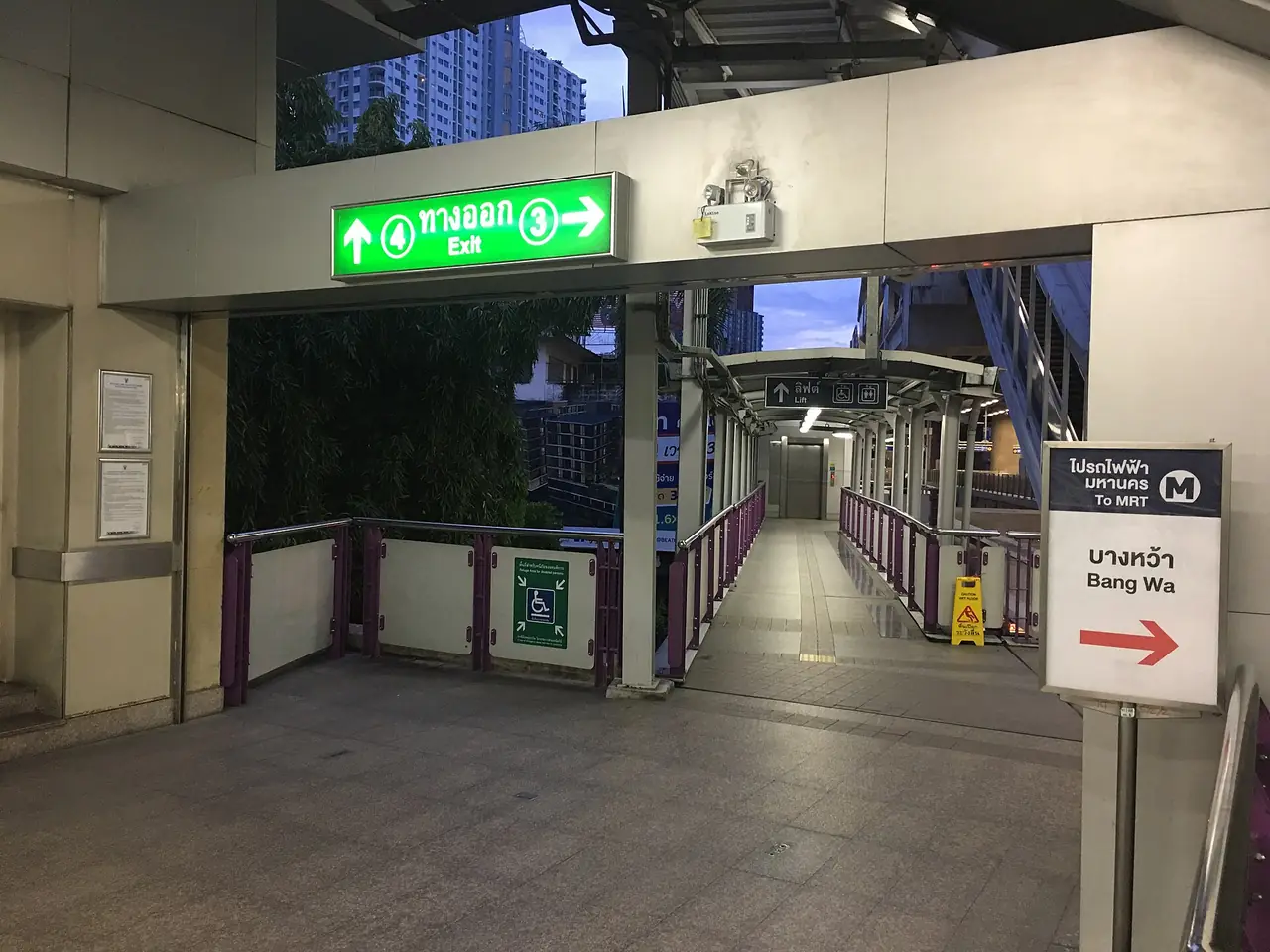
| BTS Silom Line to MRT Blue Line | Sala Daeng (BTS) and Si Lom (MRT); Bang Wa (BTS) and Bang Wa (MRT) | Bang Wa has a covered transfer corridor |
| BTS to Airport Rail Link | Phaya Thai (both) | Walk between stations |
| MRT Blue Line to Airport Rail Link | Phetchaburi (MRT) and Makkasan (ARL) | Check signs for the walkway |
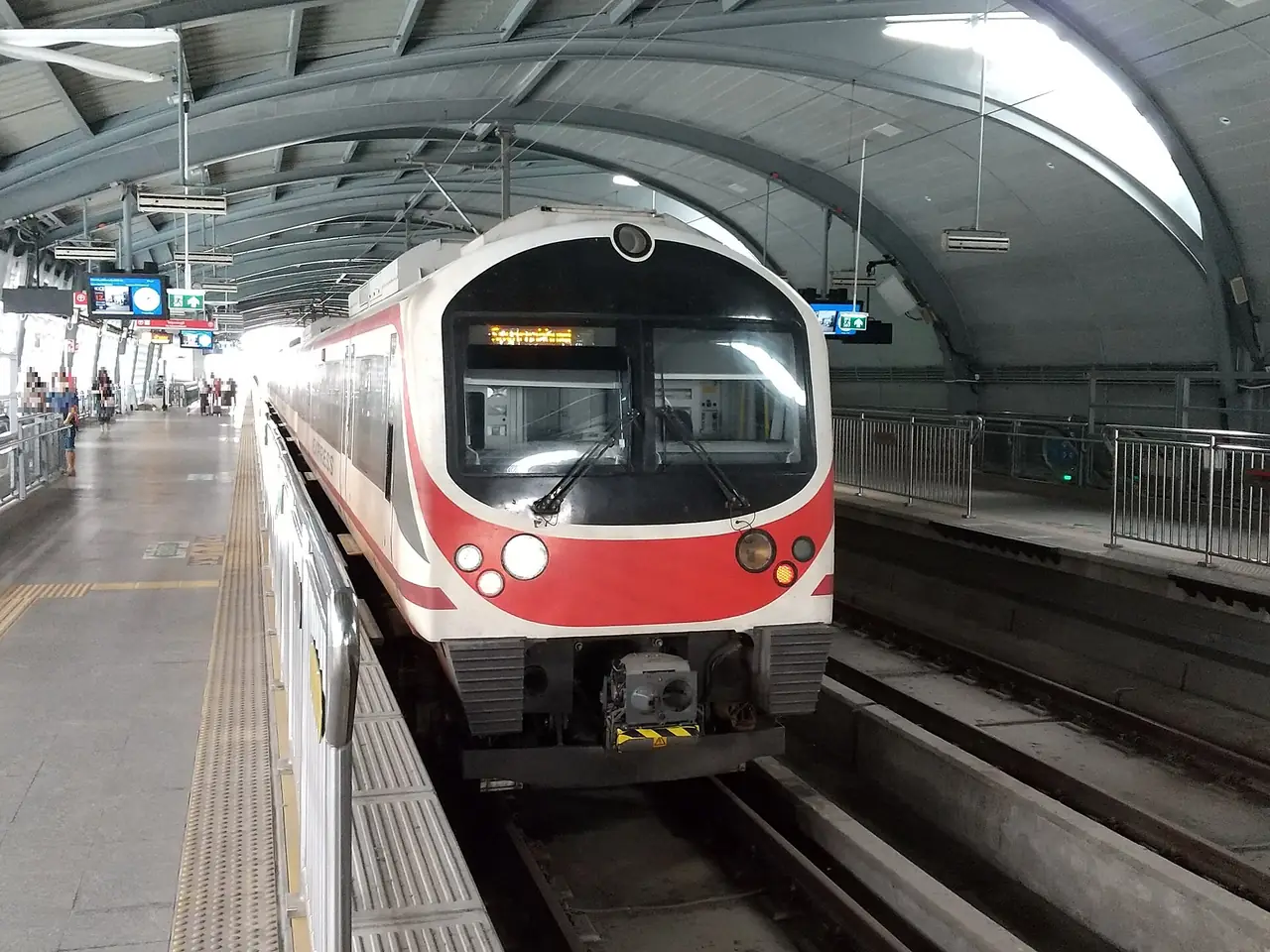
| Blue Line or Red Line | Bang Sue (Blue Line) and Bang Sue Grand Station (Red Line) | Used for Don Mueang |
Useful trips for first-time visitors:
- Grand Palace and Wat Pho: MRT Sanam Chai, then walk (see the Grand Palace guide).
- Wat Arun and the river: BTS Saphan Taksin, then the express boat (see the Wat Arun guide).
- Chinatown food: MRT Wat Mangkon (see Bangkok street food and Yaowarat).
- Chatuchak Weekend Market: BTS Mo Chit or MRT Chatuchak Park (see the Chatuchak guide).
- Siam shopping malls: BTS Siam, the interchange between the two BTS lines.
From the airport
At Suvarnabhumi the Airport Rail Link station is on Level B1 of the main terminal, and Airports of Thailand lists its hours as 05:30 to 24:00. The line runs to Makkasan and Phaya Thai, where you can change to the BTS or, at Makkasan, walk to the MRT. We could not find a current ARL fare table on an official page we could read, so use the chart at the station; our airport to city guide quotes an approximate 15 to 45 baht and compares taxis and buses. Don Mueang has no direct link to the BTS: the guide above covers the Red Line and buses. For onward trips out of Bangkok, see intercity transport.
Costs at a glance
| Item | Amount | Source |
|---|---|---|
| Rabbit card issue fee | 120 baht, no deposit | BTS, 2026-10-16 |
| Minimum top-up and maximum balance | 100 baht and 4,000 baht | BTS |
| Single-journey ticket | 17 to 47 baht | BTS |
| One-day pass (Green Line) | 150 baht | BTS (Thai page) |
| MRT Blue Line fare | 17 to 45 baht on BEM's page (to 2 July 2026); 17 to 44 baht reported from 3 July 2026 | BEM; Nation Thailand |
| BTS maximum including extensions | 65 baht | BTS Xtreme Savings page |
All amounts above are as of 2026 and can change by announcement. Check the operator's page or the station fare chart before you pay.
Tips and cautions
Tap in and out with the same method. If you pay with a bank card on the MRT, use that card on both taps,.
- Rush hour and luggage. Keep bags in front of you and step aside after the gate; weekday peaks are busy.
- Walking and heat. Many interchanges are covered walkways, but some are long; allow extra time with luggage.
- Scams. Tuk-tuk or taxi touts sometimes say a sight is closed; the rail network avoids this. See Thailand safety, scams and health.
- Phone data. Maps and operator apps are easier with a local plan; see eSIM versus SIM.
- Emergency numbers. 191 police, 1669 medical, 1155 Tourist Police.
Planning around the trains
If you are choosing a hotel, being within a short walk of a station saves more time than a cheaper room far away, so read where to stay in Bangkok. For routes built around the rail network, use the Bangkok 3-day plan and the best time to visit Bangkok. For temples and river transport, see temples and Chao Phraya cruises compared, Bangkok attraction tickets and Bangkok day trips. Country-wide, getting around Thailand and Thailand budget per day give the larger picture, and the Bangkok hub lists every guide.
The booking box on this page opens the Klook Bangkok airport transfer page: it is a Suvarnabhumi car transfer, not a train or metro ticket. We have no registered affiliate link for BTS or MRT passes, and those are bought at the station or in the operator's app, so there is nothing to book in advance.
FAQ
How do I pay for the BTS as a tourist?
Buy a single-journey ticket at the station, or a Rabbit card (120 baht issue fee, no deposit, minimum top-up 100 baht) if you will ride several times. BTS does not yet accept contactless bank cards at its gates.
Can I use a credit card on the MRT?
Yes on the Blue and Purple Lines. BEM's official page says contactless Visa or Mastercard cards with the EMV logo can pay fares. Use the same card to tap in and out, and check your bank's foreign-transaction fee.
How much does the BTS cost?
BTS's own single-journey page gives 17 to 47 baht per journey on the original network. Journeys that include the extension lines can cost more, with 65 baht named as the maximum on BTS's Xtreme Savings page. Check the fare chart at the station.
What time do the BTS and MRT stop running?
The BTS timetable lists service hours of 05:00 to 01:00, with the last train from Siam to all stations at about 00:02. For the MRT, use BEM's per-station timetable, because MRTA's Blue Line page gives only a general 06:00 to midnight.
Does the BTS go to the airport?
No. Take the Airport Rail Link from Suvarnabhumi (Level B1, 05:30 to 24:00 per Airports of Thailand) to Phaya Thai, then change to the BTS. Don Mueang has no BTS link.
Is a one-day pass worth it?
The 150 baht pass covers the BTS Green Line only. It pays off only if you ride many times in a day; for most visitors a Rabbit card or single tickets cost less.
Which line goes to Chinatown?
The MRT Blue Line to Wat Mangkon station, then walk to Yaowarat Road. See our Yaowarat street food guide.
Official sources and further reading
- BTS Skytrain: Single Journey Card
- BTS Skytrain: How to purchase a Rabbit card
- BTS Skytrain: Timetable and service intervals
- BTS Skytrain: Structure and stations
- BEM (MRT Blue and Purple Lines): Ticket types
- BEM (MRT Blue and Purple Lines): EMV Contactless
- Mass Rapid Transit Authority of Thailand: EMV contactless announcement
- Airports of Thailand: Suvarnabhumi transport
Prices, schedules and entry rules change. Figures here are approximate as of 2026; always confirm on the official or operator page before you book. Spotted something out of date? Tell us.