Isaan covers roughly a third of Thailand and is the country's largest region by area, yet receives far fewer foreign visitors than the beaches and the north. That is part of the appeal: markets, temples and festivals that feel local, a cuisine built on grilled meats, sticky rice, larb and papaya salad, and landscapes that range from rolling plateau and forested hills to the broad Mekong. This hub gives a general overview; for a route-based plan, see the Isaan travel guide and the Thai-language Isaan highlights.
Getting there from Bangkok
Transport changes often; check each operator on the day (as of 2026).
- Train: Northeastern lines from Bangkok run to Nakhon Ratchasima (Khorat), Khon Kaen, Udon Thani, Nong Khai and Ubon Ratchathani, with sleeper options on some services. A high-speed rail link is under development, so check State Railway of Thailand for the current status.
- Bus and van: Frequent coaches leave from Bangkok's northeastern terminal (Mo Chit) to most provincial capitals; journey times are typically 4-10 hours.
- Flights: Domestic flights serve hubs such as Udon Thani, Khon Kaen, Ubon Ratchathani and Loei from Bangkok; check airline sites for current routes.
- Car: The region is well suited to a rental car because attractions are spread out, but distances are long. Roads are generally good on main routes.
Best time to visit
November to February is cooler and drier, with fields green after the rains and clear skies in the north-east. March to May is very hot. The rainy season (roughly June to October) brings greener scenery and some festivals, but also humidity and flooding in some areas. Some parks adjust access in the wet season; check with the park first. See Thailand best time by region.
Highlights by area
- Khao Yai and Nakhon Ratchasima (Khorat): Khao Yai National Park, part of a UNESCO-listed forest complex, offers wildlife viewing, trails and waterfalls, about 2-3 hours from Bangkok. Khorat is a hub for Khmer sites and food.
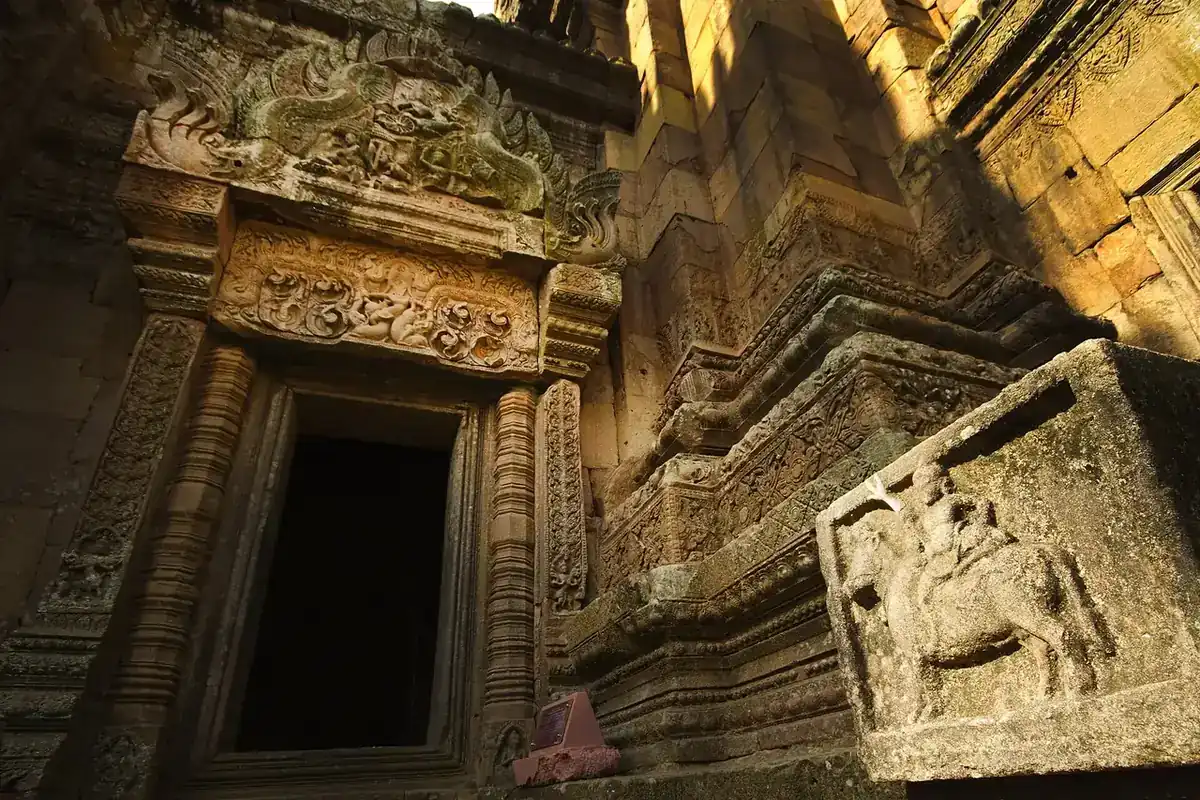
- Phimai: A Khmer-era temple complex within a historical park; often combined with Khorat.
- Khon Kaen: A university city and transport hub, useful for museums and a base for silk-weaving villages and regional food.
- Udon Thani and Ban Chiang: Ban Chiang is a prehistoric archaeological site on UNESCO's list, with a museum on early bronze-age communities. Red lotus lakes near Udon Thani bloom in the cool season, usually best at sunrise.
- Nong Khai and the Mekong: A relaxed riverside town with sunset views, markets, a bridge to Laos and the sculpture park of Sala Keoku.
- Ubon Ratchathani and Phu Chong Na Yoi: Ubon is known for its candle festival (typically July) and as a base for Pha Taem National Park and the Phu Chong Na Yoi area on the Thai-Lao-Cambodian border, where waterfalls and sunrise viewpoints draw visitors.
- Loei, Phu Kradueng and Chiang Khan: Cool-season mountains, hiking on Phu Kradueng (access is generally restricted in the rainy season; check the park) and the old wooden town of Chiang Khan along the Mekong.
Road distances between these places are long; plan a loop or choose two or three bases rather than trying to see everything.
Where to stay
- Khorat, Khon Kaen, Udon Thani and Ubon: Large cities with a good range of business and mid-range hotels, practical for transport and food.
- Nong Khai and Chiang Khan: Small riverside towns with guesthouses and boutique stays, good for slow travel.
- Khao Yai and Phu Kradueng: Resorts and park accommodation; book ahead in peak season and on weekends.
Sample budget
| Item | Approx. cost (THB) |
|---|---|
| Bangkok to a northeast city by bus | 300-900 one way |
| Train, sleeper or seat | 300-1,500 depending on class and route |
| Rental car per day | 900-1,800 plus fuel |
| Meal in a local restaurant | 50-250 |
| Guesthouse per night | 400-1,200 |
| Mid-range hotel per night | 1,200-3,000 |
| National park entry (foreigners) | Check the park; often in the low hundreds of baht |
Approximate, as of 2026; check current prices on each operator's own page.
Order dishes with a spice level you can handle. Phrases such as "mai phet" (not spicy) are widely understood, though local cooks may still go bold.
Many Isaan highways are long and straight, and drivers can get fatigued. Plan rest stops, avoid night driving in rural areas and check fuel before long stretches.
Some border areas have temporary closures or restrictions that change. If you plan to visit near the border with Cambodia or Laos, check current official travel advice first.
Neighbouring destinations
- Bangkok: The main gateway; see getting around.
- Chiang Mai: Pair Isaan with the north via Loei or Phitsanulok.
- Ayutthaya: A historic stop between Bangkok and the northeast.
- Thailand overview: Country-wide planning.
Safety basics
Emergency numbers are 191 (police), 1669 (medical emergency) and 1155 (Tourist Police). Choose licensed transport, wear helmets on motorbikes and keep travel insurance. Heat and sun can be intense in the hot season.
FAQ
How many days do I need for Isaan?
Four to five days covers Khorat, Khao Yai and Phimai; ten days allows a loop through the Mekong towns, Ubon and Loei.
What is Isaan food known for?
Papaya salad (som tam), grilled chicken, larb, sticky rice and fermented sausages are typical regional dishes. Spice levels can be high, so ask for milder preparation.
Is Isaan good for first-time visitors to Thailand?
It suits travellers who want culture and local life rather than beaches. Plan transport carefully, since public transport can be sparse outside cities.
Can I visit Isaan in the rainy season?
Yes, but check access to national parks and expect afternoon storms. Some trails and viewpoints may be closed.
Do I need a car?
Not essential for city-to-city travel, but helpful for Khao Yai, Phimai, Loei and rural sights.
Official sources and further reading
Prices, schedules and entry rules change. Figures here are approximate as of 2026; always confirm on the official or operator page before you book. Spotted something out of date? Tell us.