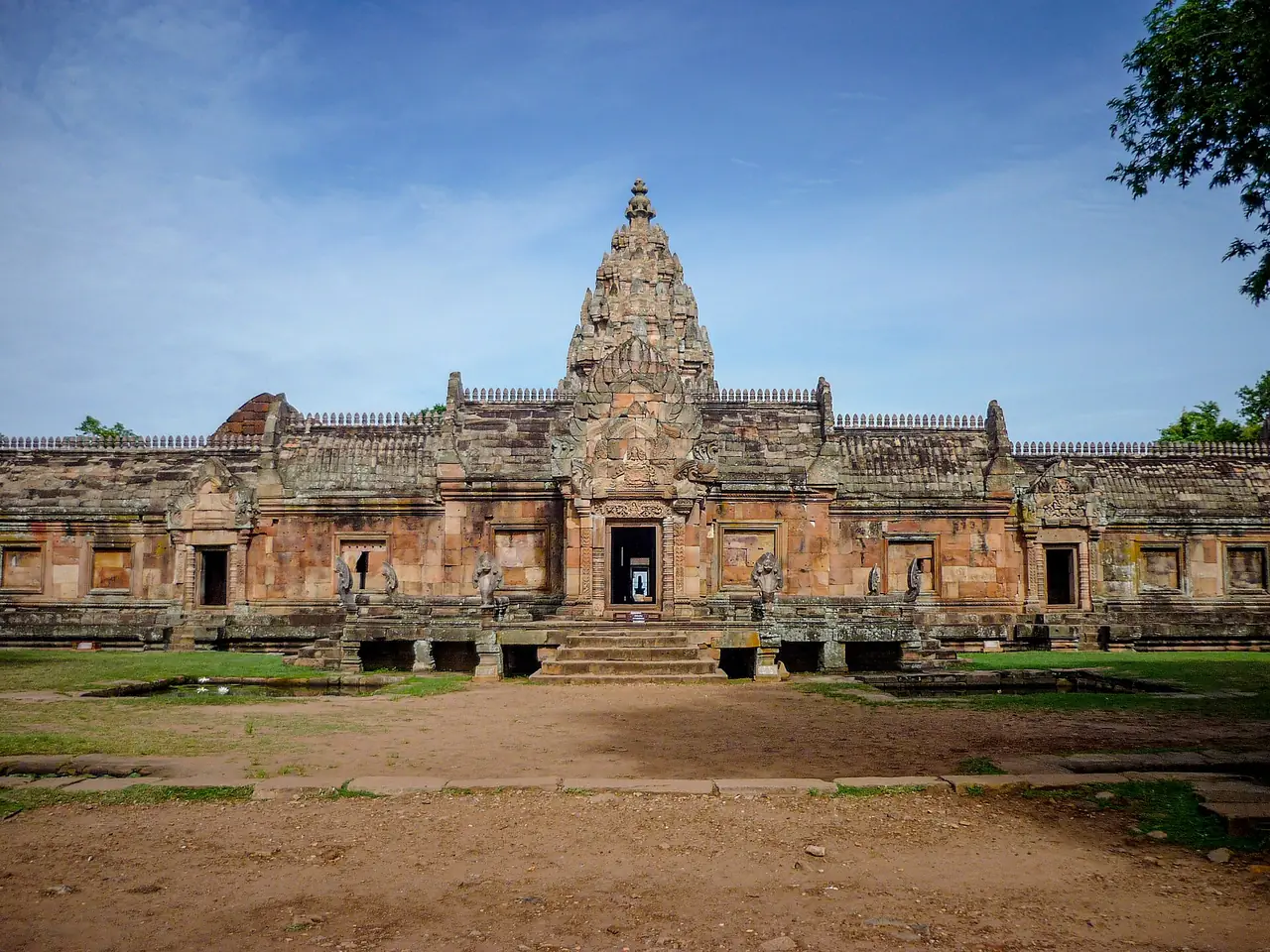
Phanom Rung and Phimai are the two great Khmer stone temples of northeast Thailand, and the Fine Arts Department runs both as historical parks. The short answer: Phanom Rung (Buriram) is open 06:00 to 18:00 and Phimai (Nakhon Ratchasima) 07:00 to 18:00, every day including public holidays, and each charges foreigners 100 baht and Thais 20 baht. Phanom Rung is the one to see for its hilltop setting and the sunrise alignment, Phimai is the easier one to reach, and if you have a car and two days you can do both.
We read the Department's own park pages on 2026-10-16. They are clear and agree with each other, but many blogs still print other numbers (40, 150 or 200 baht), so the table below shows the official figure and where it comes from.
Verified facts
| Item | Phanom Rung | Phimai | Source |
|---|---|---|---|
| Hours | 06:00-18:00 every day, including public holidays | 07:00-18:00 every day, including public holidays | Fine Arts Department park pages, 2026-10-16 |
| Foreigners | 100 baht; 150 baht combined ticket with Prasat Muang Tam | 100 baht | Fine Arts Department |
| Thais | 20 baht; 30 baht combined ticket with Muang Tam | 20 baht | Fine Arts Department |
| Free entry | Monks and novices, uniformed or ID-carrying students, disabled visitors, war veterans with an official card | Uniformed students, monks, veterans, people aged 60 and over, disabled visitors | Fine Arts Department |
| Parking | Free in the large car park at the front; vehicles that enter through Gate 3 behind the temple pay (car 50 baht, motorbike 20 baht) | Free; the car park holds about 26 cars | Fine Arts Department |
| Guides and extras | Free guided tour and information centre, free Wi-Fi at the centre | Information centre; leaflets in six languages; student volunteer guides at weekends | Fine Arts Department |
| Size | 451 rai, 372 km from Bangkok | 2,658 rai, about 60 km northeast of Korat city | Fine Arts Department |
Fees and hours change. The figures above are the official ones as of 2026-10-16. Third-party sites still show 40, 150 or 200 baht for foreigners; we did not find an official source for those. Confirm at the ticket window on the day.
We did not find an official fee for the separate national museum in Phimai town, so check its hours and price when you get there.
Phanom Rung: the temple on the volcano
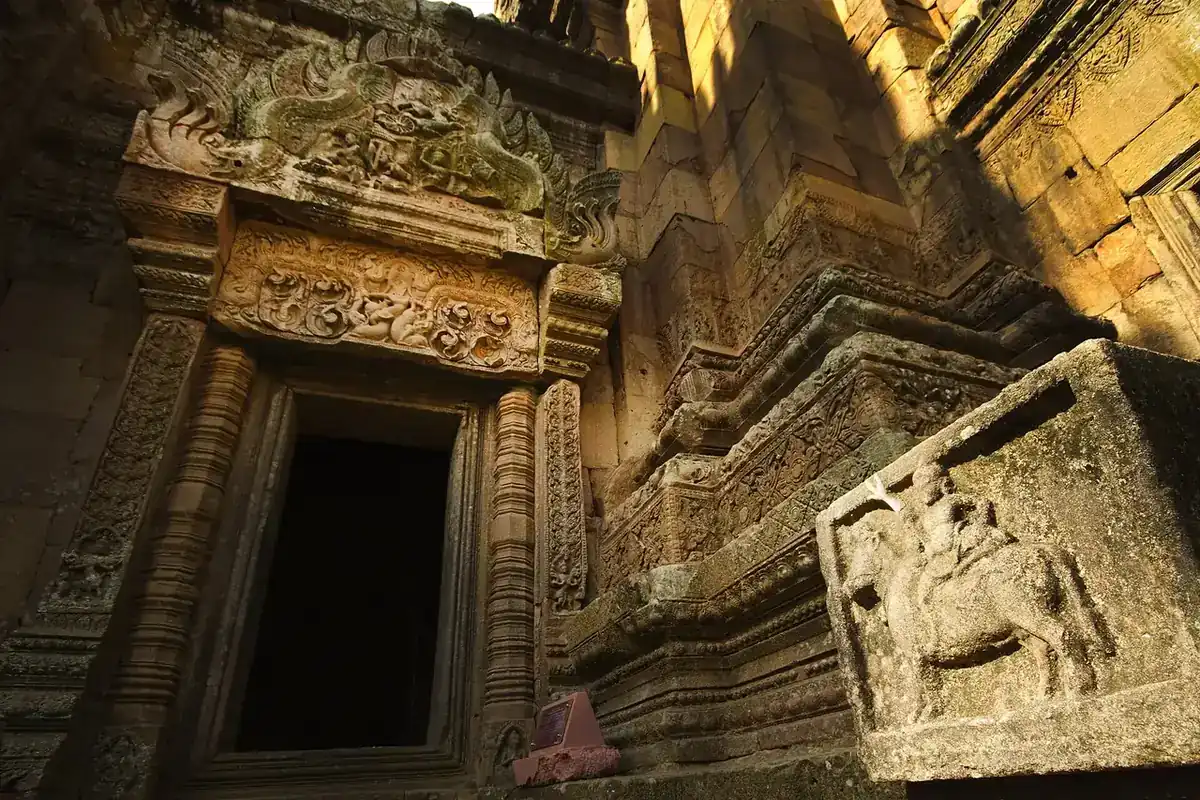
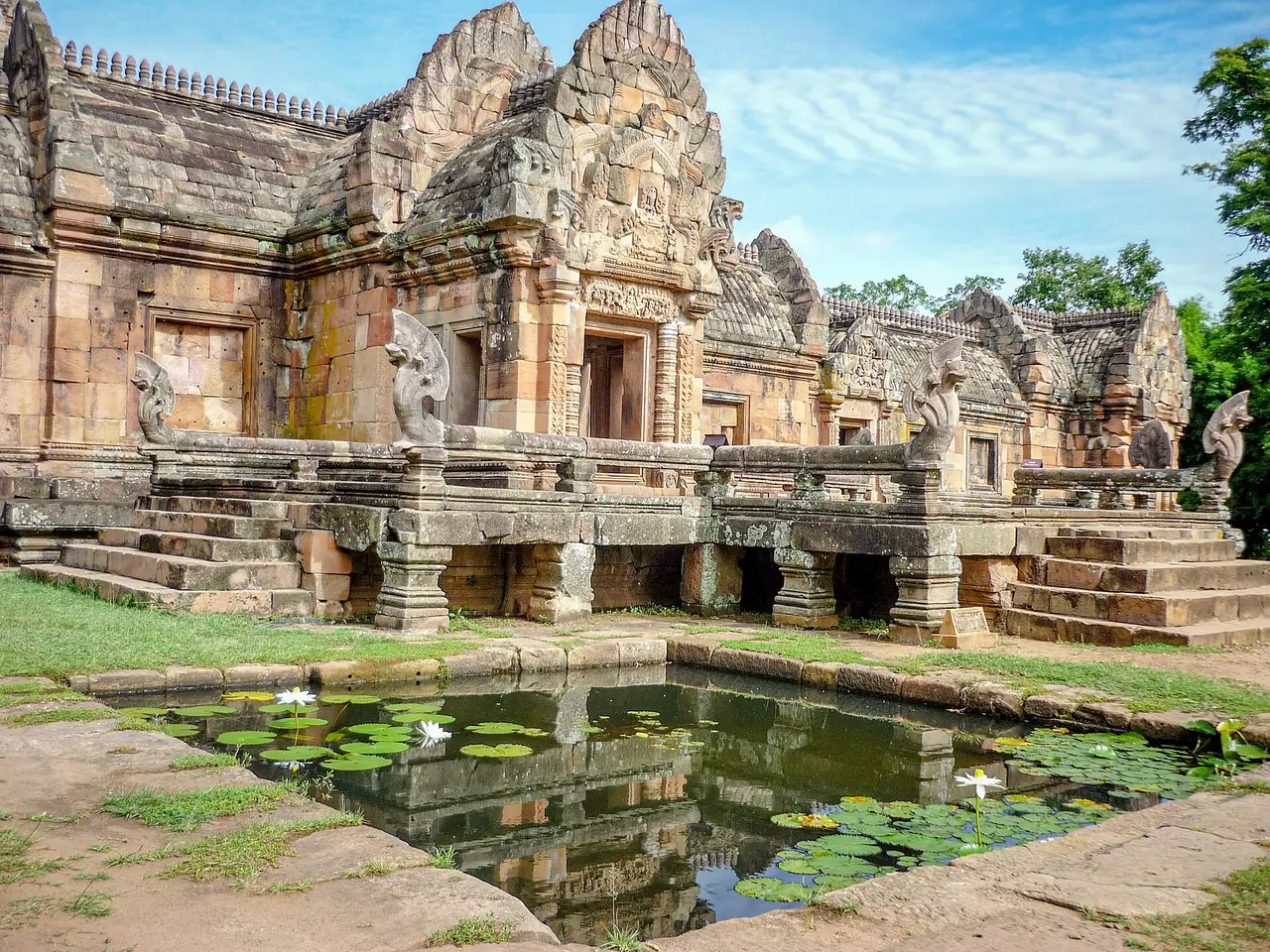
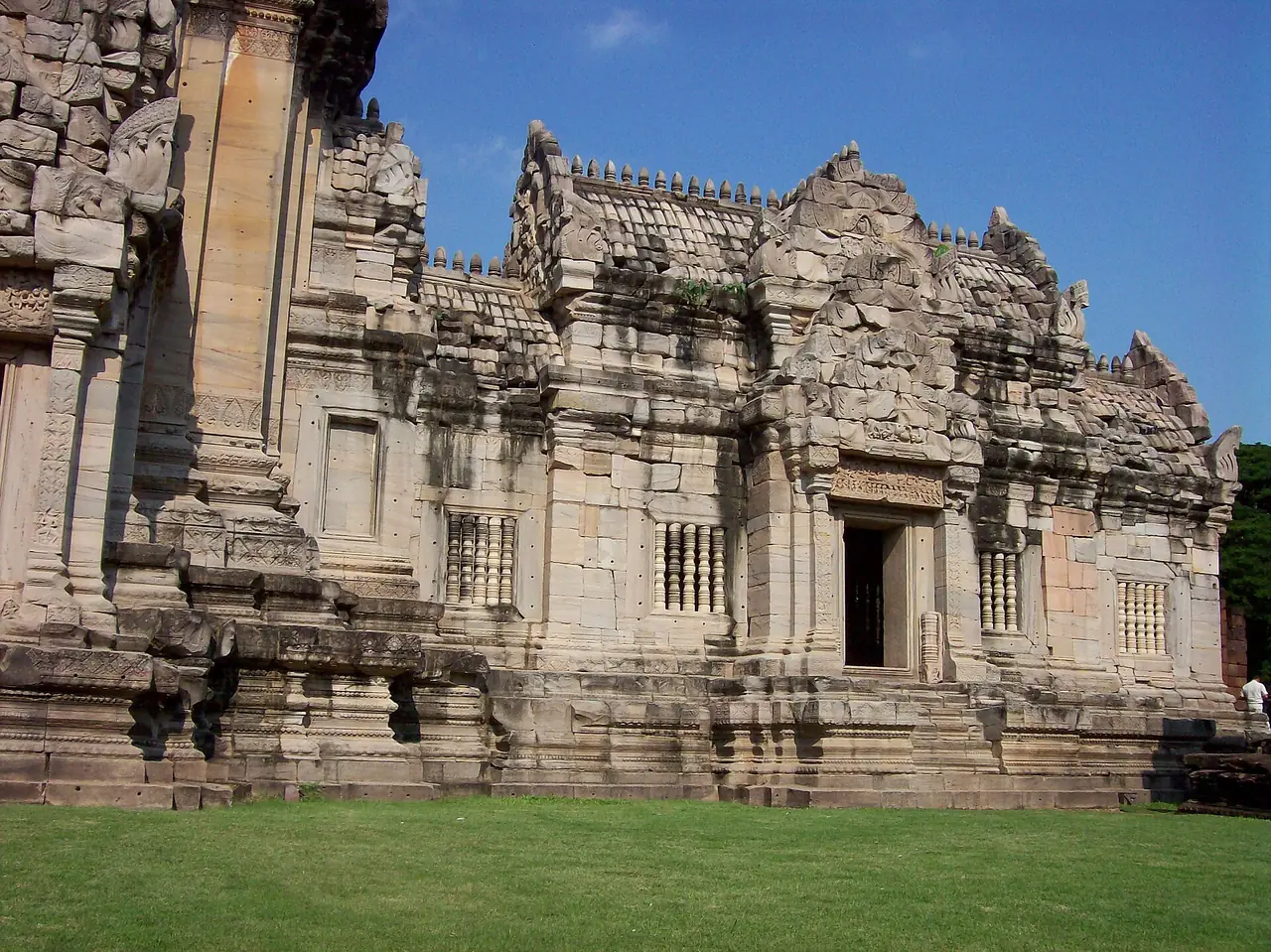
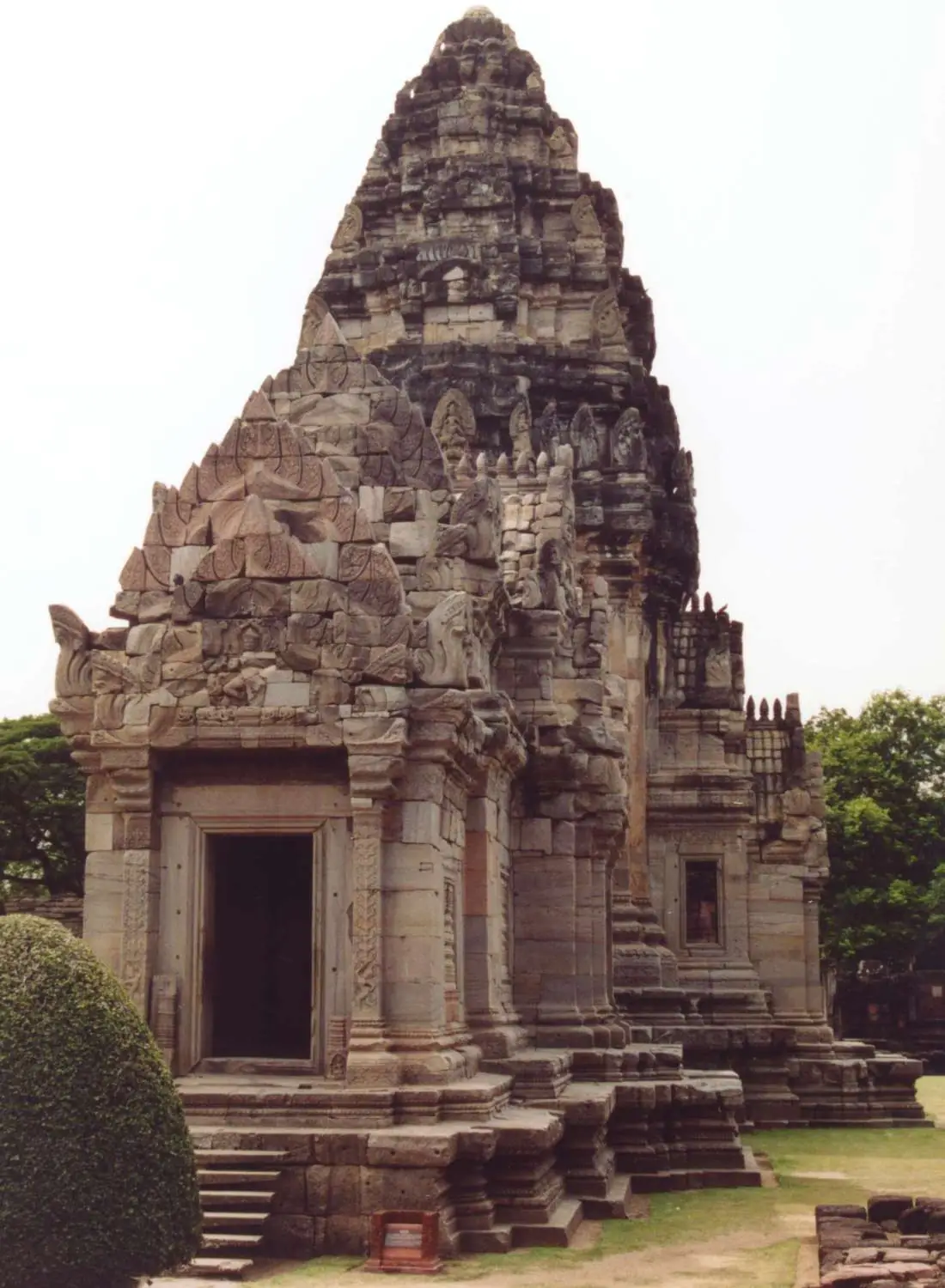
According to the Fine Arts Department, the park sits on the top of an extinct volcano in Ta Pek subdistrict, Chaloem Phra Kiat district, Buriram. Inscriptions and ruins show people lived here from about the 10th century CE. The central sanctuary was built in the 12th century as a Hindu temple to Shiva, mirroring Mount Kailash, and later became a Buddhist site. Wikipedia gives the whole build as the 10th to 13th centuries and notes that the Department spent 17 years restoring it, from 1971 to 1988, when Princess Maha Chakri Sirindhorn opened the park on 21 May 1988.
What to see, in order:
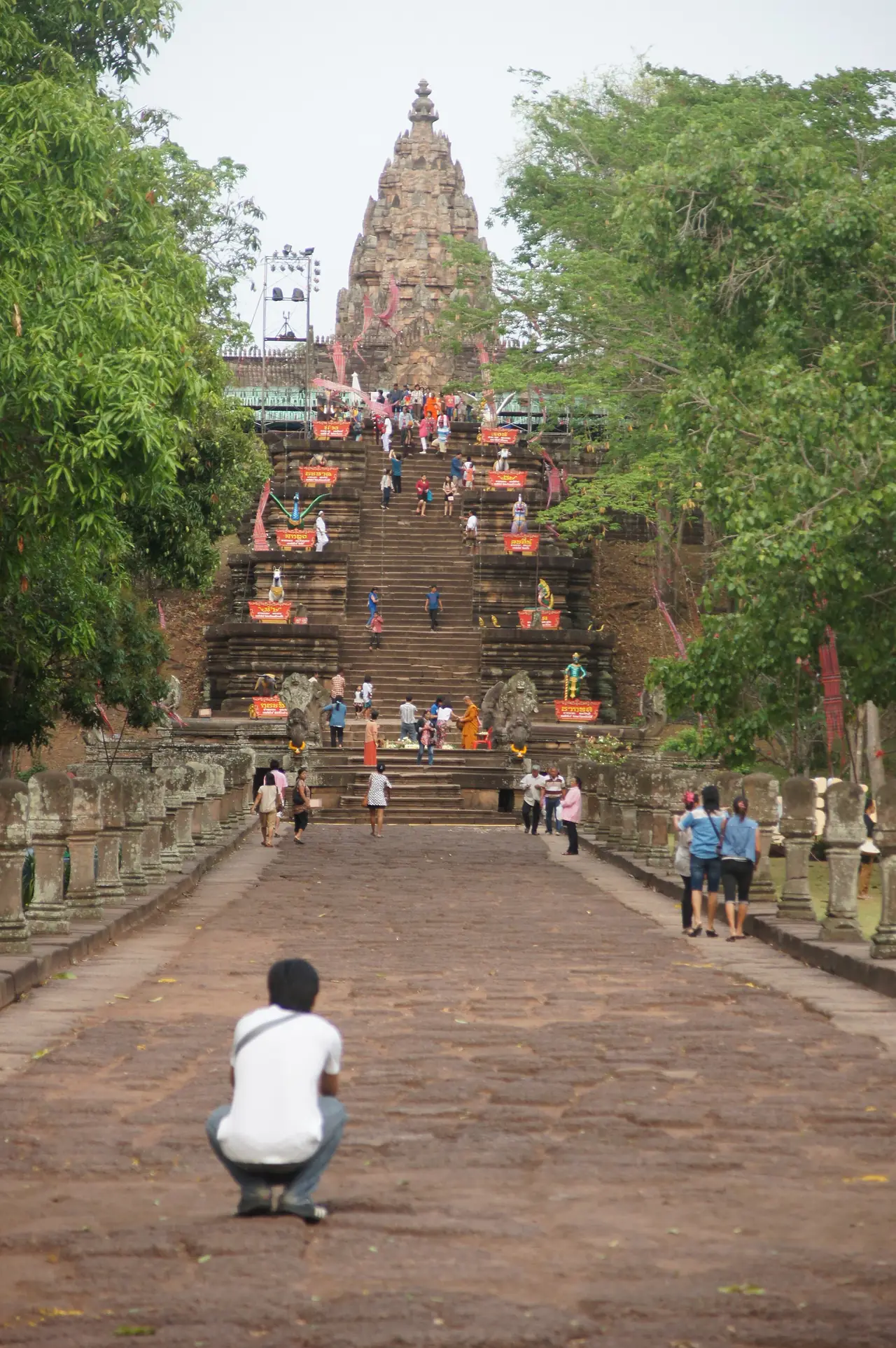
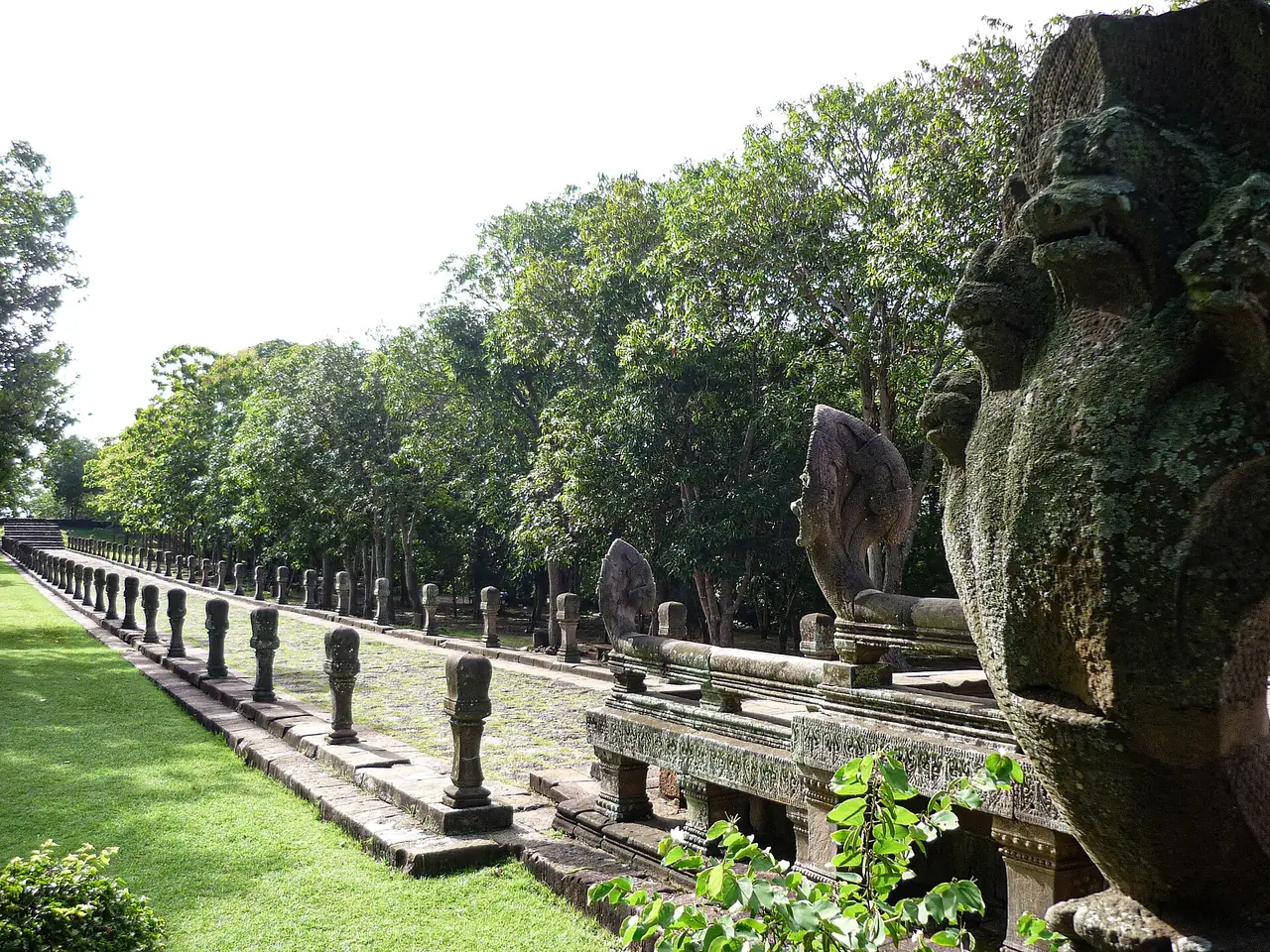
- The processional walkway. About 160 metres of laterite paving lined with seventy sandstone posts topped with lotus buds, according to the Department's and Wikipedia's descriptions.
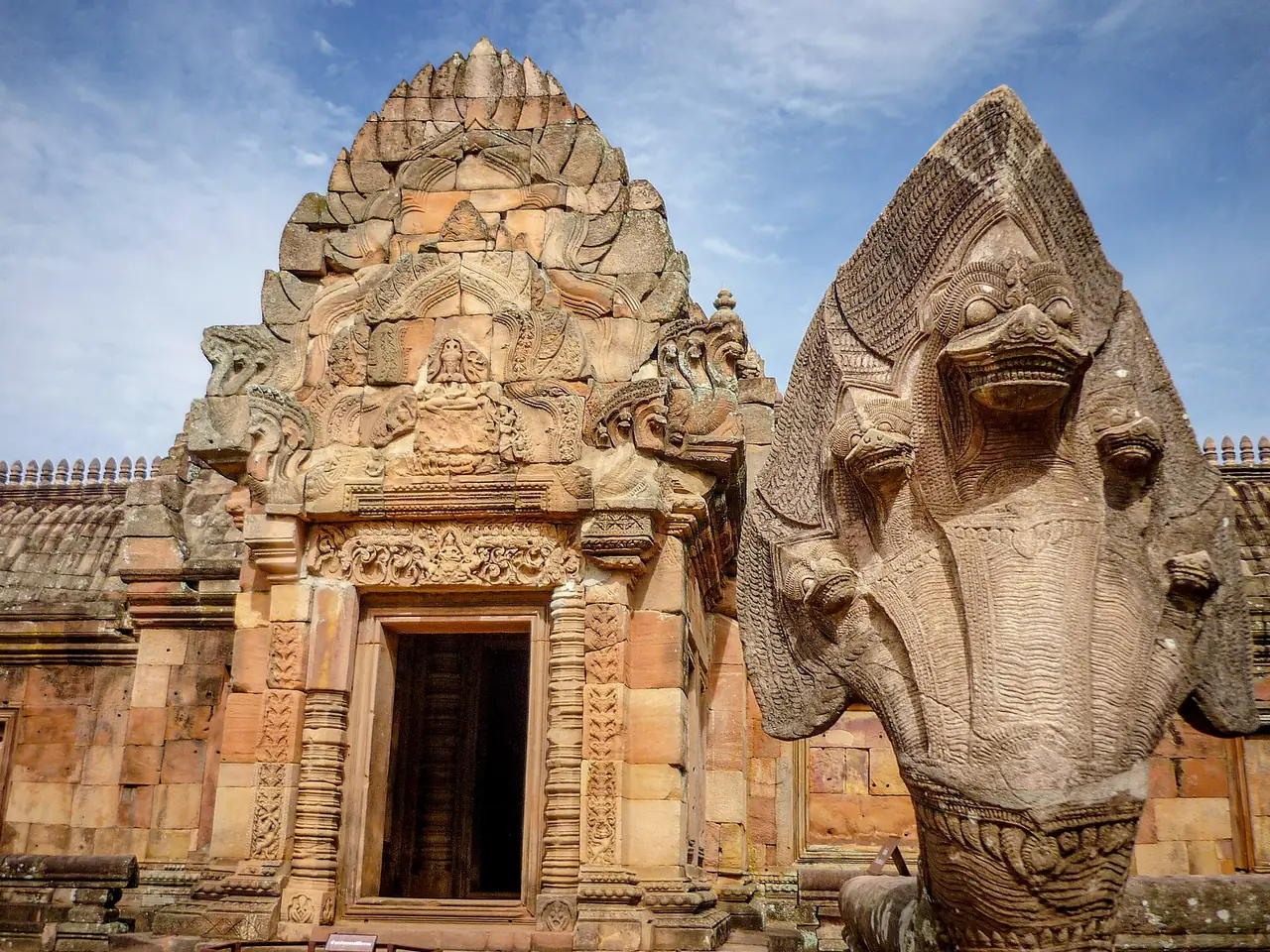
- The naga bridges and stairway. Five-headed naga balustrades mark the symbolic crossing from earth to heaven; lotus ponds sit beside the steps.
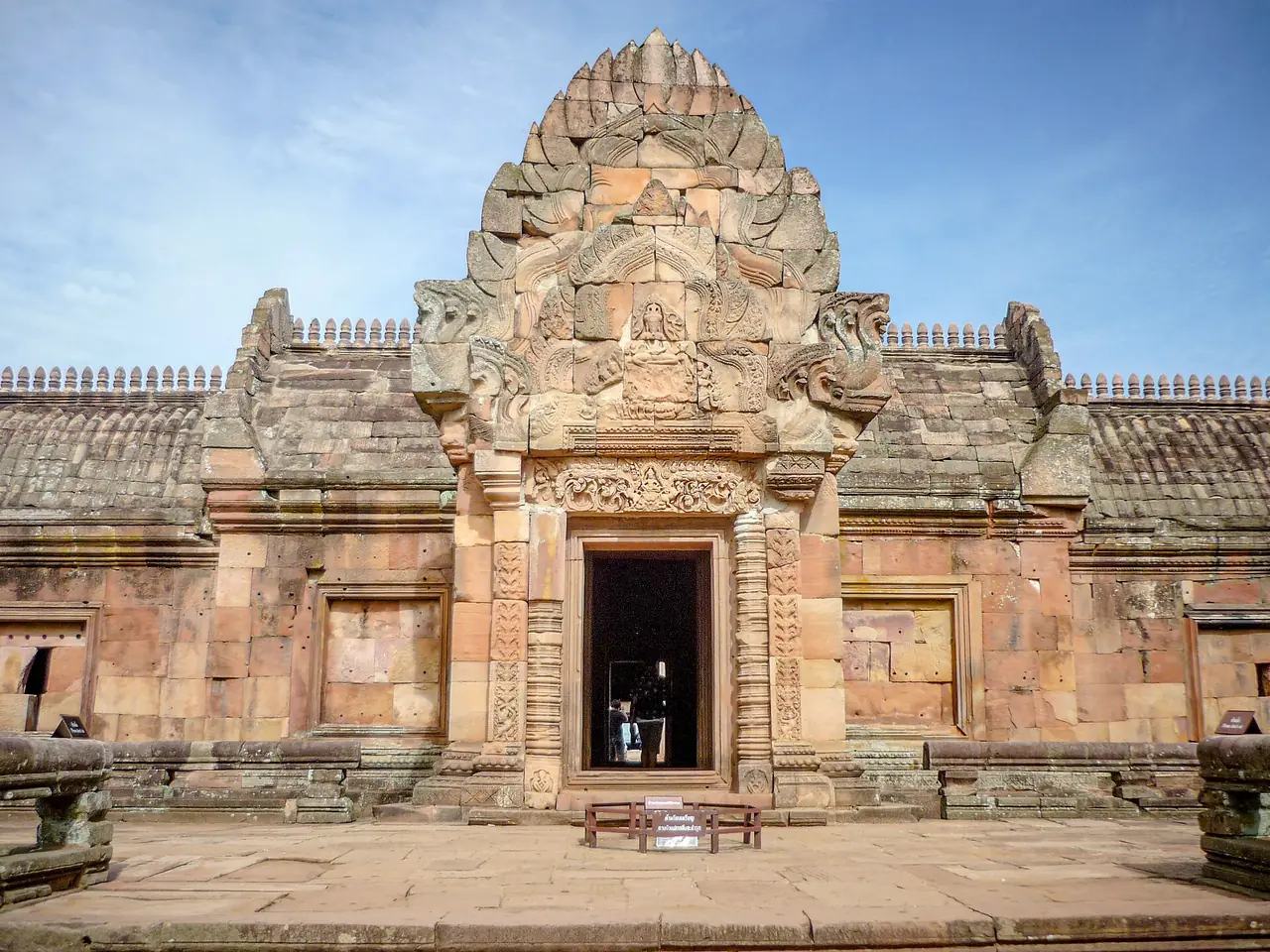
- The central sanctuary. A cross-shaped tower with porches in all four directions. Look at the lintels and pediments over each door.
- The Phra Narai lintel. Above the eastern doorway, a carving of Vishnu reclining on the cosmic serpent. It was taken from the site in the 1960s and turned up at the Art Institute of Chicago. After a public campaign it came home in November 1988 and went back in its place on 7 December 1988, per Wikipedia.
- The libraries and Hindu-Buddhist details. Two later brick libraries stand inside the compound.
The sunrise alignment
Thai media quote the park head saying the sun lines up with the 15 doorways of the temple only four times a year: sunrise on about 3-5 April and 9-11 September, sunset on about 5-7 March and 6-8 October. In 2025 more than 200 people gathered on 5 April, and cloud blocked a full view, which is a reminder that the weather decides. The next sunset window is in March 2027. A festival around the April sunrise brings processions, so crowds are large; Thairath reports visitors waiting from 05:30, so arrive early and confirm the dates with Buriram province, because they are quoted from a news report, not from the Department's page.
Prasat Muang Tam
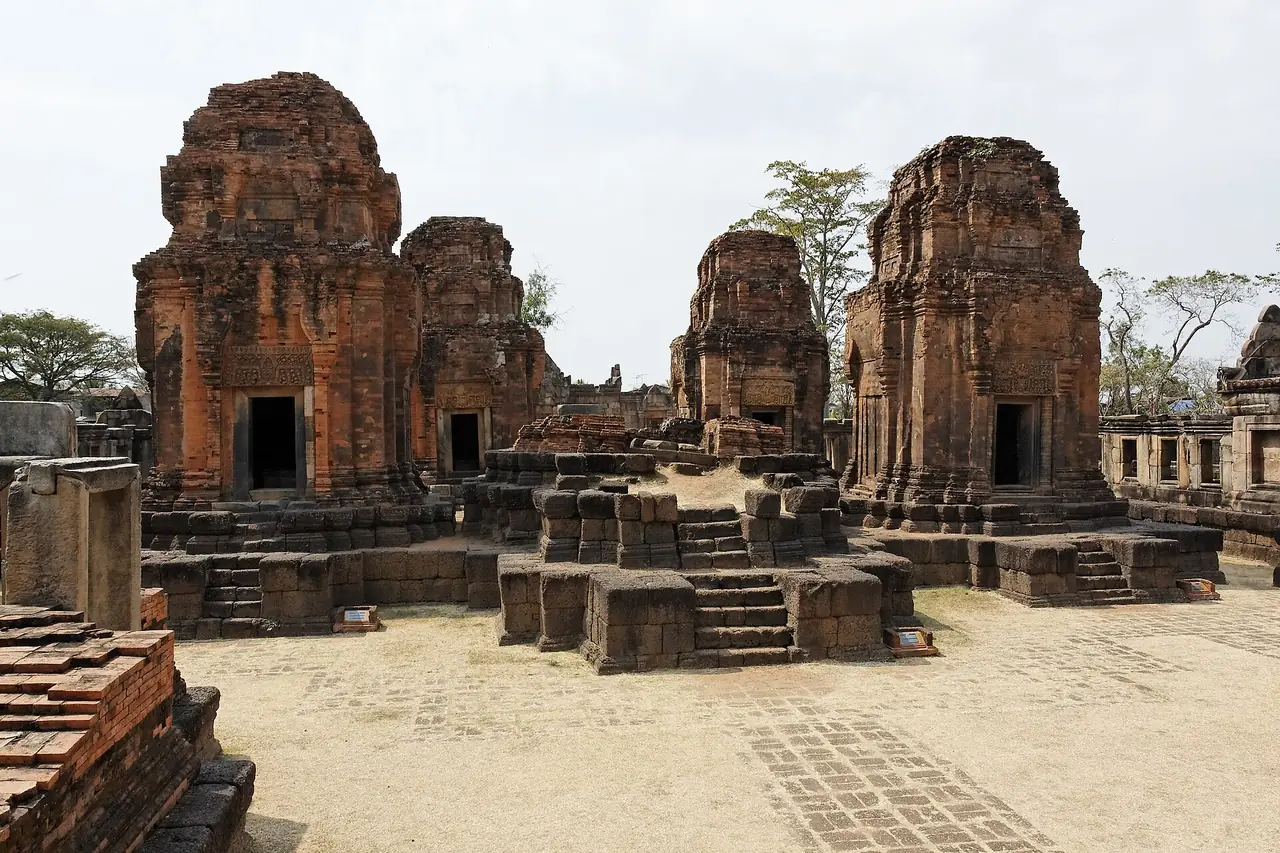
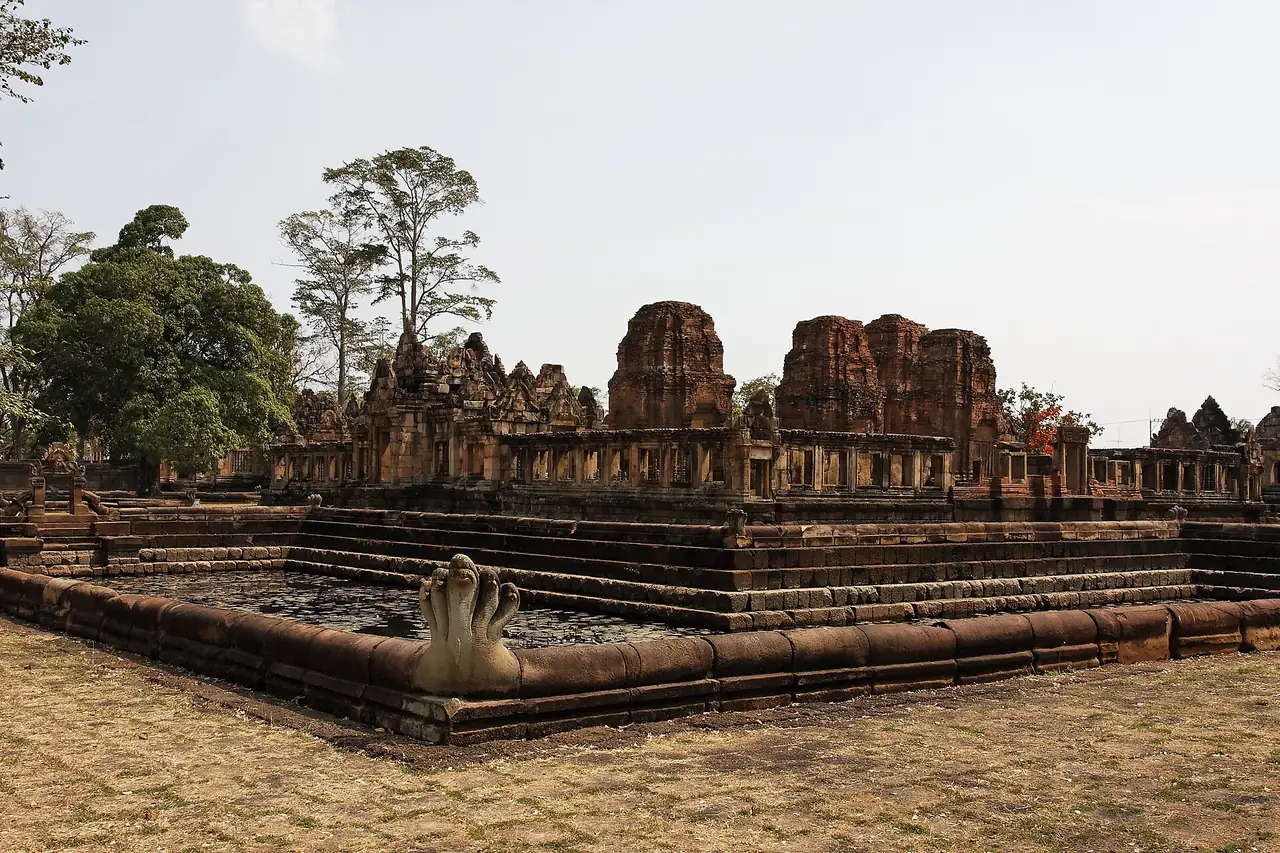
The combined 150 baht ticket also covers Prasat Muang Tam, a smaller Khmer temple at the foot of the mountain with a water-filled moat and four brick towers. It is cheap, takes about an hour and is worth adding if you are already there. Wikipedia notes that Phanom Rung, Muang Tam and the Plai Bat sanctuaries together were submitted to UNESCO in 2005 as a tentative World Heritage listing.
Phimai: the biggest Mahayana temple in Thailand
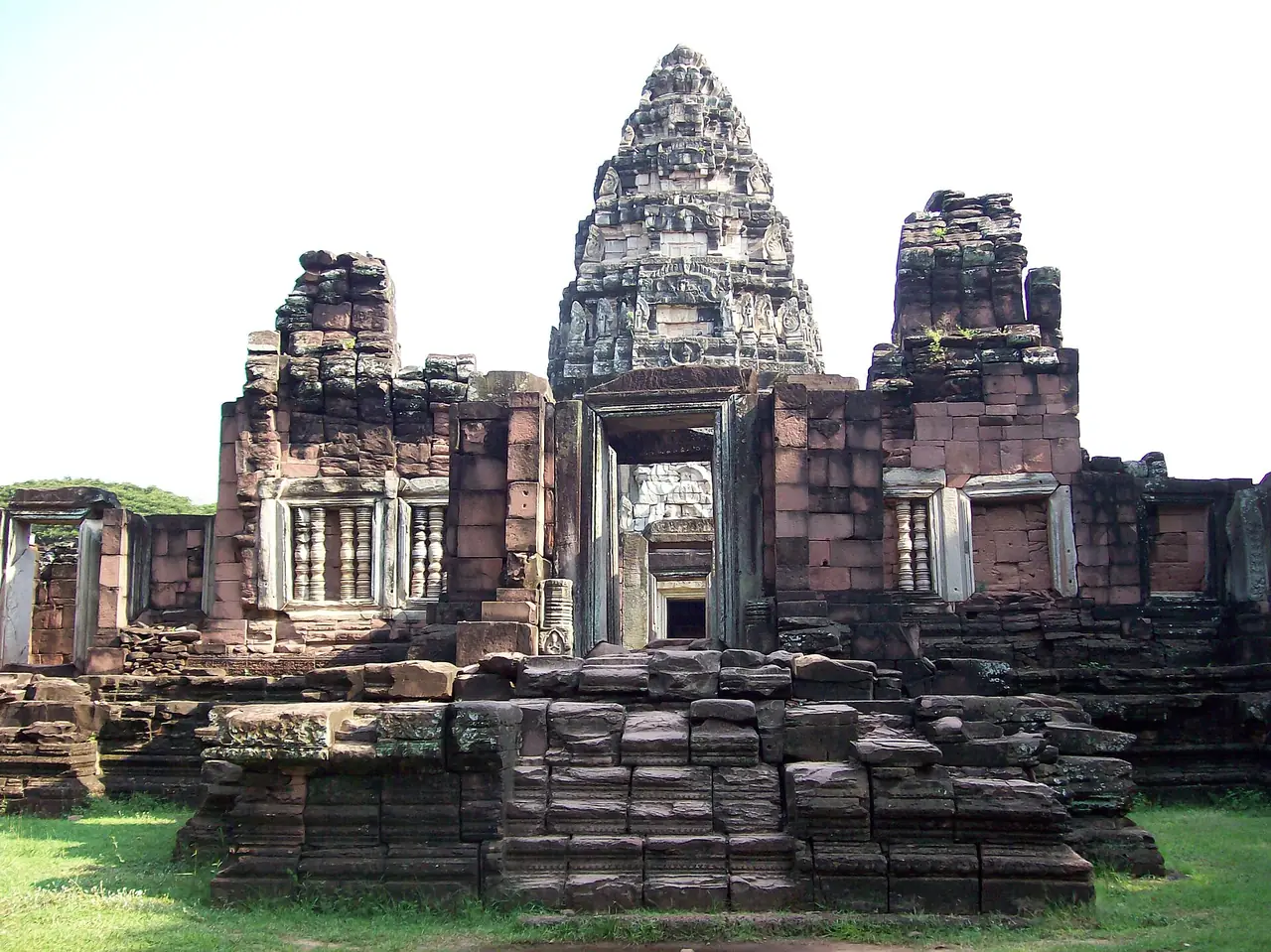
The Department's English page describes Phimai as a Mahayana Buddhist temple about 1,000 years old, at the centre of a walled town measuring 565 by 1,030 metres with the Mun River to the north and east. The name probably comes from "Vimaya" in a Khmer inscription dated 1108 CE. The big restoration ran from 1964 to 1969 as a joint project with the French government, using anastylosis (numbering each block and rebuilding it in its original place). The park opened officially on 12 April 1989.
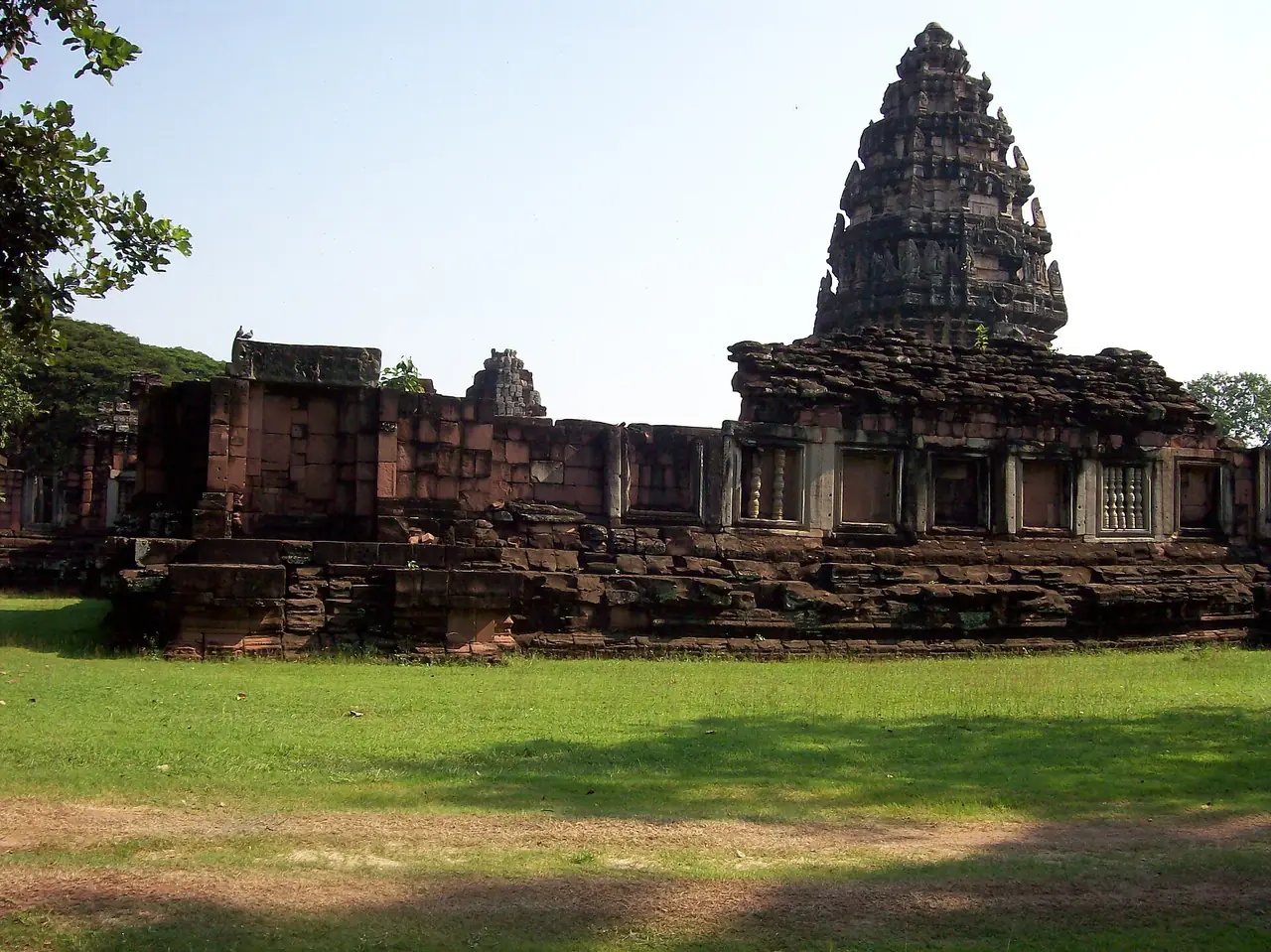
Wikipedia adds that the temple faces Angkor and was linked to it by the ancient Khmer highway. Highlights:
- The main prasat. The central sanctuary tower, with carved lintels around the doors.
- The galleries and gates. Cloistered galleries and the southern gateway, with the inscription frame cited above.
- Prang Brahmadat and Prang Hin Daeng. Smaller towers inside the compound.
- Meru Brahmadat. A large brick monument in the town area, outside the sanctuary walls.
- The old town walls and gates. You walk into the park through what remains of the ancient city.
Getting there
| Route | What to know |
|---|---|
| Bangkok to Nakhon Ratchasima (Korat) | Trains on the northeast line serve Korat; check times and fares on the State Railway of Thailand. Buses also run from Bangkok. Phimai is then about 60 km northeast of Korat city, per the Department. |
| Korat to Phimai | Buses link Korat and Phimai town; ask at the Korat bus terminal, because we could not verify a timetable. |
| To Phanom Rung | We found no reliable public transport. A visitor guide (itsbetterinthailand.com) says to drive, hire a taxi or take a tour, and puts Buriram city about an hour away and Surin about 1 hour 20 minutes. |
| Between the two | They are in different provinces; plan a driver or rental car and check the map for the day's distance. |
The booking box opens the 12Go Bangkok to Nakhon Ratchasima (Korat) route page, which lists bus, train and taxi operators (we opened it in a browser on 16 October 2026). It covers transport to Korat city only, the easier base for Phimai; it does not reach Phanom Rung and sells no temple ticket. It is a partner link, so we may earn a commission at no extra cost to you. Compare getting around in Thailand getting around, and read the wider region in the Isaan travel guide and the Isaan hub. Khao Yai is the usual neighbour, see Khao Yai.
A simple two-day plan
- Day 1: Train or bus to Korat, car or bus to Phimai, visit the park in the cool first hours, overnight in Phimai or Korat.
- Day 2: Drive to Phanom Rung (check the day's distance on a map and leave early). See the temple, add Muang Tam, then continue to Buriram or return.
If you only have one day from Bangkok, the park nearer your route is the sensible choice; Phimai is easier without a car.
Dress code and manners
The park head asks for modest dress and no alcohol on site. Phanom Rung was a Hindu shrine and is still a place where Thais make offerings, so keep your voice low, do not climb on carvings and do not sit on the steps. The wider rules are in Thailand temple etiquette.
When to go
The cool dry season (November to February) is best for walking in the open. Phanom Rung has no shade on the stairs, so go at 06:00 any other time of year. April and September to October are the alignment periods. See Thailand best time by region.
Costs
| Item | Official (checked 2026-10-16) |
|---|---|
| Phanom Rung, foreigner | 100 baht (150 combined with Muang Tam) |
| Phimai, foreigner | 100 baht |
| Parking | Free at the main car park of Phanom Rung and at Phimai |
| Hire car with driver | Quotes vary; ask for a written total including fuel and waiting time |
Plan a whole trip budget with Thailand budget per day. If you want mobile data for the drive, see Thailand eSIM vs SIM.
Safety
- Heat. Carry water; there is little shade on the Phanom Rung stairs.
- Rural roads. Avoid night driving; see Thailand safety, scams and health.
- Border areas. Check current access for temples near the Cambodian border; these two parks are well inland.
FAQ
How much is Phanom Rung?
The Fine Arts Department lists 100 baht for foreigners and 20 baht for Thais, with a combined ticket for Prasat Muang Tam at 150 baht for foreigners (checked 2026-10-16).
What time does Phanom Rung open?
06:00 to 18:00 every day, including public holidays, according to the Department.
How much is Phimai Historical Park?
100 baht for foreigners and 20 baht for Thais, open 07:00 to 18:00 daily; visitors aged 60 and over, monks and uniformed students are exempt.
When does the sun line up with the doors at Phanom Rung?
Thai media report sunrise on about 3-5 April and 9-11 September and sunset on about 5-7 March and 6-8 October. Confirm each year and expect cloud to spoil some days.
Can I get to Phanom Rung by bus?
We found no reliable public service to the temple itself. Plan a driver, rental car or tour.
Which should I choose if I only have time for one?
Phanom Rung for scenery and the alignment, Phimai for ease of access without a car.
Are the lintels original?
The Phra Narai lintel above the east door was returned from the Art Institute of Chicago in 1988 and put back in place on 7 December, per Wikipedia.
Is there a booking button for tours here?
There is no temple ticket or tour link. The booking box is a partner link that compares Bangkok to Korat city transport only, the gateway to Phimai. For Phanom Rung, 12Go also has a Bangkok to Buriram route page, but Buriram city is still about an hour from the park, so we do not present it as a way to reach the temple.
Official sources and further reading
- Fine Arts Department, Phanom Rung Historical Park: services, hours and fees
- Fine Arts Department, Phanom Rung Historical Park: history
- Fine Arts Department, Phimai Historical Park: services, hours and fees
- Fine Arts Department, Phimai Historical Park: history (English text)
- Thairath: sunrise alignment dates reported by the park head, 5 April 2025
- Wikipedia: Phanom Rung Historical Park (lintel return, UNESCO tentative list)
- Wikipedia: Phimai Historical Park
- itsbetterinthailand.com: Phanom Rung visitor guide (access, no public transport)
- State Railway of Thailand
Prices, schedules and entry rules change. Figures here are approximate as of 2026; always confirm on the official or operator page before you book. Spotted something out of date? Tell us.