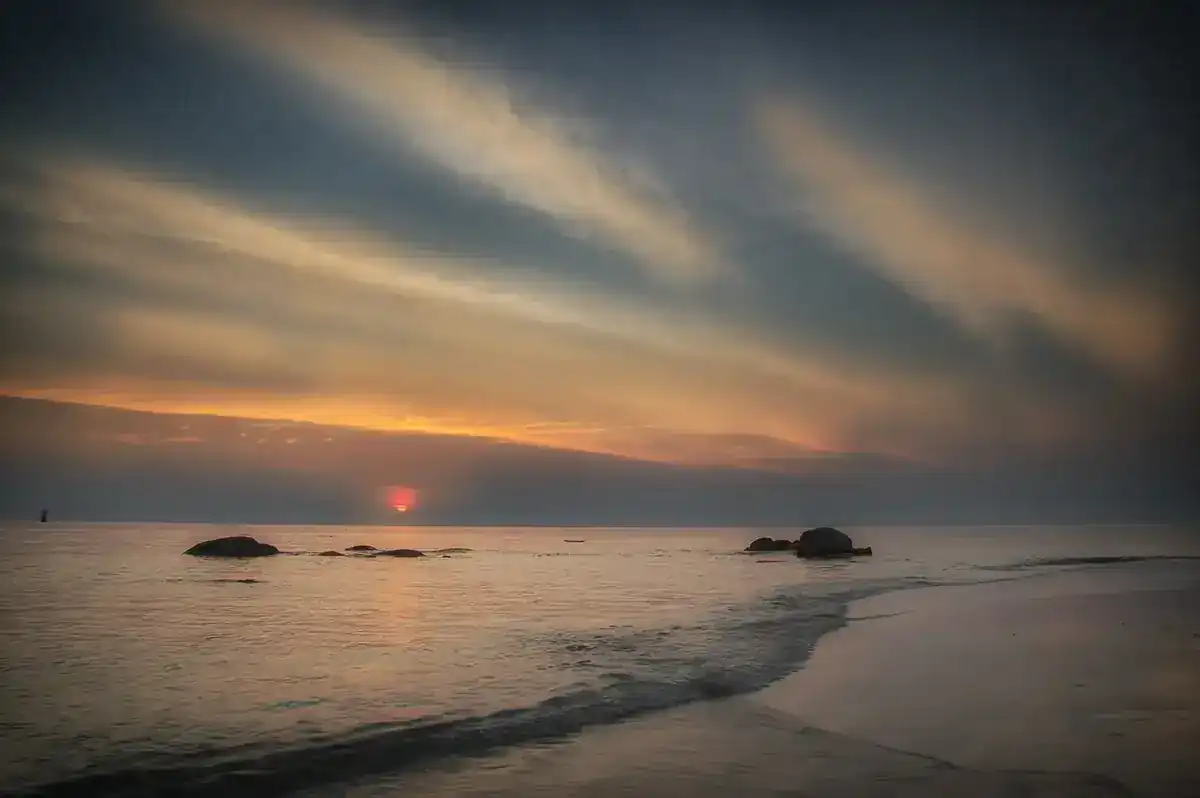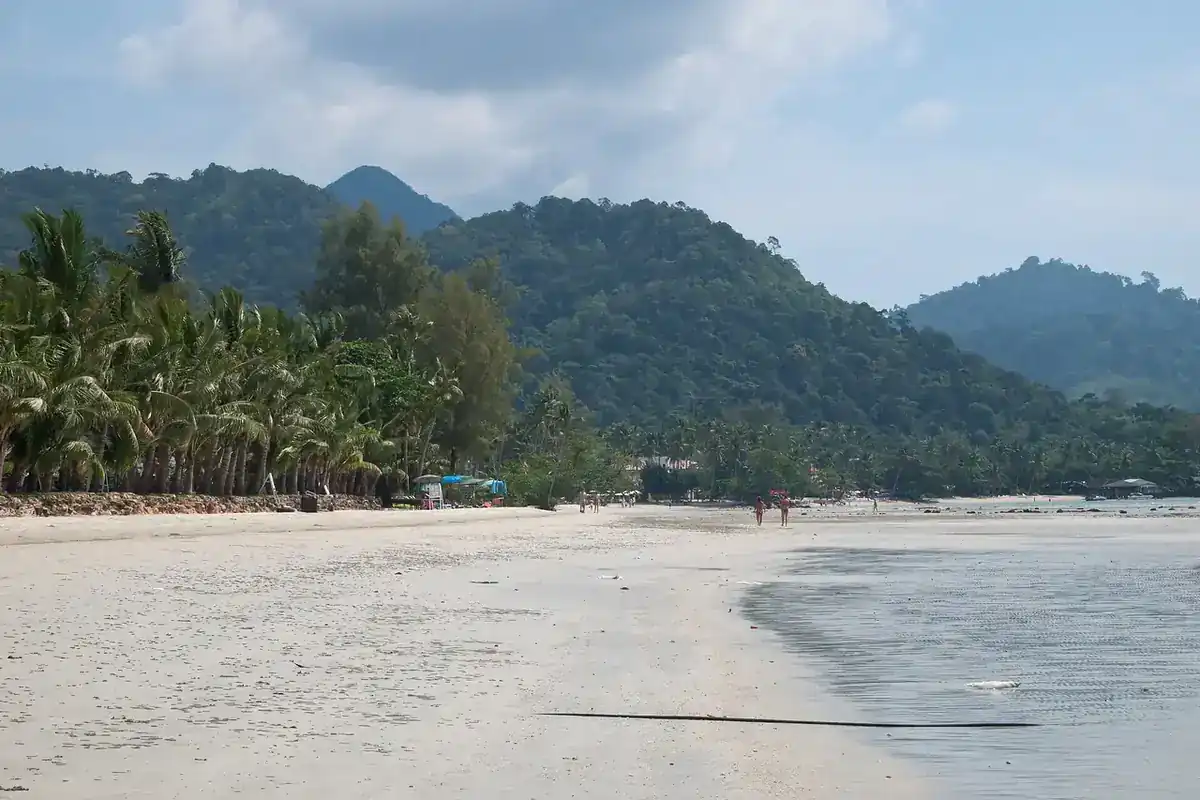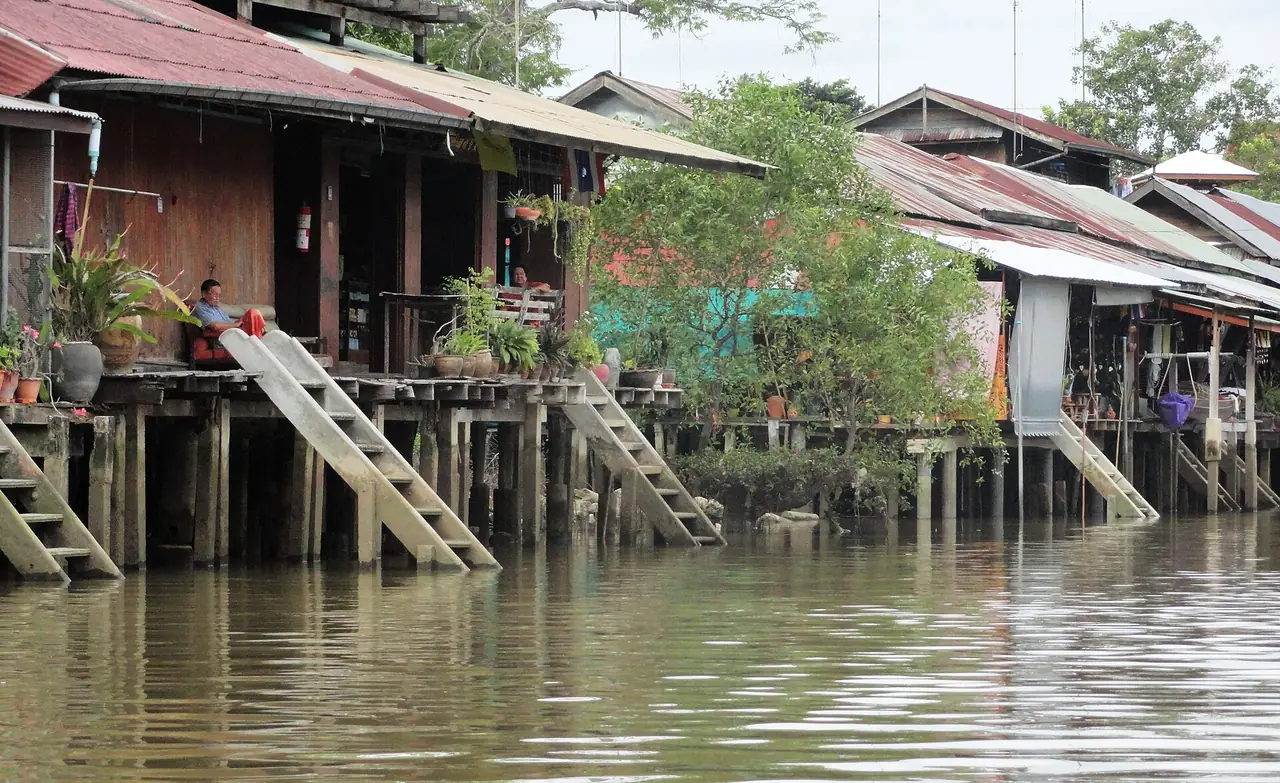
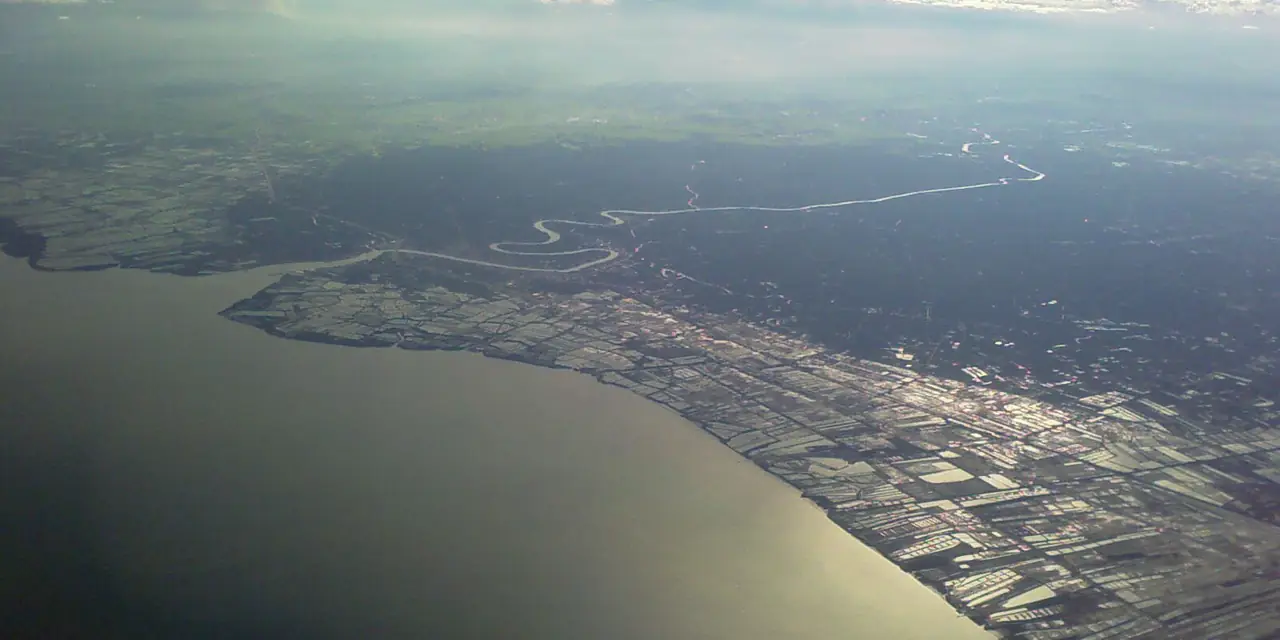
Samut Songkhram is the smallest province in Thailand by area, according to Wikipedia, and local people call it Mae Klong after the river that flows through it. It sits where the Mae Klong meets the upper Gulf of Thailand, about an hour or two from Bangkok by road, and most visits are built around three things: the evening canal market at Amphawa, the railway market in the provincial town, and the quiet canals, orchards and mangrove coast between them.
This guide uses facts we could check on 16 October 2026 on the sources listed below, and it says where they disagree. It is a small province, so a weekend is plenty. For hotel choices read where to stay in Samut Songkhram, or the Thai version, ที่พักสมุทรสงคราม.
What Samut Songkhram is like
Wikipedia describes the province as lying at the mouth of the Mae Klong river, with many canals that spread the river's water for irrigation and, along the coast, many lakes used to produce sea salt. Wikivoyage says the people here earn a living from vegetable and fruit farming and coconut palm sugar, and that the provincial town is 72 km from Bangkok and a little more than an hour away. Amphawa district, home of the floating market, is described by Wikipedia as about 50 km from Bangkok.
Wikipedia also notes that King Rama II was born in Amphawa district, which is why a memorial park to him sits next to the market, and that the famous Siamese twins Chang and Eng Bunker were born in the province in 1811. None of this is crowded sightseeing in the Bangkok sense: the pleasure here is slow, flat and water-based, so plan canals, markets and temples rather than a long list of sights.
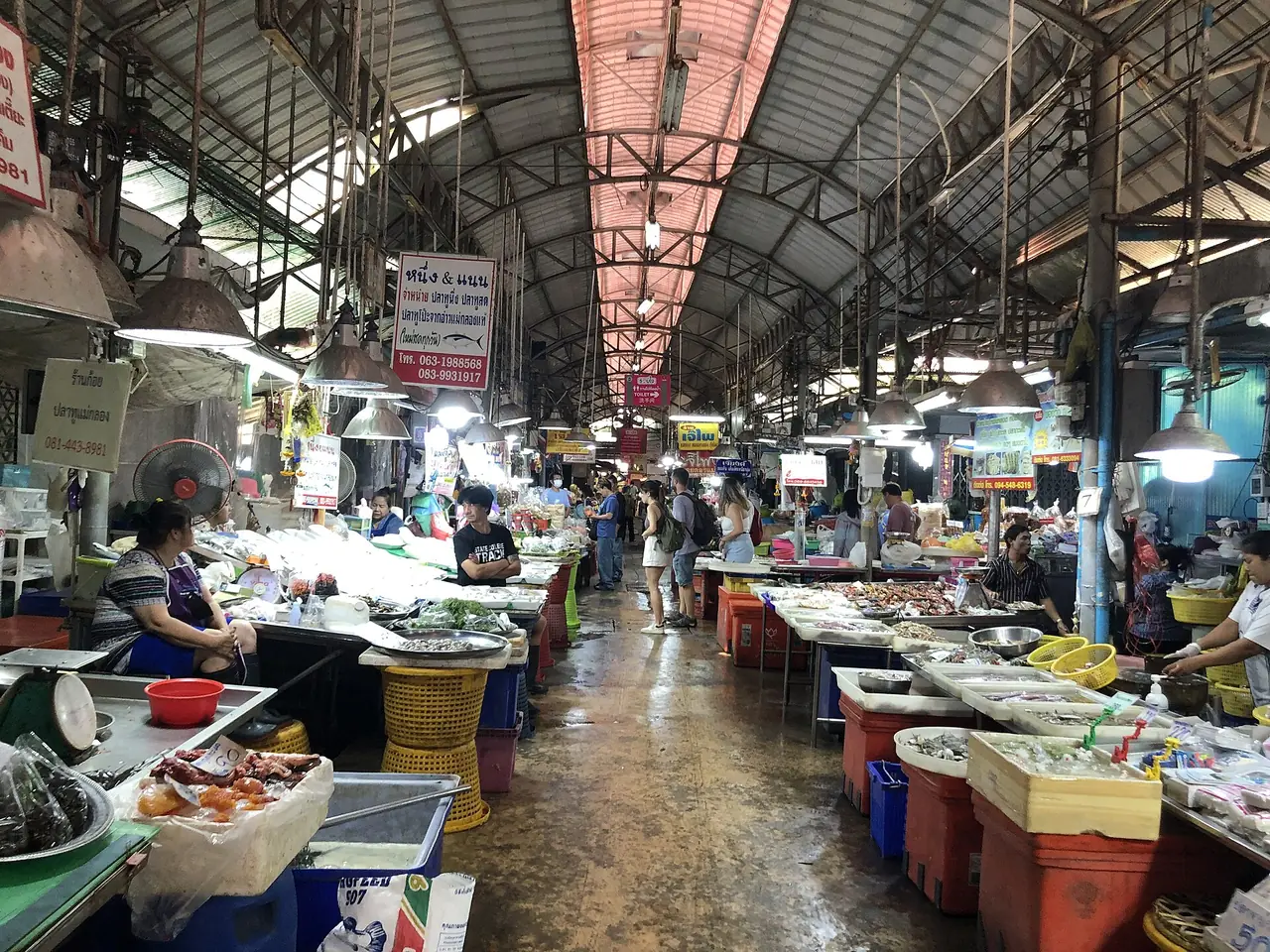
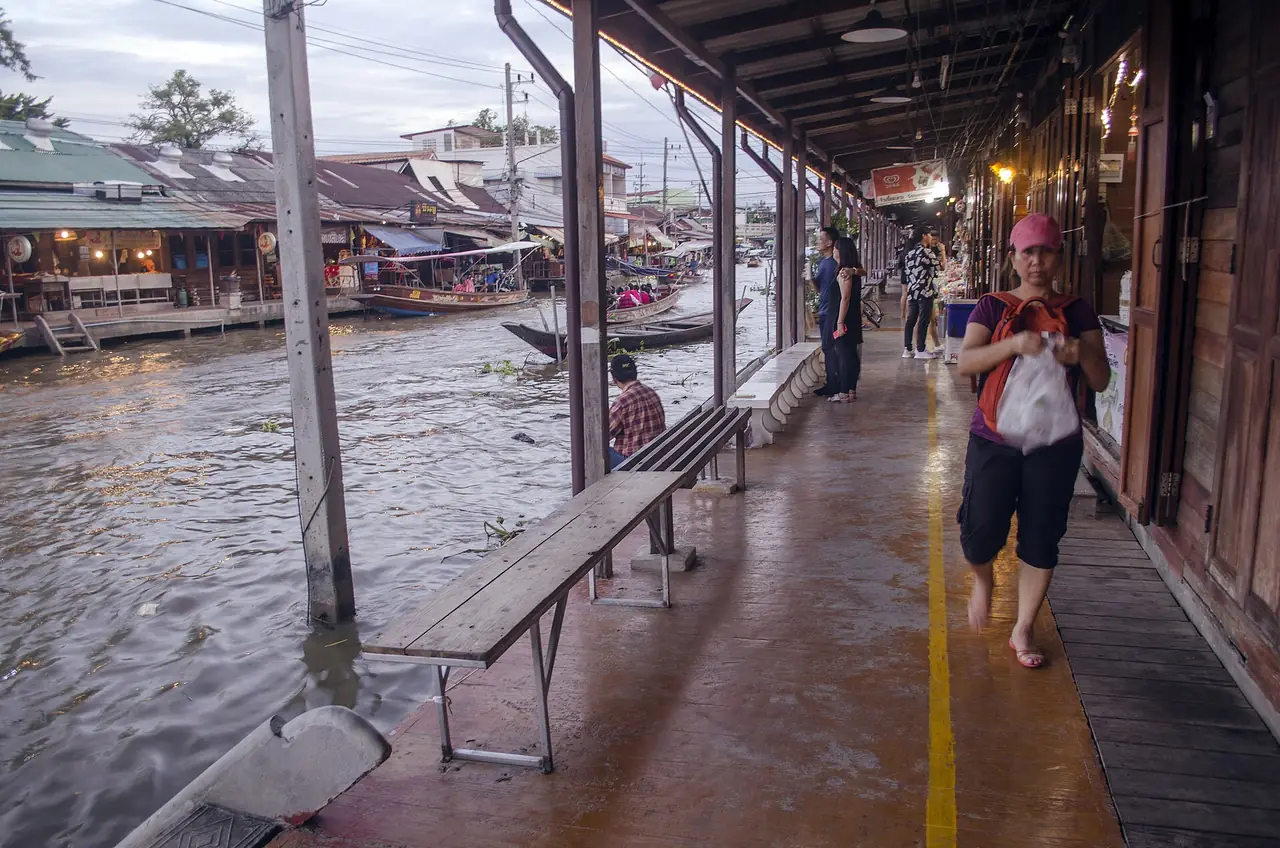
Amphawa floating market and the canal
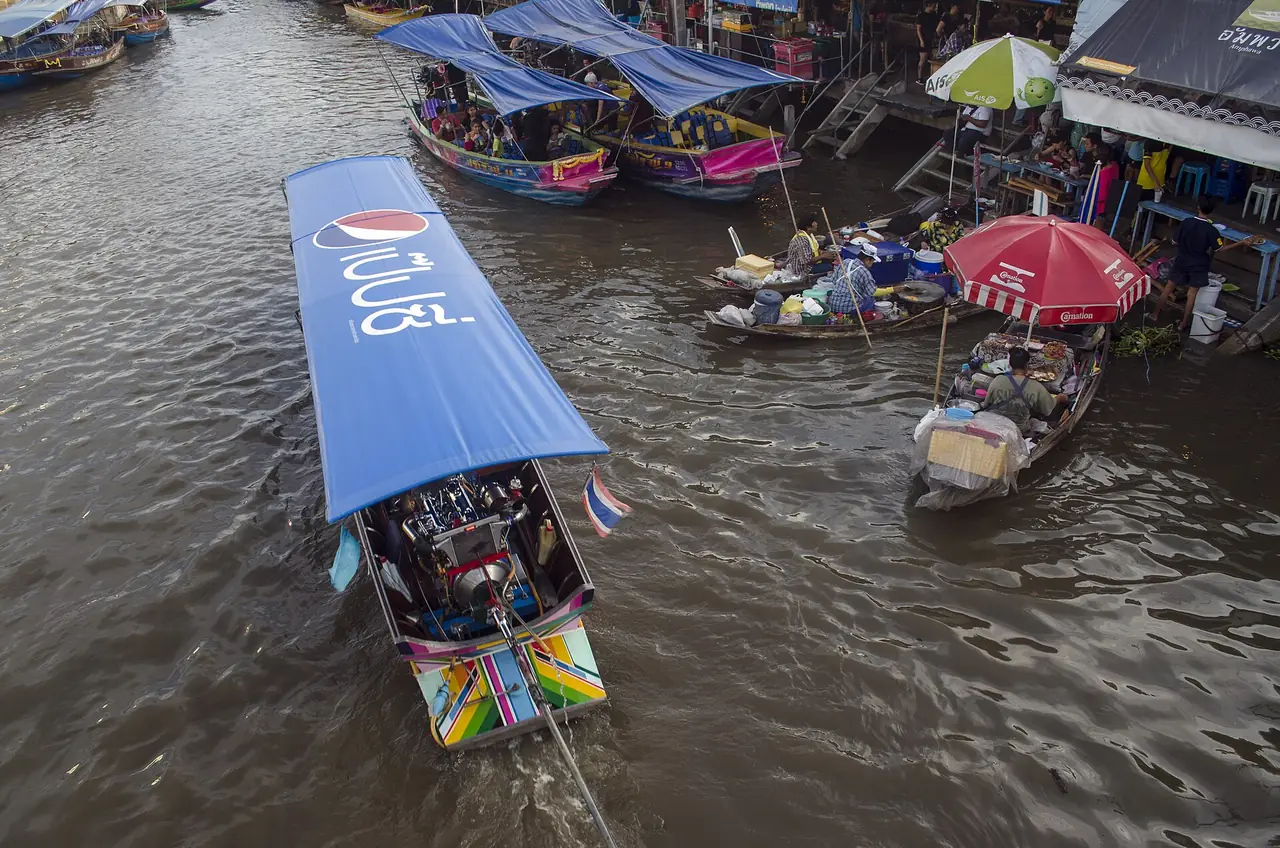
The Amphawa Floating Market is the headline. TAT describes it as an afternoon floating market by the canal near Wat Amphawan Chetiyaram, with parking, and lists it as open Friday to Sunday from 10.00 a.m. to 8.30 p.m., when vendors fill boats with food and drinks. Wikivoyage says it is an afternoon market, unlike the morning market at Damnoen Saduak, so the two can be combined in one trip; it starts to get going around noon and is at its best around 15:00. Because the market is only open at weekends, on a weekday most stalls are closed and the town is very quiet.
TAT says visitors can take a boat trip along the canal and, at night, arrange a boat trip to watch fireflies. Wikipedia adds that fireflies are usually seen in the rainy season. Boat prices vary, so ask what is included and agree the price before you board; we did not verify any boat fare.
TAT's page for Amphawa suggests nearby stops: King Rama II Memorial Park, Wat Bang Kung, the Nativity of Our Lady Cathedral, Tha Kha Floating Market and Bang Noi Floating Market. For the other floating markets, compare them in our Thai guide to Damnoen Saduak, Amphawa and Maeklong, or read the day trips from Bangkok overview.
The Maeklong railway market
The Maeklong Railway Market, nicknamed the "umbrella pull-down market", is built along an active railway track. Wikipedia says it is one of the largest fresh seafood markets in Thailand, and that whenever a train approaches, the awnings and shop fronts are moved back from the rails, then put back once the train has passed. Wikivoyage says the train announcement is made by loudspeaker and that the tracks clear within seconds.
Train frequency is where the sources disagree.
| Source | What it says |
|---|---|
| Wikipedia | Four trains run daily between Ban Laem and Maeklong |
| Wikivoyage | A train passes through the market eight times a day |
Treat both as unverified and check the State Railway of Thailand timetable before you plan around a train. Stand where the stall holders tell you to and keep clear of the rails.
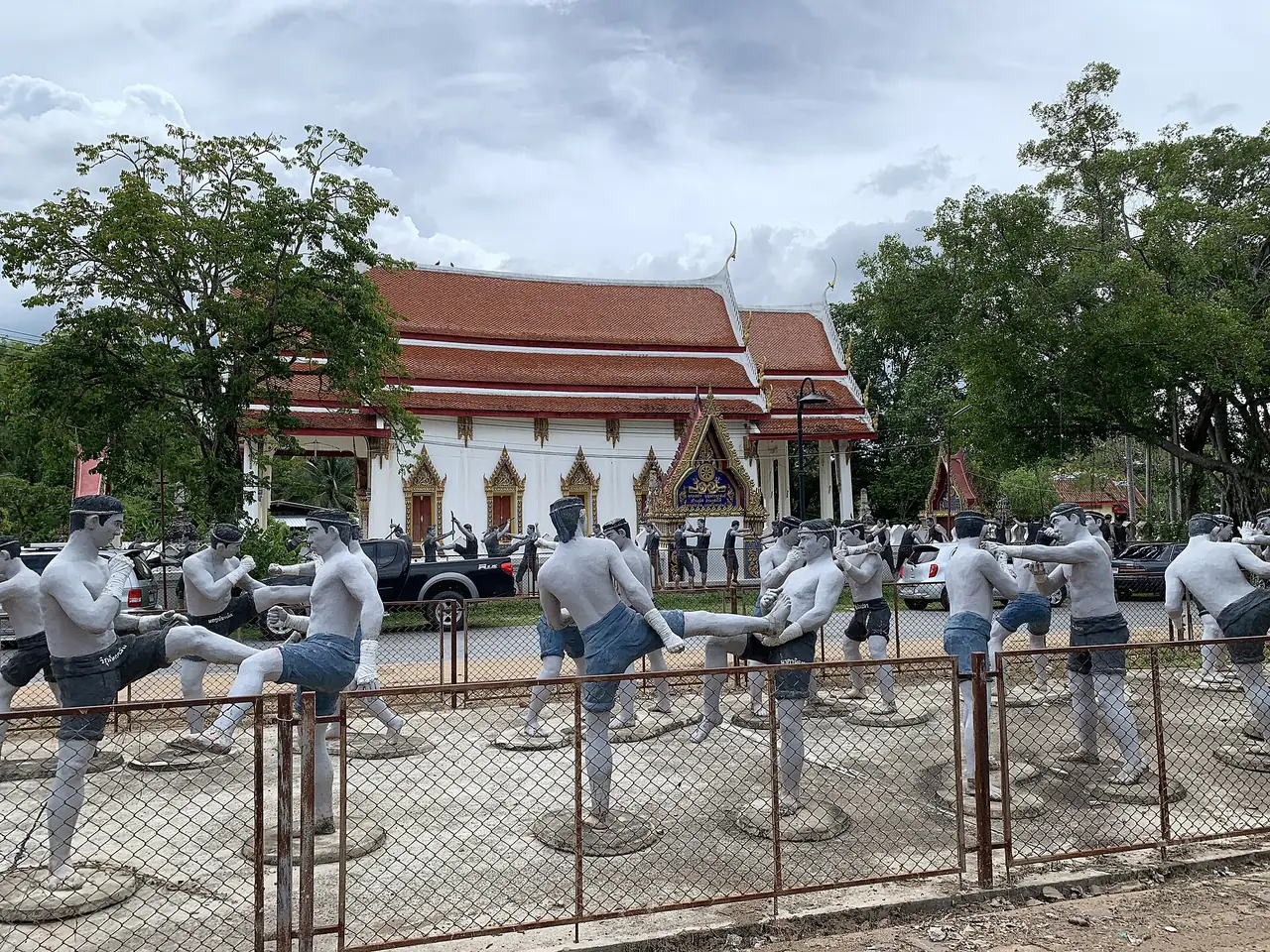
Temples, parks and the coast
Wat Bang Kung is an old temple in Bang Khonthi district. Wikipedia says it was built in the Ayutthaya period and was the site of the Battle of Bang Kung between the Konbaung dynasty and the Thonburi Kingdom, and that the Fine Arts Department registered it as a national archaeological site in 1996. TAT describes an old ordination hall with a large Buddha image locally called Luangpho Bot Noi and murals from the late Ayutthaya period.
King Rama II Memorial Park, in Amphawa, has a museum of four buildings, traditional Thai houses and a botanical garden, according to TAT. TAT lists an entrance fee of 60 for a foreign adult and 20 for a child, but the text we read did not name the currency or show opening hours, and Wikivoyage lists 08:30-17:00 daily from an older edit, so confirm both at the gate.
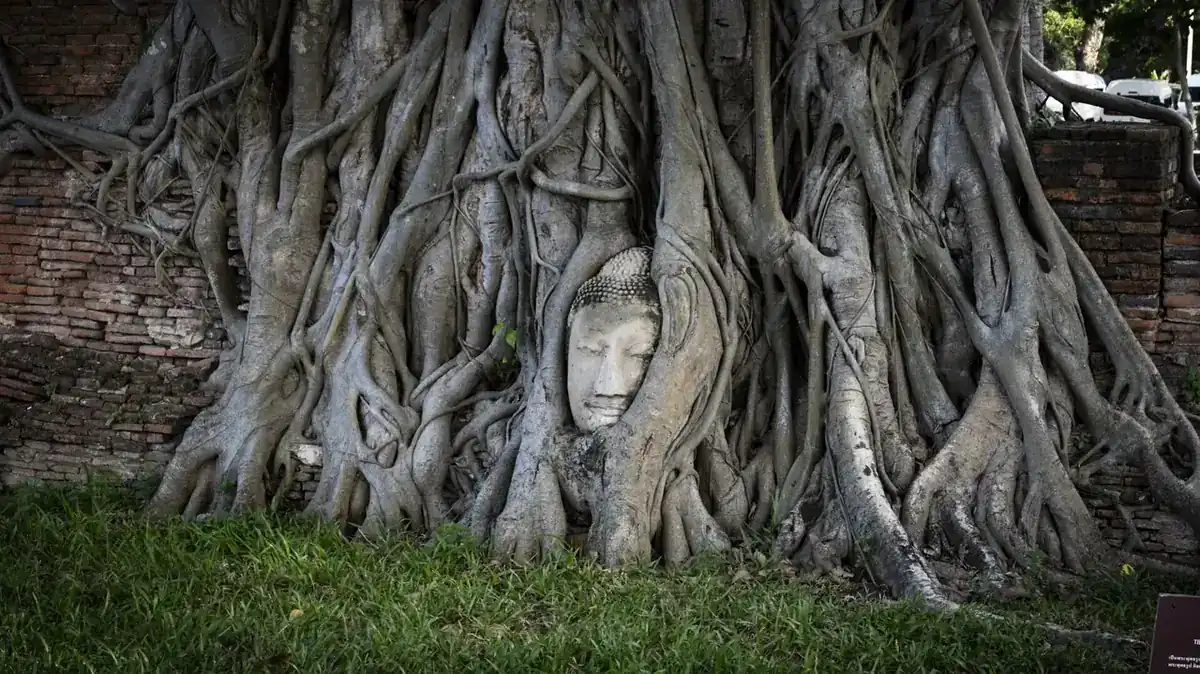
Two more stops sit close to the Amphawa canal. TAT says Wat Amphawan Chetiyaram, beside the memorial park, is a second-class royal temple whose ubosot and other buildings are mostly early Rattanakosin in style, and that the area where its prang stands is believed to be King Rama II's birthplace. TAT also describes the Nativity of Our Lady Cathedral at Bang Nok Khwaek, built in 1890 by the French missionary Father Paolo Salmone over about six years in French Gothic style, with stained glass inside; it says a guided visit must be arranged in advance with the priest. Wikipedia adds that Wat Bang Kung is covered with roots that help support its ubosot.
In the provincial town, Wikipedia says Wat Phet Samut Worawihan (Wat Ban Laem), near the Mae Klong river and the Mae Klong railway station, holds the Luang Por Ban Laem Buddha image, about 167 cm high and presumed to date from the Sukhothai to early Ayutthaya periods; according to folklore it was found floating in the river with four others. It is a third-class royal temple, and Wikipedia calls it one of the best-known sights of Samut Songkhram alongside Don Hoi Lot, the railway market and the Amphawa market.
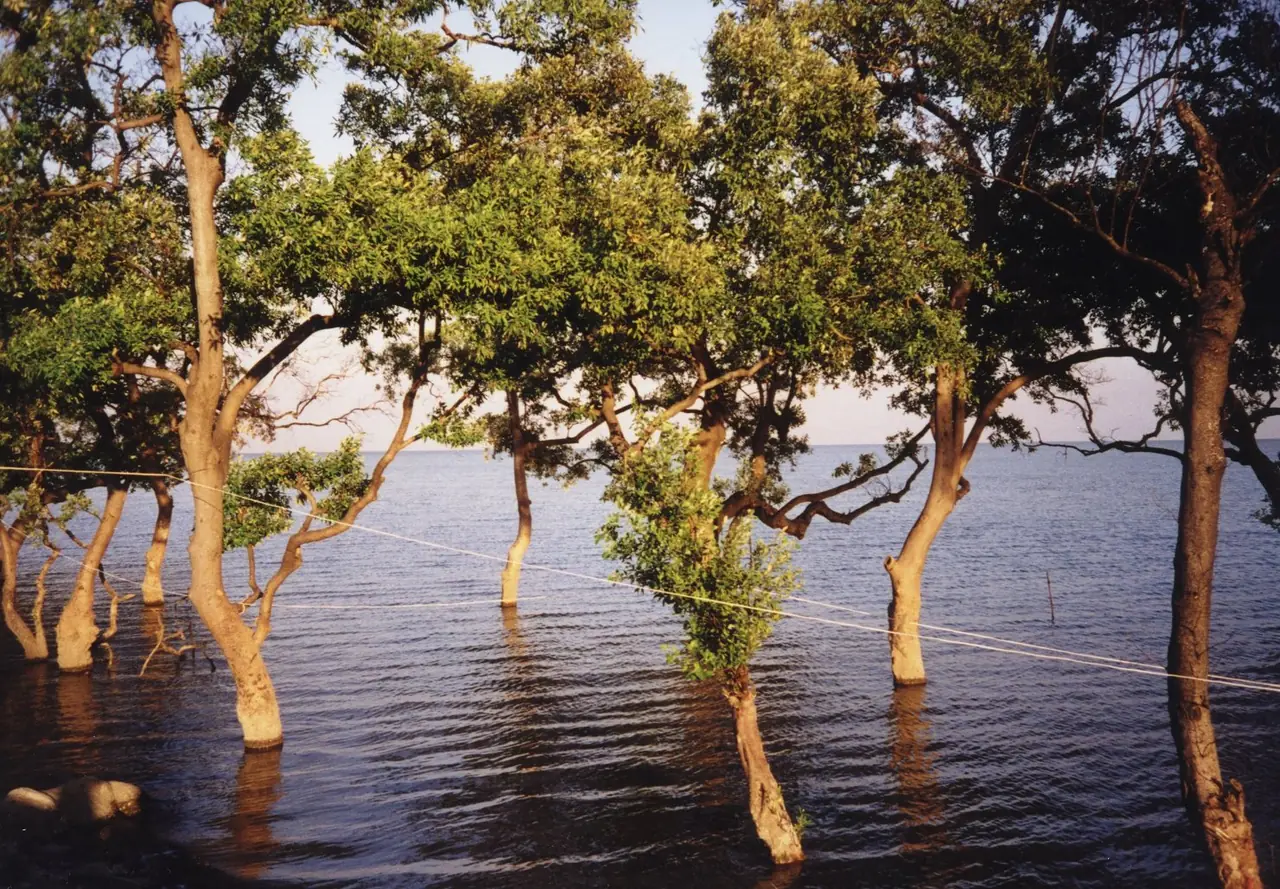
Don Hoi Lot is a sandbar and mudflat at the mouth of the Mae Klong river. Wikipedia says it is home to the largest population of the endemic razor clam Solen regularis, and that it has been a Ramsar site (number 1099) since 5 July 2001. TAT says it covers 3 km by 5 km, that Don Nok at the river mouth is reached by boat, and that the low tides between March and May are the time to hire a boat; it also says a nearby shrine offers live music on late afternoons in the first and third weeks of the month. We did not verify boat prices.
For a quieter market, TAT says Tha Kha Floating Market runs every five days, on the 2nd, 7th and 12th day of the waxing or waning moon, from about 6.00 a.m. to 2.00 p.m., so check the lunar calendar before you go.
Getting to Samut Songkhram
We found no airport listed for the province, and the rail route from Bangkok needs a boat transfer (see below), so most visitors come by road: a bus, a minivan, a taxi or a rental car.
| From | How | What the sources say |
|---|---|---|
| Bangkok, Southern Bus Terminal | Public bus to the provincial town | Wikivoyage says a Transport Company bus leaves from 05:40 to 21:00; confirm with the operator |
| Bangkok by car | Highway 35 (Rama II Road) | TAT says to follow Highway 35 to Km 63 and drive through the town; Wikivoyage mentions an elevated road into the town at around km 63 |
| Bangkok by train | Maeklong Railway | Wikivoyage says to take the train from Wongwian Yai to Maha Chai, cross the Tha Chin river by boat, then take the Ban Laem line to Samut Songkhram; Wikipedia confirms the river separates the two sections |
| Bangkok by minivan | Victory Monument to Damnoen Saduak | Wikivoyage says to get off at Amphawa; it is older advice, so check the queue and timings |
| Provincial town to Amphawa | Songthaew or bus | Wikivoyage says about 15 minutes; buses are signed in Thai |
The 12Go route page
We checked the 12Go page for Bangkok to Samut Songkhram in a real browser on 16 October 2026, for Sunday 18 October and two travellers. It listed 36 trips with fares from THB 473 to THB 5,062: 2 bus trips from THB 473 (Tara Tour and Travel and Bangkok Taxi) and 34 taxis from THB 1,158 (including Gosafe), and no train. One bus listing showed a drop at the "Train market Maekong market". These figures are what the page showed on that date for that search, not guarantees; fares and times change, so check the page for your own date. Some links on this site may earn us a commission, which does not change the price you see.
When to go
The Amphawa market sets the calendar: TAT lists Friday to Sunday only, and Wikivoyage warns that hotels sell out at weekends, so book ahead if your dates are fixed. A weekday visit is calmer but most market stalls will be closed. Wikipedia says fireflies are usually seen in the rainy season; TAT says low tides between March and May suit the boat trip to Don Hoi Lot. We did not verify month-by-month weather, so look at the forecast on the Thai Meteorological Department site before you go.
Where to stay
The stay guide compares four areas, with every hotel fact checked on the hotel's own website:
- Amphawa market lanes: walk to the evening market; Amphawa Nanon says 3 minutes on foot and Amphawa Riverview says 600 metres.
- Mae Klong riverside, between Amphawa and Bang Noi: small riverside resorts, a short ride from the market.
- Mae Klong town and Tai Hat: a base for the railway market, with pools and car trips.
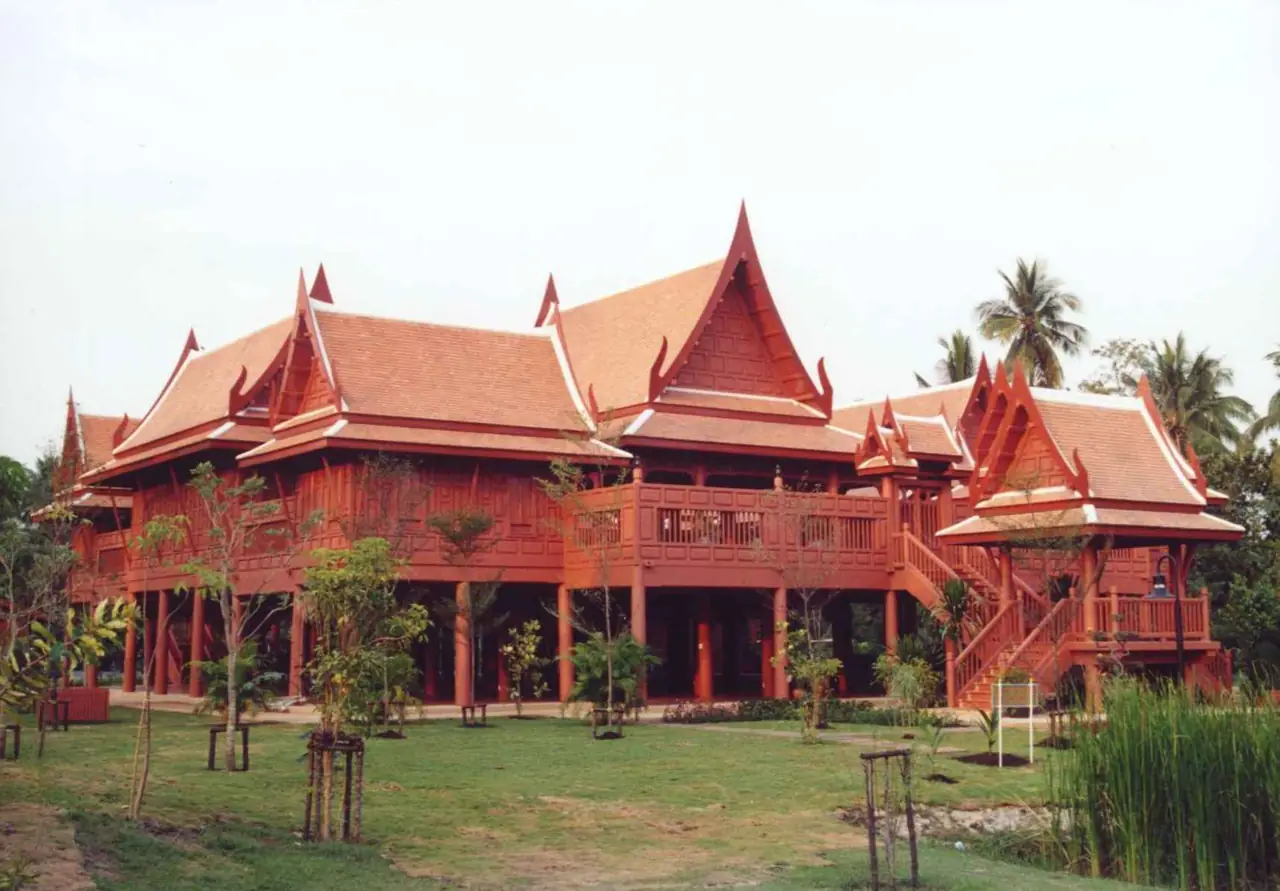
- Bang Noi canal and Khlong Khon: quiet Thai-house homestays and coastal activities; bring a car.
Open where to stay in Samut Songkhram for the area table and the 8 hotel cards.
Nearby destinations
- Ratchaburi: neighbouring province, home of the Damnoen Saduak morning market
- Nakhon Pathom: the giant chedi town between Bangkok and Samut Songkhram
- Kanchanaburi: River Kwai and Erawan, further west
- Hua Hin: beach town further south via Phetchaburi
- Bangkok: the starting point for most trips
- Thailand overview
- Phetchaburi: Phra Nakhon Khiri, Kaeng Krachan and Cha-am
FAQ
When is the Amphawa floating market open?
TAT lists Friday to Sunday, 10.00 a.m. to 8.30 p.m. Wikivoyage says it is an afternoon market that gets going around noon and peaks around 15:00. On weekdays most stalls are closed, so check the market's own announcements before you travel.
How far is Samut Songkhram from Bangkok?
Wikivoyage gives the provincial town as 72 km from Bangkok and a little more than an hour; Wikipedia gives Amphawa district as about 50 km. Traffic and your starting point change the time.
How do I get from Bangkok to Samut Songkhram?
By road. On 16 October 2026, 12Go showed 36 trips (2 buses and 34 taxis, no train). Wikivoyage says a Transport Company bus leaves the Southern Bus Terminal from 05:40 to 21:00, and the highway is Highway 35.
Can I see the Maeklong railway market and Amphawa in one day?
Yes, if you have a car or a short transfer, but they are in different places and the train times at Maeklong change. Check the State Railway of Thailand and remember the Amphawa market is a Friday to Sunday afternoon market.
When are the fireflies?
TAT says visitors can arrange a night boat trip to watch fireflies, and Wikipedia says fireflies are usually seen in the rainy season. We did not verify boat prices or dates, so ask at the pier or your hotel.
How many trains pass through the Maeklong market?
Sources disagree: Wikipedia says four trains run daily between Ban Laem and Maeklong, while Wikivoyage says a train passes eight times a day. Check the State Railway of Thailand timetable.
Is Samut Songkhram worth an overnight stay?
An overnight stay lets you see the Amphawa canal in the evening, give alms to monks by boat in some hotels, and try an early market such as Tha Kha, which TAT says runs every five days. Weekend hotels sell out, so book ahead.
Official sources and further reading
- Samut Songkhram province (Wikipedia)
- Amphawa Floating Market (Wikipedia)
- Maeklong Railway (Wikipedia)
- Don Hoi Lot (Wikipedia)
- Wat Bang Kung (Wikipedia)
- Wat Phet Samut Worawihan (Wikipedia)
- Amphawa (Wikivoyage)
- Samut Songkhram (Wikivoyage)
- TAT: Amphawa Floating Market
- TAT: Tha Kha Floating Market
- TAT: Don Hoi Lot
- TAT: Wat Bang Kung
- TAT: King Rama II Memorial Park
- TAT: Wat Amphawan Chetiyaram
- TAT: Nativity of Our Lady Cathedral
- 12Go: Bangkok to Samut Songkhram
- State Railway of Thailand
- Thai Meteorological Department
Prices, schedules and entry rules change. Figures here are approximate as of 2026; always confirm on the official or operator page before you book. Spotted something out of date? Tell us.