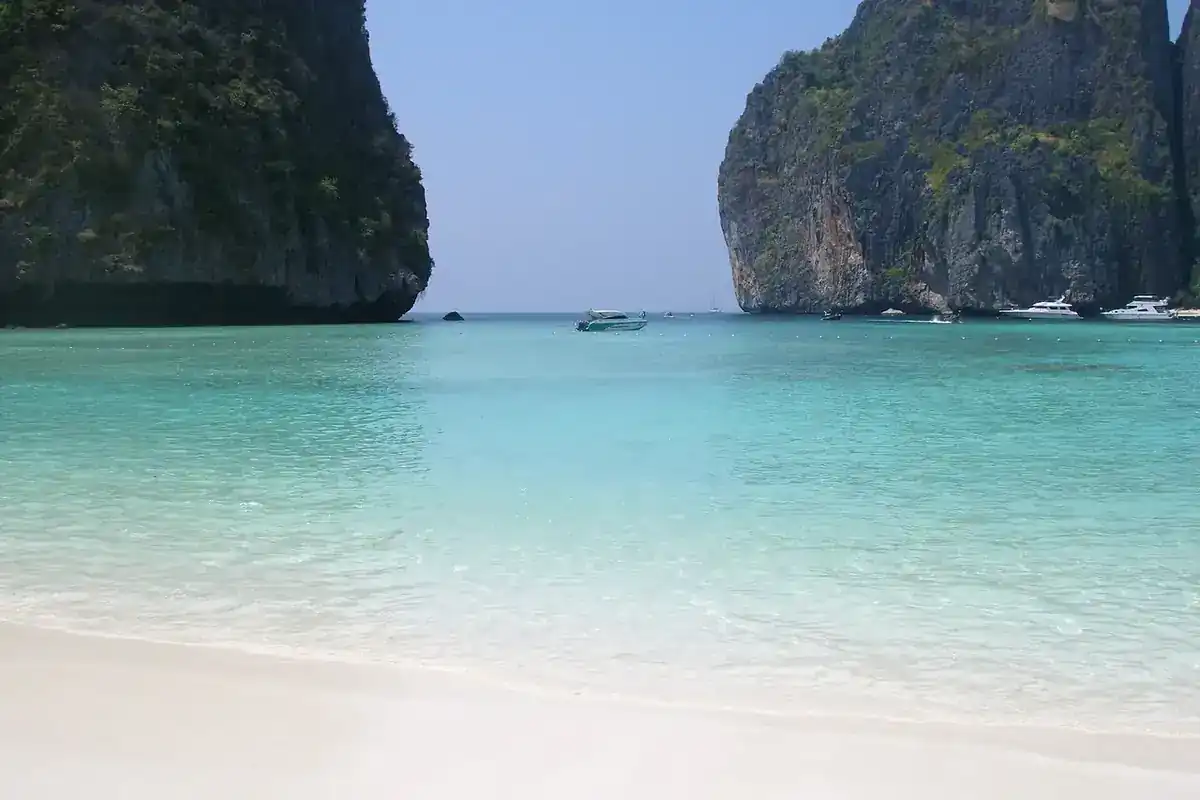
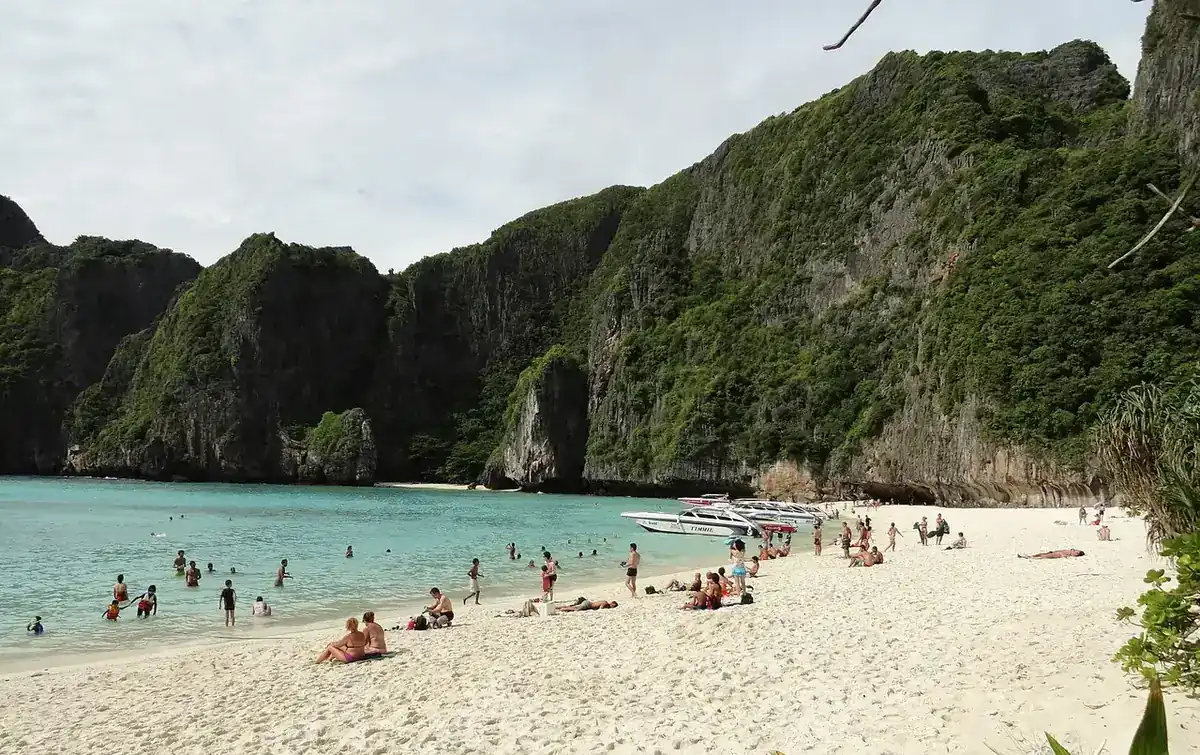
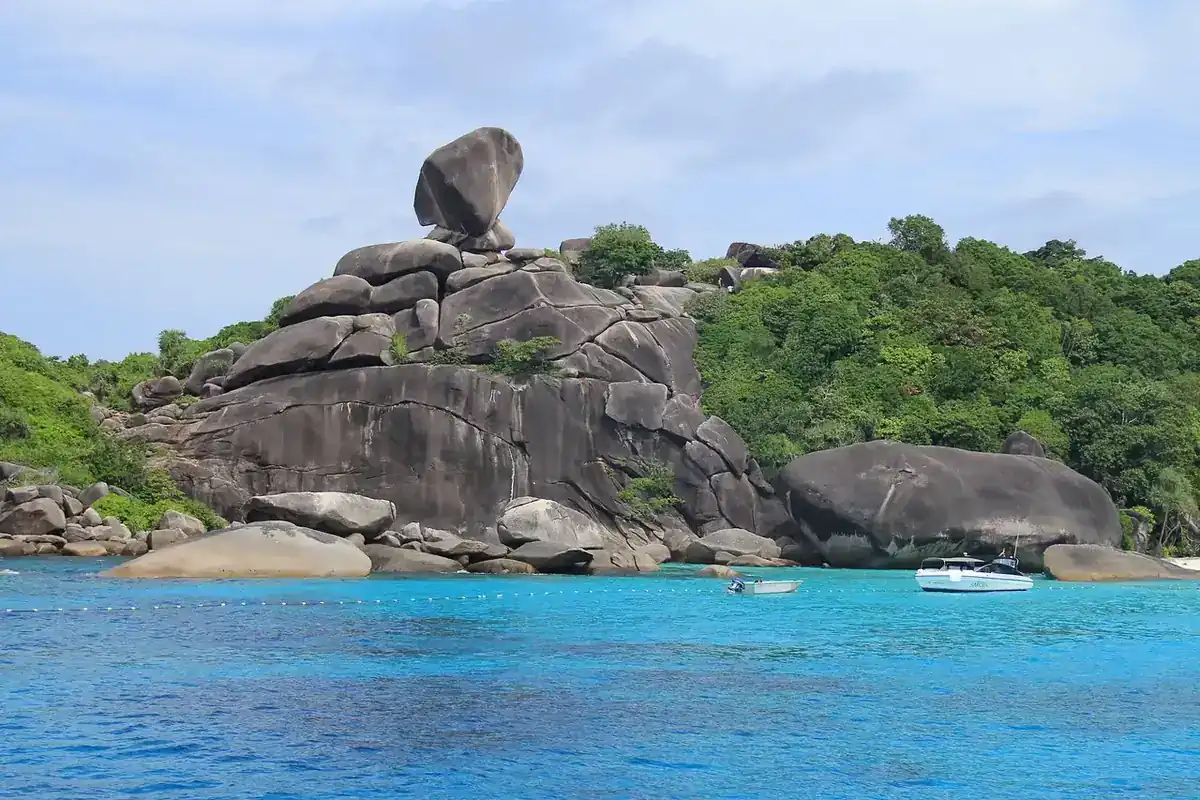
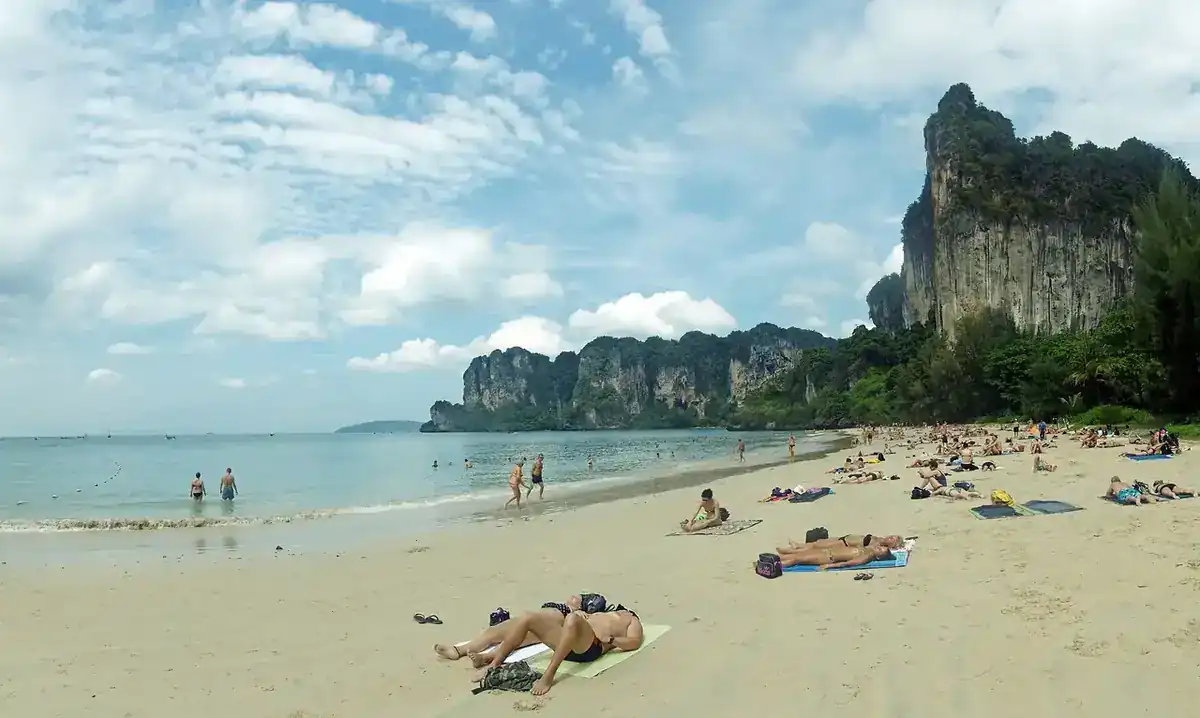
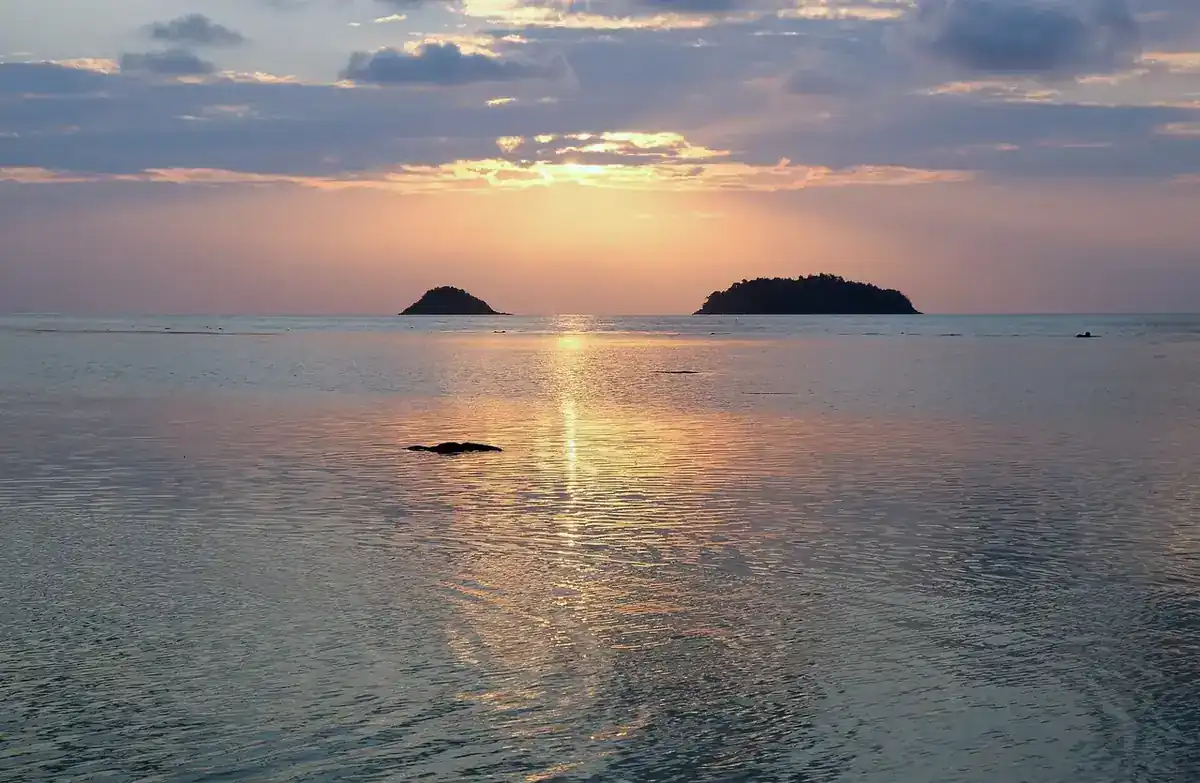
Phi Phi Don is the island people mean when they say "Koh Phi Phi" and plan to sleep there. It is the largest island in the Phi Phi group, the only one with a permanent community, and the place where the ferries land. Its neighbour Phi Phi Leh, home of Maya Bay, is uninhabited and is visited by boat. If you are deciding between staying on Phi Phi Don and just passing through, one or two nights works much better than a rushed day trip, and you should plan for crowds around the pier and the viewpoint.
This page covers what the island is, its layout, the main places, how to arrive, the park fee, how to get around without cars, the sea season, where to stay and what to bring. Facts come from official or primary pages where they exist, with the date we checked them (16 October 2026). Where we could not confirm a number on an official page, we say so and tell you where to check.
What Phi Phi Don is
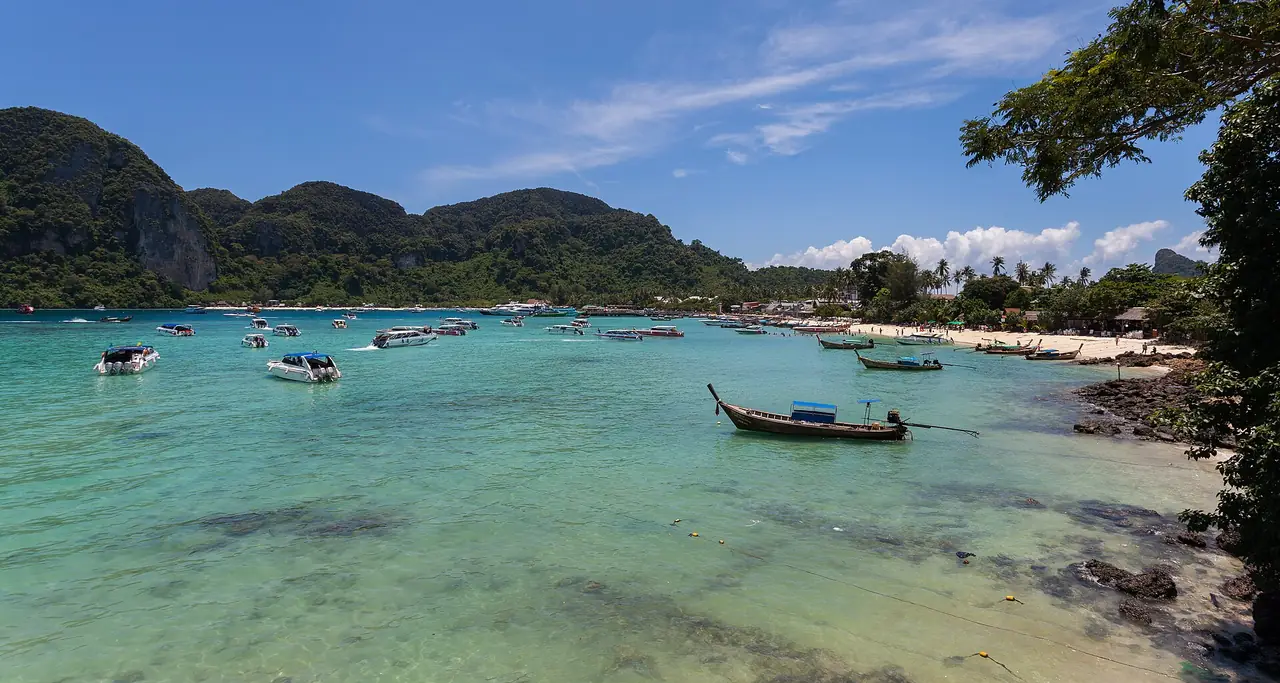
Ko Phi Phi is a small island group off the coast of Krabi province in the Andaman Sea. The two main islands are Phi Phi Don and Phi Phi Leh. Phi Phi Don is the inhabited one, with hotels, restaurants, dive shops and a pier. Phi Phi Leh has the dramatic cliffs and Maya Bay, but no resident community.
The island group lies within or beside the Hat Noppharat Thara-Mu Ko Phi Phi National Park, run by the Department of National Parks (DNP). One reference source notes that parts of Phi Phi Don itself fall outside the park boundary, under local administration, while the surrounding sea and the other islands are inside it. That is why the fee question below has a slightly messy answer: ask at the pier or check with the park before you assume what applies to your plans.
The island is not large. Wikipedia gives about 2,500 residents (2018 figure) and an area of around 10 square kilometres, and notes that many workers are temporary. Treat those as orientation figures, not official statistics.
The shape of the island: two bays and a narrow middle
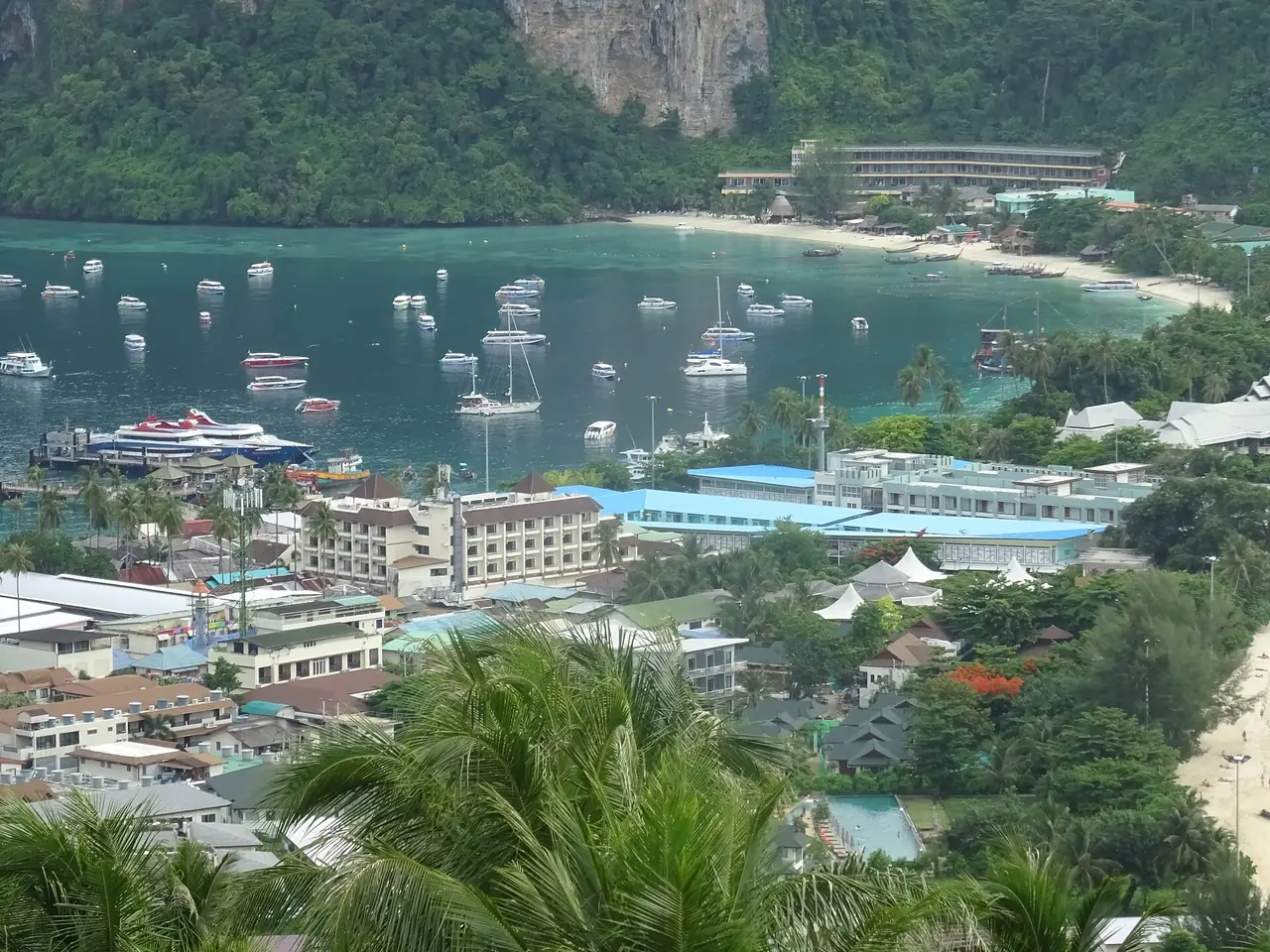
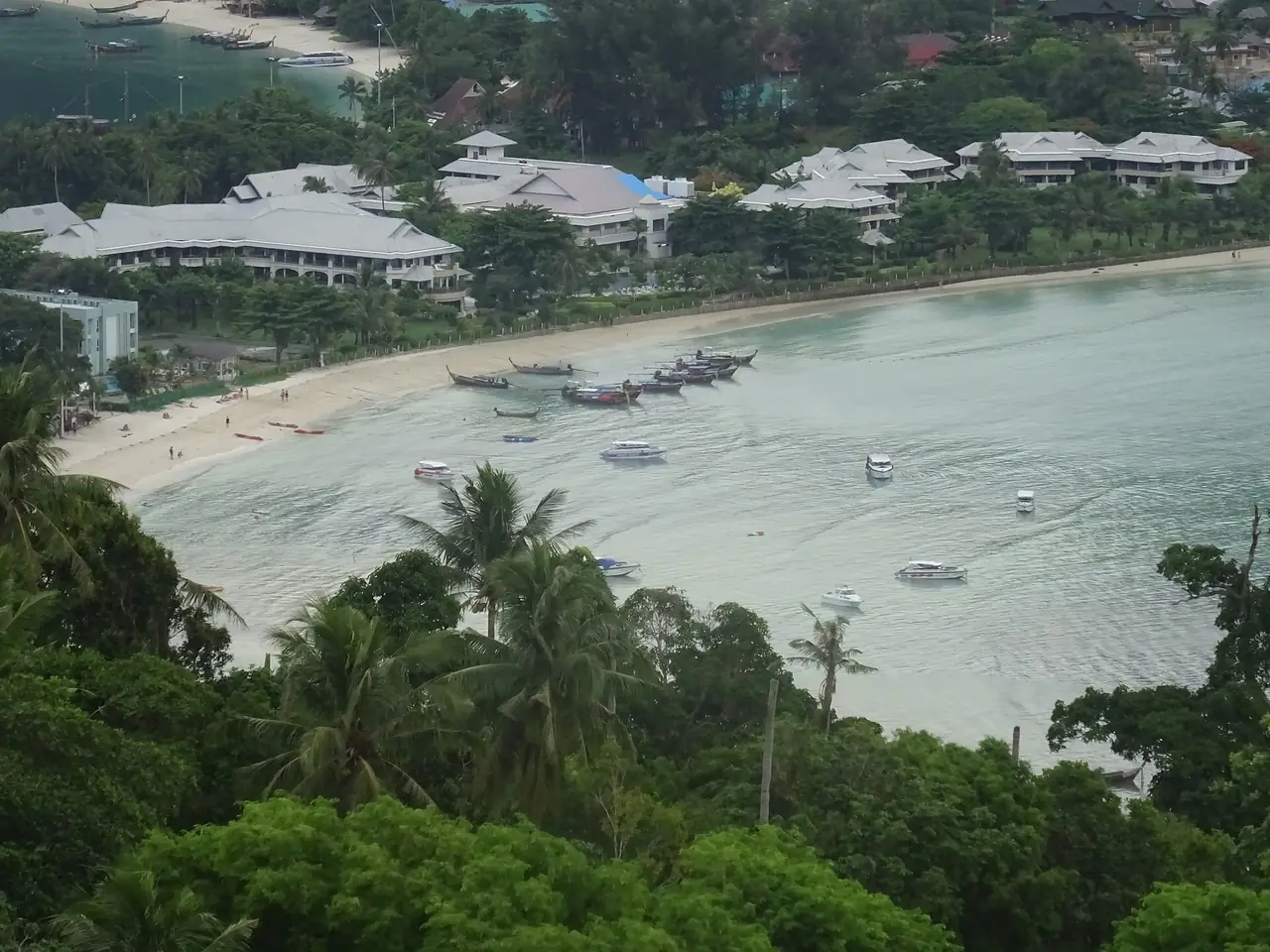
Phi Phi Don looks like a dumbbell. Two limestone-ridged halves are joined by a low, narrow strip of flat land. On one side is Ton Sai (Tonsai) Bay, where the pier and most boats are. On the other is Loh Dalum Bay, a long, curved beach. The village, restaurants, bars and many hotels sit on the narrow strip between the two bays, which is why you can walk from the pier to the other beach in a few minutes.
The best way to see this layout is from above. The viewpoint panorama below shows Ton Sai Bay on the left, the village on the narrow middle and Loh Dalum Bay on the right.

The low ground matters for safety as well as geography. The island was hit hard by the 2004 tsunami, and Wikipedia records Loh Dalum Bay as especially affected. Read the evacuation signs when you arrive (see the safety section below).
Main places on Phi Phi Don
| Place | What it is | Notes |
|---|---|---|
| Tonsai Pier and Ton Sai Bay | Main landing point for ferries and speedboats | Busy with boats; longtails and tour boats leave from here |
| Tonsai village | Restaurants, shops, dive shops, ATMs and boat desks on the narrow middle strip | The busiest area; walkable from the pier |
| Loh Dalum Bay | Long curved beach on the other side of the strip | Many hotels face it; ask your hotel about boat traffic and swimming areas |
| Phi Phi Viewpoints | Uphill walks above the village; Viewpoint 2 is one of the best known | Steep and often busy at sunset; wear proper shoes and carry water |
| Long Beach (Hat Yao) | Quieter beach on the island | Reached by longtail boat or a walk; popular for a calmer stay |
| Laem Tong | Northern part of the island with resorts | Some ferries serve Laem Tong directly; see the ferry operator's page |
| Monkey Beach | Small beach near Phi Phi Don | Usually visited by longtail or tour boat; wild monkeys live here, so keep food hidden |
| Hin Khom and Phak Nam bays | Smaller, quieter bays | Mostly longtail access; ask locally about conditions before you go |
Ton Sai Bay and the pier
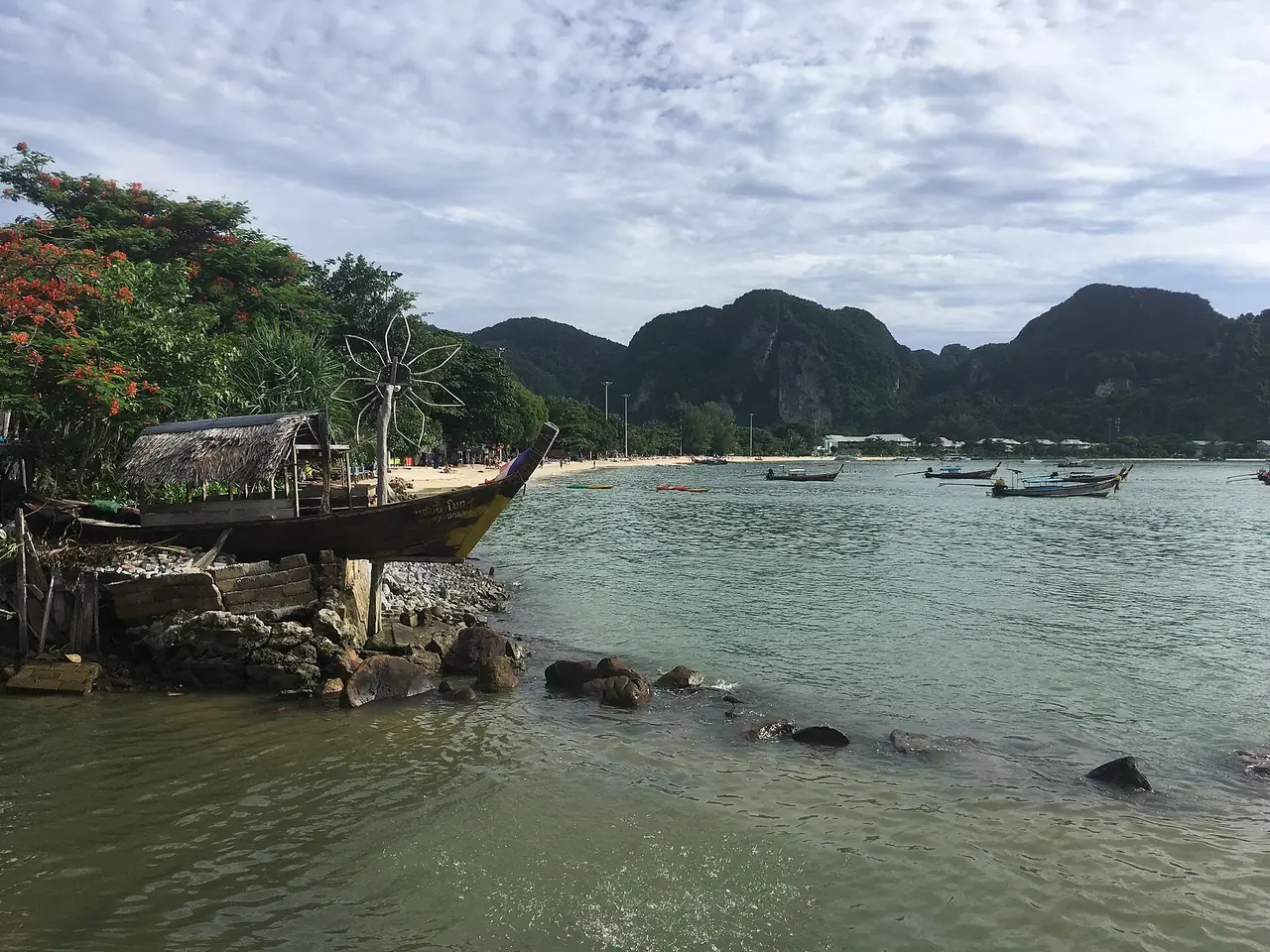
This is where you arrive. The pier is a working landing, not a scenic spot: ferries, speedboats, longtails and tour boats all use it, and it is crowded in the morning and late afternoon. Porters offer to carry bags for a fee; agree the price before you hand a bag over. Ton Sai Bay beach is on the same side, with many boats in the water, so choose another beach if you want a calmer swim.
Loh Dalum Bay
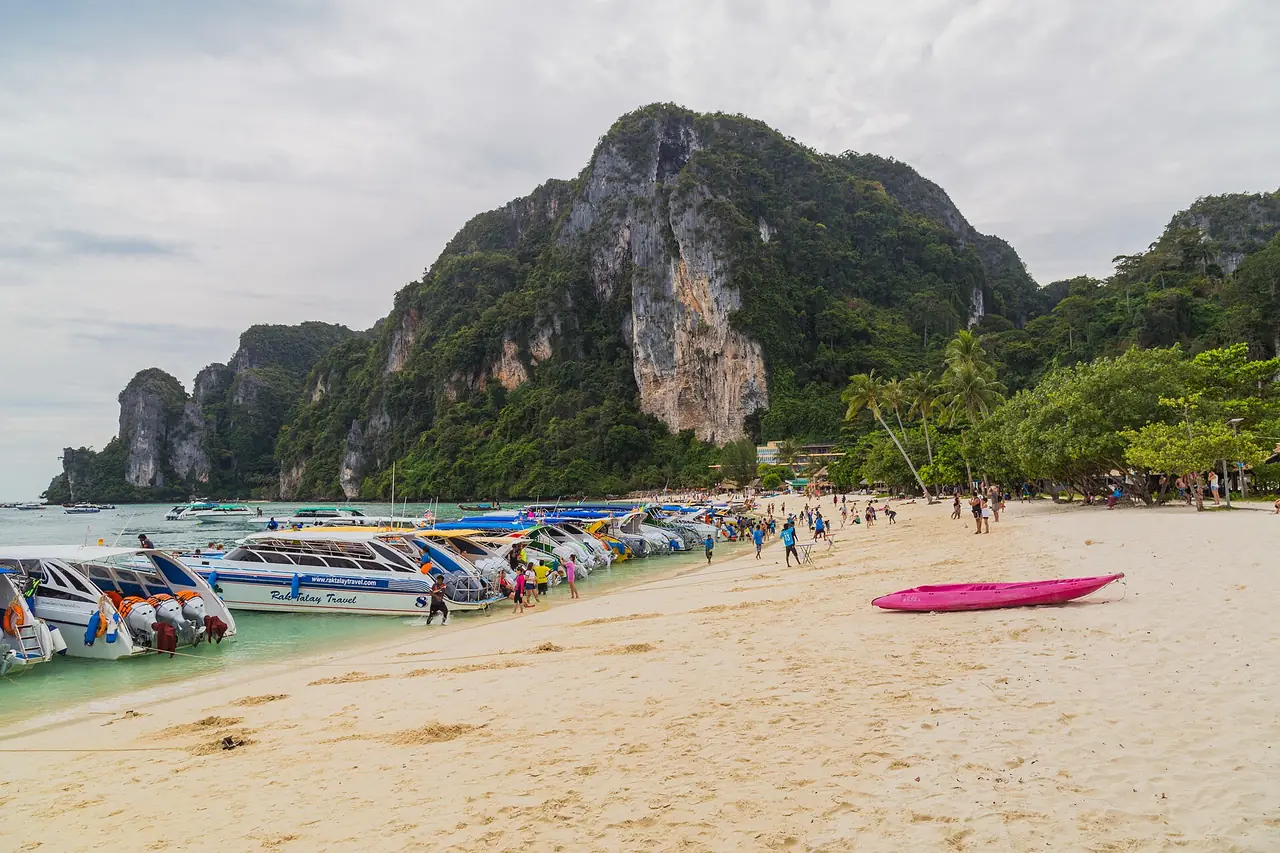
Loh Dalum is the other side of the strip, a short walk from the village. It is a longer, curved beach with hotels along it. Many visitors choose a hotel here for the beach and a short walk to the restaurants. Check on arrival where swimming is marked and where boats come in.
The viewpoints
There is more than one marked viewpoint above the village, and the numbering (Viewpoint 1, 2, 3) is used on local signs and visitor sites. They are steep, stepped walks, and a typical visit adds up to the climb, time at the top and the walk down. Go early or late to avoid midday heat; sunset is popular and gets crowded. Wear shoes with grip, carry water and do not go up in heavy rain.
Long Beach, Laem Tong and the outer bays
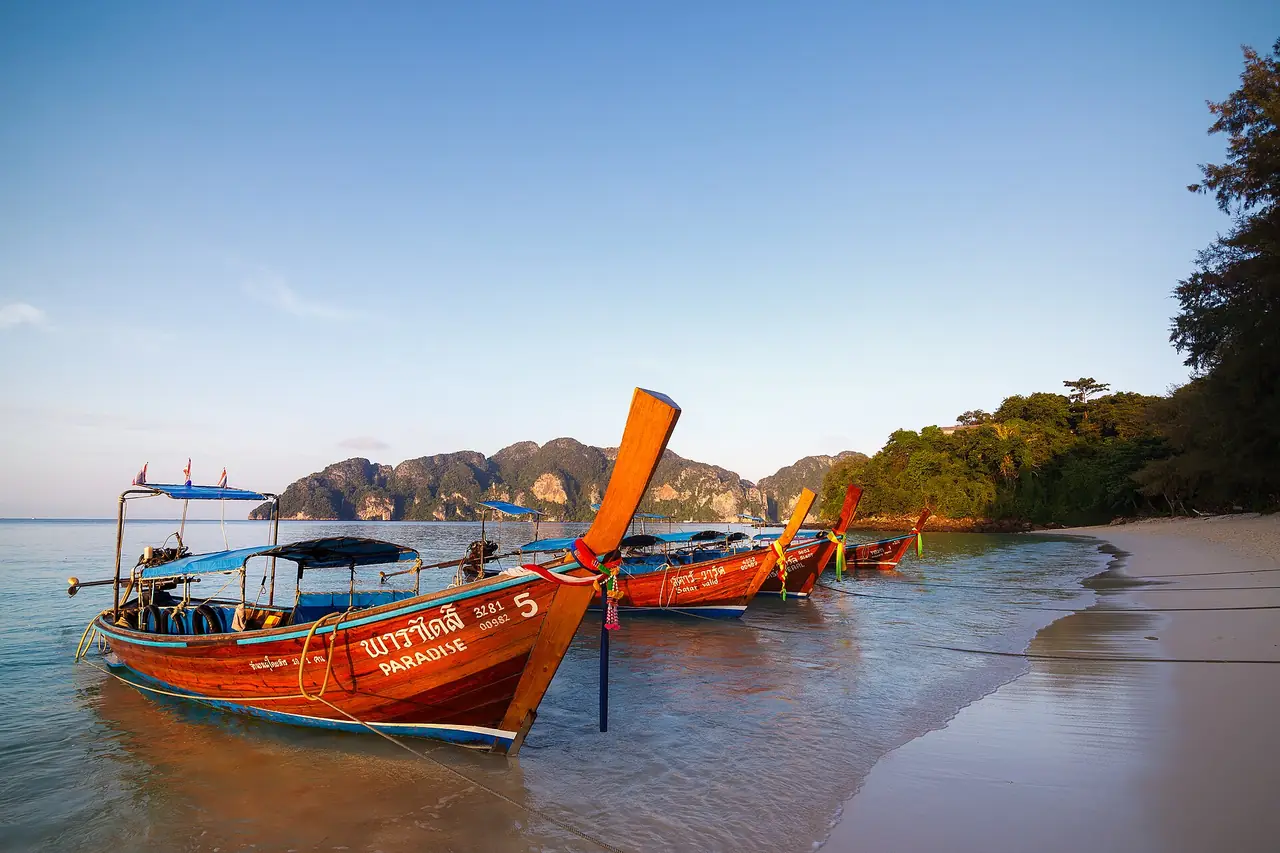
These are the quieter sides of the island. Long Beach is usually reached by longtail boat from Tonsai or by walking, depending on tide and conditions. Laem Tong is in the north and is served by some direct ferries from Phuket, according to the ferry operator Andaman Wave Master. Hin Khom, Phak Nam and other small bays are mostly visited by longtail boat. Ask your hotel or the boat owner about swimming conditions and the return time before you set off.
Nearby trips: Monkey Beach, Bamboo Island, Mosquito Island and Phi Phi Leh
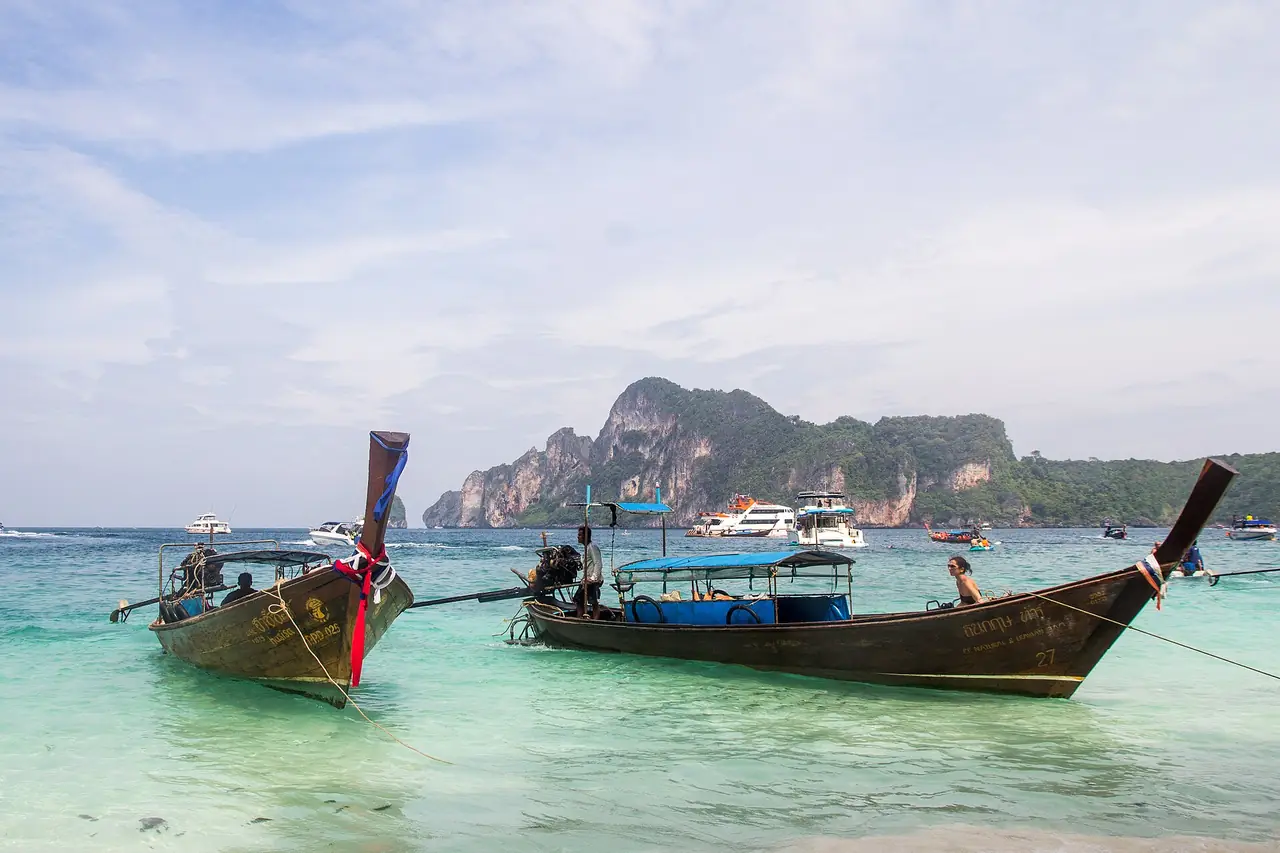
Phi Phi Don is the base for short boat trips. Monkey Beach is close to Phi Phi Don, while Phi Phi Leh with Maya Bay and Pileh Lagoon is across the water. Bamboo Island and Mosquito Island are nearby islands normally visited on a boat trip. For how a visit to Maya Bay works from Phi Phi Don, see Maya Bay from Phi Phi Don. Boat times, stops and what is included change by operator and season, so confirm those with the operator you book.
How to get to Phi Phi Don
There is no airport and no bridge, so you arrive by boat. Most ferries and speedboats go to Tonsai Pier. The ferry operator Andaman Wave Master lists Phuket (Rassada Pier) to Tonsai at about 2 hours by ferry or about 1 hour by speedboat, and also lists a route to Laemtong Beach. Check any operator's own site for the current timetable and fare.
| From | Pier | What to know |
|---|---|---|
| Phuket | Rassada Pier | Ferry or speedboat to Tonsai Pier; see Phuket airport transport for reaching the pier |
| Krabi mainland | Krabi piers (Klong Jilad and Ao Nang area) | Morning and afternoon boats; see Krabi airport transfer |
| Railay | Railay area boat services | Often by speedboat; read the Krabi islands and Railay guide |
| Koh Lanta | Saladan | Seasonal services; see Krabi to Koh Lanta and the Koh Lanta hub |
For route details, luggage and the rainy-season notes, read How to get to Koh Phi Phi from Phuket, Krabi and Lanta. If you are starting in Phuket and heading for Krabi first, see Phuket to Krabi.
Take a morning boat. If a departure is cancelled or delayed, you still have the afternoon to try another, and you reach the pier before the late-day crowds.
A day trip from Phuket
You can see Phi Phi Don on a day tour from Phuket, but that is a tour from Phuket, not an independent visit. A typical day tour combines boat transport, a stop or two and time on the water. Phi Phi Don is usually part of the itinerary, but the time on the island itself is short. The tour box on this page is for a Phuket-based Phi Phi day tour; compare inclusions, stops and time on the island before you choose. See the Phuket Phi Phi tour comparison and the Phuket hub for the options.
National park fee
A national park fee applies in much of the Phi Phi area, including the other islands in the group. The Department of National Parks fee list, an open-data file updated on 2 June 2023 that we read on 2026-10-16 (DNP fee list), gives THB 400 per foreign adult and THB 200 per foreign child for the zone covering Phi Phi Don, Phi Phi Leh and Bamboo Island, and THB 40 / 20 for Thai adults and children. Elsewhere in the park it lists THB 200 / 100 for foreigners. The Thai PBS report of 28 February 2017 records the national park advisory committee keeping the 400 baht rate for foreign adults and 200 for children, and cites a 2007 department notice for the Thai rates. Travel sources through 2026 repeat the same figures.
Two cautions. First, the DNP list is dated June 2023 and a newer notice would replace it (the park's own site, dnp.go.th, did not show one when we checked on 2026-10-16), so ask at the park office or pier before you go. Second, practice varies: some tours include the fee in the ticket and others collect it in cash, and one reference notes that parts of Phi Phi Don are outside the park boundary. If it is not clear, ask the operator or the pier counter what is included, and keep any receipt.
Getting around: no cars, longtail taxis and walking
Phi Phi Don has no road network for cars. Visitor sources describe the island as car-free: you walk, and you take boats. Longtail boat taxis run to Long Beach and the outer bays, and kayaks are used for close coves. From Tonsai Pier you can walk to most things on the narrow strip, including Loh Dalum Bay.
- Agree the price and the return time before a longtail trip.
- Wheeled bags work on the main paths but are awkward on sand; ask your hotel how to reach it from the pier.
- Carry some cash, although there are ATMs in the village.
Beaches, swimming and snorkelling basics
- Swim where boats are not moving. Ton Sai Bay is a working harbour; keep clear of boat lanes.
- Wear a life jacket if you are not a confident swimmer, and never swim alone in rough water.
- Do not stand on or touch coral. Use reef-safe sun protection and avoid feeding fish or monkeys.
- Currents and waves change with the season and the tide. If a beach has a warning flag, treat it seriously.
- Ask your hotel or boat operator where snorkelling is easy on the day.
Do not feed the monkeys, and keep food and bags out of reach. They are wild animals and can bite or scratch.
Season and sea conditions
The Andaman coast has a drier season, roughly from November to April, when the sea is usually calmer, and a wetter season from around May to October, when southwest monsoon swell and rain are more common. These are broad patterns, not guarantees. The Thai Meteorological Department (TMD) issues the official forecasts and wave warnings. For example, in a 28 June 2026 forecast reported by The Nation Thailand, TMD said southwest monsoon conditions would strengthen, with waves of 2 to 3 metres in the upper Andaman Sea and about 2 metres in the lower Andaman Sea, and advised small boats in the upper Andaman Sea to stay ashore.
What that means for you:
- Ferries usually keep running in the wet season, but speedboats and small tours are more often cancelled.
- Leave buffer days before flights and any non-refundable plans.
- Check the forecast and warnings at tmd.go.th the day before and again that morning.
Maya Bay on Phi Phi Leh has an annual closure of about two months, 1 August to 30 September, according to Time Out Bangkok (7 October 2025). Confirm the dates with the park or your operator for any trip. For wider timing see Phuket best time to visit and Thailand best time by region.
Where to stay on Phi Phi Don
Your base decides how much walking you do and how quiet it is at night. For the detailed comparison and hotel cards see Where to stay in Koh Phi Phi. This short table is the overview.
| Area | Good for | Trade-off |
|---|---|---|
| Tonsai village and pier | Restaurants, boat desks, easy arrival | Busiest and loudest, crowded in the day |
| Loh Dalum Bay | Beach close to the village | Some boat traffic and nightlife noise nearby |
| Long Beach | Quieter beach feel | Needs a boat or walk to the village |
| Laem Tong and the northern bays | Resort stays and quiet | Remote; you depend on boats and your resort |
If you are building a wider trip, see the Krabi where to stay guide and the Koh Phi Phi hub.
How many days to spend
- Day trip: Possible from Phuket or Krabi, but you see the island briefly and the pier area is busiest then.
- One night: Lets you see sunset and early morning without the day-tour crowds.
- Two nights: Enough for a viewpoint walk, a longtail trip and a beach morning, with time to spare for weather.
- Three or more nights: Worth it if you dive or want the quiet bays.
If you cannot choose between islands, read Thailand: which island.
Safety and responsible visiting
- Learn the tsunami evacuation signs and your hotel's route to higher ground. The island has low ground in the middle.
- Follow park rules and any ranger instructions at beaches and on boats.
- Wear the life jacket on the boat; do not insist on a crossing in unsafe conditions.
- Do not take or step on coral, shells or wildlife. Take your rubbish with you.
- Bring sea-sickness and personal medicine; larger hospitals are on the mainland. Emergency numbers are on the Koh Phi Phi hub. For general travel safety see Thailand safety, scams and health.
What to bring
- Cash in small notes, a card and a power bank
- A dry bag for phone and passport copies
- Reef-safe sunscreen, a hat and a water bottle
- Shoes with grip for the viewpoint
- Motion sickness tablets and any personal medicine
- Travel insurance details; see Thailand eSIM vs SIM for connectivity and Thailand budget per day for costs
FAQ
Is Phi Phi Don the same as Phi Phi?
Not exactly. "Phi Phi" usually means the island group, and Phi Phi Don is the main inhabited island within it. Most visitors who stay overnight stay on Phi Phi Don and visit Phi Phi Leh, the smaller uninhabited island, on a boat trip.
Is Maya Bay on Phi Phi Don?
No. Maya Bay is on Phi Phi Leh, across the water from Phi Phi Don. You reach it by boat. See Maya Bay from Phi Phi Don for how the trip works.
Is there an airport on Phi Phi Don?
No. The nearest airports are in Phuket and Krabi, and you continue by ferry or speedboat. Allow extra time after a flight and do not book a tight connection. See How to get to Koh Phi Phi.
Are there ATMs on Phi Phi Don?
There are ATMs in the village near the pier, but we could not verify current numbers or limits from an official source. Bring some cash in case a machine is empty, and keep small notes for longtail boats.
What are the best months to visit?
Roughly November to April is the drier season with usually calmer seas, while May to October is wetter with more swell. Check the TMD forecast for your dates. See Thailand best time by region.
Do I need to pay a national park fee?
Yes, inside the park. The DNP fee list (updated 2 June 2023) gives THB 400 per foreign adult and THB 200 per foreign child for Phi Phi Don, Phi Phi Leh and Bamboo Island, and THB 40 / 20 for Thais. Ask the operator whether the fee is included, and check the DNP site before you travel.
Can I do Phi Phi Don as a day trip?
Yes, from Phuket or Krabi, usually on a boat tour. A Phuket day tour includes boat transport and stops, but the time on the island itself is short. If you want the viewpoint and quiet hours, stay at least one night. See the Phuket Phi Phi tour comparison.
Are there cars or taxis on Phi Phi Don?
No cars. You walk, and longtail boats act as taxis to Long Beach and the outer bays. Agree the price before you board.
Official sources and further reading
- DNP national park entrance fee dataset
- Department of National Parks, Wildlife and Plant Conservation
- Thai Meteorological Department
- Thai PBS, national park committee keeps Phi Phi fee (28 Feb 2017)
- Andaman Wave Master (ferry operator)
- Time Out Bangkok, Maya Bay reopens (7 Oct 2025)
- The Nation Thailand, TMD monsoon and wave forecast (28 Jun 2026)
- Wikipedia, Ko Phi Phi Don (orientation only)
Prices, schedules and entry rules change. Figures here are approximate as of 2026; always confirm on the official or operator page before you book. Spotted something out of date? Tell us.