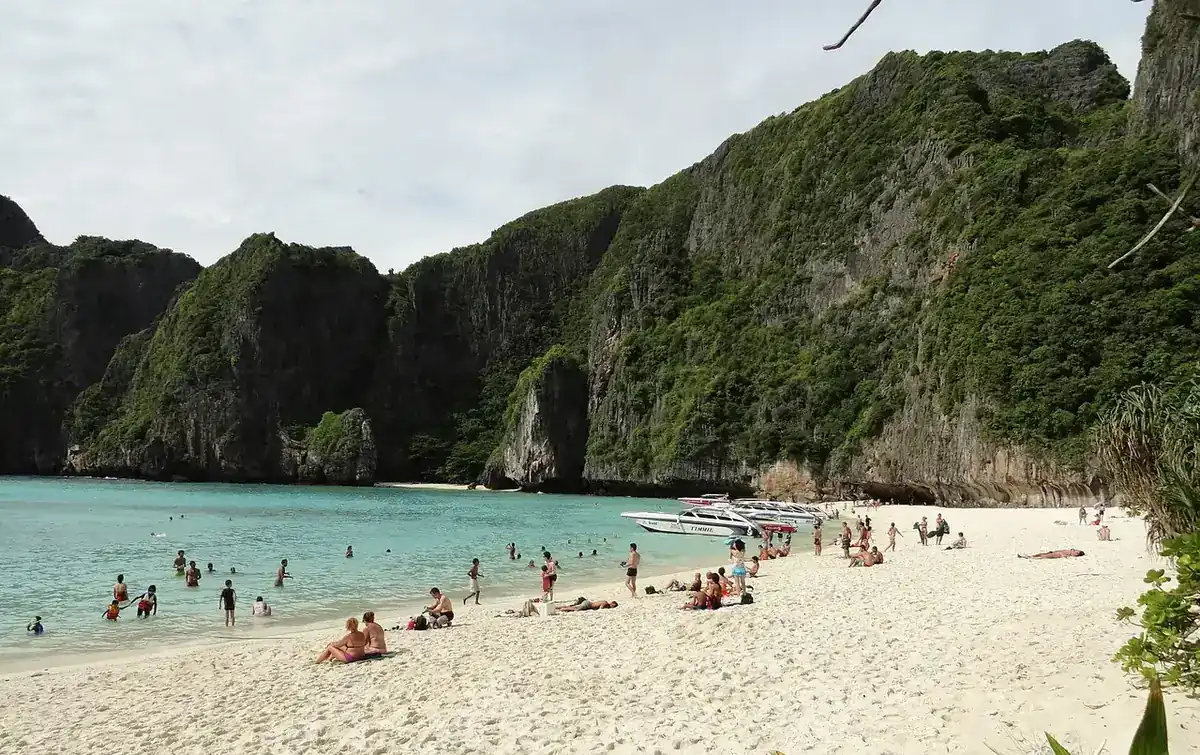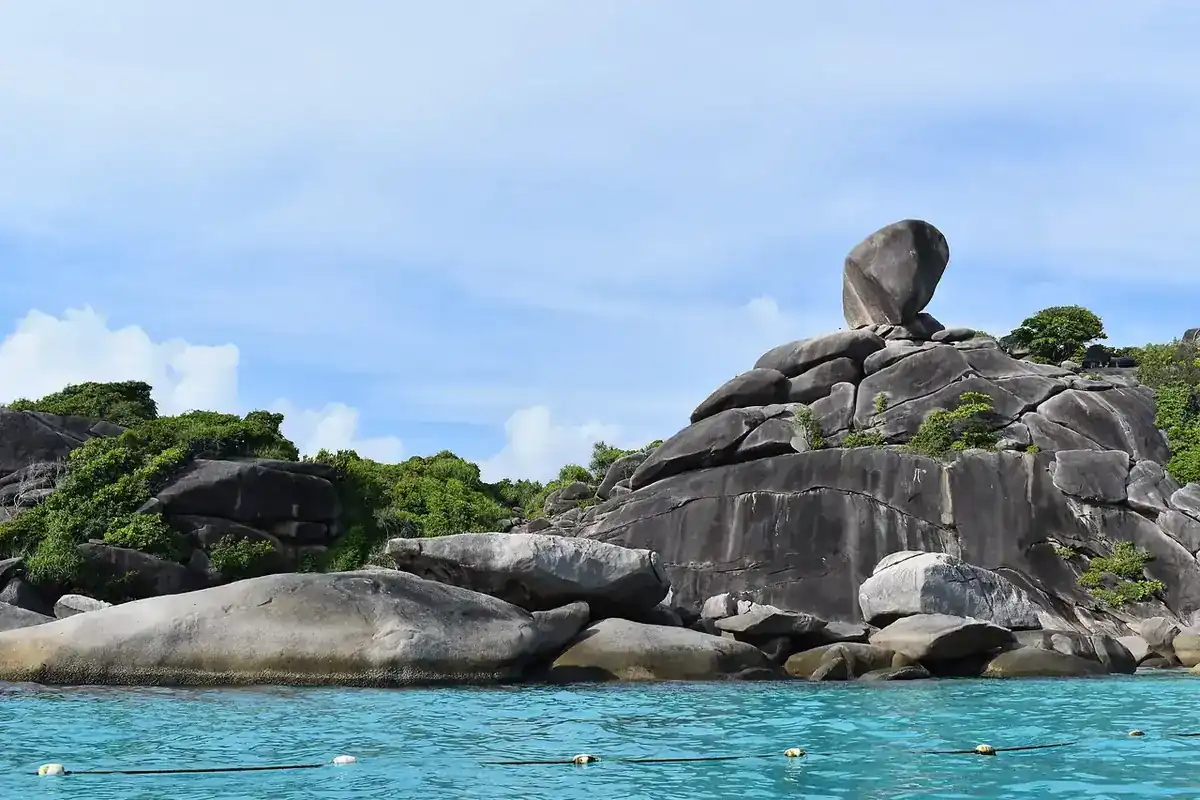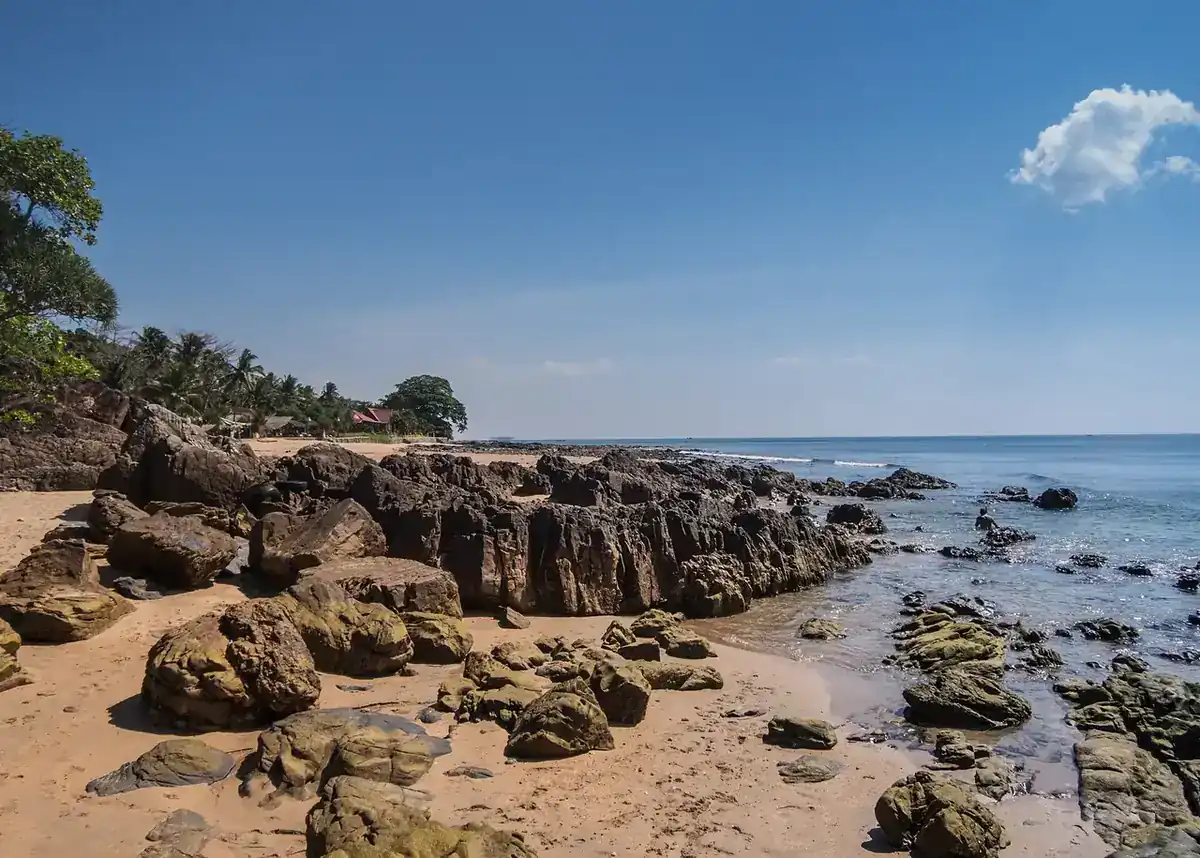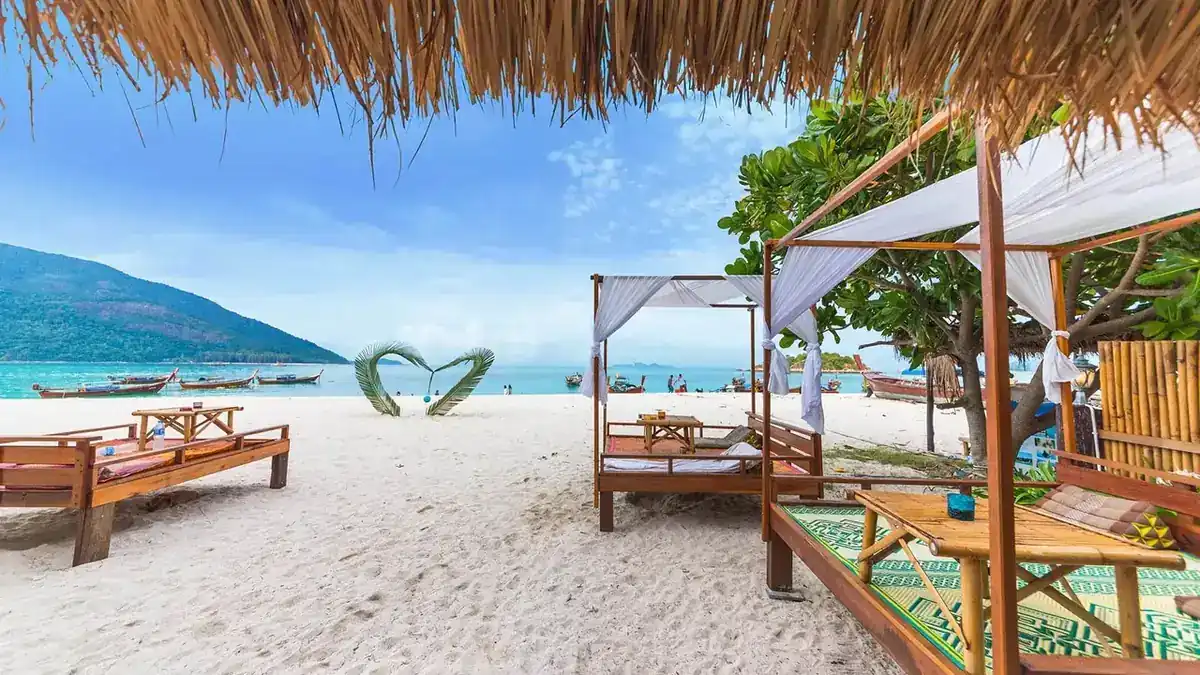
Koh Phi Phi is a small island group, but choosing a place to sleep makes a big difference. The main village around Tonsai Pier is practical and busy, Loh Dalum is close to beach nightlife, and the outer bays trade convenience for a quieter setting. There are no roads connecting the main village to the remote resorts, so the right area depends on how much you want to walk, how late you stay out, and whether you are comfortable relying on boats.
This guide compares the main areas by access, atmosphere, beach use and broad room-price bands. Rates change sharply by date and property, so treat every figure as a planning estimate and check the current terms directly before booking. For island orientation and activities, start with the Koh Phi Phi hub.
How the island is arranged
Most visitors stay on Phi Phi Don. Ferries arrive at Tonsai Pier, beside the narrow central isthmus. Tonsai village has the largest concentration of restaurants, shops, small hotels and services. Loh Dalum, the bay on the north side of the isthmus, is a short walk away. Long Beach lies southeast of Tonsai, while Loh Ba Gao and Laem Tong are farther north and east, separated from the village by hills and water.
The walking paths in the central area are narrow and can be crowded. There is no island road system for cars or regular taxis. You can walk between Tonsai and Loh Dalum easily; Long Beach is a longer walk over a hilly path or a short boat ride. Remote northern resorts generally use longtail transfers. Ask a property about its pier pickup, luggage handling, operating hours and weather policy before confirming a stay.
Area comparison
| Area | Atmosphere | Best suited to | Access and trade-off |
|---|---|---|---|
| Tonsai village | Busy, central, practical | First visits, short stays, travellers using ferries | Walkable to services; can be noisy and crowded |
| Loh Dalum | Beach bars and late nights | Nightlife and social trips | Near Tonsai; sound can carry late |
| Long Beach | Relaxed beach-resort feel | Couples, swimmers, slower stays | Walk or boat from Tonsai; fewer services |
| Loh Ba Gao | Quiet, resort-oriented | Guests happy to stay near their resort | Boat access; limited independent dining nearby |
| Laem Tong | Remote and peaceful | Longer, resort-based breaks | Boat-dependent and far from Tonsai facilities |
Swimming, sand conditions and boat traffic vary with tide and weather. Follow local signs and beach flags, and ask the accommodation which parts of the shore are suitable for swimming during your dates.
Tonsai village: easiest for ferries and everyday needs
Tonsai is the most convenient base if you arrive by ferry, want a wide choice of meals, or prefer to arrange day trips on foot. Guesthouses, hostels and hotels are packed into the village and the lanes behind the pier. You can reach shops and boat desks without arranging a transfer, and you have the simplest access to the central walking paths.
The trade-off is the activity. Ferries, day visitors, restaurant deliveries and evening venues keep the area busy. Rooms near the pier may hear early arrivals; rooms beside bars may hear music late. The water beside the busy pier is for boat operations, not a quiet beach day.
Tonsai works particularly well for one or two nights, travellers with an early boat departure, and anyone who would rather spend time exploring than staying at a resort. If you are noise-sensitive, ask for a room facing away from bars and the main lane, and check recent property details for stairs or uphill access.
Loh Dalum: beach access with nightlife nearby
Loh Dalum sits just across the central strip from Tonsai. During the day the bay is broad and attractive, with shallow water over parts of the sandbar at low tide. In the evening, beach venues and fire performances draw a lively crowd. Staying here places you close to the social scene without needing a boat transfer.
Noise is the main consideration. The sound level depends on the property, season and exact position, and it can continue late. Check the accommodation's location relative to beach bars rather than relying only on a map pin. If you want quiet mornings, choose a room set back from the beach or consider Long Beach instead.
The central location is convenient for food and boat tours. It is not a secluded-resort experience, and beach conditions change with the tide. Families with young children or light sleepers may prefer a quieter part of the island unless they have confirmed a suitably calm room.
Long Beach: a slower pace near the village
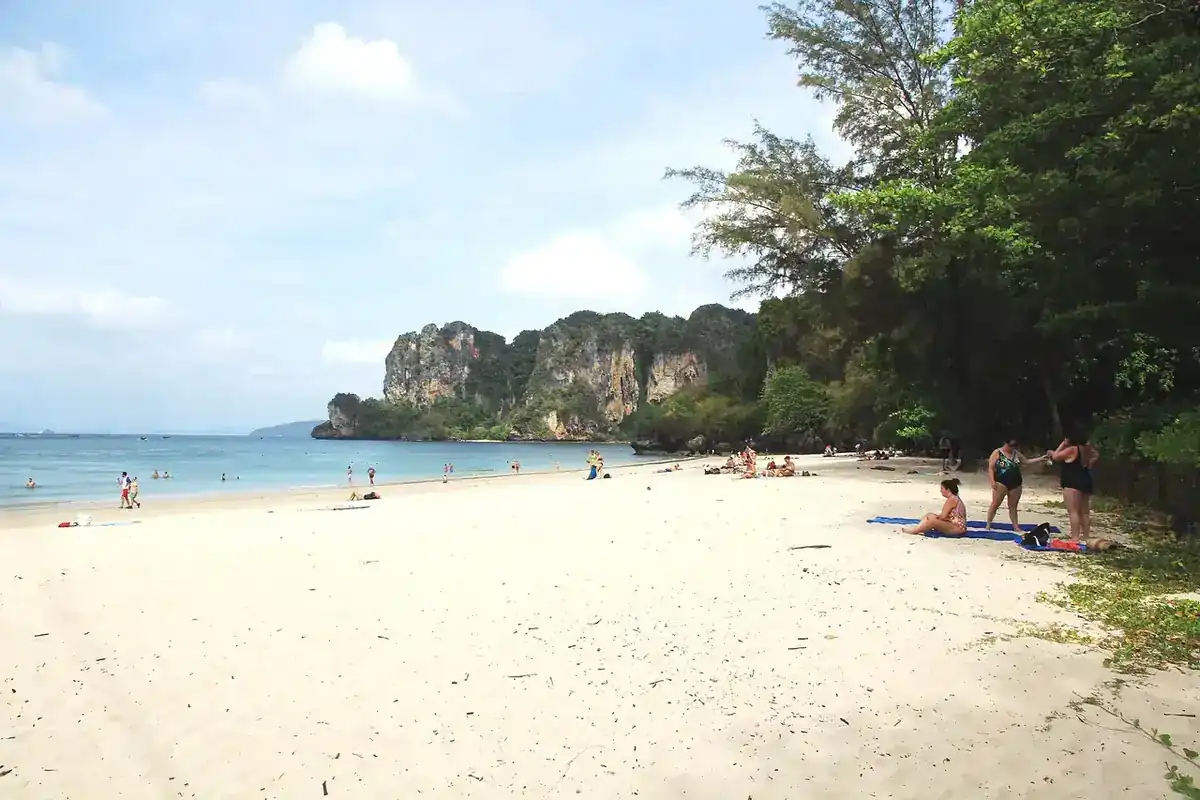
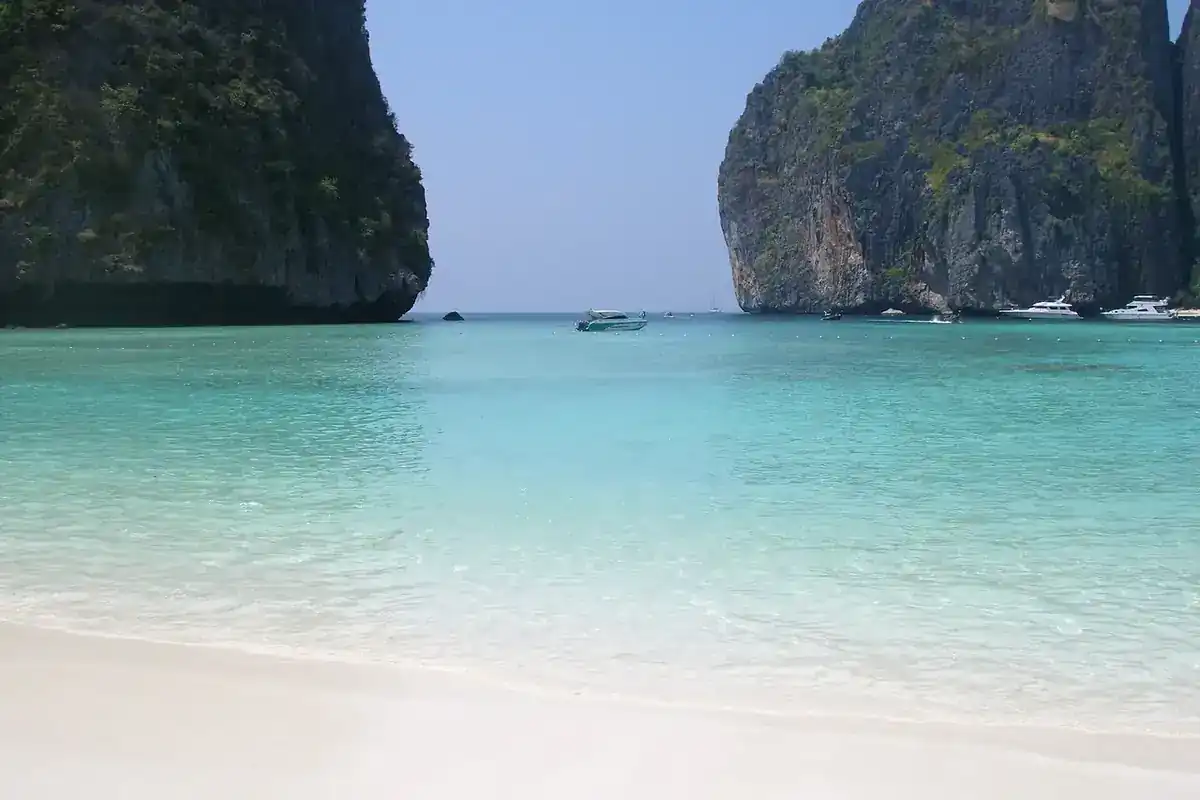
Long Beach is southeast of Tonsai and has a more relaxed resort feel, with a sandy shoreline and views toward the limestone islands. It suits travellers who want to spend more time at the water and less time in the centre. Some properties have their own restaurants, which helps when you do not want to go back to Tonsai for every meal.
The village is not far as the crow flies, but the hilly footpath and heat make the walk more demanding than a map suggests. A longtail boat is a convenient alternative when services are operating. At night or in rough weather, boat options may be less straightforward; confirm how you will get back before planning a late dinner in Tonsai.
Long Beach is a good compromise for a couple of nights: calmer than the centre, but not as isolated as the northern bays. Check the specific stretch of shore, since boat movement and water conditions vary by season.
Loh Ba Gao and nearby east-coast stays
Loh Ba Gao is a quieter bay with larger resort-style properties and a more self-contained feel. It is a fit for guests who expect to spend much of the day at the property or on the beach. Some stays in this part of the island are reached by boat or by longer walking paths, so transport and meal options deserve more attention than they do in Tonsai.
Before booking, ask whether the quoted room rate includes pier transfers, whether boats run after dark, and what happens if weather interrupts the crossing. Check whether there are restaurants within a comfortable walk and whether the resort offers meals throughout your stay. A low headline price may not reflect transfer and dining costs.
This area can work well for a quiet break, but less well for visitors who want to move around spontaneously. If you are staying only one night, the extra logistics may outweigh the calm setting.
Laem Tong: remote and resort-led
Laem Tong is at the northern end of Phi Phi Don. Its separation from the central village creates a peaceful, scenic setting, often with resort accommodation rather than small independent guesthouses. You can enjoy a slower schedule and spend time near the beach, but the location is not a convenient base for frequent trips to Tonsai.
Boat transfer arrangements are essential. Confirm the meeting point, luggage assistance, last transfer time, weather cancellation terms and whether the resort can help with onward connections. A planned island-hopping day or late ferry departure can become awkward if you have not allowed enough time to travel back south.
Choose Laem Tong for a resort-focused stay where quiet and scenery matter more than choice of restaurants or easy access to shops. For a short stop between Phuket and Krabi, Tonsai is usually simpler. See the Krabi hub and Phuket hub when planning the mainland legs.
What rooms may cost
| Style | Broad nightly range | Typical trade-off |
|---|---|---|
| Budget | THB 900-2,000 | Basic room or hostel bed, often in or behind Tonsai village |
| Mid-range | THB 2,500-6,000 | Private air-conditioned room; quality and location vary widely |
| Resort or beachfront | THB 6,000+ | More space or a quieter bay; transfers and meals may add cost |
These broad estimates are approximate as of 2026, not live quotes. December, January, holiday periods and weekends can cost more, while availability may be limited in quieter months. Compare the total stay cost, including boat transfers, meals, air-conditioning, breakfast, taxes and cancellation terms. Verify prices on the property's own page or your chosen booking service.
Phi Phi can cost more than staying on the Krabi mainland because many supplies and services arrive by boat. Budget for drinking water, meals and local transfers as well as the room.
A quick way to choose
| If your priority is... | Start by comparing... |
|---|---|
| Ferry convenience and the widest food choice | Tonsai village |
| Bars and a lively beach scene | Loh Dalum, after checking noise details |
| A quieter beach without being fully remote | Long Beach |
| A resort stay away from the central crowd | Loh Ba Gao or Laem Tong |
| One night before an early departure | Tonsai, near but not directly beside the noisiest venues |
For a first visit, two nights is a useful starting point: one day for the bays and viewpoints, another for a boat excursion or a slower beach day. A day trip from Phuket or Krabi can work, but leaves less time on the island and depends on boat schedules. Read how to get to Koh Phi Phi—if that guide is not available yet, confirm current routes with the ferry operator—before locking in an onward connection.
Booking checks and practical safety
- Confirm the exact location. Check whether the property is in central Tonsai, across the Loh Dalum side, or in a bay requiring a boat.
- Ask about luggage and steps. Central paths can be uneven, and some properties sit uphill.
- Clarify transfers. Confirm included boat pickup, arrival cut-off times and the plan for late or weather-disrupted crossings.
- Check noise and room details. Ask about nearby venues, air-conditioning, hot water and construction during your dates.
- Check the cancellation policy. Sea conditions can affect boat services. Keep buffer time before flights or important onward travel.
- Respect marine life and swimming boundaries. Avoid boat lanes, follow signs and do not touch or stand on coral.
Boat services and sea conditions can change quickly. As of 2026, check notices from the operator and park authorities close to travel, and do not assume a crossing will run in rough weather.
For park access rules and protected-area updates, consult the National Parks Department and local notices. General destination information is available from the Tourism Authority of Thailand. In Thailand, call 191 for police, 1669 for medical emergencies or 1155 for Tourist Police.
Plan the rest of your trip
- Explore the Koh Phi Phi hub for island orientation and activity ideas.
- Compare the Koh Lanta hub for a larger, quieter island base.
- Use the Krabi hub or Phuket hub to plan the mainland before or after Phi Phi.
- If your wider trip includes Bangkok, see where to stay in Bangkok.
FAQ
Which area is easiest for a first visit?
Tonsai is the most straightforward base for ferries, meals, shops and walking access. It is also busy. Choose it for convenience, and request a quieter room location if you are a light sleeper.
Where should I stay for nightlife?
Loh Dalum and central Tonsai are close to evening venues. That convenience can mean late noise, so check the property's position and room orientation before booking.
Is Long Beach walkable from Tonsai?
There is a hilly footpath, but the walk takes more effort than the short map distance suggests. A longtail boat is another option when services and conditions allow. Ask your accommodation about the current route and return options.
Is a northern resort a good choice for one night?
It can be inconvenient for a one-night stop because you depend on boat transfers and have fewer nearby services. It is more suitable when you want a resort stay and can spend several nights in the same area.
When should I book accommodation?
Book earlier for December, January, weekends and public holidays, especially if you want a particular beach or room type. Outside busy periods, compare cancellation terms and verify boat access for your dates.
Are room prices fixed throughout the year?
No. Rates vary by demand, room type, season and booking conditions. Treat the ranges in this guide as approximate planning bands and check a current quote before making plans.
Official sources and further reading
Prices, schedules and entry rules change. Figures here are approximate as of 2026; always confirm on the official or operator page before you book. Spotted something out of date? Tell us.