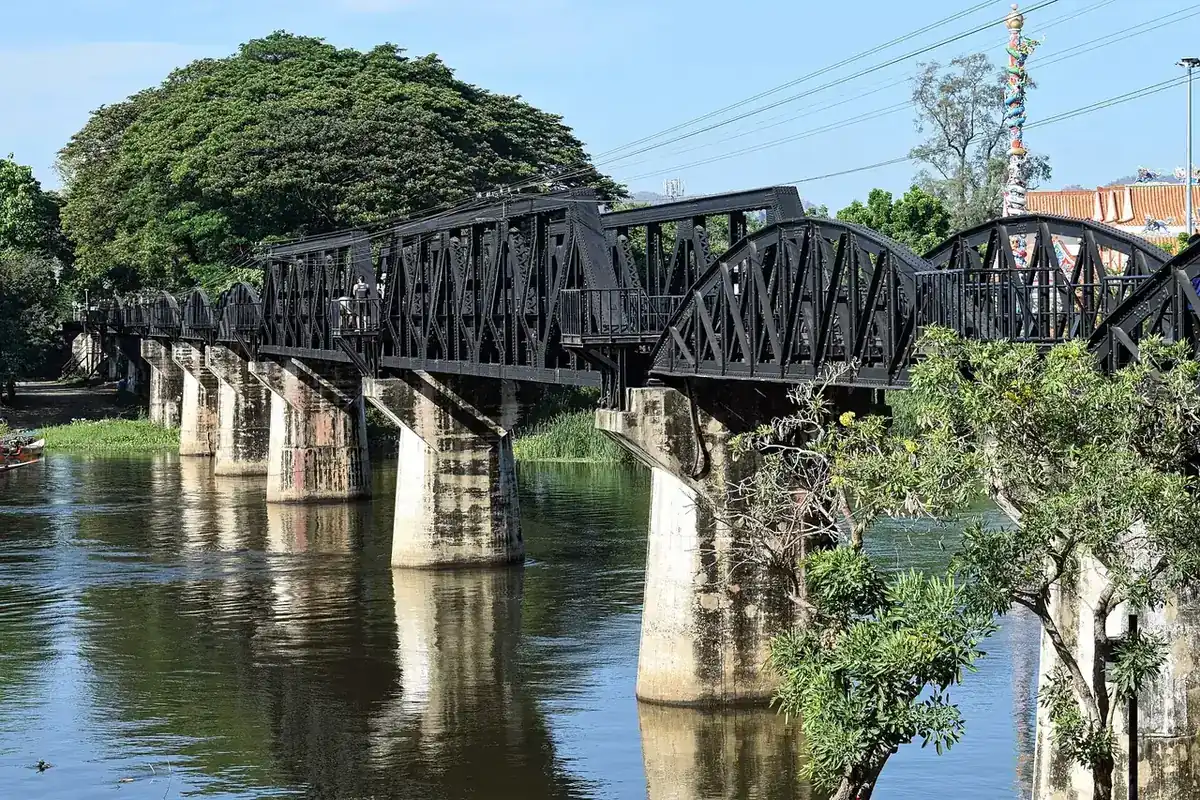
Kanchanaburi is a large province, not one compact resort town. A room near the railway station makes museums and meals straightforward, while riverside properties trade convenience for scenery. Bases around Sai Yok or Erawan put nature first but require more planning for transport, food and park visits. Choose the base around the places you want to see, then check the exact property location: “riverfront” can mean a quiet stretch well outside town.
This guide compares areas rather than hotels. For the province overview, see the Kanchanaburi hub; for the main sights and a two-day route, use the Erawan and Death Railway guide. The Bangkok day-trip guide helps decide whether to stay overnight.
Quick area comparison
| Base | Works well for | Main advantage | Trade-off |
|---|---|---|---|
| Kanchanaburi town | First visits, rail arrivals, museums and varied meals | The broadest choice of services and easier onward transport | Not a wilderness setting; sights are spread out |
| River Kwai / riverfront | Couples, slower stays and scenery | River views, gardens and a retreat feel | Some properties are distant from town and need transfers |
| Sai Yok and Nam Tok | Railway scenery, caves and national-park time | Closer to western nature attractions | Fewer restaurants and less frequent transport |
| Erawan / Srinagarind area | Waterfall-focused trips and early starts | Less time travelling to Erawan National Park | Limited accommodation and services; verify access carefully |
Kanchanaburi town: the practical first base
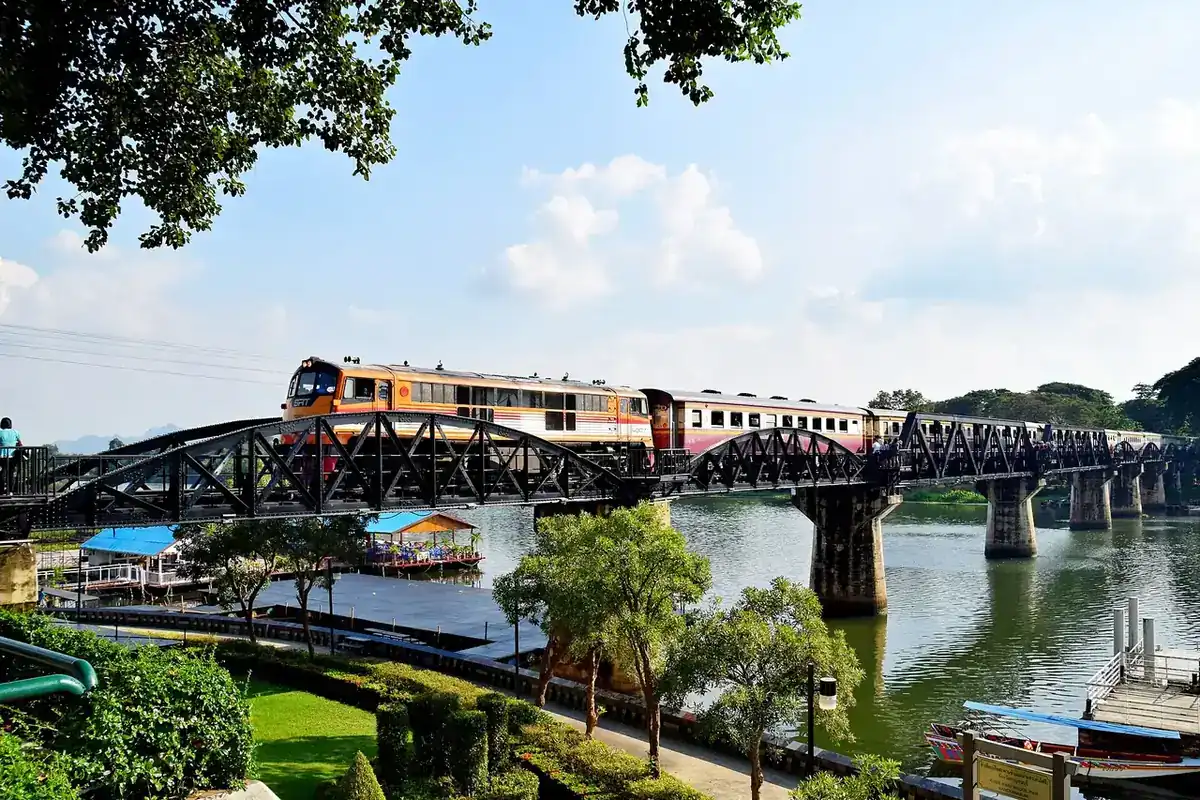
Town is the safest default for a first visit, especially without a car. It has guesthouses, small hotels and larger properties, plus restaurants and convenience shops. The railway station, bus terminal and the Bridge over the River Kwai are within the wider urban area, but they are not all next door to one another. Check a map for the station, the bridge, your lodging and your planned museums instead of assuming “central” means walkable to every sight.
Stay near the railway station or central commercial streets if you plan to arrive by train or bus, want dinner choices, and expect to arrange day tours locally. Choose a location closer to the bridge if that is your main evening or early-morning stop. Distances may look short on a map yet feel uncomfortable on foot in heat, rain or along roads without continuous pavements. Use a taxi, ride service where available, or a pre-arranged transfer when needed.
Town is also the better base for the cemeteries and museums that explain the Thailand-Burma Railway. These are memorial places. Allow time rather than treating each as a quick photo stop, and check current opening arrangements directly with each institution. After a day out, town gives you the most flexibility for a meal without arranging transport from a remote resort.
Riverside properties: scenery with a location check
“Riverside” describes very different stays: urban hotels by the water, resorts on the outskirts, and raft houses reached by road or boat. Consider this category if a quiet setting is part of the trip, you have at least two nights, or you are content to eat at the property. Before booking, ask how guests reach the road, whether a vehicle can reach the entrance, and what transport is available after dark.
Raft-house stays may be attractive for the setting, but confirm what is included, whether electricity or mobile service is limited, and how check-in works. Look at recent property information for noise, stairs, accessibility and boat transfers rather than relying on a landscape photograph. A riverside location does not automatically provide a safe swimming area; follow local instructions and do not enter fast or unfamiliar water.
For visitors combining town history with a night on the river, choose a property with an explicit transfer plan. Otherwise, every meal and museum visit may require a long round trip. A town-side riverside hotel often gives a useful compromise: water views while remaining closer to shops and onward transport.
Sai Yok and Nam Tok: western scenery and railway stops
Sai Yok and Nam Tok are useful bases for travellers continuing along the Death Railway, visiting the Tham Krasae viaduct, or spending time around Sai Yok National Park. The area feels more rural than town. Accommodation ranges from simple stays to secluded resorts, and some are spread along roads or riverbanks rather than clustered around a walkable centre.
Choose this base when your itinerary is built around western Kanchanaburi and you can arrange transport. Check the distance from the property to the station, park entrance or boat pier you actually need. A train stop does not guarantee that your lodging is nearby, and train services are limited; verify current times with the State Railway of Thailand before committing to a connection. If arriving late, arrange a pickup with the property in advance.
This is usually less convenient for a short trip focused on Kanchanaburi town’s museums and cemetery. You can combine both areas over several nights, but avoid changing accommodation every day unless the transport links make it worthwhile.
Erawan and the Srinagarind area: prioritise the waterfall
Staying nearer Erawan can make an early visit easier and leave more time for the park, particularly if you want to walk beyond the lower pools. Accommodation and food options are thinner than in town, so confirm that the property is open on your dates, how guests reach the park, and whether meals or transfers need advance arrangement. The Department of National Parks is the official starting point for current park information; hours, access rules and conditions can change.
Do not assume that a pin marked “Erawan” is beside the entrance. Check the road route, transfer time and return plan. Local buses or songthaews may serve the corridor, but frequency and last departures can vary; confirm locally and keep a fallback. If you want both the falls and historical sites, a town base with a driver or organised transfer may be simpler than lodging near the park.
Choose by trip style
| Your priority | Base to consider | Planning note |
|---|---|---|
| First visit without a car | Kanchanaburi town | Book near the transport point you will use; arrange trips to outlying sights |
| Museums, cemetery and the bridge | Town or a town-side riverside stay | Leave time for each memorial and check museum details |
| A quiet river break | Riverside property | Confirm transfers, meals, road access and water-safety conditions |
| Erawan as the main event | Erawan / Srinagarind area or town with transport | Compare real transfer time and park access before choosing |
| Sai Yok and the western railway | Sai Yok / Nam Tok | Check train times and the distance from stop to lodging |
| A short Bangkok escape | Town | One central base avoids spending the trip changing hotels |
How many nights?
One night works for a focused town visit, but it leaves little margin if you arrive late or want both the railway sights and a national park. Two nights gives most first-time visitors a more realistic split: one day for town’s history and one for Erawan or another outlying excursion. Three nights can suit a slower trip combining town with Sai Yok or a riverside stay.
If you have only one full day, pick either the historical sites or the waterfall rather than trying to cover the province. For a detailed sequence, see the two-day itinerary. Travellers continuing to the ancient capital can plan it separately with Ayutthaya’s day-trip guide.
Booking and practical checks
- Map the exact location. Compare the property with the train or bus arrival point, bridge, museum and excursion meeting point. Read the access route, not only the straight-line distance.
- Confirm transport. Ask whether the property can arrange a pickup, how much notice is required and whether the return trip is available. Timetables and local services can change; check current details as of 2026.
- Check the room and access. Confirm air-conditioning, stairs, lift, parking, river noise, mosquito screens and whether the approach is suitable for your luggage or mobility needs.
- Plan meals. Remote resorts may have limited nearby options or fixed meal service. Check opening days and whether advance notice is needed.
- Compare the whole cost. A cheaper room far from town may require paid transfers and meals at the property. Treat all budgets as approximate and check current prices directly.
- Respect memorial sites. Dress modestly at cemeteries and museums, follow posted rules and keep a quiet tone.
- Take care around water and roads. River levels and waterfall conditions vary with weather. Wear suitable footwear, obey park closures and avoid riding a motorbike unless properly licensed and insured.
For a first visit, book in town for two nights. Arrange the Erawan day trip separately, then consider a riverside or Sai Yok stay on a longer return visit.
A remote river resort can look close to town on a map while having no walkable food or transport. Confirm the transfer plan before reserving a non-refundable room.
Safety
Keep valuables secure and use a licensed, insured transport option. At waterfalls, wet rocks can be slippery and water conditions change after rain; follow park staff and closure signs. Use mosquito protection, drink safe water and carry travel insurance appropriate to your activities. In Thailand, call 191 for police, 1669 for a medical emergency or 1155 for Tourist Police.
FAQ
Where should a first-time visitor stay in Kanchanaburi?
Kanchanaburi town is the practical choice for most first visits because it has more food, transport and lodging options. Pick the exact neighbourhood based on your arrival station and planned sights.
Is it better to stay by the River Kwai?
A riverside stay suits a slower trip if you value the setting and have transport arranged. Some properties are outside town, so confirm access, meals and transfers before booking.
Can I stay near Erawan Falls?
There are places to stay in the wider Erawan and Srinagarind area, but choices and services are more limited. Confirm the property’s distance from the park entrance and current transport arrangements.
Is Sai Yok a good base for the Death Railway?
It can work well for the western railway and national-park area, especially with a car or arranged driver. It is less convenient for town museums, and train schedules are limited, so plan connections carefully.
How many nights should I book?
Two nights is a useful starting point for town history plus one major nature excursion. Add a night if you want to include both Erawan and Sai Yok without rushing.
Do I need a car?
No, but a car or driver makes outlying parks and rural lodging much easier. Without one, stay in town and confirm tours or local transport before setting out.
Official sources and further reading
Prices, schedules and entry rules change. Figures here are approximate as of 2026; always confirm on the official or operator page before you book. Spotted something out of date? Tell us.