Kanchanaburi combines two quite different experiences: some of the most affecting World War II memorials in Southeast Asia, and some of the most beautiful waterfalls within reach of Bangkok. Done well over two days, they make a balanced trip. This guide explains the history briefly and respectfully, then covers transport, a two-day plan, costs and practical tips. For the broader picture, see the Kanchanaburi hub; for a Thai-language plan, see the weekend guide in Thai.
The history behind the railway
In 1942-1943, during World War II, the Japanese military built a railway connecting Thailand and Burma (now Myanmar) to move troops and supplies. Allied prisoners of war and a much larger number of Asian labourers, recruited or forced from Southeast Asia, worked in harsh conditions with limited food, medicine and shelter. Tens of thousands died from disease, malnutrition, exhaustion and violence. Exact numbers vary by source and are still discussed by historians, so treat any single figure with caution.
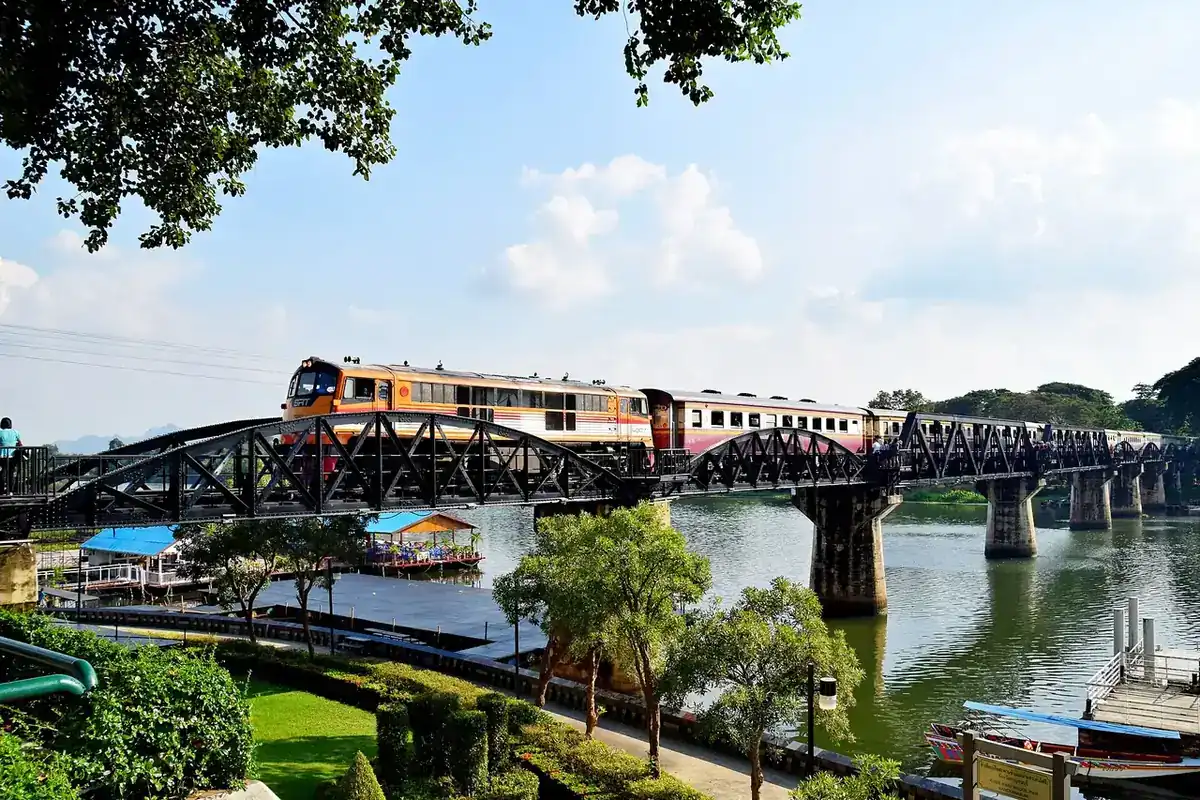
The railway earned the name "Death Railway". Today the preserved sections, cemeteries and museums serve as memorials. Visit them quietly, dress modestly and avoid posing casually in front of graves or monuments. The famous "bridge over the River Kwai" is a working railway bridge that was rebuilt after wartime damage; the story in popular films is a fictionalised retelling, so museum visits help separate the film from the history.
Getting there from Bangkok
Schedules, operators and fares change, so check each operator's own site on the day (as of 2026).
- Train: A slow service from Thonburi (Bangkok Noi) station runs to Kanchanaburi and on to Nam Tok, travelling over the Death Railway. It takes a few hours, is inexpensive, and has limited departures, so check the timetable at the State Railway of Thailand. Seat selection and tourist services may vary on weekends.
- Minivan or bus: Services leave from Bangkok's southern bus terminal and other points, typically taking 2-3 hours.
- Private car or taxi: About 2-2.5 hours outside peak hours; useful for Erawan and Hellfire Pass.
- Tours: One-day tours usually combine the bridge, railway and Erawan. They are efficient but tiring; consider two days if you want time at the museums and the falls.
Getting around Kanchanaburi
- Rental car: The easiest way to reach Erawan, Hellfire Pass and Sai Yok at your own pace.
- Motorbike: Common, but roads to the parks involve traffic and bends; only ride if you have experience, a licence and insurance coverage.
- Songthaew and local buses: Cheap and slow; services to Erawan run from Kanchanaburi bus terminal on a regular but limited schedule.
- Taxi and tours: A driver can be hired by the day; agree the price and stops beforehand.
- Train: Useful for the Nam Tok section and the Tham Krasae viaduct.
Two-day itinerary
| Time | Day 1: History in and around town |
|---|---|
| Morning | Arrive Kanchanaburi; visit the Kanchanaburi War Cemetery (Don Rak) |
| Late morning | War museums, including JEATH, or the Thailand-Burma Railway Centre |
| Afternoon | Bridge over the River Kwai; walk across if open and safe |
| Late afternoon | Train from Kanchanaburi towards Nam Tok, or a riverside rest |
| Evening | Dinner by the river; early night for Erawan |
| Time | Day 2: Erawan or Hellfire Pass |
|---|---|
| Early morning | Drive or transfer to Erawan National Park (about 1-1.5 hours) |
| Morning | Walk the waterfall tiers; swim at the lower pools if conditions allow |
| Midday | Lunch near the park entrance |
| Afternoon | Return to Bangkok, or visit Hellfire Pass museum on the way back |
Reach Erawan close to opening time. The tiers get crowded by late morning, especially on weekends and Thai holidays, and parking and shuttles fill up.
If you have a third day, add Sai Yok Noi waterfall, a river raft or the Hellfire Pass memorial walk, which is a half-day on its own.
Erawan National Park in detail
Erawan has seven tiers of limestone pools. The lower tiers are easy to reach; the upper tiers involve steps, roots and slippery rocks. Most visitors reach tier 5 or tier 7 depending on fitness and time. Water colour varies with season and recent rain, and runoff can turn the pools cloudy.
- Fees and rules: Entry fees, opening hours and visitor limits are set by the park and the national parks authority. Check the Department of National Parks site for current details (as of 2026).
- Footwear: Wear shoes with grip. Sandals can slip.
- Swimming: Allowed in designated pools. Do not swim in fast water or after heavy rain. Small fish may nibble your skin; this is normal.
- Food and plastic: Parks often regulate disposable plastic and bring-your-own food; follow ranger instructions.
- Closures: Trails can be closed after storms or in the wet season. Always check the park before travelling.
Slips and falls are the main accident risk at waterfalls. Stay on marked paths, do not climb on wet rocks beside the water, and avoid pools in flood or after heavy rain.
Hellfire Pass
Hellfire Pass is a long cutting through rock, built largely with hand tools under extreme pressure. A memorial museum near the site, supported by the Australian government, explains the story and organises a walking trail. Allow at least two to three hours, bring water and walk with care on uneven ground. Some sections of the trail may be closed after wet weather; check on arrival. Nearby, the railway towards Nam Tok offers scenic cliff-side views.
Costs
All figures are approximate and may change (as of 2026); check each provider's own page.
| Item | Approx. cost (THB) |
|---|---|
| Bangkok to Kanchanaburi, one way | 100-300 by train or van |
| Rental car per day | 900-1,800 plus fuel |
| Private driver for a day | 1,800-3,500 |
| Motorbike per day | 250-400 |
| Erawan entry (foreigners) | Check the park; often in the low hundreds of baht |
| Museum entries | Check each museum; some require a small fee or donation |
| Meal in a local restaurant | 60-250 |
| Guesthouse per night | 500-1,500 |
| Mid-range hotel per night | 1,500-4,000 |
Two days with train, shared transport, budget guesthouses and local meals can cost under THB 1,500 per day; a rental car and mid-range hotel push it toward THB 3,500 or more.
What to bring
- Quick-dry clothing and a swimsuit for Erawan.
- Shoes with grip, plus a small towel.
- Water, sunscreen, insect repellent and a hat.
- Modest clothing for memorials: shoulders and knees covered.
- Cash for entry fees, small restaurants and songthaews.
When to go
November to February brings dry, comfortable weather; March to May is hot. The rainy season (roughly June to October) is fresher and greener, with fuller waterfalls but occasional closures, slippery trails and muddy water. Check Thailand best time by region for broader advice. Weekends and public holidays are busy.
Combining with other destinations
Kanchanaburi pairs naturally with Ayutthaya as a history-focused pair of trips from Bangkok, though each is better as a separate outing. See Bangkok day trips if you only have a single day.
Safety
Emergency numbers are 191 (police), 1669 (medical emergency) and 1155 (Tourist Police). Use bottled or filtered water, protect against mosquitoes, wear a helmet on motorbikes and carry insurance that covers medical care and activities such as swimming and hiking. Keep valuables out of sight in parked cars.
FAQ
Can I visit Kanchanaburi and Erawan in one day from Bangkok?
It is possible on an organised tour or with a private driver, but the day is long and rushed. One night in Kanchanaburi is more comfortable.
What is the best way to experience the Death Railway?
Ride the train from Kanchanaburi towards Nam Tok to see the cliff-side viaduct, and visit Hellfire Pass for the history. The museums in Kanchanaburi town provide context.
Is the bridge over the River Kwai worth visiting?
Yes, as part of the wider story. The bridge itself is a short stop, but it is best combined with the museums and cemetery.
Can children swim at Erawan?
Yes in designated lower pools with supervision, but watch for slippery rocks and strong water after rain.
Is it appropriate to take photos at the cemetery?
Respectful photographs are generally acceptable, but avoid posing on or in front of graves and keep your voice low.
How do I get to Erawan without a car?
Songthaews and local buses run from Kanchanaburi, though schedules are limited. Check at the bus terminal and plan an early start so you can return before the last service.
Official sources and further reading
Prices, schedules and entry rules change. Figures here are approximate as of 2026; always confirm on the official or operator page before you book. Spotted something out of date? Tell us.