Koh Chang is Thailand's second-largest island, and its accommodation is spread along a steep west coast and quieter southern and eastern shores. Picking a base affects how much time you spend travelling, whether you can walk to dinner, and how easy it is to reach a beach or arrange a boat trip. This guide compares areas by practical fit; it does not rank individual hotels. For island orientation, see the Koh Chang travel guide and the Thailand hub.
Quick area comparison
| Area | Best fit | Evening feel | Main trade-off |
|---|---|---|---|
| White Sand Beach | First visit, families, convenient services | Busy and varied | More developed and less secluded |
| Klong Prao | Longer stays, families, resort beaches | Relaxed, spread out | Long distances between properties and services |
| Kai Bae | Central beach stay, couples, mixed plans | Restaurants and sunset bars | Hills and limited walking between some resorts |
| Lonely Beach | Backpackers and social evenings | Lively around the village | Noise varies; steep access and hills |
| Bailan | Quiet budget stays and slower trips | Low-key | Fewer services and limited transport late |
| Bang Bao and the south | Boat trips and a quiet setting | Quiet after day visitors leave | Far from the west-coast centre |
| East coast | Seclusion, local village life and road trips | Very quiet | Few beach resorts and longer journeys |
The west-coast road is the main accommodation corridor, but hills, curves and resort access roads can make short map distances feel longer. If you do not ride a scooter, stay near the services you expect to use or ask the property to confirm transport options before booking.
White Sand Beach: the easiest first base
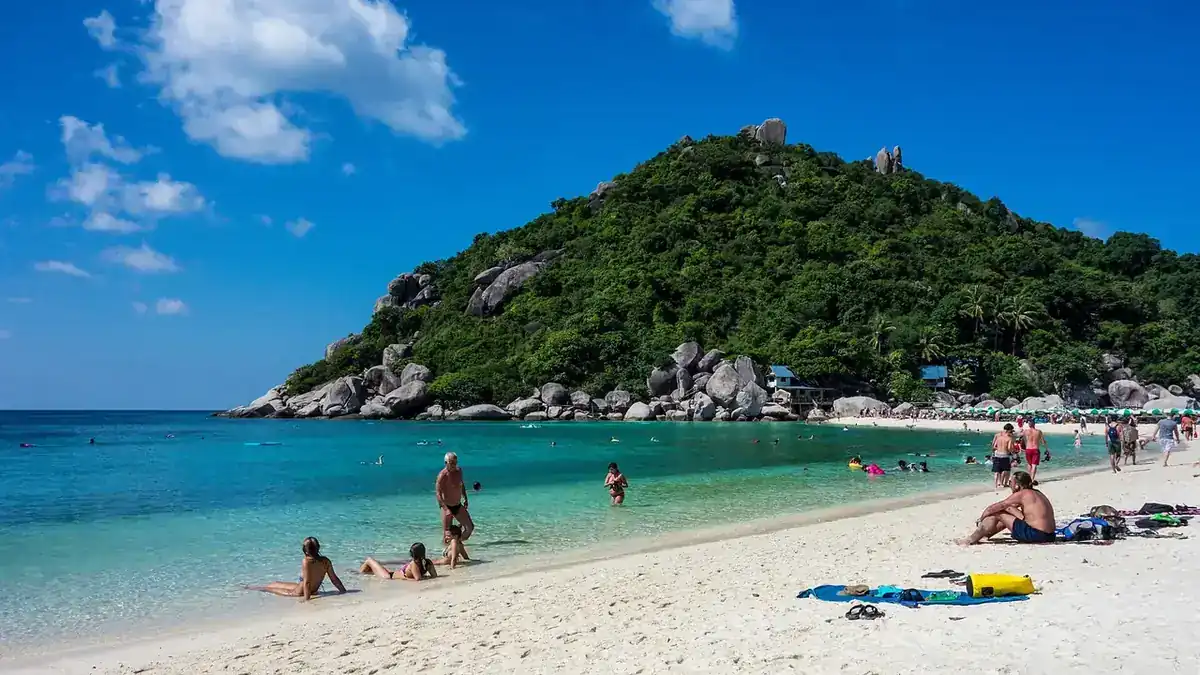
White Sand Beach (Hat Sai Khao) is near the northern end of the island's west coast and is one of the most convenient areas for a first stay. It has a broad range of accommodation and everyday services, including places to eat, small shops and transport connections. Visitors arriving from the mainland can reach it without travelling far down the island.
The area suits short visits, families who value nearby meals, and travellers who want a simple base. Accommodation may sit on a hillside or across the road from the beach, so check the exact access route rather than relying on a general area label.
Choose White Sand if convenience matters more than a quiet, remote setting. For a calmer resort feel, look farther south toward Klong Prao or Kai Bae.
Klong Prao: space for a slower stay
Klong Prao is a long, spread-out area south of White Sand Beach. Resorts, guesthouses and restaurants sit along the coast and inland road, with a quieter atmosphere than the northern centre. Its broad shoreline and roomier properties can work well for families, couples and visitors planning several nights in one place.
Klong Prao is not a compact village: properties may be far apart, with no direct beach path between them. Check whether your room is on the beach side of the road and how you will get to nearby restaurants.
Klong Prao is a sensible choice when you want a relaxed resort base and are comfortable arranging occasional rides. It is less convenient if you want nightlife or to walk to a large choice of restaurants every evening.
Before booking anywhere on Koh Chang, use the map pin to check the property's actual road entrance and beach path. A short straight-line distance can hide a steep hill or a long road detour.
Kai Bae: central and versatile
Kai Bae sits between Klong Prao and Lonely Beach. It combines beach accommodation with restaurants, cafes and small shops, and its central position is useful for visitors who want to explore more than one part of the west coast. The area has a mix of stays, from simple rooms to resort properties.
The shoreline and beach access vary by property. Some accommodation is set on slopes above the coast; check the route and any stairs if mobility is a concern.
Kai Bae works well for couples or independent travellers who want a middle ground between convenience and a quieter beach holiday. It is also a practical base for a few nights if you plan to arrange local tours and use shared transport.
Lonely Beach: social, with a quiet-room caveat
Lonely Beach is known for its backpacker scene, casual restaurants and evening venues. The village and nearby accommodation appeal to budget-conscious travellers and people who want a social atmosphere. The name can be misleading: it is not necessarily the island's quietest place, especially around popular venues or busy travel dates.
Check the precise room location if sleep matters. Some stays are up a steep hill from the beach or village, so consider luggage and your return route after dark.
Lonely Beach is a fit when evening atmosphere is part of the trip. For the same general southern part of the west coast with a lower-key feel, compare Bailan and the accommodation around Bang Bao.
Koh Chang's main road is steep and winding in places. Do not plan to ride a scooter after drinking, and do not assume that a late-night ride will be available from a quiet bay. Arrange a return transfer in advance.
Bailan and Bang Bao: slower southern bases
Bailan, south of Lonely Beach, has a quieter, more low-key character. It can suit visitors looking for a simple stay away from the busier strips, but services are more limited. Check what is within walking distance and whether the accommodation offers food or can arrange transport, particularly if you will arrive late.
Bang Bao and the surrounding south-coast area are associated with boat departures and access to the island's southern bays. The village has a distinctive waterfront setting, while nearby accommodation can feel removed from the main west-coast strip. Boat schedules, sea conditions and departure points vary; confirm current arrangements with the operator rather than building a tight connection into your plan.
These areas suit travellers who are content to spend more time near their accommodation or have transport arranged. They are less suited to visitors who want spontaneous restaurant-hopping or frequent trips north.
East coast: quiet and local, with fewer beach stays
The east coast is quieter and more local, with mangroves, villages and fewer conventional beach-resort clusters. Consider it if you have several days or value a peaceful base over swimming directly outside your accommodation. The east coast has fewer services and less frequent transport than the west. Confirm meals, check-in arrangements and road access before choosing a property.
Choose by your trip
| Your priority | Areas to compare | Check before confirming |
|---|---|---|
| Simple first visit | White Sand Beach, Kai Bae | Transfer time, road-side location, walk to food |
| Family beach stay | Klong Prao, quieter parts of White Sand | Beach access, pool and room layout, nearby meals |
| Social evenings | Lonely Beach, central Kai Bae | Noise, hill access, safe ride home |
| A quieter resort stay | Klong Prao, Bailan, south coast | On-site dining, transfer availability, beach conditions |
| Boat trips | Bang Bao or a west-coast base with a confirmed pickup | Departure pier, pickup time, sea and weather policy |
| No scooter | White Sand, central Kai Bae, selected Klong Prao stays | Walkability, songthaew availability, arranged transfers |
For a short trip, choose one base instead of moving hotels every night. Koh Chang's distances and hills make repeated check-ins less relaxing than they may appear on a map. A week-long visit can justify splitting the stay between a convenient northern or central base and a quieter southern area, if the transfer plan is clear.
When to visit and what to budget
Koh Chang is affected by the southwest monsoon. Conditions and rainfall vary from year to year, and boat services or beach access may change with weather. The drier period is generally around November to April, while wetter conditions are more likely during the monsoon months; check the Thai Meteorological Department forecast close to travel. Some accommodation and boat services operate seasonally, so confirm dates directly before making a non-refundable booking.
Room prices vary widely by season, exact location and property. As a broad planning guide, basic rooms may be around THB 600-1,500 per night, comfortable mid-range stays around THB 1,500-4,000, and larger or beachfront resorts can cost more. These are approximate ranges as of 2026, not live quotes. Check the current price, taxes, cancellation rules and minimum-stay conditions for your dates.
Transport costs also depend on route and availability. Shared songthaews commonly serve the west-coast road, but fares and frequency can vary, and late services may be limited. Confirm the current fare with the driver before boarding. Private transfers cost more but can make arrival with bags easier; agree the total price and drop-off point in advance.
Getting there and getting around
Most visitors reach Koh Chang by road to the mainland ferry piers in Trat province, then continue by vehicle ferry to the island. Schedules, fares, operating hours and pier arrangements can change. Check official travel information before departure and leave a buffer for onward connections. The Tourism Authority of Thailand provides general destination information.
Once on the island, shared songthaews are a common option along the west-coast route. Services can be less predictable at night and in remote areas. Some visitors rent scooters, but the hills, curves, rain and uneven road surfaces require experience. Wear a helmet, hold the correct licence and confirm that your insurance covers riding. If you do not meet those conditions, use a driver or arranged transfer.
For a first visit, ask your accommodation about its pier transfer, nearest songthaew pickup and late-arrival procedure. Keep enough time for ferry queues during busy periods and do not assume a short drive on the map will be quick on the island road.
Safety and what to bring
Bring sun protection, insect repellent, a light rain layer in wetter months and shoes for uneven paths. Check beach flags and local advice before swimming; conditions can change after rain. Follow park notices and check current access information with the Department of National Parks.
Use a licensed, insured driver or a suitable vehicle, and avoid riding after alcohol or in heavy rain. Keep valuables secure on boats and at beaches. For emergencies in Thailand, call 191 for police, 1669 for medical help or 1155 for Tourist Police.
FAQ
Which area is best for a first visit to Koh Chang?
White Sand Beach is convenient for services and arrival, while Kai Bae is a more central option with a mix of restaurants and accommodation. Choose based on the exact property location and transport you plan to use.
Where should I stay for a quiet beach holiday?
Compare Klong Prao, Bailan and quieter southern properties. Check the specific beach access, on-site meals and transport because these areas are spread out and vary by property.
Is Lonely Beach quiet?
It can be social and lively, especially near evening venues. Noise depends on the exact room and date, so ask the property about its location and recent conditions if you are a light sleeper.
Can I get around Koh Chang without a scooter?
Yes, but plan ahead. Shared songthaews serve parts of the west coast, and properties or tour operators may arrange transfers. Availability can be limited late at night and in remote areas.
How many nights should I stay on Koh Chang?
Three to five nights gives many visitors time for beach days and a few excursions without rushing. Add nights if you want a slower stay or plan to explore both the west and east coasts.
Should I book accommodation in advance?
Booking ahead is useful in busy holiday periods and for a specific beachfront or family room. Compare the cancellation terms and verify transport and check-in arrangements before paying.
Official sources and further reading
Prices, schedules and entry rules change. Figures here are approximate as of 2026; always confirm on the official or operator page before you book. Spotted something out of date? Tell us.