Chiang Rai is compact at its centre but spread out beyond it. The right place to stay depends less on a single “best” neighbourhood and more on whether your days are built around town, temple visits, mountain scenery or the Golden Triangle. If you have no car and only two nights, choose the centre. If a quiet riverside setting or a sunrise in the hills matters more, accept the extra transport planning.
This guide compares four useful bases, explains what each is good for, and gives a simple way to match an area to your itinerary. Prices are broad planning ranges, not live quotes. Check current room rates, transport and opening details directly before booking. Start with the Chiang Rai travel guide for destination context, or compare it with a Chiang Mai stay if you are deciding where to spend more nights.
Chiang Rai areas at a glance
| Area | Best for | Trade-off | Transport outlook |
|---|---|---|---|
| Town centre | First visit, short stay, food and evening walks | Less of a resort or countryside feel | Most convenient for walking; use taxis or a driver for distant sights |
| Kok River | Quiet evenings, greenery, resort-style stays | Fewer places immediately outside the property | Plan hotel transfer, taxi or private transport |
| Mae Salong and tea hills | Mountain scenery, tea culture, slow travel | Remote, winding roads and fewer late services | A car or pre-arranged driver is strongly useful |
| Chiang Saen and Golden Triangle | Mekong scenery, border-region sights, history | Far from the city and other main attractions | Best with a multi-day route or dedicated vehicle |
1. Town centre: the easiest base for most visitors
The central area around the Golden Clock Tower, night bazaar and main shopping streets is the most practical choice for a first visit. It puts restaurants, cafes, small shops and evening food within a manageable walk. You can also keep the day flexible: return to your room between sights, then head out again without arranging a long transfer.
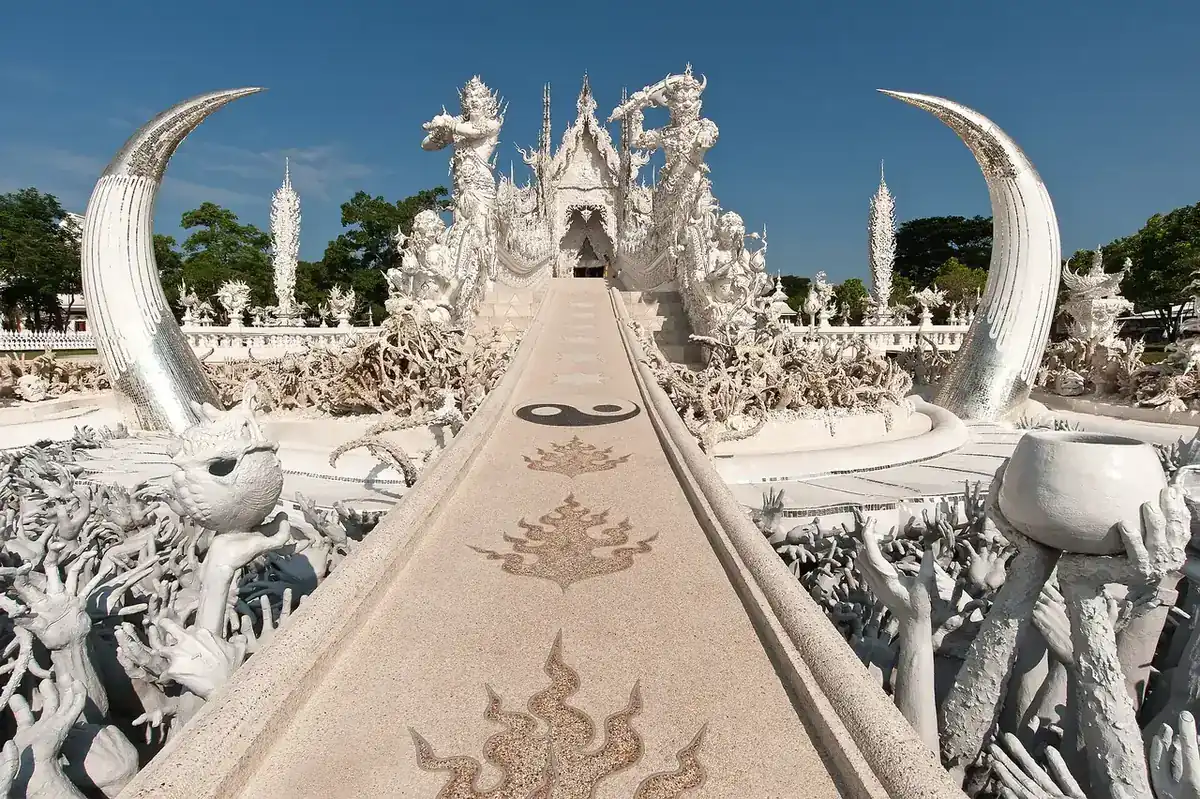
Choose the centre if you are arriving by intercity bus, travelling without a car, or spending only one or two nights. It is also a sensible base if you want to visit the White Temple, Blue Temple and Black House as day trips but prefer to sleep where food and basic services are close by. Those attractions are not all in the centre, so lodging centrally does not remove the need to plan transport.
Accommodation ranges from simple guesthouses and small hotels to comfortable city properties. A rough planning range is about THB 500-1,500 per room per night for basic private rooms and THB 1,500-4,000 for many mid-range options, before peak-date differences. These are approximate 2026 ranges, not a survey or guarantee; compare the total price, location and cancellation terms on the property’s own listing.
Good fit: short stays, solo travellers, couples who want dinner options nearby, and anyone relying on local transport.
Check before booking: distance on foot to the night bazaar or your bus stop, whether breakfast is included, and whether the property can arrange an early airport transfer. “City centre” can cover several blocks, and not every hotel is close to every transport point.
2. Kok River: a quieter, greener stay
The Kok River area suits travellers who value a calmer setting after sightseeing. Some properties have gardens, river views or more resort-like facilities than city-centre guesthouses. It can feel removed from the evening bustle while remaining close enough to town for a planned ride.
This area works well for a slower couple’s trip, a family wanting more space, or a visitor staying several nights who expects to spend time at the accommodation. It is less convenient if you want to walk to dinner every evening or need to make frequent, spontaneous trips. Ask the property how guests normally reach the centre and what an airport or bus-terminal transfer costs; do not assume a hotel shuttle runs all day.
Room prices vary substantially by facilities, season and weekend demand. Treat the same broad budget and mid-range ranges above as an initial filter only; riverfront resorts may cost more. Check whether the room rate includes meals, a transfer or only the room, and compare the full stay total rather than the headline nightly figure.
If you choose a riverside property, save its exact map pin and arrange your first ride before arrival. This is especially useful after a late flight, when you may not want to search for transport on the roadside.
3. Mae Salong and the tea hills: sleep in the mountains
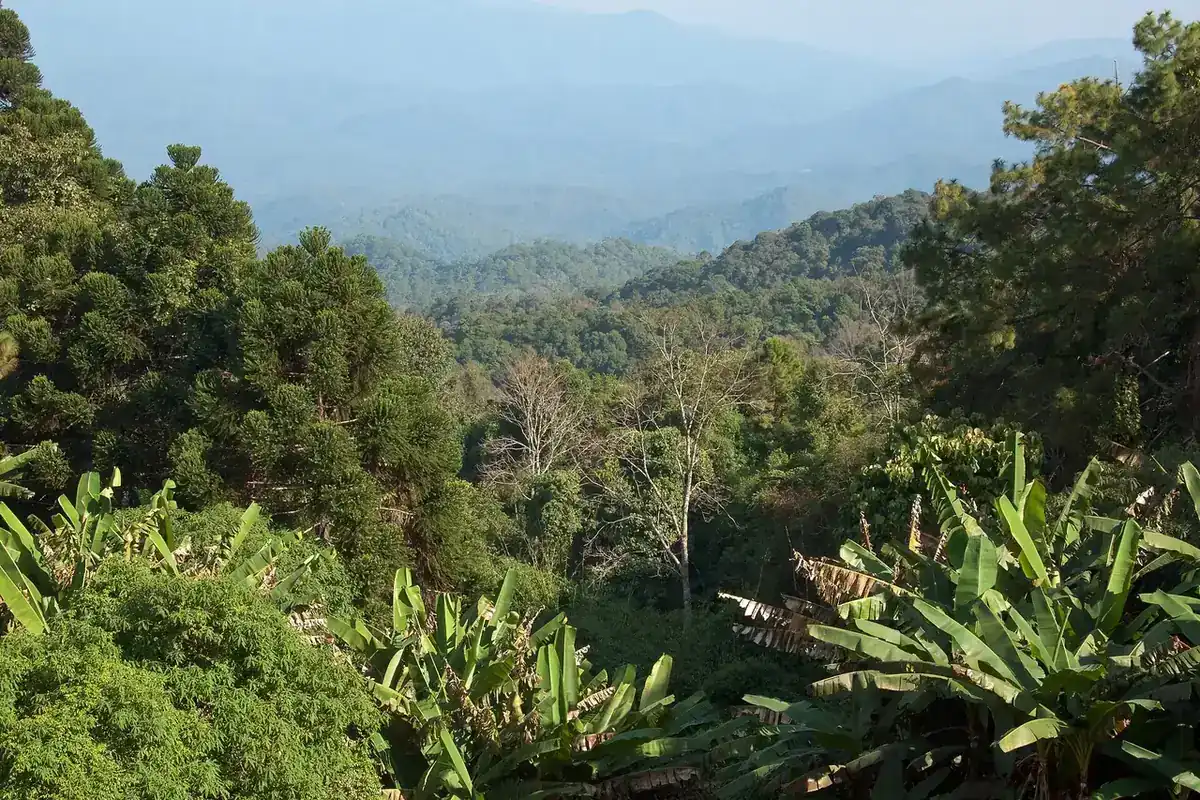
Mae Salong, also known as Santikhiri, and nearby hill areas are for travellers who want the landscape to be part of the stay. Tea gardens, mountain roads and viewpoints can make an overnight stop more rewarding than a rushed excursion from town. The trade-off is distance: local dining and transport choices are more limited, and a late arrival can be inconvenient.
Pick a hill stay if you have at least two nights for Chiang Rai, enjoy a quieter schedule and can arrange a car or driver. Confirm the property’s precise location, road access and check-in window before reserving. Map distances in mountainous areas can understate travel time; roads are winding, and weather or fog can slow a journey. Avoid planning a tight connection after a long drive.
Simple guesthouses and homestays may be available, while some properties focus on views and tea-country atmosphere. Rates, meal availability and payment methods differ, so confirm these directly. Ask whether dinner is available on site, whether the host can help arrange local transport, and whether the access road is suitable for your vehicle. Do not assume there will be a taxi waiting nearby.
Cool-season mornings can be chilly at elevation, while the hot season can bring haze or smoke across northern Thailand. Check current air conditions through Air4Thai if air quality affects your plans, and keep viewpoint visits flexible. For a town-based alternative and the region’s main attractions, see the Chiang Rai hub.
4. Chiang Saen and the Golden Triangle: best as a route, not a default base
Chiang Saen and the Golden Triangle suit visitors who want time beside the Mekong, regional history and border-area viewpoints. Staying here can make sense as part of a northbound loop or a dedicated two-night countryside itinerary. It is usually inefficient for a short first visit focused on the city’s temples because the drives in both directions add up.
Consider an overnight here if your next day is centred on Chiang Saen, the Golden Triangle and nearby countryside, rather than trying to return to town after every stop. Check the exact location of your accommodation: properties described as “Golden Triangle” can be separated from the viewpoint or town services. Ask about dinner, transport and the nearest staffed reception, particularly if arriving after dark.
This area is a poor match for travellers depending on frequent public transport or those with a one-night stop and a morning flight. It can be a rewarding change of pace when you have a vehicle and build the transfer into your route. Follow local signs and current official travel advice near border areas; do not cross an international border without checking the applicable entry rules.
Which area should you choose?
Use this quick decision guide:
- One or two nights, no car: stay in the town centre. It keeps food and basic errands simple, while tours or a hired driver cover the outlying sights.
- A quiet hotel is part of the holiday: consider the Kok River. Confirm how you will reach dinner and attractions each day.
- Tea hills and mountain mornings are the priority: spend a night in Mae Salong or another hill area, with transport and meals arranged in advance.
- You are tracing the Mekong or heading north: stay near Chiang Saen or the Golden Triangle as part of a route, not as a substitute for the city base.
- You are unsure: book a cancellable central stay first, then add a countryside night only if your transport plan is clear.
Do not rent a scooter simply to bridge long distances between areas unless you are legally licensed, experienced on similar roads and comfortable with local conditions. Northern hill roads can be steep, winding and affected by rain or fog. A car with a driver or organised excursion may be the safer fit.
How many nights to book
For a quick first visit, two nights in the centre allow one full sightseeing day and one more flexible day. Three nights make room for either a slower temple schedule or a trip to the Golden Triangle. If the tea hills are important, consider splitting the stay: begin in town, then move north for one night. Changing hotels has a time cost, so do it only when the countryside experience is a real priority.
Chiang Rai is also possible as a long day trip from Chiang Mai, but an overnight stay reduces time spent on the road. Read the White Temple day-trip guide if you are comparing that option. For a broader north Thailand route, the Chiang Mai hub and Pai hub cover other bases, though Pai lies in a different direction and should not be treated as an easy add-on to every Chiang Rai itinerary.
Practical booking checklist
- Confirm the address and map pin, not just the neighbourhood label.
- Check recent room details, cancellation terms and the total price for your dates.
- Ask about late arrival, breakfast, luggage storage and early departures.
- For a riverside or rural stay, confirm the cost and hours of transport to town.
- For a hill stay, confirm dinner options, road access and check-in time before you set out.
- Keep a weather and air-quality backup plan for outdoor viewpoints.
- Pack a light layer for cool hill mornings, sun protection, insect repellent and a rain shell in wetter months.
For general destination planning, see Thailand’s best time to visit by region and the Thailand getting-around guide. Schedules, conditions and prices change; verify transport with the operator and check any current advisories before travel.
FAQ
What is the best area to stay in Chiang Rai for a first visit?
The town centre is the simplest base for most first-time visitors, especially without a car. It has the easiest access to evening food and services, while the main temples and countryside still require separate transport.
Is it better to stay near the Kok River or in the city centre?
Choose the centre for walkable meals and convenience. Choose the river for a quieter property and more relaxed setting, after confirming how you will travel to restaurants and sights.
Should I stay in Mae Salong overnight?
An overnight stay can suit a slower trip focused on tea hills and mountain scenery. Arrange transport and check meal availability first; it is less convenient for a short visit based entirely around town.
How many nights should I spend in Chiang Rai?
Two nights is a useful starting point for the city’s main sights. Add a night if you want the Golden Triangle, tea hills or a less rushed schedule.
Is Chiang Rai safe for getting around by scooter?
Road conditions vary, and hill routes can be steep, winding or slippery. Use a scooter only if you are properly licensed and experienced; otherwise consider a car, driver or organised tour.
When should I book accommodation?
Book earlier for popular cool-season dates and holiday periods, but compare current availability and cancellation terms. If air quality is a concern, check conditions before finalising outdoor plans.
Official sources and further reading
Prices, schedules and entry rules change. Figures here are approximate as of 2026; always confirm on the official or operator page before you book. Spotted something out of date? Tell us.